“The Howling Wilderness: Western Connecticut in the 18th Century”

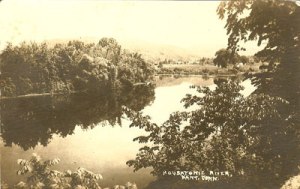
The Kent Historical Society has planned a lecture on January 22 at 2 p.m. called “The Howling Wilderness: Western Connecticut in the 18th Century” that is sure to chase the January winter blues away!
housatonic-river

Michael Everett, the President of the Kent Historical Society and an Emeritus Professor at the Rhode Island School of Design, will discuss conditions in Western Connecticut at the beginning of the 18th century. The Revolutionary period is often viewed as the starting point of Kent’s history, but the town was founded well before that. Through the entire period, the Puritan view of the countryside as a “howling wilderness” had theological and cultural consequences, which Everett will explore as he examines the natives and settlers, changing agricultural and ownership ideas, and more.

The lecture, as well as future Sunday Series events in 2017, helps give context to the Kent Historical Society’s upcoming exhibit in the summer of 2017, “The Founders of Kent,” on the emergence of one New England town in the 18th century.

The Kent Historical Society sponsors the Sunday Series every other month September through May. Free admission for members; $5 suggested donation for non-members.

For more information please call 860.927.4587 or visit www.kenthistoricalsociety.org.
Colonial Cookery and Customs for Kids at the Wilton Historical Society

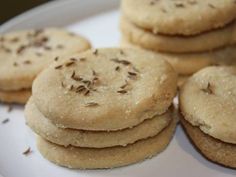
The holidays are full of traditions, and more often than not those traditions revolve around eating. In New Year celebrations, menus often contain foods meant to symbolize or even bring about good fortune. In times past, it was customary to hold open houses on New Year’s Day, and offer guests a cup of punch and New Year’s Cakes, often sweetened with honey. This month, the children will be making New Year’s Cake. A recipe for New Year’s Cake from The Practical Cook Book by Mrs. Bliss (Published in Philadelphia, 1850), calls for honey and caraway seeds, and makes a stiff dough that is to be rolled out, cut and baked — this “cake” is actually what we would call a cookie. The Colonial Cookery and Customs for Kids program will be held on Saturday, January 28, from 11:00 – 12:30.

new-years-cake-honey-cookies-jan-2017-3

Every month, the Colonial Cookery and Customs for Kids workshop at the Wilton Historical Society teaches kids in grades 4 – 8 a Colonial “reciept” (recipe) used in the Connecticut region. While the food is prepared, they hear about Colonial manners, morals and way of life. The workshops feature relatively simple dishes made with local, seasonal ingredients. The recipes used will be adapted for modern kitchens. This is done for safety reasons, and also so that the attendees can recreate their meals at home. All participants sample their own cooking and take home recipe cards – as well as any leftovers! The children learn how a Colonial kitchen would have operated, in order to appreciate the modern conveniences we take for granted. Previous sessions have made bannock cakes, pease porridge, pickles, an amulet of green peas, apple tansey, fairy butter, pumpkin bread and cranberry shortbread.

Members: $10; Non-members $15. Space is limited — please register by contacting info@wiltonhistorical.org or call 203-762-7257. The Wilton Historical Society is located on 224 Danbury Road/Rt. 7, Wilton, CT 06897 www.wiltonhistorical.org

Did You Know?
Why do we Americans choose “cookies” over “biscuits?”

The answer to this is probably twofold: (1) Our early Dutch heritage and (2) Our revolutionary tradition of separating ourselves from “all things British.” — From the Foodtimeline.org
“Early English and Dutch immigrants first introduced the cookie to America in the 1600s. While the English primarily referred to cookies as small cakes, seed biscuits, or tea cakes, or by specific names, such as jumbal or macaroon, the Dutch called the koekjes, a diminutive of koek (cake)…Etymologists note that by the early 1700s, koekje had been Anglicized into “cookie” or “cookey,” and the word clearly had become part of the American vernacular. Following the American Revolution, people from other parts of the country became familiar with the cookie when visiting New York City, the nation’s first capitol, a factor that resulted in widespread use of the term.”
—Oxford Encyclopedia of Food and Drink in America, Andrew F. Smith editor [Oxford University Press: New York] 2004, Volume 1 (p. 317)

Full Moon Snowshoe Hikes Jan. 31 and March 1

What better way to start off 2018 than with a winter full moon hike in the Litchfield Hills…and, this is not just any hike, it is one with snowshoes organized by Sportsmen in Litchfield. In recent years, snowshoeing has become a popular recreational sport. An Outdoor Industry Association report released in January 2014 estimated snowshoeing participation grew more than 40 percent in the previous five years.

With winter in full swing, snowshoeing is an outdoor activity that can be done in virtually all types of weather. Snowshoes distribute a person’s weight over a wider area, making for easier travel over ice and snow.

On January 31 from 6 pm to 9 pm another hike will take place with a hike around Camp Columbia that was established by Columbia University for their School of Surveying. The hallmark of the park is the 75-foot-high observation tower built in 1942 by members of Columbia University’s Class of 1906. The tower is the only remaining structure on 591 acre property. We will hike through the remains of the camp, which some note to be haunted, where we hope to catch a beautiful view of the Super Moon!! A great hike for history buffs and veteran and new snowshoe enthusiasts!!

Following the hike we will enjoy a cozy camp fire, snacks & libations! The meeting point to start this hike is the Camp Columbia Parking area off Rte. 109 in Morris @ 6 pm.

The final hike of the season takes place on March 1 at 6 pm. at the Litchfield Town Beach. To reserve your spot and snowshoes contact 860-567-3167 or email info@sportsmens.biz.

Pudd’nheads: Childhood in Colonial America @ The Glebe House

On January 22 at 2 p.m. the Glebe House located on Hollow Road in Woodbury is hosting a program, Pudd’nheads: Childhood in Colonial America presented by Velya Jancz-Urban – of “The Grounded Goodwife” & Ehris Urban. Pilgrim and Puritan colonists had children, and though it would be hard to tell from historical records, so did African slaves and the indigenous families whom they encountered.

getpart-1

Velya Jancz-Urban – author, teacher, and creator of The Not-So-Good Life of the Colonial Goodwife – has partnered with her herbalist daughter, Ehris Urban, on this unique presentation. Pudd’nheads: Childhood in Colonial America is similar to The Not-So-Good Life of the Colonial Goodwife in that it is funny, sad, sweet, and shocking. Dive deeper into our history. There was much more to childhood than hoop rolling and horn books! Registration for this event is required by calling 203-263-2855 and is $20.

Pudd’nheads: Childhood in Colonial America examines the unique aspects of childhood between the late sixteenth and late eighteenth centuries and explores themes including birthing and childrearing practices, parenting, children’s health and education, naming, gender, play, and rites of passage.

Providing fresh historical perspectives on key features of children’s lives, this program offers compelling information on colonial children – as well as Native American and slave children, who are too often left out of conventional coverage. This new program will be presented in the “kitchen” of the Glebe House Museum (c.1750), immersed in colonial artifacts and history. Light refreshments will be served.

To sign up for a monthly newsletter on Litchfield Hills and Fairfield County visit www.litchfieldhills.com

Flanders Nature Center holds winter photo contest through Feb 15

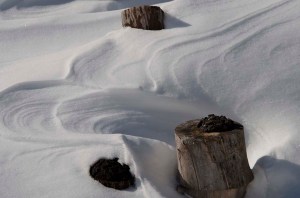
Flanders Nature Center located in Woodbury Connecticut is holding a photography contest from January 9th through February 15th with prizes for the best submissions based on composition, image quality, originality and the story the image tells.

dsc_8370

This “Winter Scape” photo contest is an invitation to capture the spirit and beauty of the winter season in all of its beauty with images that might include landscapes, or wildlife pictured in a wintery context. The photos do not need to be taken on a Flanders’ property but instead can be taken anywhere that provides the photographer inspiration. Entries must be in digital formats of 6MB or less in size.

All the submitted images will be judged by Flanders staff and experienced photography associates and shared in a special gallery on the Flanders web site after the winners have been announced.

The cost for one submission is $5.00, 2/$7.00, 3/ $10.00, 4/$13 and 5/$15. All proceeds to benefit Flanders programming.

Entry blanks as well as details on the contest can be found on their website at http://www.flandersnaturecenter.org or call Flanders at (203) 263-3711; Ext 10.

The art of trash @ Oliver Wolcott Library in Litchfield

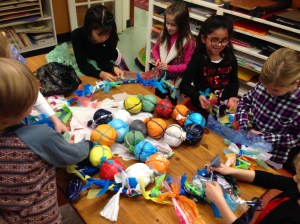
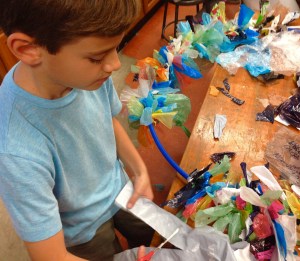
The Litchfield Montessori school will have their artwork on display in the Jamie Gagarin Community Room and Gallery at the Oliver Wolcott Library located on 160 South Street in Litchfield from January 5- January 27. The exhibit has been curated by LMS Art Specialist Liliana Kleid. This year’s theme is “Masterpieces From Trash.”

owl-litchfield-montessori-school-1

The exhibition’s goal is to raise awareness of the environmental issues facing society. Society’s reliance on paper and especially plastic has created environmental problems including groundwater contamination, crowded landfills, and ocean debris. These environmental issues are a legacy that future generations will have to contend with. Techniques used include drawing, painting, collage, sculpture.

owl-litchfield-montessori-school-3

About the Montessori School
Established in 1972, Litchfield Montessori School’s curriculum and approach to learning reflects the commitment and vision of Dr. Maria Montessori. Dr. Montessori believed that the goals of the educational process should be to cultivate self-motivation, to encourage the child’s natural desire to learn, and to promote critical and creative thinking. LMS is committed to serving the whole child by nurturing their love of learning, preserving their sense of wonder, encouraging independence and fostering respect for our world’s social and cultural diversity. Located on a four-acre campus in the Northfield, the Litchfield Montessori School serves children 15 months through 12 years of age. To learn more about Litchfield Montessori School, visit their website at www.litchfieldmontessori.org.