Great Mountain Forest Launches Bat Activity Study or Discovering the Nightlife of Great Mountain Forest: A New Bat Activity Study

Great Mountain Forest (GMF) is embarking on an exciting new chapter in its efforts to support wildlife conservation, thanks to a generous grant from John T. and Jane A. Wiederhold Foundation, a supporting organization of the Northwest CT Community Foundation. This innovative project will shed light on the diverse group of elusive bat species that have been largely missing from the landscape for decades. GMF will work with partners at the University of Connecticut (UConn) and CT Department of Energy and Environmental Protection (CT DEEP) to track their activity across a range of forest habitats.

Despite their vital ecological roles, little is known about which state-listed bat species are returning to this region or how they interact with different forest environments and conditions. Forest managers and policymakers need this information to make informed decisions about conservation and sustainable forestry practices. With its rich history of forestry projects, GMF offers the perfect living laboratory to address these critical knowledge gaps.

Guided by Dr. Tracy Rittenhouse, two UConn undergraduates will use acoustic monitors to capture bat activity at 30 distinct sites throughout the forest. Dr. Devaughn Fraser, a wildlife biologist at CT DEEP will also contribute her expertise. Supporting them, a Master of Energy and Environmental Management intern, guided by Dr. Chadwick Rittenhouse, also of UConn, will leverage remote sensing to refine detailed maps of forest stands, wetlands, and management histories in partnership with GMF’s forester Kate Regan-Loomis. Three of GMF’s summer forestry interns – its 88th cohort – will conduct on-the-ground surveys, gathering data on forest tree species composition and structure. Together, these student researchers will create a robust dataset linking bat activity to habitat features across over 1,000 acres.

The results will seed future research and enhance GMF’s educational programs. Findings will be shared through K–12 science field trips and Woodland Academy workshops for landowners and professionals managing the region’s forests.

“This study marks a significant step toward understanding and protecting Connecticut’s bats. By combining student-driven research, academic expertise, and hands-on education, GMF is fostering a new generation of conservation leaders—and helping the region’s forests remain vibrant, resilient habitats for bats and other wildlife for years to come,” said Mike Zarfos, Executive Director of GMF.

About Great Mountain Forest
Great Mountain Forest (GMF) is a leader in forest stewardship. For more than a century, we have been demonstrating how sustainable management can protect biodiversity and support ecosystems. By serving as a hub for education and research, we are spreading the benefits of sustainable management so that communities across New England derive educational, economic, and recreational and health benefits from their forests—now and well into the future. GMF is a 501(c)(3) nonprofit encompassing 6,400 acres of contiguous forestland in Norfolk, Canaan, and Falls Village Connecticut.

Great Mountain Forest Opens Sugarhouse for Maple Sugaring Day March 22, 2026

On Sunday, March 22, from 10 a.m. to 2 p.m., Great Mountain Forest invites the community to experience the art and science of maple sugaring at its sugarhouse on 201 Windrow Road. Visitors can meet GMF foresters, learn how sap becomes syrup, and take home a bottle of the forest’s acclaimed “forest-to-table” maple syrup.

For more than 80 years, Great Mountain Forest has combined maple sugaring with research and sustainable forestry. Its sugarbushes not only produce high-quality syrup but also support wildlife habitat for migratory birds. As Connecticut’s first bird-friendly maple syrup producer, GMF exemplifies how healthy forests can benefit both syrup enthusiasts and native wildlife.

Maintaining healthy sugarbush forests is more important now than ever as warming temperatures and shifting weather patterns challenge maple trees and the species that depend on them. This year, GMF is at the forefront of a new research initiative studying how sugarbush stands support early-season pollinators—an essential part of the regional ecosystem.

A unique feature of GMF’s sugaring program is its Sap House diary, a record kept for over 80 years that tracks sap production, syrup yields, weather patterns, migratory bird arrivals, and tree budding cycles. Executive Director Mike Zarfos calls it “an insightful window into the forest’s past and an invaluable resource for studying our changing climate, forest health, and syrup production.” It offers crucial, long-term data on climate change impacts, forest health, and the intricate relationship between trees and wildlife.

Location: Great Mountain Forest Sugarhouse, 201 Windrow Road, Norfolk, CT
Time: Sunday, March 22, 10 a.m.–2 p.m.

About Great Mountain Forest

Great Mountain Forest (GMF) is a leader in forest stewardship. For more than a century, we have been demonstrating how sustainable management can protect biodiversity and support ecosystems. By serving as a hub for education and research, we are spreading the benefits of sustainable management so that communities across New England derive educational, economic, recreational and health benefits from their forests—now and well into the future. GMF is a 501(c)(3) nonprofit encompassing 6,200 acres of contiguous forestland in Norfolk, Canaan, and Falls Village Connecticut.

Great Mountain Forest Hosts Workshop @ The Annual Connecticut Land Conservation Conference, March 21

The Annual Connecticut Land Conservation Conference is set to take place on March 21, 2026, at Wesleyan University, located in the Frank Center for Public Affairs. This gathering is the state’s premier one-day event for those involved in land conservation. It welcomes land trust professionals, community stewards, agency leaders, volunteers, and advocates to discuss key conservation issues.

This year’s conference agenda is packed with workshops and panels focusing on vital themes such as effective conservation, stewardship, climate resilience, community inclusion, and leadership. One of the standout sessions hosted by Great Mountain Forest is titled “Building Bridges Between Land Trusts and Researchers: Lessons from the Field.” The workshop will feature notable conservation leaders such as: Michael Zarfos, Ph.D., Executive Director, Great Mountain Forest, Kate Regan-Loomis, Forester, Great Mountain Forest, Dr. Danica Doroski, State Urban Forester, James Fischer, Research Director at White Memorial Conservation Center, Bill Gridley, Chief Steward, Aton Forest, Vince LaFontan, Executive Director, Flanders Nature Center and Land Trust, and Dr. Elizabeth Ward, Agricultural Scientists, Connecticut Agricultural Experiment Station.

This roundtable will explore the integration of research and conservation efforts, emphasizing the unique role land trusts can play in supporting research that improves conservation decision making and our essential understanding of nature. Participants will gain insights into initiating research collaborations, overcoming challenges, and using research to inform stewardship and outreach efforts. This session is designed to inspire connections, share achievements and challenges, and motivate participants in their conservation endeavors.

In the Forest, photo: Bill Gridley

About Great Mountain Forest

Great Mountain Forest (GMF) is a leader in forest stewardship. For more than a century, we have been demonstrating how sustainable management can protect biodiversity and support ecosystems. By serving as a hub for education and research, we are spreading the benefits of sustainable management so that communities across New England derive educational, economic, and recreational and health benefits from their forests—now and well into the future. GMF is a 501(c)(3) nonprofit encompassing 6,200 acres of contiguous forestland in Norfolk, Canaan, and Falls Village Connecticut.

For additional details and registration information, please visit the conference’s web page Connecticut Land Conservation Conference page.

Bringing Women’s History Out of the Shadows

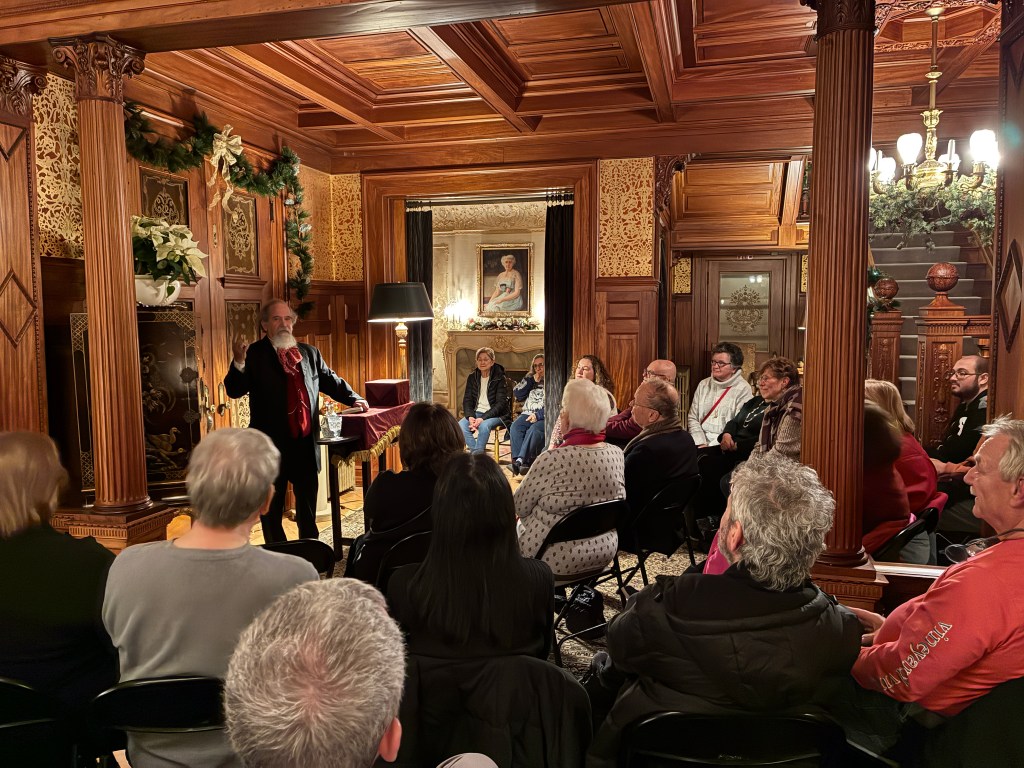
When we think of history, it’s easy to picture the famous kings, generals, and founding fathers—but what about the women whose lives were woven into the tapestry of revolution and empire? The Middlebury Historical Society invites you to a fascinating lecture, “Four 18th-Century Women of the Time of Rochambeau,” where these stories finally take center stage. Join historian and author Jini Jones Vail on Wednesday, March 18, 2026, at 6:00 PM at the Shepardson Community Center for a fresh look at women who made their mark—often in the background, but always essential.

Vail’s talk will introduce you to remarkable figures from every corner of society: Queen Marie Antoinette, shining brightly at Versailles amidst growing unrest; Countess de Rochambeau, balancing diplomacy and the uncertainties of military life; Martha Washington, standing steadfast beside her husband through war; and an unnamed camp follower, whose tireless support kept armies marching. By sharing these diverse experiences, Vail brings to life a more vibrant and complete picture of the American Revolution.

After the video presentation, you’ll have the chance to join an in-person discussion with Jini Jones Vail herself. Whether you’re a dedicated history buff or simply curious, this is a wonderful opportunity to ask questions, share thoughts, and connect with fellow community members.

Admission is free, and all are welcome!
Location: Shepardson Community Center, Middlebury, CT
Details: middleburyhistoricalsociety.org
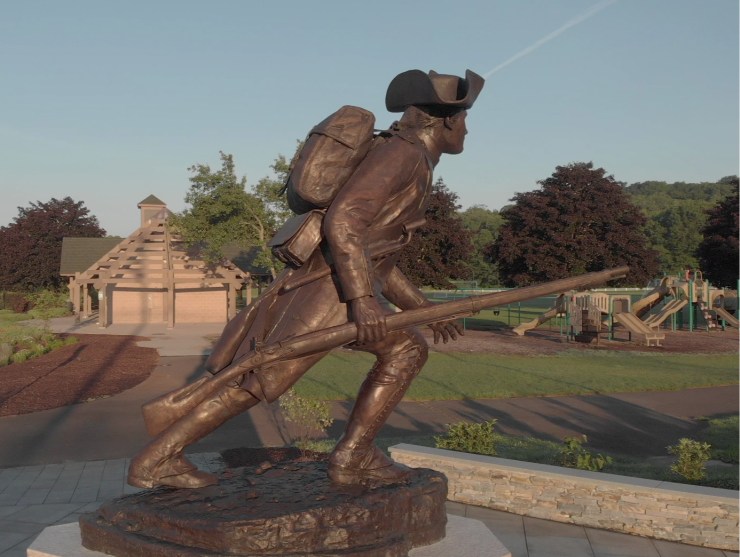
This event also highlights the Society’s ongoing work on the Rochambeau Monument Project at Meadowview Park, commemorating the pivotal 1781 French army encampment in Middlebury. If you’re interested in supporting this effort or learning more about the project’s impact, please visit the Society’s website. Let’s celebrate the past—and the remarkable women who shaped it—together!

The Danbury Concert Association presents Ilya Yakushev, piano Sunday, March 22 at 3:00 p.m.

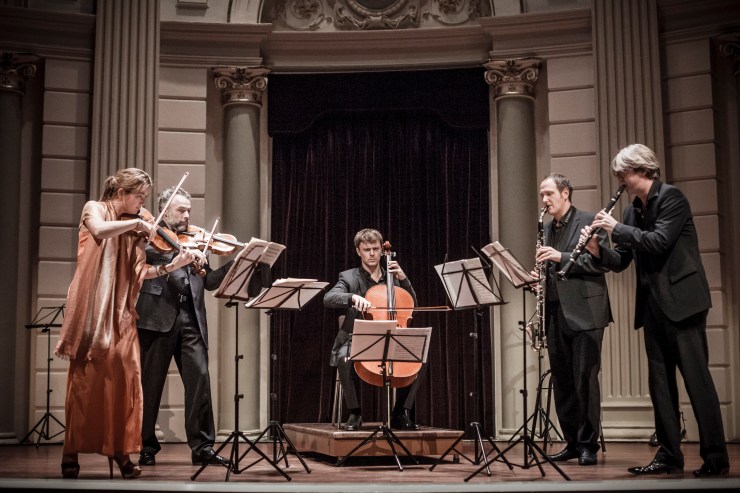
Renowned pianist Ilya Yakushev will make his Danbury debut at the stunning Visual & Performing Arts Center of Western Connecticut State University on Sunday, March 22 at 3:00 p.m. The third of four concerts in the Danbury Concert Association’s

Renowned pianist Ilya Yakushev
2025/26 series will feature works by Beethoven, Bach, Rachmaninoff, Gershwin, and Liszt, and be followed by a meet-the-artist reception that is open to all.

Tickets will be available on WCSU’s Eventbrite page for $25, and admission is free for ages 18 and under courtesy of a grant from the Danbury Cultural Commission.

About the artist
Ilya Yakushev has mesmerized audiences at major venues around the world, including Weill Recital Hall at Carnegie Hall; Davies Symphony Hall in San Francisco; Sejong Performing Arts Center in Seoul, Korea; Great Philharmonic Hall in St. Petersburg; and Victoria Hall in Singapore. His many awards include first prizes at the 2005 World Piano Competition in Cincinnati and, at age 12, the Young Artists Concerto Competition in his native St. Petersburg. A New York Times critic has noted that “Mr. Yakushev…cultivates a fiery, impetuous persona with both energy and brash humor…ready to pounce but delicate…at the keyboard he can do just about anything he wants.”

About the Visual & Performing Arts Center (VPAC)
The VPAC’s Veronica Hagman Concert Hall (located at 43 Lake Ave. Extension in Danbury) has been a premier performance venue since it opened in 2014. The acoustics are excellent, and the vibe is at once casual and refined. With the hall’s open, in-the-round seating (for up to 350) each concertgoer can sit back and enjoy the artist–audience connection.

Mark your calendar for the fourth and final performance of the series, featuring cellist Sophie Shao & Friends, on Sunday, June 7 at 3 p.m. See https://www.danburyconcert.org/ for details.

About the Danbury Concert Association

The DCA, a 501(c)(3) organization, has a local, volunteer board that organizes its series. Thanks to support from individual and corporate donors, and granting organizations like the Danbury Cultural Commission, it brings exceptional artists to the stunning concert hall on WCSU’s west side campus. The DCA invites everyone who wants to experience “beautiful music, where they live” to come to its concerts.

Experience the Art of Chair Rushing and Caning with Susannah Anderson @ Weekend in Norfolk

On Sunday, February 22, from 10 am to 2 pm at the Berkshire County Store, during Weekend in Norfolk, you will find Susannah Anderson, immersed in a craft that ties beauty, patience, and heritage together: chair rushing and hole to hole caning. With every meticulous weave, Susannah breathes new life into worn chairs, preserving heirloom furniture, and the rich, layered stories embedded in each seat.

Susannah’s path to chair weaving began with a deeply personal motivation: a family heirloom. “When my in-laws downsized, they passed on a few pieces of furniture, including a pair of worn Danish modern chairs,” she recalls. Intrigued and determined to restore them, she dove into online tutorials. In 2019, she re-wove the chairs. What many craftspeople love about rushing and caning is the almost meditative rhythm of wrapping and knotting. There is something magical about watching the geometric patterns gradually unfold, transforming a tired chair back into both beauty and usefulness. For Susannah, each woven chair is more than just a piece of furniture; it’s a labor of love and a thread connecting decades of use.

That initial spark soon ignited a wider passion. From Danish cord to ash splint, from a neighbor’s heirloom chair to a canoe seat her father was restoring, each new project added to her skill set. “I see rushing and caning as a way for people to be able to use a chair they love. If someone has had a chair with a broken seat for years it must mean something to them, to save it and be willing to put money into getting it fixed – or even a beloved thrifted item. People seem very glad to be able to use their chairs again,” Susannah shares.

Woven rush seating has a long and fascinating history, stretching all the way back to ancient Egypt, where bulrushes were transformed into strong, comfortable seats. Over the centuries, this craft grew in popularity—particularly during the 17th and 18th centuries in England and Colonial America, where country-style ladder back and spindle back chairs became household staples. Although the art of rush seating saw a decline in the 20th century, largely due to the loss of skilled craftsmen during wartime, it’s now making a wonderful comeback, thanks to renewed interest in the Arts and Crafts Movement.

Today, rushing a chair involves working with both durable twisted paper—known as fiber rush—and natural materials like bulrush or twisted cattail leaves. The result is a beautifully textured, sturdy seat that combines practical strength with nostalgic charm. Chair caning, by contrast, uses the glossy outer layer of rattan palm vine to create a seat that’s lightweight, breathable, and remarkably strong. Whether can is hand-woven through holes or pressed in as a pre-woven mesh, each technique adds its own distinctive touch.

Susannah, a painter, brings her keen artistic eye and a true passion for craftsmanship to every restoration project. She carefully assesses each chair’s needs and applies time-honored techniques to restore its beauty and function. While the process may look effortless, it demands patience, strong hands, and a meticulous attention to detail.

Keeping these age-old crafts alive is not without its challenges. Materials are more expensive now, and handmade work is always a labor of love. As Susannah notes, “Trying to keep a project affordable, while making a living, as we say, is the ongoing challenge.” Yet, her commitment to restoration over replacement, and preservation over mass production, shines through in every project.

Those lucky enough to visit her Sunday demonstrations get to witness something special: not just the repair of a chair, but the revival of a tradition. Each seat restored is a piece of history woven by hand, carried forward by dedication and artistry.

For more information on Weekend in Norfolk visit http://weekendinnorfolk.org And, for information on the studio of Susannah Anderson visit https://www.susannahandersonart.com