Westport Historical Society hosts: Destination Westport: In Gatsby’s Shoes, Walking Tour

Imagine it’s the summer of 1920. Westport is a sleepy farm community that lures New York’s most glamorous couple-F. Scott and Zelda Fitzgerald—to its shores. Seeking respite from their whirlwind Jazz era lives, they set up in an 18th-century farmhouse that has seen Revolution and the building of a nation over many decades. Zelda swims daily in the peaceful waters of the Long Island Sound while Scott takes advantage of the bucolic quiet to work on what he hopes will be his next great novel—The Great Gatsby.

Join Westport Historical Society and your guide, Richard “Deej” Webb, as he recreates the summer of 1920 and the sites and characters that influenced Fitzgerald’s Great American Novel.

Come prepared on July 28 from 3 – 4pm for a gorgeous, vigorous walk in one of the East Coast’s most beautiful settings. $20 suggested admission for members, $25 for non-members. No charge for children 12 and under. Please meet on the sidewalk in front of 244 South Comp Road; park along the shoulder of Narrow Rocks Road.

Reservations are recommended, register at westporthistory.org or call (203) 222-1424. Tickets are nonrefundable. In the event you must cancel, we will consider your purchase a donation and will happily issue you a donation receipt.

Digging Into the Past By Lake and Land

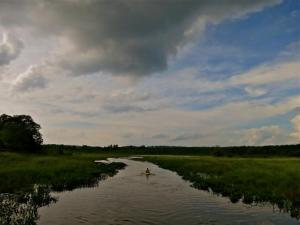
The Institute for American Indian Studies is hosting a free event on July 22 and on July 28 on Lake Waramaug at the Warren Town Beach located on North Shore Road off of Rte. 45 on the New Preston and Warren Town line. From 11:30 a.m. to 2:30 p.m. participants will experience the historic legacy of our Native American past by taking a free ride in an authentically made Native American dugout canoe and watching an archeological dig that is taking place in a meadow across the street.

Dugout Canoe Rides

Today cars, cell phones, social media, and the Internet connect us, it is the way most of us share ideas and keep in touch with each other. For the Eastern Woodland Indians, rivers and waterways served as the high-speed highways that connected tribes as the quickest way to move from place to place. The importance of dugout canoes or mishoon as they are called in Wampanoag and Algonkian languages were like today’s digital cables because they connected tribes and spread ideas. Dugout canoes also facilitated fishing, hunting, and trade during pre and post contact time.

This free opportunity to paddle in an authentically made dugout canoe is a once in a lifetime experience that gives us a glimpse into Native American’s rich cultural history of how indigenous people lived in the Eastern Woodlands. Jeff Kalin, one of the leading primitive technologists in the country made this dugout canoe using traditional Native American construction methods.

About Native American Dugout Canoes

Making a dugout canoe is a mammoth undertaking and began with taking down a massive tree that was usually located near a river or lake. To fell a tree for a dugout canoe, Native Americans coated the base of a tree with mud and straw and built a fire that charred the trunk. As soon as the tree was down, the bark (that would be used to build wigwams) was removed and the ends of the trunk was cut and shaped into a point so that the canoe would move either direction. A small fire was started on top of the stripped tree trunk to burn out the top and bottom surface of the trunk. Stone hand tools would be used to scrape out and hollow the log and flatten the bottom of the canoe. The final step was to coat the canoe in bear grease to waterproof the wood.

Archeological Dig – July 22

If you are interested in archeology, this is your chance to dig into the past with The Litchfield Hills Archaeology Club on July 22. The excavation will take place within walking distance of the dugout canoe launch spot on North Shore Road from 11:30 a.m. to 2:30 p.m.

It is exciting to watch the challenge of finding where and how ancient people once lived in Connecticut where there are so few above ground clues. Perhaps, in this newly excavated area, an artifact may be found that has not been touched by human hands since it was discarded hundreds, perhaps thousands of years ago – artifacts that may shed light on how ancient man lived in Connecticut and in our beautiful Eastern Woodlands.

The Institute for American Indian Studies

Located on 15 woodland acres the IAIS has an outdoor Three Sisters and Healing Plants Gardens as well as a replicated 16th c. Algonkian Village. Inside the museum, authentic artifacts are displayed in permanent, semi-permanent and temporary exhibits from prehistory to the present that allows visitors a walk through time. The Institute for American Indian Studies is located on 38 Curtis Road in Washington Connecticut and can be reached online or by calling 860-868-0518.

The Institute for American Indian Studies preserves and educates through discovery and creativity the diverse traditions, vitality, and knowledge of Native American cultures. Through archaeology, the IAIS is able to build new understandings of the world and history of Native Americans, the focus is on stewardship and preservation. This is achieved through workshops, special events, and education for students of all ages.

Call for Entries – Seaport Photo Contest Through August 25

Do you know what an award-winning photo looks like for Sheffield Island Lighthouse? To find out the Seaport Association of Norwalk is calling for entries to the “150 Anniversary Celebration Photo Contest” of the Sheffield Island Lighthouse that is taking place through August 25, 2018.

Get your camera ready. It doesn’t matter if you are a first time visitor or, one that puts Sheffield Island on your bucket list every summer, the Seaport Association can’t wait to see the images that connect people to Sheffield Island’s 150-year-old history.
Perhaps it is a moment of family fun on the beach looking for shells with our classic lighthouse in the background or the first time you stepped foot onto Sheffield Island in full pirate garb watching pirates cavort in the shadows cast by our lighthouse.

Maybe your image will be the best view of the lighthouse tower and lantern or one that shows the pier and its natural surroundings that is a testament to why we have treasured this maritime landmark for 150 years and counting.

It could be as simple as capturing the architectural beauty of the stonework of the lighthouse, reflections on water, or a birds-eye view of Norwalk’s coastline. The choice is yours.

Contest Rules
The rules to enter our contest are simple. The Seaport Association’s Photo Contest in celebration of Sheffield Island’s 150 Anniversary is open to all photographers, beginners, amateurs, and pros are invited to submit their photos that discover and captivate the ecological beauty and cultural heritage of Sheffield Island on one of our cruises to the Sheffield Island Lighthouse.

To Enter follow @Norwalkseaport on Instagram. Tag @Norwalkseaport and use #SILH150.
There is one entry per contestant. The First Place Prize is $250, the Second Place Prize is $100 and the Third Place Prize is $50.

This is your chance to submit your most beautiful and creative photos of the lighthouse. Winners will be announced at the Norwalk Oyster Festival.

For the Love of Oysters in Westport

Oysters were the quintessential American food – especially in the estuaries and inlets of shoreline Connecticut where they grow in natural abundance.  The Westport Historical Society is celebrating the culture and lore of oystering on Long Island Sound with a month-long exhibit through July 29 entitled Westport Is Your Oyster.

The exhibit offers a glimmer into Westport and Norwalk’s oystering history using original artifacts and objects from the private collections of Ms. Robin Tauck and Mr. Norman Bloom as well as items from our permanent collection.  Ephemera relating to the consumption of oysters round out a display that includes tools of the trade and archival documents.  Oysters have been enjoyed by native people who seared them in hot coals, in a method later adopted by European colonists.  In those days, the oysters pulled from the waters around Westport were as large as dinner plates. 

The Westport Historical Society is located on 25 Avery Place in Westport and is open Tues.-Sat. 10 am – 4 p.m. and Sun. noon to 4 p.m. 

Medicinal Monday – Gooseberries or Currants?

A flavorful shrub in the currant family produces a flavorful fruit popular with Native Americans called a gooseberry. The gooseberry is another name for several of the many varieties of currants that grow all over North America. The name gooseberry is a direct translation of the Kiowa, Omaha and Ponca terms for this fruit.

About Gooseberries
Currant bushes are small and grow no more than six feet tall and usually measure about three feet. They have fragrant yellow five petal flowers in May or June and round black, red, or blue color fruit that usually ripens in July and August. Gooseberries usually grow on hillsides or on the border of woods or near swamps and beside rivers and streams. Cultivated forms of gooseberries are divided into either European or American; the difference is in the size of the fruit and the flavor. North American gooseberries are said to be smaller and have less flavor than there European counterpart, however, they are more resistant to diseases.

Medicinal and Culinary Uses
Native Americans ate gooseberries raw, they also cooked with them. Gooseberries were also dried or preserved and made into jellies or jams. The Hidatsa tribe considered gooseberries a desireable wild fruit, while the Hopi, would caution against eating too much of this fruit because it could make you sick to your stomach. The Gitksan of British Columbia put them in thin dry cakes that they ate with oil of eulachon, salmon, groundhog, or bear during the winter months. Many tribes made dried currant cakes and also used them in soup and to flavor stews. The leaves of the plant were dried for tea and the young leaves were cooked with meat.

The Kiowa used the raw fruit of the gooseberry as a remedy for snakebite because they believed that snakes did not like this berry and kept away from this shrub. A decoction made from the steam of the skunk red current was used to prevent blood clotting after giving birth. Other parts of this plant were used to treat colds, coughs, diabetes, diarrhea and to prevent miscarriages.

Did You Know…
There are many types of gooseberries or currants including the wax, bear, squaw, buffalo, clove, black, Missouri, golden and flowering currants.

Gooseberries are tart, low in calories, fat and cholesterol free and high in Vitamin C and A.

Gooseberries and currents can be easily distinguished by thorns; gooseberries usually have thorns and currants do not.

In the early 1900s the Federal and State Governments outlawed the growing of currants and gooseberries to prevent the spread of white pine blister rust. Massachusetts still prohibits the cultivation of this plant.

The Institute for American Indian Studies

Located on 15 woodland acres the IAIS has an outdoor Three Sisters and Healing Plants Gardens as well as a replicated 16th c. Algonkian Village. Inside the museum, authentic artifacts are displayed in permanent, semi-permanent and temporary exhibits from prehistory to the present that allows visitors a walk through time. The Institute for American Indian Studies is located on 38 Curtis Road in Washington Connecticut and can be reached online or by calling 860-868-0518.
The Institute for American Indian Studies preserves and educates through discovery and creativity the diverse traditions, vitality, and knowledge of Native American cultures. Through archaeology, the IAIS is able to build new understandings of the world and history of Native Americans, the focus is on stewardship and preservation. This is achieved through workshops, special events, and education for students of all ages.

“To Mexico & Back: Alison Palmer’s Paper and Clay” @ Brookfield Craft Center

There will be an opening reception from 5 to 7 pm on July 7 at the Brookfield Craft Center of the work of Alison Palmer, whose work will be on display through July 29. Gallery hours are Tuesday – Friday noon – 5pm, Saturday 11-5pm, Sunday Noon – 4pm.

Ms. Palmer resides in Kent. She received a BFA in ceramics from the California College of Arts. Her works are represented in numerous galleries, museum shops and catalogs throughout the U.S. a nd abroad.

Ms. Palmer’s work is about the celebration of life and the natural world. “Animal imagery in clay has always been my chosen expression. Sometimes I make pots into animals and sometimes animals out of my pots. My search is to find the balance between pottery form and animal form the winter fit as one. I strive to achieve a lighthearted meld”.

Spending time in Mexico has influenced her artistic direction and endeavors. “Spending the winter in Merida, Mexico on the Yucatan Peninsula. There is limited access to good clay there, but I wanted to continue practicing my art. I began making papier-mache masks since I wanted to make art that was relevant to Mexican culture. Papier-mache is accessible to everyone. Every child has at least one piñata for their birthday. The parades are full of giant puppets, gigantes, with masks made of papier-mache. It is my way of meeting and connecting with people”.

Howard Lasser, Brookfield Craft Center Executive Director said: “we are always excited to provide local artists a venue to exhibit their work, and this exhibition of multi media work is an exceptional opportunity for the public to see and experience a mix of work and cultural exploration”.