Mardi Gras Party at the Carousel Museum March 2

The New England Carousel Museum will be in full New Orleans-style celebration mode during its 29th annual Mardi Gras party on Saturday, March 2, 2019, from 7:30 PM-midnight. Come join us for an evening of fun and frolicking with great music, good food, bourbon, and beads.
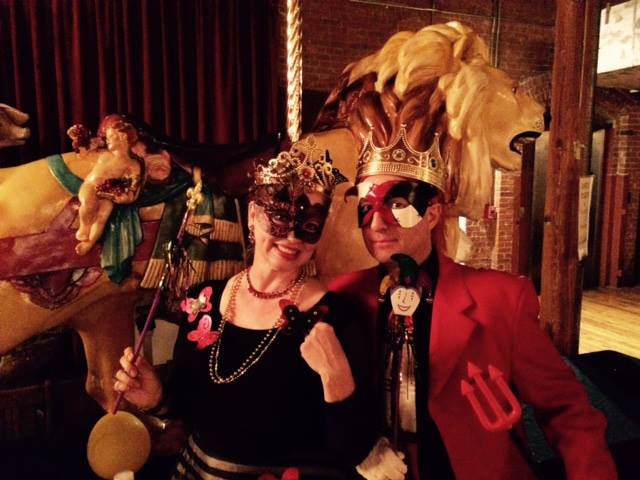
The Big Easy evening features music and dancing in the magnificent museum ballroom. Along with a 50/50 auction and entertainment. There will be bourbon and wine tastings in the Speakeasy, beads, and doubloons, and a catered dinner! This is a BYOB event. “This unique party brings a taste of New Orleans to Bristol,” said Louise DeMars, the museum’s Executive Director. Attendees are encouraged to wear an optional mask or come in full costume. Masks are available to purchase in the museum gift shop.
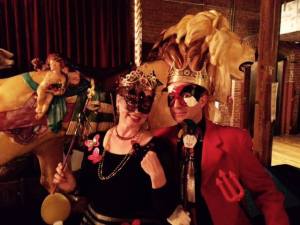
The evening’s festivities will culminate in the crowning of a king and queen of the ball. Gather your friends and come kick up your heels to help us celebrate our 29th year while supporting the wonderful programming and events produced by the Carousel Museum for the Greater Bristol community.

Tickets are on sale at the Carousel Museum or you may order them by mail, by phone, or online. The cost is $50 per person and pre-paid tables of 8 may be reserved. The event will be held at the New England Carousel Museum, 95 Riverside Ave, Bristol, CT. For more information or to purchase tickets, please contact The New England Carousel Museum at (860) 585-5411 or email manager@thecarouselmuseum.org.

BOOK ONLINE:
https://www.thecarouselmuseum.org/mardi-gras
Weaving Workshop for Kids Making a Potholder Saturday, February 16 @ Wilton Historical Society

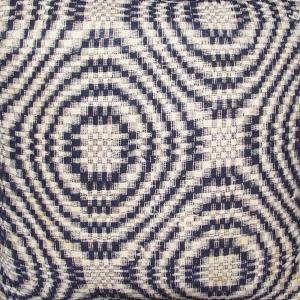
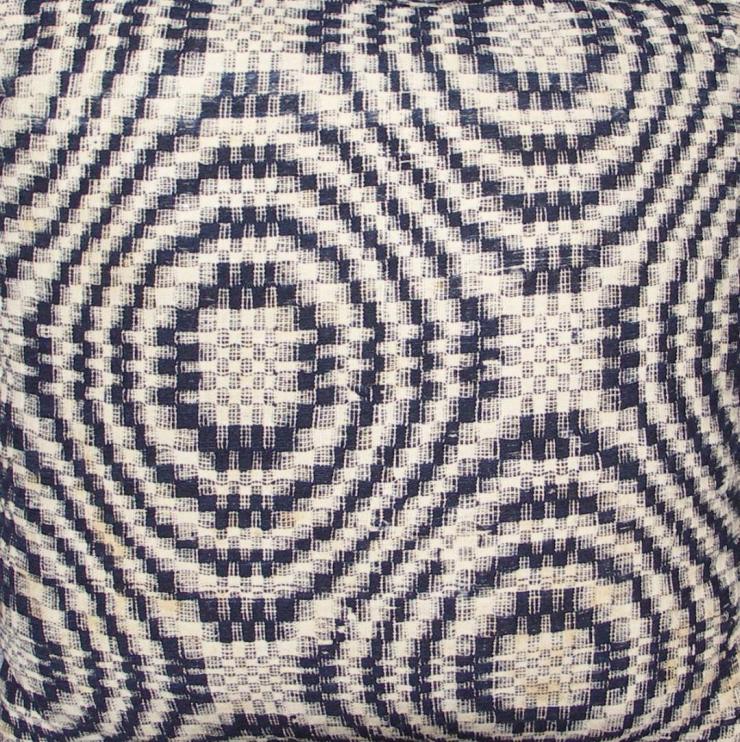
According to the historians at Colonial Williamsburg “Then as now, Americans required fabrics for clothes, towels, sheets, blankets, sails, and dozens of other items made of wool, cotton, silk, linen, and hemp and bought them from textile manufacturers. Until the Revolution, British goods poured into the American market, and most people wore clothes made of English textiles. English or American, weavers typically learned their trade through apprenticeship, which focused mostly on operating a loom. Weavers had to know how to prepare the loom and how to run and to maintain it. During the Revolution, when Americans could not get English goods, weaving became a necessity and a patriotic duty. Weaving will be explored at this February 16 workshop for kids at the Wilton Historical Society from 11:00 – 12:30. Museum Educator Laurie Walker will show the kids the “loom room” in the 1740 Betts House, and explain weaving with flax and wool. For a workshop project, the kids will make a woven pot-holder. Snack of lattice-pattern sugar cookies.

Suggested for ages 6 – 12. Wilton Historical Society members $10 per child, maximum $25 per family; Non-members $15 per child, maximum $35 per family. Please register: info@wiltonhistorical.org or call 203-762-7257. Wilton Historical Society, 224 Danbury Road, Wilton, CT 06897 www.wiltonhistorical.org

Did You Know?
From the Merriam-Webster Dictionary: “A single woman who is old enough to be married but isn’t—and isn’t likely to get married—is sometimes called a spinster. The word has an old-fashioned and dated feel to it, and because of that, it can carry a whiff of impoliteness in certain circumstances. But in previous centuries, a spinster was a valuable word that didn’t carry any such connotation. During the late Middle Ages, married tradeswomen had an easier time obtaining higher-status, higher-income work than their unmarried peers. Unmarried women ended up with lower-status, lower-income jobs like combing, carding, and spinning wool—hence “spinster.”
When spinster first entered English in the mid-1300s, it referred to a woman who spun thread and yarn. . . . Two historical facts led to spinster’s evolution: the fact that most spinners in the Middle Ages were women and the fact that it was common in legal documents to use one’s occupation as a sort of surname (which is why we have Smiths and Bakers and Tanners and so on). Women who spun yarn or thread were given the title Spinster in legal documents . . . By the 17th century, a spinster was being used in legal documents to refer to unmarried women.”

Bluebird Nest Box Building Workshop at Flanders

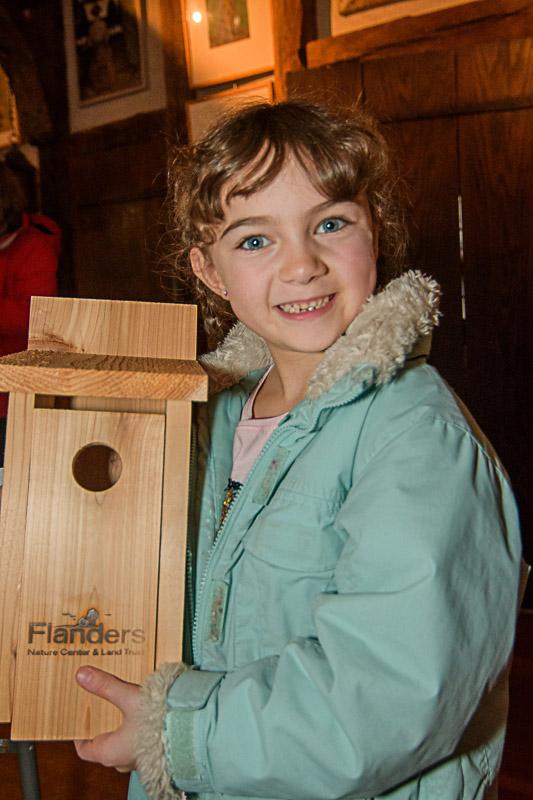
Join Master Naturalist Edward Boisits as he provides background on the history of the Eastern Bluebird and discusses the role of the nest box initiative in helping to increase the populations of the beautiful birds to sustainable levels. Following the presentation, participants will build their own nest box using kits provided.

Once common throughout Connecticut, the Eastern Bluebird, the only bluebird species found in New England, has declined in numbers. One significant contributing factor to this decline is the lack of suitable nesting spots needed by the bluebird to successfully raise young. The construction of nest boxes and their establishment in appropriate habitat is helping the bluebird make a comeback. Flanders Nature Center & Land Trust’s ongoing bluebird program has helped bring many Eastern bluebirds back to the area.
Wanting to encourage others to also provide appropriate nesting spots for the birds, this class will provide all the materials needed to build a bluebird box and participants will be creating their own nest box to take home with them. Information and tips needed for installing and maintaining a successful bluebird nest box to encourage these beautiful birds to your property will also be covered.

The program is being held on Saturday, February 16 at 2PM at the Flanders Studio located at the corner of Flanders and Church Hill Road in Woodbury.
The cost for each bluebird nest box is $20 for each box built. Space is limited so preregistration is required. Those interested may register online at www.flandersnaturecenter.org or call 203-263-3711, ext. 10, for more information.

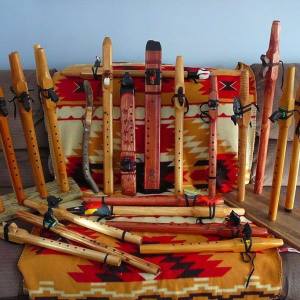
The Magic of Courting Flutes @ Institute for American Indian Studies Feb. 16

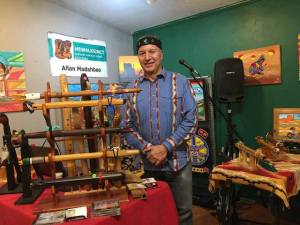
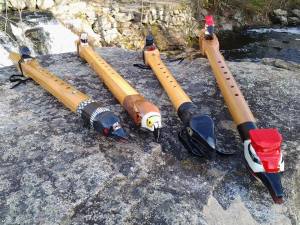
The Institute of American Indian Studies in Washington has a perfectly unique way to top off Valentine’s Day week. On Saturday, February 16 from 1:30 p.m. – 3:30 p.m., Ojibway artist, and musician Allan Madahbee will explain the cultural significance and the hauntingly beautiful sound of the Native American courting flute. The flute is deeply rooted in the traditions of Eastern Woodland indigenous peoples.

Today, makers of Native American Flutes like Ojibway artist and musician AllanMadahbee craft their personal style and sound into their creations. Madahbee began to research the Chippewa flute culture and was influenced and mentored by Joseph Firecrow of the Cheyenne Nation. “We became friends and he provided guidance and feedback and explained some of his methods of flute making. With his passing last year, we have all lost a great Native American flute maker and musician. I am proud to continue our flute making traditions.” The sound of the courting flute that is usually made of cedar has an uncommon scale for Western music and is entrancing.

Born on the shores of Lake Huron, Allan Madahbee is a member of the Ojibway (Chippewa) Nation that has pursued the traditional arts and crafts of his ancestors. He has been making Native American flutes for about ten years. “I had always thought they were a product of the Southwest Indian tribes, but a book that I found that was written during the 1800s about Chippewa culture, had a passage about the Chippewa flutes, along with pictures. This made me realize that they were indeed a part of my Chippewa culture. Knowing that my ancestors constructed these flutes for hundreds of years has inspired me to continue this tradition. Also, the haunting sound from these mystical instruments is a large part of my inspiration.”

Along with constructing Woodland flutes, beaded moccasins, woodcarvings, Native American regalia, and rock sculptures, Madahbee always returns to his artistic roots in paintings. Mainly self-taught, Madahbee attended school with fellow Ojibway artists Blake Debassige and James Simon – two well known Anishnawbe artists that are respected and have their paintings displayed around the world.
Space is limited and reservations are suggested. To make sure you get a spot call the Institute for American IndianStudies at (860) 868-0518 or email general@iaismuseum.org to reserve your spot. The program is included in the price of admission: $10 adults; $8 seniors; $6 children; IAIS Members free.

About The Institute for American Indian Studies

The Institute for American Indian Studies preserves and educates through discovery and creativity the diverse traditions, vitality, and knowledge of Native American cultures. Through archaeology, the IAIS is able to build new understandings of the world and history of Native Americans, the focus is on stewardship and preservation. This is achieved through workshops, special events, and education for students of all ages.

Located on 15 woodland acres the IAIS has an outdoor Three Sisters and Healing Plants Gardens as well as a replicated 16th c. Algonkian Village. Inside the museum, authentic artifacts are displayed in permanent, semi-permanent and temporary exhibits from prehistory to the present that allows visitors a walk through time.

The Institute for American Indian Studies is located on 38 Curtis Road in Washington Connecticut and can be reached online or by calling 860-868-0518.

Colonial Cookery and Customs for Kids at the Wilton Historical Society

During colonial times in New England, winter had two “crops” – ice and maple syrup. Ice was harvested from ponds to stock the ice house for summer heat. Sap begins to flow in maple trees, ready to be collected and boiled down to the sweet syrup that is as popular today as it was long ago. At this Colonial Cookery and Customs for Kids Workshop at the Wilton Historical Society on Saturday, February 23 from 11:00 – 12:30, Museum Educator Laurie Walker will be discussing how maple syrup is made and will be showing the children how to use maple syrup to make a simple but delicious Colonial Maple Tart.

The Colonial Cookery and Customs for Kids workshop at the Wilton Historical Society teaches kids a “reciept” (recipe) used in the Connecticut region. While the food is prepared, they hear about Colonial manners, morals, and way of life. The monthly workshops feature relatively simple dishes made with local, seasonal ingredients, adapted for modern kitchens. All participants will sample their own cooking and take home recipe cards – as well as any leftovers! The children will learn how a Colonial kitchen would have operated, in order to appreciate the modern conveniences we take for granted. Previous sessions have made bannock cakes, pease porridge, pickles, an amulet of green peas, apple tansey, fairy butter, pumpkin bread, cranberry shortbread, New Year’s “cakes”, New England chowder, hand pies, cheese and ramp soufflé, pea and watercress Rappahannock, blackberry maslin, thirded bread, pound cake with “Oranges” juice, maple cup custard, pepper pot soup, scalloped tomatoes, dressed macaroni and cheese, and gingerbread cakes.
Suggested for ages 6 – 12.

Members: $10; Non-members $15. Space is limited — please register by contacting info@wiltonhistorical.org or call 203-762-7257.
The Wilton Historical Society, 224 Danbury Road, Wilton, CT 06897 203-762-7257
www.wiltonhistorical.org

Did You Know?

“In the late 1700s and early 1800s, maple sap was produced into maple sugar, a granular, solid block of maple that had a long shelf-life and could be easily transported. Maple sugar was promoted by the Quakers and abolitionists as an alternative to West Indian “slave-produced” cane sugar; Thomas Jefferson even started a maple plantation at Monticello in 1791.
It wasn’t until the Civil War that the maple syrup industry was born, with the introduction of the tin can and the invention of metal spouts and evaporator pans. Most early producers were dairy farmers who made maple syrup and sugar during the off-season of the farm for their own use and for extra income.” – New England Maple Museum in Pittsford, Vermont

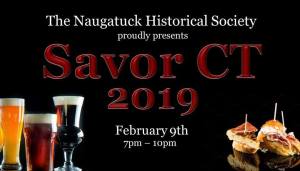
Savor Connecticut, 2019 in Naugatuck Feb. 9

Once again this year the Naugatuck Historical Society is hosting its Savor Connecticut on Feb. 9 and they invite the general public to join them for their annual food, beer, wine, and spirit tastings. It may not be the biggest “Savor” in CT, but they are the original!

This year’s event includes seven breweries, four distilleries, in addition to a number of vineyards. A highlight of this event is the attendance of more than twenty food vendors that will help participants celebrate all that is good in CT. The entrance fee includes all the samples, you pay nothing but your entrance fee. The Society has also organized several tempting raffles to participate try your luck at.

The Society would like to extend their thanks to their sponsors, Fine Wines and Liquors and Attorney Frederick A. Dlugokecki. Fine Wines and Liquors are bringing some of the samples for you to try and Attorney Dlugokecki is providing each guest with a glass tasting cup to take home.

Tickets are on sale at the Naugatuck Historical Society Museum located on 171 Church Street, Naugatuck or Fine Wines and Liquors on Meadow Street, or online at https://tickets.beerfests.com/event/savorct (there is a small processing fee for online ticket purchases)

Advance Tickets are $25 for members, $30 for non-members. Tickets at the door will be $35 for everyone.