The American Museum of Tort Law Opens Online Galleries

The American Museum of Tort Law, founded by Ralph Nader has just launched a new online tour of some of their exhibits. This online exhibit features the work of Pulitzer Prize-winning artists such as Matt Wuerker whose artwork eloquently illustrates famous Tort Law cases. To access the online galleries click here.

This online exhibit explains tort law and trial by jury illustrating how both of these legal procedures have impacted the lives of thousands of consumers with positive and progressive outcomes. Dangerous Toys, for example, shows how the world has been made a safer place for children. The online gallery focuses on precedent-setting cases. These cases highlight the building blocks of righting wrongs that impact present and future cases. These cases reflect the constantly evolving nature of tort law and show why it is important. Once case not to miss is Nader V. General Motors Corp., 1970 that is also documented in his book, Unsafe at any Speed. From wiretapping and a car with major flaws, this read is fascinating and artfully illustrated.

The Museum of Tort Law is located in Winsted and has a mission to educate, inform and inspire Americans about Trial by Jury and the benefits of tort law, or the law of wrongful injuries including car crashes, defective products, medical malpractice, and environmental disasters.

The Institute for American Indian Studies Hosts Inside with IAIS in April Monday, Wednesday, and Friday @ 2 p.m

There are many inspirational stories about how different museums, companies, and individuals are coping with the social distancing restrictions brought about as a result of COVID19. The Institute for American Indian Studies https://www.iaismuseum.org
has a few stories of its own and launched a series called “Inside with IAIS” in March. Back by popular demand and social distancing restrictions, the IAIS is continuing its video series “Inside with IAIS” in April. The educational staff at the Institute has pivoted from on-grounds educational programs to internet-based, distance learning programs that are entertaining and educational for the whole family. These programs will take place in April on Monday, Wednesday, and Friday at 2 p.m. on Facebook. https://www.facebook.com/IAISMuseum/

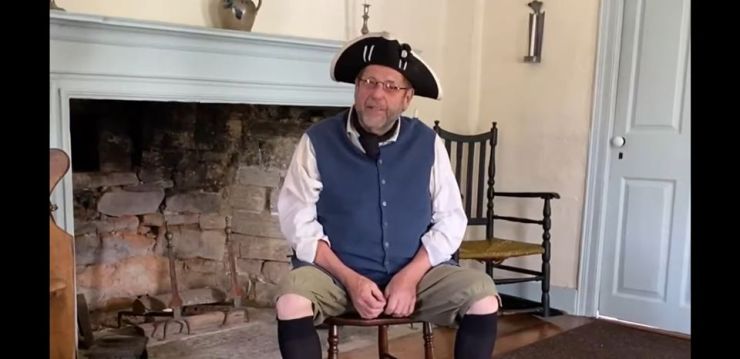
The Institutes’ Staff Educators and Archeologists have filmed a series of videos that stream on Facebook. Each video has a different focus and story to tell. There are programs on archeological based learning, sessions on foraging and survival skills, as well as broadcasts on Native American Stories that teach a myriad of life lessons for young and old alike.

On Friday, April 10 and 17, Darlene Kascak (STN), a traditional Native American storyteller will entertain and educate with the popular “Tales from the Rabbit Bag,” and on Monday, April 6, there will be an archeological look at the importance of rocks.

If you want to stretch your legs in the great outdoors, take a virtual Nature walk with Institute Staff to learn how to ID plants, trees, and animals this spring on Wenesday, April 8. If you are a fan of survival shows, learn how to forage on Monday, April 13 – you will be amazed at the things you can find that have always grown right under your nose! On April 15, learn what clever tool Native Americans and, many other cultures from around the globe used to hunt with before the invention of the bow and arrow.

Check back often on our Facebook page for updates, new videos, Wisdom Wednesday, Medicinal Monday, and other programming so you can continue to learn from the comforts of home!

One way you can help the Institute for American Indian Studies during this time is to become a member. Our mission is to educate and preserve Native American history and culture and we need your help to accomplish this. Please click the link here and become a member today. As an IAIS Member, your benefits include unlimited free admission to the museum, reduced or free admission for special events, discounted workshop and summer camp fees, discounts in the IAIS Museum Shop, quarterly calendar of IAIS activities and workshops, invitations to exhibit openings and special events, and your choice of one of four books as a welcoming gift.

About The Institute for American Indian Studies
Located on 15 acres of woodland acres the Institute For American Indian Studies preserves and educates through archeology, research, exhibitions, and programs. They have the 16th c. Algonquian Village, Award-Winning Wigwam Escape, and a museum with temporary and permanent displays of authentic artifacts from prehistory to the present that allows visitors to foster a new understanding of the world and the history and culture of Native Americans. The Institute for American Indian Studies is located on 38 Curtis Road, Washington, CT.

List of Inside with IAIS Videos

Inside Community – https://www.facebook.com/IAISMuseum/videos/3047169402008405/

Nature Journaling for Kids https://www.facebook.com/IAISMuseum/videos/236181334191364/

Difference between natural rocks and artifacts https://www.facebook.com/IAISMuseum/videos/636067410292358/

Outdoor Survival Shelter Building – https://www.facebook.com/IAISMuseum/videos/618339135563401/

Native American Story About Frogs – https://www.facebook.com/IAISMuseum/videos/245374036631763/

Native American Story – How the Rabbit Got His Ears – https://www.facebook.com/watch/?v=204133197525826&external_log_id=aed5153351e60a51774e54128afc4979&q=Inside%20with%20IAIS

Birds in Crisis – A Virtual Exhibit – Salisbury Association

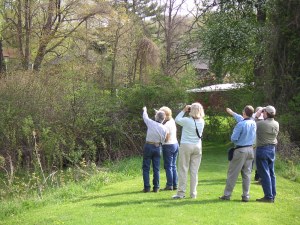
The Salisbury Association Land Trust, partnering with Sharon Audubon Center and the Housatonic Valley Association, has produced an exhibit about important ecological concerns affecting you and our natural world. Birds in Crisis: What Can I Do? was scheduled to open at the Academy Building in Salisbury, mid-April. Due to the current health emergency and the public’s need to avoid community transmission, a physical exhibit is not possible at this time. However, a virtual exhibit is. The virtual exhibit was created by Lou and Elaine Hecht in both its virtual and physical form. The Salisbury Association plans to mount the physical exhibit when it is safe to do so.

To view this fascinating exhibition click this link. https://mcusercontent.com/f01c260f9bc4aa036fa217f73/files/1c4bc441-30cb-48ba-b6c3-f7924f29b115/BirdsInCrisisExhibitPanels.pdf

Murder Mystery Vol. 6 #QuarantineLife Edition @ MATT Museum in Waterbury

The Mattatuck Museum has transformed its annual MATT by Night: Murder Mystery event into a COMPLETELY interactive online digital experience and the event is catching on. Given the current guidelines about public gatherings and social distancing, the Mattatuck staff and Murder Mystery Committee have taken a fan-favorite event and turned it into an experience that participants can tune in to from their homes.

The Mattatuck invites participants to travel 100 years back in time and celebrate the roaring 1920s with bootleggers, suffragettes, flappers, and mobsters alike! Online, guests will be able to interact with friends and Museum staff and have some safe and intriguing fun.
“We hope to give participants an exciting outlet to escape reality for a couple of hours and enjoy some good ‘ol fun,” says Cat Clark, the Mattatuck Museum’s Corporate and Foundation Relations Manager and member of the Murder Mystery Committee. “Even though family members and friends can’t get together in person right now, we have seen them sign up for Murder Mystery so they can spend some quality time together virtually.”
The Mattatuck have already had ticket sales come in from outside of Connecticut, including North Carolina and Illinois.

“This event is going to be the cat’s pajamas,” jokes Clark, keeping to the 1920s theme. “The cast is looking forward to bringing this year’s mystery to life in a new way and for an entirely expanded audience.”

Join the fun on April 23 from 7:00-9:00pm and see the Murder Mystery unfold. Access to the event will be e-mailed to registrants the week of and there, guests will be able to watch the opening scene, interrogate the suspects live, inspect the clues, and figure out WHODUNNIT!? Tickets are $10 for members and $15 for non-members. Not a member of the Mattatuck Museum? Visit mattmuseum.org/join to become one today!Tickets are nonrefundable and may be purchased at mattmuseum.org/matt-by-night.

LIME ROCK PARK ANNOUNCES POSTPONEMENT OF SEASON OPENER DUE TO COVID-19 CORONAVIRUS CRISIS

In lieu of the latest government and health official statements concerning the COVID-19 pandemic and after consultation with each circuit, SRO Motorsport America today announces the postponement of its races scheduled in May, including the Touring Car Festival at Lime Rock Park.

The TC America and Pirelli GT4 America races as part of the Touring Car Festival were originally scheduled for May 8-9 and will be rescheduled to a future date later in 2020. SRO Motorsports America officials plan on announcing the new date for the Touring Car Festival in the coming weeks.

The Lime Rock Park staff continues to place a priority on the health and safety of our staff, fans, spectators and competitors. We hope that you and your family remain safe and well during this COVID-19 crisis.

Please sign up to receive the latest news and information from Lime Rock Park by visiting http://www.limerock.com/jointhefanclub. Updated announcements will also be made on www.limerock.com and on our Facebook page at www.facebook.com/limerockpark. For additional questions, Lime Rock staff can be reached by emailing info@limerock.com or by calling (860) 435-5000 (Mon.-Fri. 9:00am – 5:00pm).

How to Download a Walking Tour of Torrington

The Torrington Historical Society has put together an interesting walking tour of downtown Torrington. In Colonial Times downtown Torrington was known as Mast Swamp. It was a low-lying, wet area covered with massive pines and hemlocks that were claimed as ship masts for England’s Royal Navy. The land in Mast Swamp was divided among Torrington’s early settlers and most of the trees were sawn into lumber at Wilson’s Sawmill (1751) on the upper end of Water Street. Few, if any, became ship masts. Torrington’s downtown was built here because the Naugatuck River supplied water power for mills and factories in an era before steam power and electricity. A woolen mill was built on lower Water Street by Frederick Wolcott in 1813. This mill brought workers to the river valley and a village of stores and homes sprang up around it. The village became known as Wolcottville and would continue to grow into the urban center that we now call downtown Torrington.

Immigration from Europe greatly expanded Torrington’s population between 1870 and 1900. During that time most of Wolcottville’s wooden buildings were replaced with more fire-resistant brick structures. In the decades that followed, buildings were built or remodeled in the popular Art Deco, Art Moderne, and Colonial Revival styles. Along the streets of downtown Torrington, you will see the work of architects, builders, and property owners who have created a unique sense of place. Today, many of these historic buildings are home to arts and cultural
organizations that are breathing new life into downtown Torrington. For your printable walking tour of Torrington visit https://www.torringtonhistoricalsociety.org/virtual-walking-tour.html

A few of the highlights include the following

1. HOTCHKISS-FYLER HOUSE, 1900 192 Main Street Built-in 1900, before the automobile arrived here, the Hotchkiss-Fyler House typifies an era when stately homes were built within walking distance of downtown. This house was built for Orsamus and Mary Fyler. Mr. Fyler was a Civil War veteran and had a notable business and political career. The house was designed in a Queen Anne, “chateauesque” style and was constructed by Hotchkiss Brothers Company of Torrington. In 1956, Fyler’s daughter, Gertrude Hotchkiss, donated the home to the Torrington
Historical Society for use as a museum. The home remains furnished as it was during Mrs. Hotchkiss’ lifetime.

2. The Brick Academy, 4 George Street – This is the oldest building in the downtown historic district. It is now a private residence and it is an excellent example of Greek Revival architecture. By 1835, downtown was expanding with new businesses and homes and this school was constructed to serve the growing school-age population. Typical of the Greek Revival style, the gable end with its triangular pediment faces the street. The Greek Revival style was popularized in America during the early nineteenth century when Americans looked beyond traditional English architecture and politics to the pure forms and ideals of ancient Greek democracy

3. ST. FRANCIS OF ASSISI CHURCH, 1887 168 Main Street. Irish immigrants began arriving in Torrington around 1845. Roman Catholic religious services were first held in Irish homes until a wooden church was built on this site in 1859. As Torrington’s Irish-Catholic population grew, so did the need for a larger church. The present Gothic-style church with its 151-foot steeple was built to replace the wooden church that once stood here. Shortly thereafter, the parish constructed a rectory, two brick school buildings behind the church and a convent.

4. CENTER CONGREGATIONAL CHURCH, 1867
155 Main Street
Although not the first church on this site, the present Center Congregational Church is one
of the older buildings in downtown Torrington. The Congregational Church built a wood-framed meeting house on this site in 1829. It was replaced with the present Gothic Revival
style church built of local granite in 1867. The parish house with its distinctive square tower
was added in 1899. Tragedy struck in 1979 when an arsonist set fire to the church and
destroyed all but the solid granite walls. Although the interior of the church is modern, the
building retains its historical appearance and significance.

5. TORRINGTON SAVINGS BANK, 1938
129 Main Street
This bank building as well as the Torrington City Hall (1936) across the street
were designed by Torrington architect Carl Victor Johnson. Both buildings
show the influence of the Colonial Revival Movement. The bank also
incorporates classical influences such as the triangular pediment above the
second floor. The bank also shares several stylistic elements with the
Torrington National Bank which was built twenty years earlier on Prospect
Street. The Torrington Savings Bank was established in 1868. Until this
building was built, the bank was located in the Granite Block, which at one
time stood opposite the Warner Theatre.

6. CONLEY’S INN, 1891
93 Main Street
When Conley’s Inn opened in 1891, it was billed as “equal to
any in Connecticut.” Frank Conley had been a hotel keeper in
Philadelphia when he entertained a group of men from
Torrington. These businessmen saw a need for a first-class hotel
to boost Torrington’s image and convinced Conley to relocate
here. The original hotel had 52 rooms and was thoroughly
Victorian. During World War I, a large demand for surgical
needles prompted Torrington Company officials to recruit workers
from outside Torrington. A shortage of housing led the company
to purchase Conley’s Inn in 1918. Two years later, a large
three-story addition was constructed to serve as a boarding
house for female employees. A Tudor-style pub called the Yankee
Pedlar was added along Maiden Lane in 1940. In 1956, the name of the
hotel itself was changed to the Yankee Pedlar Inn.

MERTZ DEPARTMENT STORE, 1930
84-94 Main Street
The W.W. Mertz Company operated Torrington’s premier
department store in a period when locally-owned department
stores were the anchor and pride of America’s Main Streets.
This pride was reflected in both the quality of merchandise as
well as in the design of the building itself. The façade of the
Mertz building is a fine example of modernistic architecture
in Torrington. Designed by Torrington architect William E.
Hunt, the building displays intricate geometric details made
of cut Indiana limestone and a front entry surrounded by
smooth, dark green Vermont marble. The retail business was
established by Walter S. Lewis who built a Victorian-era
commercial building on the site. After the death of Lewis, the
business was taken over by his son-in-law, W. W. Mertz who greatly expanded
the floor space and built the modernistic façade. It is now owned by the
Warner Theatre.

CONLEY’S INN, 1891 (YANKEE PEDLAR INN)
93 Main Street
When Conley’s Inn opened in 1891, it was billed as “equal to
any in Connecticut.” Frank Conley had been a hotel keeper in
Philadelphia when he entertained a group of men from
Torrington. These businessmen saw a need for a first-class hotel
to boost Torrington’s image and convinced Conley to relocate
here. The original hotel had 52 rooms and was thoroughly
Victorian. During World War I, a large demand for surgical
needles prompted Torrington Company officials to recruit workers
from outside Torrington. A shortage of housing led the company
to purchase Conley’s Inn in 1918. Two years later, a large
three-story addition was constructed to serve as a boarding
house for female employees. A Tudor-style pub called the Yankee
Pedlar was added along Maiden Lane in 1940. In 1956, the name of the
hotel itself was changed to the Yankee Pedlar Inn.

WARNER THEATRE, 1931
68 Main Street
Built by Warner Brothers, the Warner Theatre replaced several Victorian-era, brick, commercial
blocks on the east side of Main Street. Construction began in 1930 and the theatre opened on
August 19, 1931. Designed by noted theatre architect Thomas Lamb, the Warner incorporates
many modernistic design concepts of the period both on the exterior façade and in the interior
finishing. Lamb’s aim was to create an atmosphere of “compelling abandon and relaxation” for
the spectator. The theatre operated primarily as a movie palace until 1981 when it closed. There
was talk of turning it into a parking lot when, in 1982, a group of preservationists and theatre
enthusiasts spearheaded a grassroots fundraising campaign to purchase this landmark and create
a performing arts center. The theatre is operated by the Northwest Connecticut Association for the
Arts which has completed the theatre’s exterior and interior restoration.

CHAMBER OF COMMERCE BUILDING, 1916
56-66 Main Street
The original Neo-Classical architecture of this building and its recent restoration and
rehabilitation represent the aspirations of two successful organizations in two separate
centuries. The original three-story brick building was built by James Mallette, who came to
Torrington as a stable boy and became Torrington’s leading real estate developer and financier.
His strong support for the Chamber of Commerce led him to construct this substantial building,
in part, as a home for their operations. The building is now the headquarters of the Nutmeg
Conservatory and the Nutmeg Ballet, who have rehabilitated the original structure, adding a
new first-floor façade and a soaring glass-and-steel dance studio to the rear of the building.

ALLEN BUILDING, 1930, 1935
42 Main Street
This building is another fine example of modernistic architecture by Torrington architect
William E. Hunt (see also Mertz Building). The northernmost part of the building was built
in 1930 adjacent to a nineteenth-century wood-frame hotel on the corner. The hotel,
known as the Allen House, was severely damaged by fire in 1934 and demolished to
make way for the rest of this building (1935) that wraps around the corner. As a whole,
the building is a significant modernistic statement in an important commercial location.

LILLEY BLOCK #2, 1896
11-21 Main Street
This building is an elegant example of a type of commercial block built in American cities at the turn of the century. These mixed-use buildings often contained first floor stores with apartments above which gave cities a resident population to support a variety of businesses. The third story arched windows and arched
brickwork of the cornice identify this building as Victorian Romanesque
Revival. Waterbury developer George Lilley built this commercial block in
1896, 13 years before becoming governor of Connecticut. Lilley purchased
most of the property between Water Street and the river after an 1894 fire
destroyed the Turner and Seymour Manufacturing Company buildings on
this site. Between 1896 and 1912, Lilley built four commercial buildings
along Main and Water Streets.

VENETIAN RESTAURANT, 1844, 1901
50-52 East Main Street
The Venetian building showcases several architectural styles
as well as the history of two prominent immigrant groups,
Germans and Italians. The rear portion of the Venetian is a
wood frame building constructed in 1844 as a store and
dwelling. It is probably the oldest structure in the commercial
district. The neo-classical masonry addition on the front of
the building was built around 1898 by German immigrants
William Witzke and Oscar Stoeckert who operated a saloon.
At this time, many of the businesses on East Main Street
were owned and operated by people of German descent.
Meanwhile, Torrington’s Italian population was growing and,
in 1925, the building was purchased by Charles Giampaolo
who opened an Italian restaurant and named it the Venetian.
In 1930, the façade and interior were remodeled with the
addition of art deco glass block, a classic neon sign, and
interior murals of Venice.