
Western CT Blog
via Western CT Blog: Looking For Spring in Litchfield Hills and Fairfield County!.
Every year, Mohawk Mountain Ski Area in Cornwall CT experiences the same strange phenomenon… they run out of skiers and snowboarders way before they run out of snow. It’s a sign of the end of the season, as sure as boiling sap and blooming crocuses.
As the 2010-2011 season winds down they are offering their final event of the season… FREE LIFT TICKET DAY! Mark your calendars – Sunday, March 27, from 8:30 a.m. -4:00 p.m., Mohawk Mountain will provide FREE lift tickets to all their guests. The tickets are valid March 27, 2011 only, and are available simply by visiting a ticket window in the Main Lodge. Everyone must be wearing a lift ticket, so be sure to visit the ticket window and request your complimentary ticket before attempting to load a lift. If you are not wearing a ticket, their friendly lift operators will send you back to the lodge to get one.
Rentals and lessons will be available, at their regular rates and on the regular schedule. The cafeteria will be open, and the Ski Shop will have some great end-of-season deals! The weather report for this week calls for a dusting of fresh snow, so they anticipate great conditions next weekend (Saturday, March 26 and Sunday, March 27, 2011).
It may be the last opportunity to enjoy the slopes so plan to head for the hills this coming weekend for FREE LIFT TICKET DAY at Mohawk Mountain !
Mohawk Mountain will be closed Monday (March 21) through Friday (March 25). We will reopen on Saturday, March 26, with lifts running from 8:30 a.m. to 4:00 p.m. (no
 This Saturday take a tour of the Sharon Audubon Center’s Sugarhouse to see how maple syrup is produced fresh at the Audubon Center. In the sugarhouse, a favorite stop along the tour, the sweet aroma of boiling sap and syrup will fill the air as samples of fresh syrup are handed out to guests to taste. Tours go out continuously throughout the day so there is no need to pre-register. Tours are scheduled between 10:00am and 4:00pm $5.00 adults, $3.00 children.
While you are at the center, don’t miss the Raptor Aviaries. Here you will find 22 Birds of Prey (16 different species) that have been determined non-releasable, meaning that they would not be able to survive on their own in the wild. The majority of these beautiful birds are housed in large outside, predator-proof aviaries that are filled with natural vegetation and various perching options. Birds that you will see at the Audubon include: bald eagle, merlin, several types of owls, hawks and vultures, a peregrine falcon, an American Kestrel, dove and raven.
Audubon Sharon, consists of the Sharon Audubon Center and Emily Winthrop MilesWildlife Sanctuary, and is owned and operated by the National Audubon Society. The Sharon Audubon Center has over eleven miles of scenic hiking trails, and includes 1,147 acres of mixed forest, meadows, wetlands, ponds and streams.The mission of the National Audubon Society is to conserve and restore natural ecosystems focusing on birds, other wildlife, and their habitats for the benefit of the Earth’s biological diversity and humanity.
The Sharon Audubon Center strives to meet this mission through education, conservation and environmental research to encourage the responsible usage and stewardship of natural lands.The Sharon Audubon Center offers educational programs for all ages, a seasonal newsletter, nature programs, wildlife rehabilitation, research, live animal exhibits, a children’s adventure center, a nature store, and a natural history library.
 The Silvermine School of Art located in New Canaan in partnership with the Aldrich Museum, will be participating in the annual community event, Draw On! On Saturday, March 26th from 9am until 6pm, the School of Art will conduct DRAW UNTIL YOU DROP!
This one day event is open to the public and provides an opportunity for continuous, intensive figure drawing with a model, or models, in sustained poses. Participants of all skill levels, ages 16 and up, will be able to work alongside Silvermine faculty, Guild Artists members and students to develop their artistic vision, sharpen skills and energize studio experience through drawing.
Using all the studios in the School of Art, participants will have the opportunity to work with female and male models in a range of different poses, from short and athletic, to extended poses, as well as portrait study. Participants who would like to work with still life set ups will also have a variety to choose from.
The fee for the day is $30 and half day is $15. Registration can be made in advance or you can register the day of the event. Tables, easels, drawing horses, drawing boards and basic drawing supplies will be available. For more information call 203-966-6668 ext. 2 or visit our website at http://www.silvermineart.org.
The Silvermine Galleries are open Wednesday through Saturday, 12p.m. to 5 p.m. and Sunday from 1pm to 5 p.m. For more information, call (203) 966-9700
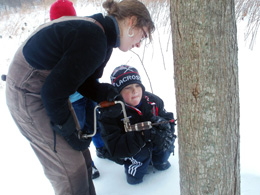 On Saturday, March 19 from 11:00 am – 2:30 pm sweet things are happenning at the New Canaan Nature Center located on 144 Oenoke Ridge in New Canaan. This annual event celebrates the New England tradition of maple syrup making and includes a pancake brunch with different varieties of syrup, including the Nature Center’s own special syrup.
Nature Center educators and local families who have “adopted” a tree for the season have been collecting sap from about 40 of the center’s maples over the last month. How does it work? Freezing temperatures create suction that draws water in through a tree’s roots, and warm periods create pressure which causes the sap to flow out through a tap hole where it’s collected in buckets. This sap, a combination of water, salt and sugar, serves as the tree’s food and is the sole ingredient of pure maple syrup. During Syrup Saturday, visitors will get a chance to observe the entire process from tree tapping to boiling into syrup at the “sugar shack”. Educators will also demonstrate historic methods of maple syruping.
Local maple syrup and maple baked goods will be for sale. Supplies and information from Tap My Trees will also be available to purchase for families who want to tap their own maple trees at home and make their own maple syrup.
A special activity also being offered is a hike along “Maple Lane” with one of the Center’s naturalists to learn how to identify sugar maples and other trees while hunting for signs of spring. Attendees are welcome to gather around and warm up by the campfire and kids are encouraged to make a maple-themed craft to take home as a rememberance of this sweet time of year. This event is primarily held outdoors and activities will be ongoing throughout the day.
For additional information call (203) 966-9577 x20 to register in advance for this popular event. Members: $8/person / Non-Members: $12/person. Children under age 3 are free.
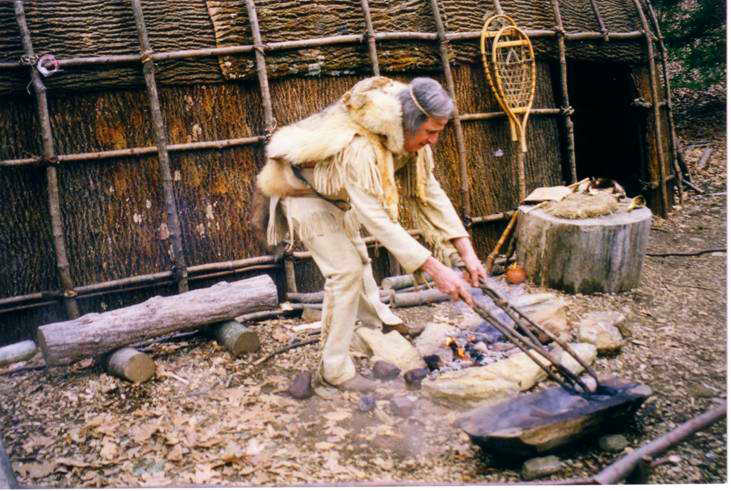 The Institute for American Indian Studies will present its Annual Maple Sugaring Festival on Saturday, March 20, 2010 from 11:00 am – 3:00 pm. What makes this Festival unique is Jim Dina who will present a full Native American Sugar-making demonstration in the Institute’s outdoor Algonkian Village.
Inside the Museum and Institute, from 11:00 am to 1:00 pm, staff members will serve pancakes with delicious local maple syrup. Fun activities for the children will run from 1:00 – 3:00 pm.
The Native American lore of sweet maple syrup is fascinating. The Mohegans believed that the melting snow caused the spring sap to run in the maples. They considered the sap to be the dripping oil of the Great Celestial Bear, who had been wounded by the winter sky hunters – according to their own Pleiades story. The bear, sometimes becoming the celestial bear and embodying the Big Dipper, repeats itself through many Indian origin stories.
Native People discovered in their woodlands the sources of seasoning and sweetening medicines and foods. Long before recorded history, their investigations unlocked the secrets of extracting many dietary substances from their natural environments. Lost in pre-history are the earliest experiences that led to “sugaring”.
It was usual for whole families to participate in the labor of sugaring, although in some tribes the women went first to the maple forests to make any necessary repairs to the camp and sugaring utensils. Among the Iroquois and the Ojibwa Indians, the women owned the maple groves, which they inherited through their maternal line. Seensibaukwut is the Ojibwa word for maple sugar, which means, “drawn from the wood.”
Tree sap is essentially water absorbed by the roots and mixed with some of the stored tree sugars. Sap will begin to run upwards from the roots on warm late-winter days followed by freezing nights. These conditions usually begin in late February in southern New England.
Once the sap had been collected, it needed to be boiled down (reduced). The sap was then put into a hollowed out log where fiery hot stones were placed into it. The purpose of the hot stones was to cause the sap to boil. This may have needed to be done several times to obtain the correct consistency.
This was the traditional “Native” way.
Please call for tickets 860-868-0518. Advance tickets $8 Adults/ $6 Children; Tickets at the door $10 Adults/ $8 Children.

