Illuminate the Night: Join the Full Moon Walk with the Institute for American Indian Studies

Experience the magic of a nighttime winter walk under the last full moon of 2024 at the Institute for American Indian Studies (IAIS) on Saturday, December 14 at 6 p.m. Embrace the whispers of the winter woods, the crisp air, and the scent of evergreens as you embark on this moonlit adventure.

The Magic of the Long Night Moon
This full moon, just before the Winter Solstice, takes the highest and longest path along the night sky. Known as the Long Night Moon, it shines above the horizon longer than most full moons, making this walk particularly special. Participants will walk along beautifully maintained wooded trails under this glistening celestial body, learning the various names Native Americans gave the December full moon and what it symbolized for them.

A Journey Through Time
As you walk, you’ll discover how different Native American peoples traditionally used the monthly cycles of the moon and nature’s signs to track the seasons. One of the highlights of this experience is witnessing the beauty of December’s full moon firsthand, just as Native American communities have done for centuries. Participants will learn that the Mohawks, among other Native American communities refer to this moon as the Cold Moon, aptly describing the chilly days and nights of the season.

The Perfect Ending

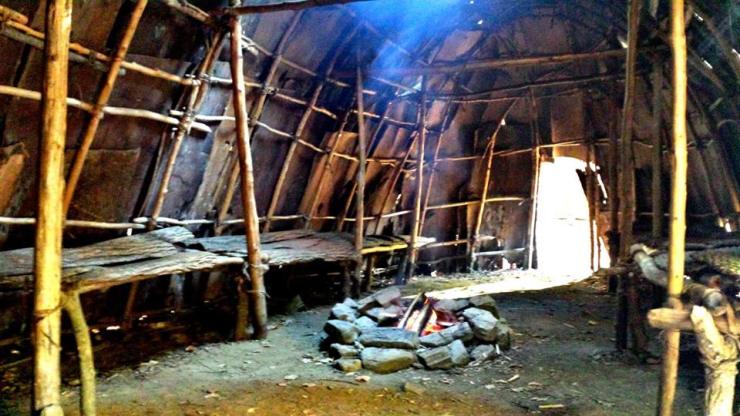
The woodland walk concludes at the recreated 16th-century Algonkian village, where a warm fire, hot chocolate, and traditional stories await. This unique setting provides the perfect atmosphere to reflect on the night’s experiences and the historical significance of the December full moon. Remember to dress for the weather, bring a flashlight, and wear sturdy shoes. If the weather looks iffy, check in with us using the contact info below. Space is limited, so pre-register using the link. Cost: $5 for IAIS Members, $10 for Non-Members.

About the Institute for American Indian Studies
Located on 15 acres of woodland, the IAIS offers educational programs, both permanent and changing exhibits, and a replicated 16th century Algonkian village. Its research department maintains and extensive archeological and ethnographic collections and conducts archeological digs and other research. Its “Wigwam Escape” escape room offers an opportunity to solve a puzzle while learning about Indigenous life before European settlement. With a focus on “two eyed seeing,” visitors can learn about the history of the American continent that incorporates the more than 12,000 -year history of human habitation. T

Learn the Cultural Tradition of Corn Husk Weaving @ Institute for American Indian Studies

During this month of gratitude, the Institute for American Indian Studies located at 38 Curtis Road in Washington Connecticut is hosting a Corn Husk Weaving Workshop on Saturday, November 23rd at 1 p.m. Participants will learn the traditional art of weaving beauty from simple cornhusks into a seasonal craft perfect for gift giving.

Originating in South America, corn didn’t reach New England until about 1000 years ago. Corn was a useful crop that wasn’t grown just as a source of food. Many Native American traditions, including the Three Sisters Garden, various traditional stories, and annual ceremonies like the Green Corn Festival, encompass the cultural importance of corn including weaving art and everyday items from cornhusks.

A cornhusk is the outer leaf of the corn plant that protects the cob as it grows. Most of the time, this green outer shell is thrown out after corn is harvested. Readily available during the fall harvest season, skilled Native American artists and other artisans collect the husks and dry them until they turn an attractive shade of golden brown signaling that they are ready to be woven.

At this workshop participants will join an IAIS educator for a hands-on class where they will create crafts made from cornhusks to take home. Weaving with cornhusks has been around for thousands of years in Native American culture and this workshop presents a rare opportunity to experience a bit of Native American culture while creating something beautiful and meaningful.

Pre-registration for this workshop is required and can be made online at iaismuseum.org. The price to participate including all materials, is $20 for non-members and $10 for members of the Institute. If you have questions, please call 860-868-00518 or email events@iaismuseum.org

About the Institute for American Indian Studies

Its “Wigwam Escape” escape room offers an opportunity to solve a puzzle while learning about Indigenous life before European settlement. With a focus on “two-eyed seeing”, visitors can learn about the history of the American continent that incorporates more than 12,000-year history of human habitation. The Institute for American Indian Studies is located at 38 Curtis Road, Washington, Connecticut.

Annual Founders Day Clambake to Raise Funds for the Institute for American Indian Studies Local Indigenous Artists to be Celebrated

The Institute for American Indian Studies is celebrating its annual Founders Day Clambake on Saturday, September 14, from 6:00 p.m. to 8:00 p.m. at the Riverwalk Pavilion in Washington Depot, 11 School Street. Along with the traditional Indigenous foods of lobster, clams, corn, and potatoes, guests will be treated to an array of artworks by two featured artists, painter Claudine Purdue and fashion designer Brandi Sawyer-Emmons. A silent auction will feature original artwork by local artists such as Elizabeth McDonald and Ruth Jaffe, as well as prints by Cora Marshall, a Native American artist, gift certificates and items from local businesses, and many other items and collectibles. Ojibwe flute artist Allen Mahahbee will perform and is offering one of his hand-made flutes to the silent auction.

0

The cost to attend this fundraiser is $75.00 per person. Tickets are limited and must be purchased in advance. No tickets will be sold at the door. To register, visit online at https://www.iaismuseum.org by September 12.

The focus on Indigenous visual arts is new this year, as the IAIS is publicizing its annual art scholarship program. The Institute gives a small stipend to an emerging Native American artist currently enrolled in an arts program and offers them an opportunity for a one-person show at the museum. This year’s recipient will be announced at the event. Claudine Purdue is the 2023 artist. Her paintings explore the stories of Mi’Kimaq and Acadians who are her ancestors. Brandi Sawyer-Emmons, known as BThunder, creates Native American-inspired apparel and accessories including her popular Teepee handbag. Clambake attendees will have an opportunity to bid on items created by these two award-winning artists, along with the other silent auction items. Winners will be announced after this dinner.

About the Institute for American Indian Studies
Located on 15 acres of woodland, the IAIS offers educational programs, both permanent and changing exhibits and a replicated 16th-century Algonkian village. Its research department maintains extensive archeological and ethnographic collections and conducts archeological digs and other research. Its “Wigwam Escape” escape room offers an opportunity to solve a puzzle while learning about Indigenous life before European settlement. With a focus on “two-eyed seeing”, visitors can learn about the history of the American continent that incorporates more than 12,000-year history of human habitation. The Institute for American Indian Studies is located at 38 Curtis Road, Washington, Connecticut.

In Native American communities bark rattles are used in a number of traditional ceremonies, dances, and spiritual gatherings. For dancers, they help maintain the beat of the music by complimenting drums. On Saturday, June 22, at 10 a.m. the Institute for American Indian Studies is holding a Bark Rattle Workshop with Richard Chrisjohn (Oneida). An advocate for Indigenous sovereignty and the preservation of traditional teachings, Chrisjohn is a fourth-generation woodcarver who lives on the St. Regis Mohawk Reservation, Akwesasne, in Hogansburg, New York. This hands-on workshop will give participants a better understanding of the Iroquois culture and their traditional approach to our environment.

The highlight of this workshop is to make an elm bark rattle whose shape is dictated by the bark being used or a bark rattle necklace. Rattles and necklaces are made using the inner bark of the American elm tree. The inner portion of the rattle will be filled with small objects that create a rattling sound when shaken. During this workshop, participants will also learn about the history and culture of the Haudenosaunee (Iroquois) Confederacy, as well as the traditional uses of various trees and natural materials.

This is an outdoor program so participants should dress accordingly. If there is heavy rain or high temperatures, the program will move inside the Institute.

Space is limited and pre-registration is requested. Please visit our website to register online at http://www.iaismuseum.org, email events@iaismuseum.org, or call (860) 868 0518. The price of participation, including materials is $30 for non-members and $20 for members.


About The Institute for American Indian Studies
Located on 15 acres of woodland acres the Institute For American Indian Studies preserves and educates through archeology, research, exhibitions, and programs. They have a 16th c. Algonquian Village, Award-Winning Wigwam Escape, and a museum with temporary and permanent displays of authentic artifacts from prehistory to the present allows visitors to foster a new understanding of the world and the history and culture of Native Americans. The Institute for American Indian Studies is located at 38 Curtis Road, in Washington, Connecticut.

2024 Summer Camp at the Institute for American Indian Studies Registration is Open

Registration is now open for the 2024 summer camp weekly programs for children ages 6 – 12 at the Institute for American Indian Studies at 38 Curtis Road in Washington, Connecticut. The summer camp runs for six consecutive weeks from June 24 through the week of August 5 (excluding the week of July 1), Monday through Friday, from 9 a.m. to 5 p.m. The Institute’s summer camp programs strive to get children unplugged from indoor activities through exciting hands-on programs that get them outdoors. Weekly programs encourage children to practice team building, make new friends, appreciate nature, and connect with an enriching culture that is more than 12,000 years old. To find out more and to register online visit https://www.iaismuseum.org/summer-camp. For questions call 868-0518 ext. 453 or email gbenjamin@iaismuseum.org.

Native American history comes alive through the educationally entertaining activities curated by the professional Educational Department of the Institute. Trailblazing through the woods, investigating the natural world, mock archaeological digs, educational games, listening to traditional Native American stories, learning new crafts, and working together to complete a group project are just some of the ways children will enjoy their time at the Institute. Each week the Institute will offer a different series of exciting programs to engage and educate children.

A connection to nature plays a critical role in a child’s development. Children that want to learn more about the natural environment and how they relate to it might want to register for, “Getting in Touch with Your Senses,” from June 24 – June 28.

“Planting Seeds for Growth: Project Week,” from July 8-July 12 will teach children invaluable skills that have been passed down through generations of Native American communities. Foraging, building from natural materials, sewing, and weaving, are just some of the topics that will be covered. This program will help build confidence, teach basic survival skills, and enhance understanding of the great outdoors.

Children who are budding writers, actors, actresses, puzzle solvers, and researchers will enjoy “A Play on Words: Imagination and Learning Through Storytelling,” from July 15- July 19. These programs are finely tuned to help further develop children’s communication skills by sharpening their abilities to record, pass on, and interpret information in many ways from storytelling to theatrical expression.

Perfect for children concerned about the environment and how to survive naturally, “Power of the Eighth Generation: Eco-Survival Skills,” from July 22 – July 26 promises to be as fun as it is informative. Campers will practice traditional survival skills like navigation, carving, lashing, and more as they explore technologies that Native Americans used for thousands of years to thrive in the Eastern Woodlands. Through these programs, campers will also learn how we impact our environment.

For children interested in archeology, “Time Travel: Understanding the Past, Present, and Future,” from July 29 – August 2 is a must. Campers will learn how to put scientific methods into practice and learn the power of oral tradition through games, mock digs, and other activities.

Ideal for children who have a thirst for knowledge and want a deeper understanding of our natural environment, “Ecological Explorations: Two-Eyed Seeing in the Natural World,” from August 5- August 9, is perfect for them. The programs being offered explore the concept of both traditional indigenous ecological knowledge and Western scientific concepts to help children better understand the natural environment from two informative and yet different perspectives. Plant and animal identification, traditional ways Native American communities have used and respected the land and water, animal adaptations, and much more make this a unique educational experience.

About The Institute for American Indian Studies
Located on 15 acres of woodland acres the Institute For American Indian Studies preserves and educates through archeology, research, exhibitions, and programs. They have a 16th c. Algonquian Village, Award-Winning Wigwam Escape, and a museum with temporary and permanent displays of authentic artifacts from prehistory to the present allows visitors to foster a new understanding of the world and the history and culture of Native Americans. The Institute for American Indian Studies is located at 38 Curtis Road, Washington, CT.

Moccasin Workshop 4/30 @ Institute for American Indian Studies

The Institute for American Indian Studies located at 38 Curtis Road in Washington Connecticut is holding a Moccasin Making Workshop on Saturday, March 30, from 11 a.m. to 2 p.m. Participants will not only leave this workshop with a pair of moccasins that they have made, they will also leave with a greater understanding of the cultural significance this footwear has with Native American communities throughout the country.

Across the United States, many Native American tribes created different styles of moccasins to suit their environment. The word moccasin itself comes from the Algonkian language – meaning “shoe.” They can be hard or soft-soled, ornately beaded, or plain, fur-lined, or cuffed. In short, the style of moccasins is as diverse as the many different tribes that they originate from.

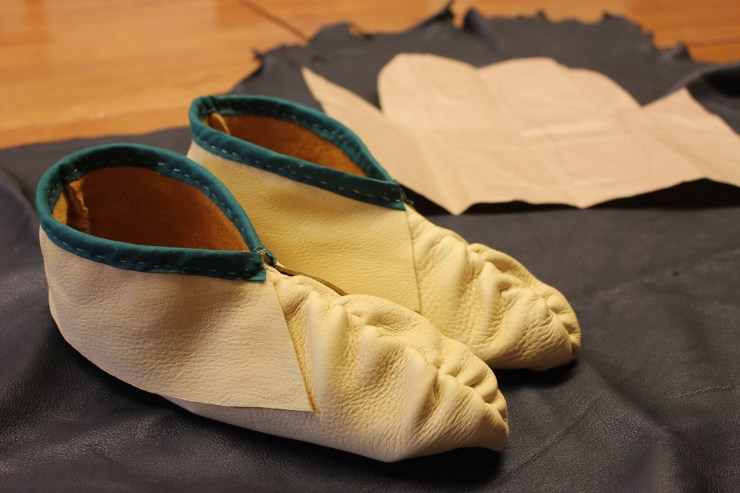
Traditionally, in the Eastern Woodlands, including Connecticut, soft-soled moccasins were commonly made out of a single piece of deer, elk or moose hide, and hand-sewn using sinew. A characteristic making it an Eastern Woodlands moccasin is the center seam that is gathered at the toe giving it a pucker shape. Today, moccasin-inspired shoes find their way into modern designs and fashion statements, even as Native culture keepers continue the centuries-old tradition of moccasin making.

This fascinating three-hour workshop, led by Darlene Kascak, Schaghticoke Tribal Nation, and Educational Outreach Ambassador for IAIS promises to be fun and informative. Participants will make a pair of pucker toe style moccasins out of deer hide while listening to the history of moccasins. It is a powerful feeling to make something that you can use in your everyday life, using methods that people have used for generations.

This workshop is recommended for adults and children ages 8 and up due to the dexterity required for sewing. To register for this workshop head to the website http://www.iaismuseum.org, call 860-868-0518, or email events@iaismuseum.org. The cost of this workshop, which includes all materials, is $80 for non-members of the museum and $70 for members.

About The Institute for American Indian Studies

Located on 15 acres of woodland acres the Institute For American Indian Studies preserves and educates through archeology, research, exhibitions, and programs. They have a 16th c. Algonquian Village, Award-Winning Wigwam Escape, and a museum with temporary and permanent displays of authentic artifacts from prehistory to the present allows visitors to foster a new understanding of the world and the history and culture of Native Americans. The Institute for American Indian Studies is located at 38 Curtis Road, in Washington, Connecticut.