Barn Tag Sale Open Thursday, April 18 to Sunday, April 21 @ Keeler Tavern

The Barn Tag Sale at Keeler Tavern Museum & History Center (KTM&HC) is back and better than ever! Our historic carriage barn will feature 1,250 square feet of bargains on April 18-21 from 9 a.m. to 3 p.m. each day.

The Barn Tag Sale is a popular community event that directly supports KTM&HC, with all profits benefitting the upkeep and preservation of the museum’s various historic buildings. The sale will feature furniture, china, toys, housewares, antiques, collectibles, rugs, and more. The museum appreciates event organizers Rhonda Hill and Hilary Micalizzi, both longtime KTM&HC supporters and past presidents, and their team of dedicated volunteers, who are donating their time and energy to make this event possible.

Shoppers will find gently used items to suit every taste. Items are priced to move, so shop early for the best selection. The Barn Tag Sale will take place rain or shine, and parking and admission are free.

Make a day of it! Pack up your purchases and head over to the Visitor Center to purchase tickets for a tour of the museum, where historically interpreted rooms immerse visitors in the site’s history from the early 1700s through the turn of the 20th century. Learn more on our website: www.keelertavernmuseum.org/visit.

Moccasin Workshop 4/30 @ Institute for American Indian Studies

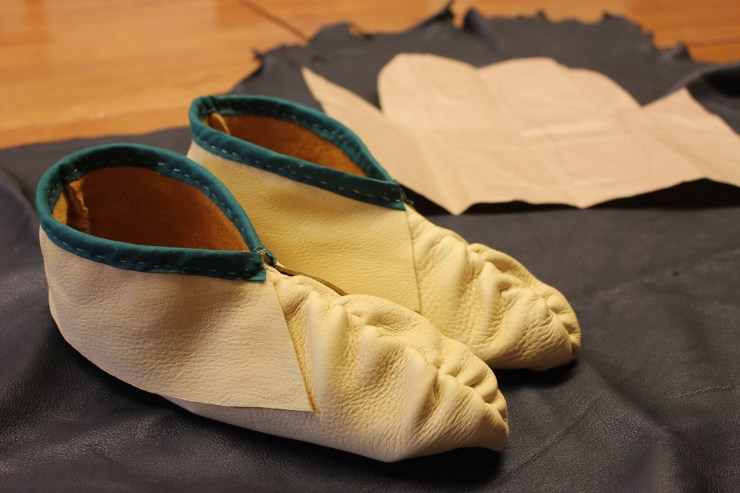
The Institute for American Indian Studies located at 38 Curtis Road in Washington Connecticut is holding a Moccasin Making Workshop on Saturday, March 30, from 11 a.m. to 2 p.m. Participants will not only leave this workshop with a pair of moccasins that they have made, they will also leave with a greater understanding of the cultural significance this footwear has with Native American communities throughout the country.

Across the United States, many Native American tribes created different styles of moccasins to suit their environment. The word moccasin itself comes from the Algonkian language – meaning “shoe.” They can be hard or soft-soled, ornately beaded, or plain, fur-lined, or cuffed. In short, the style of moccasins is as diverse as the many different tribes that they originate from.

Traditionally, in the Eastern Woodlands, including Connecticut, soft-soled moccasins were commonly made out of a single piece of deer, elk or moose hide, and hand-sewn using sinew. A characteristic making it an Eastern Woodlands moccasin is the center seam that is gathered at the toe giving it a pucker shape. Today, moccasin-inspired shoes find their way into modern designs and fashion statements, even as Native culture keepers continue the centuries-old tradition of moccasin making.

This fascinating three-hour workshop, led by Darlene Kascak, Schaghticoke Tribal Nation, and Educational Outreach Ambassador for IAIS promises to be fun and informative. Participants will make a pair of pucker toe style moccasins out of deer hide while listening to the history of moccasins. It is a powerful feeling to make something that you can use in your everyday life, using methods that people have used for generations.

This workshop is recommended for adults and children ages 8 and up due to the dexterity required for sewing. To register for this workshop head to the website http://www.iaismuseum.org, call 860-868-0518, or email events@iaismuseum.org. The cost of this workshop, which includes all materials, is $80 for non-members of the museum and $70 for members.

About The Institute for American Indian Studies

Located on 15 acres of woodland acres the Institute For American Indian Studies preserves and educates through archeology, research, exhibitions, and programs. They have a 16th c. Algonquian Village, Award-Winning Wigwam Escape, and a museum with temporary and permanent displays of authentic artifacts from prehistory to the present allows visitors to foster a new understanding of the world and the history and culture of Native Americans. The Institute for American Indian Studies is located at 38 Curtis Road, in Washington, Connecticut.

Brewing Up April Fun with the Seaport Association @ SpaceCat Brewery

The Norwalk Seaport Association is hosting an event sure to cure what ales you at the SpaceCat Brewery located at 57 Chestnut Street in Norwalk on Monday, April 15 from 6 p.m. to 8 p.m.

Get ready to discover one of the finest craft breweries in Connecticut located right here in Norwalk. This is a night to be remembered with the artful fusion of small-batch brews and hard cider with chef-driven appetizers by Ripkas Beach Café that will complement each sip. SpaceCat brews range from robust IPAs to crisp lagers sure to please the most discerning palate. Part of the fun is to find out how SpaceCat Brewer’s creative touch brings out the best in their diverse range of beer by using the finest grains, hops, and yeasts sustainably. Guests are sure to savor the diverse tapestry of flavors of beer at this event which is a fundraiser for Norwalk’s Sheffield Island Lighthouse.

Spacecat Brewery

At this fun and relaxed event, guests will also enjoy learning about what the Seaport Association has planned for 2024 from the cruise schedule and new renovations at the Lighthouse to the 2024 Norwalk Oyster Festival, and new membership levels. This is the perfect opportunity to find out about how to volunteer for this established non-profit organization that has been around since 1978.

Tickets include two drink vouchers and appetizers, all for a good cause. This event does require advance registration. Tickets are $35 per person and are limited to the first 100 people. Tickets are available online by clicking here or by calling the Seaport Office at 203-838-9444, so get them today so you don’t miss out on the fun. Proceeds from this event will be used for the maintenance of Sheffield Island Lighthouse, Connecticut’s Maritime Icon.

About the Seaport Association
The Seaport Association in Norwalk was founded in 1978 by a group of local citizens who had the vision to revitalize South Norwalk and preserve Norwalk’s maritime heritage. The Seaport Association offers a cultural, environmental, and historical journey to the Norwalk Islands. The Sheffield Island Lighthouse and the Light Keeper’s Cottage provide a unique historical and educational venue that strives to increase awareness, appreciation, and consideration for the environment and how the preservation of historic buildings contributes to our quality of life. The combination of the Lighthouse and the Stewart B. McKinney National Wildlife Refuge offers an unparalleled opportunity to educate children of all ages and adults about the importance of preserving Long Island Sound, our environment, and our maritime heritage.

BraeVal and Rob Roy!

One of the leading men’s outdoor apparel companies, BraeVal, headquartered in Litchfield is well known for its field duty collection of shirts and jackets perfect for outdoor adventure. The foundation of this brand is on form and function in the field, at the office, or on a night in the town. One of the founder’s uncles brought the Rob Roy MacGregor tartan, known today as Buffalo Plaid to America in the 1800s. Today, the neckline and cuffs of every shirt and jacket hand-crafted by BraeVal are lined with Buffalo plaid.

Hero or villain, Rob Roy made an indelible impact on Scottish history for his dastardly deeds of cattle raiding and robbing from the rich and giving to the poor. The legend of Rob Roy is known throughout the world. It has been made popular by books, poems, and movies. There is even a drink created in his honor that dates back to 18th-century New York City.

One of the ways to stay ahead of the pack as a hotelier and restaurateur in NYC in the 1890s was to create a new cocktail sensation and name it after a popular production to draw clients in the door. That said, most folks believe that the birthplace of the Rob Roy cocktail was at New York City’s infamous Waldorf Astoria in 1894. At that time, the Waldorf was located where the Empire State Building now stands. Just down the block from the Waldorf, The Herald Square Theater, was producing Reginald De Koven’s operetta called “Rob Roy,” based on the life of the Scottish folk hero. The bartender at the Waldorf decided to create a new drink, the Rob Roy, to promote the hotel and the opening of this performance. Similar to a Manhattan, the bartender prepared his new Rob Roy creation with scotch instead of rye whiskey. It was a sensation and became popular across the country.

Historian David Wondrich’s recent research led him to conclude that the Rob Roy cocktail was a creation borrowed from Duke’s House in Hoboken, New Jersey. The story goes that a salesman for Usher’s Scotch was invited to join a table of men drinking Manhattan’s at Duke’s and he said he would only join them if a round of drinks were made using his company’s scotch. The bartender, Henry A. Orphal, created the Rob Roy using Usher’s Scotch and it was a hit. Another historian claims that the birthplace of the Rob Roy was the swank Fifth Avenue Hotel, just up the street from the Waldorf.

Regardless of who created this cocktail, it is still popular today. Essentially a Rob Roy is a Manhattan created for a scotch lover. It is less sweet than a Manhattan because the scotch adds a touch of smoke to vermouth’s sweetness, giving this drink balance. It is made by combining scotch with sweet vermouth and a dash of bitters and served either with a Maraschino cherry or a twist of lemon… be decadent, have it with both!

Tequila Tasting to Benefit the Weston History & Culture Center

Start your Cinco de Mayo fun a week early at the Weston History & Culture Center’s Tequila and Mezcal Tasting Party on Saturday, April 27, 2024, from 7pm – 10pm. Tickets are $100 per person and can be purchased at: https://westoncthistory.org.

Ticket includes a variety of tequila and mezcal samples, a tasting talk led by the publisher and editor of Modern Distillery Age, Gregg Glaser, hearty appetizers by Old Mill Market & Cafe, specialty cocktails, beer and wine service. Bid on fabulous silent auction items that include JetBlue tickets, an overnight stay at the Union League Club, and more! All to support the Weston History & Culture Center’s mission to discover, collect, and preserve Weston’s history! Sponsored by Diageo. Attendees must be 21 and over. IDs will be checked at the door.

About the presenter: Gregg Glaser is the Publisher/Editor of Modern Distillery Age, a weekly trade magazine covering the spirits business; Editor in Chief Emeritus of Yankee Brew News, a bimonthly consumer newspaper covering craft beer in the Northeast; and the founder and producer of the Great International Beer, Cider, Mead & Sake Competition, the largest such professional competition on the East Coast. For many years he was a contributing editor for Modern Brewery Age, a trade magazine for the beer business established in 1934, and also a News Editor for All About Beer Magazine, a consumer magazine. Gregg has a degree in Communications with concentrations in Cinema, Television, and Radio from Ithaca College. He studied comparative media in Britain at the BBC, IBA, and Pinewood Film Studios and in Italy at RAI and Cinecittà.

The Weston History & Culture Center is located at 104 Weston Road Weston, CT. Parking and entrance is on High Acre Road. The Weston Historical Society D/B/A The Weston History and Culture Center is a 501(c)(3) non-profit organization. The Center would like to thank its annual sponsors: Fairfield County Bank and KMS Team at Compass as well as the Daniel E. Offutt, III Charitable Trust. For more information and how to donate, visit www.WestonCTHistory.org email: info@westoncthistory.org or call: 203-226-1804.

Tap into a Native American Tradition @ Maple Sugar Festival @ Institute for American Indian Studies March 2

Maple syrup has long enjoyed pride of place on many breakfast tables. The origin of this sweet spring elixir isn’t part of a trendy branding campaign; it is the widely unknown discovery of Native Americans, who have tapped trees for maple syrup since time immemorial. On March 2, the Institute for American Indian Studies in Washington, Connecticut is hosting its annual Maple Sugar Festival, from 11 a.m. to 4 p.m. to celebrate the original legacy of maple syrup.

Indigenous communities in the Northeast and Canada harvested sap from maple trees, boiling down sap and turning it into sugar water and maple syrup long before European contact. Special sugar camps were set up in groves of sugar maple trees and much like this festival, sugaring became a social event. “At the Institute’s Maple Sugar Festival, families will see firsthand how Native Americans harvested this sugary delight, a process that has been passed on through stories and demonstrations from generation to generation,” said Chris Combs, Executive Director of the Institute. “Most importantly, they’ll learn why this process is such an important part of Native American culture,” Combs added.

At this event, IAIS Educator and Ecologist, Susan Scherf will demonstrate various traditional Native American techniques of collecting sap and boiling it down into syrup and sugar. Visitors will learn the importance of maple sugar to the diet of Native Americans as well as its usefulness as an item of trade, and even as medicine.

In keeping with the fun-filled traditions surrounding Native American sugar camps, children are invited to listen to Native American stories and play traditional family-friendly games that will take place throughout the day, adding to this culturally enriching experience. To satiate your taste buds, maple syrup, samples from the Passamaquoddy Tribe of Maine are being offered. And, if you want to bring some of this delicious amber nectar home, head to the Institute’s gift shop which is stocked up with maple syrup made by the Passamaquoddy Tribe.

The cost of participation is $15 for adults, $10 for children, and $5 for members of the Institute. To pre-register head to The Institute for American Indian Studies Museum & Research Center, email events@iaismuseum.org, or call (860) 868-0518.

About The Institute for American Indian Studies
Located on 15 acres of woodland acres the Institute For American Indian Studies preserves and educates through archeology, research, exhibitions, and programs. They have a 16th c. Algonquian Village, Award-Winning Wigwam Escape, and a museum with temporary and permanent displays of authentic artifacts from prehistory to the present allows visitors to foster a new understanding of the world and the history and culture of Native Americans. The Institute for American Indian Studies is located at 38 Curtis Road, in Washington, Connecticut.