Glebe House Museum Announces “Hands-on-History” Summer Experience for Children

This summer, step into another time with the Glebe House Museum’s immersive Hands-on-History program, running from August 4–8, 2025. Now in its 36th year, this beloved program offers children ages 6–12 a unique opportunity to explore life in 18th and 19th century Woodbury through engaging, hands-on activities at our historic site. The full-day program runs Monday through Friday from 9:00 am to 3:00 pm, providing a safe, educational, and exciting environment led by experienced educators.
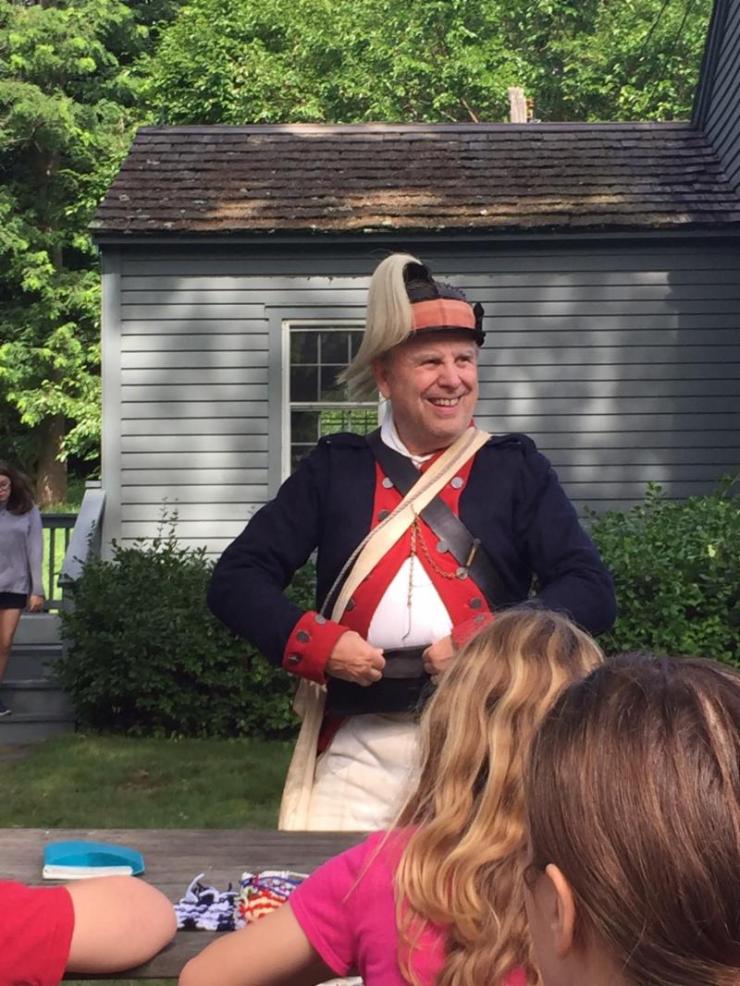
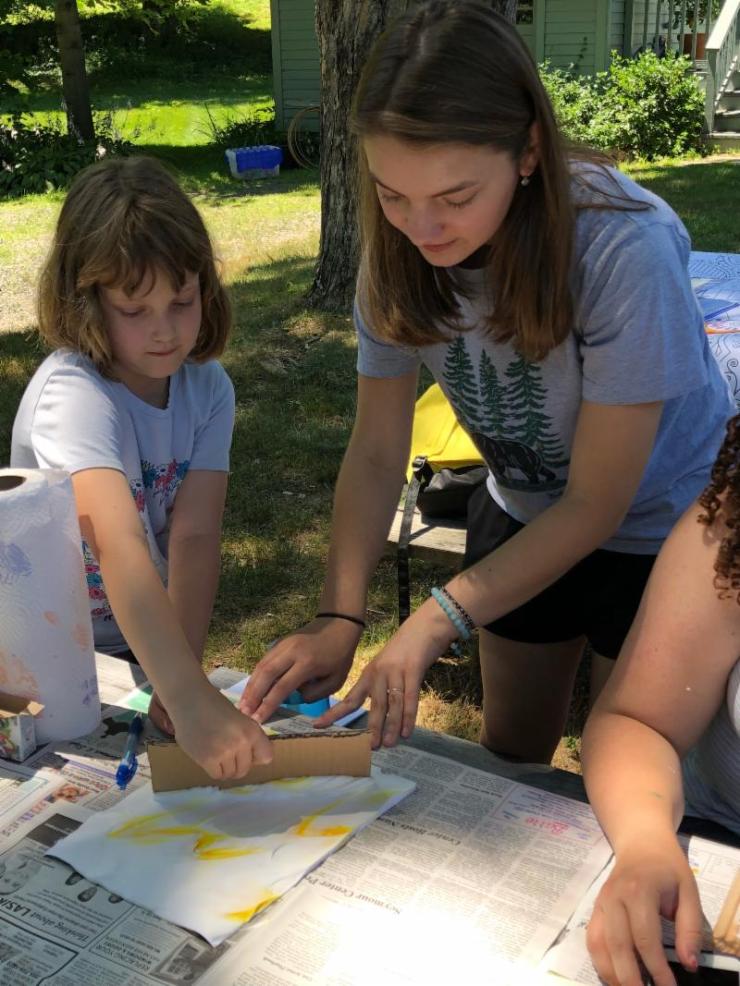
Participants will delight in creating colonial crafts, churning butter, making candles, playing historic games, and exploring the Gertrude Jekyll Garden, while also learning about herbal remedies, kitchen gardens, and nature-inspired art. Designed to spark curiosity and foster a deeper appreciation for history, horticulture, early American trades, and the arts, the program is both enriching and fun.
The program fee at the Glebe House located on Hollow Road in Woodbury, Connecticut is $250 for members and $275 for non-members. Pre-registration is required, and space is limited, so early registration is encouraged. High school students aged 14 and up are invited to apply as Youth Leaders, earning community service hours and a stipend while supporting program operations.
To learn more or to register, visit www.glebehousemuseum.org
, call 203-263-2855, or email office@glebehousemuseum.org. Don’t miss this opportunity to give your child a summer filled with history, discovery, and creativity.

New Exhibit @ Institute for American Indian Studies on Native American Identity

The Institute for American Indian Studies located at 38 Curtis Road in Washington Connecticut has just announced a new temporary traveling exhibit, “Native American Identity Stolen, Sold, and Reclaimed.” This exhibition invites guests of the museum to reflect on the stories that every one of us carries, consciously or not about Native American People. It is an enlightening and thoughtful journey through Native American stereotypes and more. This exhibit will be up through August. The Insitute is participating in the Summer at the Museum Program where one child from Connecticut 18 and under accompanied by an adult gets in free through September 4.


“Native American Identity Stolen, Sold, and Reclaimed,” traces the story of 500 years of Western perceptions that have been placed on Indigenous peoples of North America through family myths and popular culture that have been woven into a mythology depriving Native American People of their cultural, ethnic, and linguistic diversity.

Walking through this exhibit, visitors will see an interesting array of displays that explore misguided representations of Native American People in film, news, print media, literature, art, and commercial products. These displays highlight that Native Americans have a very limited scope of representation. They are most often represented either as historical figures belonging to the past or as stereotypical cliches, such as the Indian Princess, the Savage Indian, or the Noble Savage. Displays highlight tropes in advertising, films, T.V. shows, video games, and more that embrace these stereotypical generalizations, and in doing so, validate them in the way people view Indigenous people.

The final set of displays showcases an alternative narrative through a series of short bios on Native Americans from just about every walk of life and from many different time periods. Their stories and self-expression seek to help visitors break the cycle of misrepresentation in a positive and uplifting manner. As, Dr. Janine Pease concludes in one of the displays, “What’s been lost over many generations, it will take perhaps that many generations to restore…the challenge is to realize the power we do have. It’s not going to take some outside power. It’s power within that will really make the difference.”


About the Institute for American Indian Studies

Located on 15 acres of woodland acres the Institute For American Indian Studies preserves and educates through archeology, research, exhibitions, and programs. They have the 16th c. Algonquian Village, Award-Winning Wigwam Escape, and a museum with temporary and permanent displays of authentic artifacts from prehistory to the present allow visitors to foster a new understanding of the world and the history and culture of Native Americans. The Institute for American Indian Studies is located at 38 Curtis Road, Washington, CT

Free Admission this Summer at Institute for American Indian Studies Funding Provided by a Grant from CT Humanities

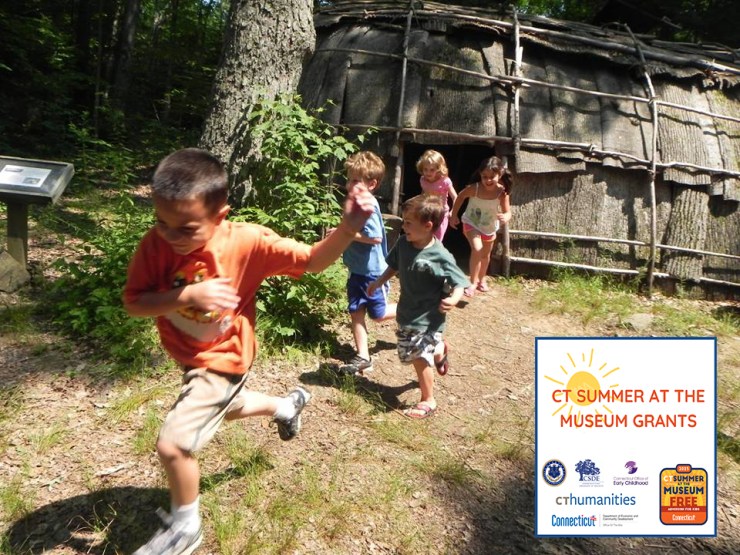
The Institute for American Indian Studies was awarded a grant from CT Humanities for participating in Connecticut Summer at the Museum 2023 initiative. This program invites Connecticut children ages 18 and under plus one accompanying Connecticut resident adult to visit participating museums free of charge from July 1 through September 4, 2023.
CT Humanities is honored to partner with the CT Office of the Arts again to administer the CT Summer at the Museum Initiative in 2023. The Department of Economic and Community Development, in partnership with the Office of the Governor, Connecticut State Department of Education, Office of Early Childhood, and Connecticut Humanities, will deliver these financially accessible summer enrichment opportunities to families and children of all ages using funding provided through ARPA (American Rescue Plan Act).

“The Summer at the Museum program in 2022 was very successful. We were delighted to be able to introduce so many new children to Native American culture and history and can’t wait to do it again this summer. We are very proud to be among the grant recipients,” said Chris Combs, Executive Director of the Institute for American Indian Studies. “This grant program allows us to expand our reach and also helps us achieve our mission of education by introducing children from Connecticut to the 12,000-year-old history of eastern woodland Native Americans,” Combs continued.

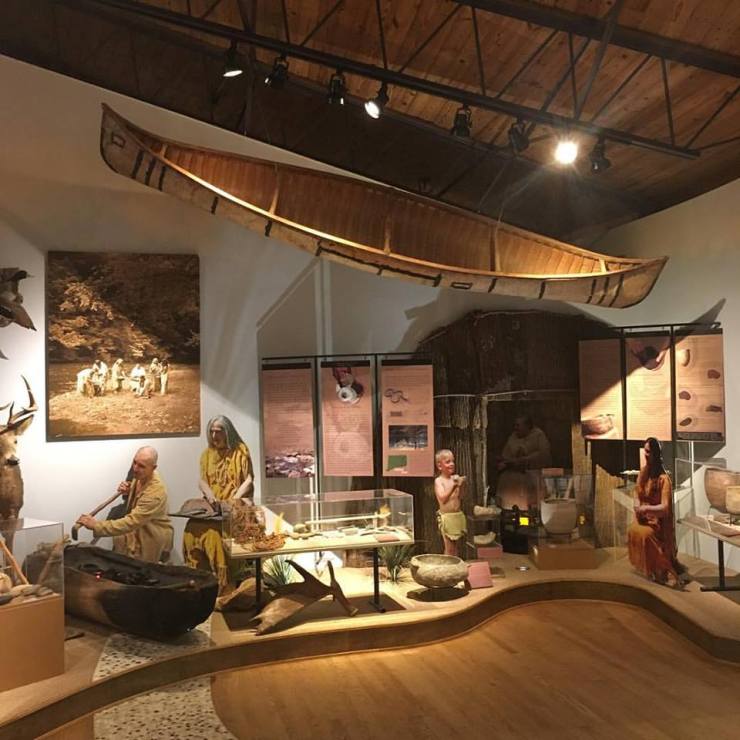
Children are welcome to explore the Institute’s galleries that trace the 12,000-yearlong stories of Connecticut’s Native American peoples from the distant past to their lives and culture today. The core exhibit takes children from a time at the end of the Ice Age to modern times. A second gallery presents artifacts, images, and themes reflecting both early colonial and modern tribal lifestyles across North America. The Children’s Discovery Room is an interactive space that shows children what life would have been like if they were a Native American living 600 years ago. An indoor longhouse is an elongated wigwam that contains both original and replicated artifacts and provides an immersive experience. A highlight of any visit is taking the trail to the replicated Algonkian Village that depicts life common to an Algonkian village of 350 to 1000 years ago.

About The Institute for American Indian Studies
Located on 15 acres of woodland acres the Institute For American Indian Studies preserves and educates through archeology, research, exhibitions, and programs. They have a 16th c. Algonquian Village, Award-Winning Wigwam Escape, and a museum with temporary and permanent displays of authentic artifacts from prehistory to the present allows visitors to foster a new understanding of the world and the history and culture of Native Americans. The Institute for American Indian Studies is located at 38 Curtis Road, in Washington, Connecticut.

About Connecticut Humanities
CT Humanities (CTH) is an independent, nonprofit affiliate of the National Endowment for the Humanities. CTH connects people to the humanities through grants, partnerships, and collaborative programs. State and federal matching funds, community foundations, and gifts from private sources support CTH projects, administration, and program development. Learn more by visiting cthumanities.org.

About Connecticut Office of the Arts
The Connecticut Office of the Arts (COA) is the state agency charged with fostering the health of Connecticut’s creative economy. The State of Connecticut as well as the National Endowment fund part of the state’s Department of Economic and Community Development, the COA for the Arts.