Brewing Up April Fun with the Seaport Association @ SpaceCat Brewery

The Norwalk Seaport Association is hosting an event sure to cure what ales you at the SpaceCat Brewery located at 57 Chestnut Street in Norwalk on Monday, April 15 from 6 p.m. to 8 p.m.

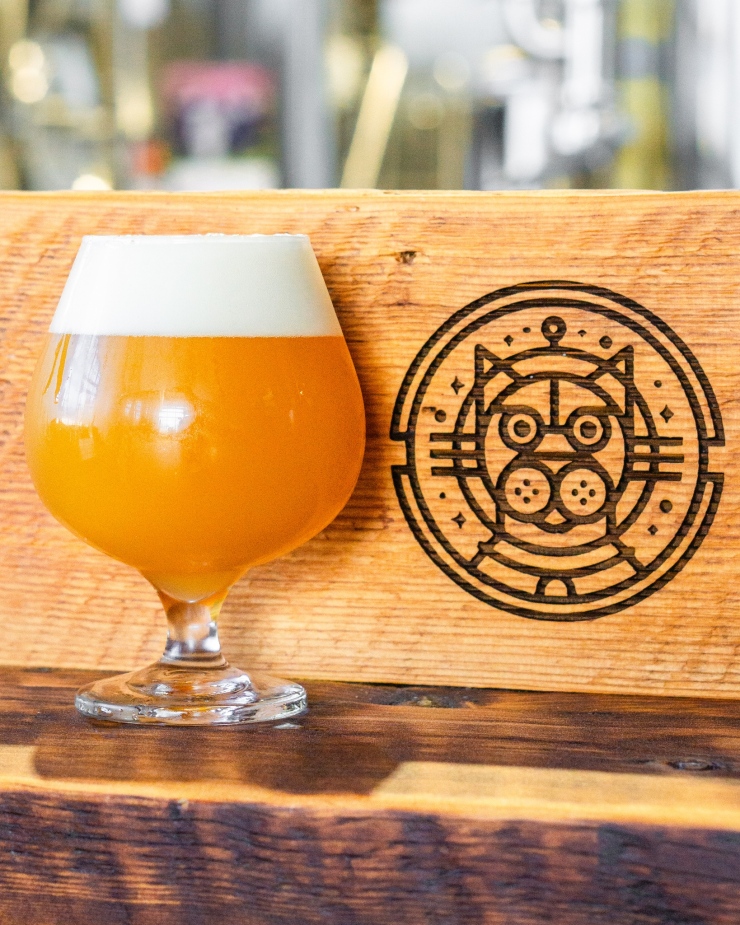
Get ready to discover one of the finest craft breweries in Connecticut located right here in Norwalk. This is a night to be remembered with the artful fusion of small-batch brews and hard cider with chef-driven appetizers by Ripkas Beach Café that will complement each sip. SpaceCat brews range from robust IPAs to crisp lagers sure to please the most discerning palate. Part of the fun is to find out how SpaceCat Brewer’s creative touch brings out the best in their diverse range of beer by using the finest grains, hops, and yeasts sustainably. Guests are sure to savor the diverse tapestry of flavors of beer at this event which is a fundraiser for Norwalk’s Sheffield Island Lighthouse.
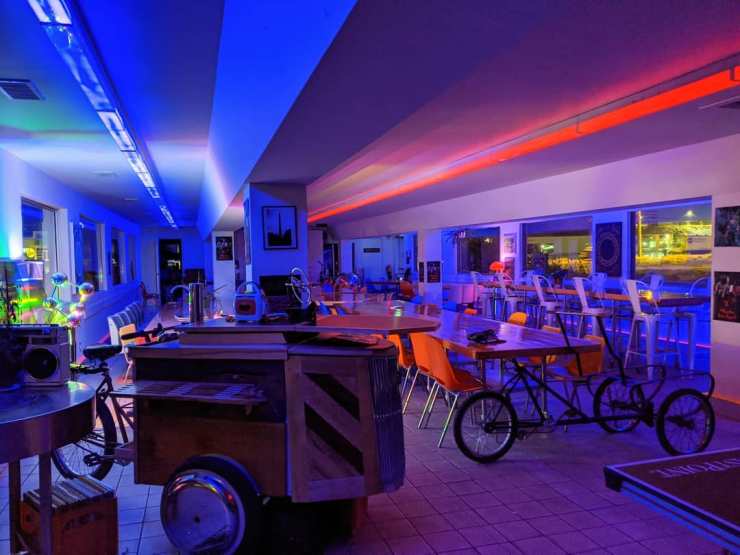
Spacecat Brewery

At this fun and relaxed event, guests will also enjoy learning about what the Seaport Association has planned for 2024 from the cruise schedule and new renovations at the Lighthouse to the 2024 Norwalk Oyster Festival, and new membership levels. This is the perfect opportunity to find out about how to volunteer for this established non-profit organization that has been around since 1978.
Tickets include two drink vouchers and appetizers, all for a good cause. This event does require advance registration. Tickets are $35 per person and are limited to the first 100 people. Tickets are available online by clicking here or by calling the Seaport Office at 203-838-9444, so get them today so you don’t miss out on the fun. Proceeds from this event will be used for the maintenance of Sheffield Island Lighthouse, Connecticut’s Maritime Icon.

About the Seaport Association
The Seaport Association in Norwalk was founded in 1978 by a group of local citizens who had the vision to revitalize South Norwalk and preserve Norwalk’s maritime heritage. The Seaport Association offers a cultural, environmental, and historical journey to the Norwalk Islands. The Sheffield Island Lighthouse and the Light Keeper’s Cottage provide a unique historical and educational venue that strives to increase awareness, appreciation, and consideration for the environment and how the preservation of historic buildings contributes to our quality of life. The combination of the Lighthouse and the Stewart B. McKinney National Wildlife Refuge offers an unparalleled opportunity to educate children of all ages and adults about the importance of preserving Long Island Sound, our environment, and our maritime heritage.

The Amistad Comes to the Norwalk Oyster Festival Sept. 8,9,10

In addition to three family fun-filled days of entertainment at the Norwalk Oyster Festival like the WOW Water Circus and Canines in the Clouds, food, arts and crafts, and riveting performances by Gary LeVox, lead singer of Rascal Flatts, Mullett the nation’s best 80s band, and John Cafferty and the Beaver Brown Band, the historic Amistad will be docked in Norwalk Harbor adjacent to Veterans Park where the festival is taking place. All ticketed festgoers are invited to tour this amazing vessel for free at this year’s Oyster Festival. The enslaved African captives aboard the Amistad initiated the most famous slave ship rebellion in American history.

Illegally Sold into Slavery

The story of the Amistad and Connecticut are historically entwined in an extraordinary way. It all began in February 1839, when Portuguese slave hunters abducted hundreds of Africans from Mendeland, in present-day Sierra Leone, and transported them to Cuba, then a Spanish colony. At that time, the importation of enslaved people and the transatlantic slave trade were illegal in the United States and in Great Britain. Unfortunately, Havana, Cuba remained an important trading hub supplying plantations in the Caribbean with enslaved people.

When the slave ship, the Tecora reached Cuba, two plantation owners, Pedro Montes and Jose Ruiz purchased 53 of the transported Africans as enslaved workers. Soon after their purchase, they set sail on the Amistad, for their plantation in Puerto Rico. Ironically, the name of the vessel, Amistad means “Friendship.”

Color Engraving and Frontispiece from John Warner Barber (1840). A History of the Amistad Captives. New Haven, Connecticut: E.L. and J.W. Barber, Hitchcock & Stafford, Printers.

Uprising at Sea

A few days into the journey Joseph Cinque, one of the enslaved Africans managed to get out of the shackles and helped other captives to get out of theirs. Armed with knives, they seized control of the Amistad, killing the captain and the cook.

After seizing control, they ordered Montes and Ruiz to turn the ship back to Africa. Secretly, at night, Montes and Ruiz changed the course of the vessel, in hopes of being rescued, and sailed it through the Caribbean and up the eastern coast of the United States.

The Amistad docked in Long Island to get provisions and was spotted by the U.S. brig Washington on August 26, 1839. The Amistad was seized by the Naval Officers on the Washington and the enslaved were put back in chains and brought to Connecticut, which was still a slave state at that time. The naval officers claimed salvage rights to the ship and its enslaved cargo.

Contemporary painting of the sailing vessel La Amistad off Culloden Point, Long Island, New York, on 26 August 1839; on the left the USS Washington of the US Navy

Battle in Court

Cinque and other Africans who helped him with the revolt on the Amistad were imprisoned in New Haven and charged with murder and piracy. With the help of influential abolitionists, the charges were dropped. However, a legal battle ensued regarding the legal status of the enslaved captives and property claims between the naval officers of the boat, the Washington, the Spanish government, and Montes and Ruiz.

The President of the United States at the time, Martin Van Buren wanted to extradite the Africans to Cuba to pacify Spain. The defense team for the Africans enlisted a professor who studied languages from Yale University to determine what language the Africans spoke so that they could tell their story. On the waterfront of New York, they found a man who spoke their language and brought him to court to interpret their story for the first time.

In January 1840, a judge in Hartford, Connecticut, in defiance of President Van Buren, who thought the court would rule in his favor, ruled that the Africans were not Spanish enslaved peoples, but rather, that they were illegally captured and should be returned to Africa, not to Cuba. This decision was appealed and eventually was heard in the Supreme Court. The defense team enlisted the help of former President, John Quincy Adams who had successfully argued cases before the Supreme Court and had a strong anti-slavery voice in Congress. Adams argued that these enslaved Africans had the right to fight for their freedom aboard the Amistad, in accordance with the Declaration of Independence, and accused Van Buren of abusing his executive power.

Sketch of an Amistad prisoner, drawn as they awaited trial in New Haven.

The Outcome

On March 9, 1841, the Supreme Court ruled 7 to 1 that the enslaved Africans did have the right to fight for their freedom aboard the Amistad, and that the court deemed them to be free. However, the U.S. government did not allocate funds to repatriate the Africans to their homeland and, awarded salvage rights to the naval officers on the Washington, not to the Spanish or the Africans.

Many abolitionists supported these freed Africans and raised sufficient funds to pay for their return trip to their homeland in Africa. Although some of the Africans died at sea and others died in prison awaiting trial, in November of 1841, 43 surviving Africans boarded the vessel called The Gentleman along with five Christian missionaries in New York and headed for home. Upon reaching their homeland all but four children returned to their families and vanished from historical records.

For tickets to the Norwalk Oyster Festival http://www.seaport.org