Lacrosse – More Than Just A Game New Exhibition @ Institute for American Indian Studies

Lacrosse was originally played by eastern Native Americans and Canada’s First People. The Institute for American Indian Studies located at 38 Curtis Road in Washington Connecticut has just opened a fascinating special exhibition, “More Than a Game: The Story of Lacrosse,” that will be on view at the Institute through August 2022.

This well-researched exhibition touches on a variety of subjects, many of which are unexpected in light of the game many of us know today. Some of the most interesting aspects of the exhibition relate to the spiritual importance of lacrosse and how it connects to creation stories, the way they settle differences, and its continued social and communal significance.

This exhibition also explores the appropriation of lacrosse by Euro-Americans and Canadians. In the 1860’s Dr. George Beers of Canada wrote the first standardized rulebook for lacrosse in an attempt to “civilize” the game. By the 1890s, Native American communities were banned from participating in national competitions. This part of the exhibition includes documentation in the form of newspaper clippings and images that depict the history of lacrosse in popular culture and how it was interpreted.

More Than a Game also highlights how traditional lacrosse sticks evolved in North America. Several lacrosse sticks on display showcase the three major styles of Native American lacrosse and demonstrate the different regional interpretations of the game.

This exhibit touches on the relationship between lacrosse and Native communities today. It delves into the saga of the Iroquois Nationals, the only Native American athletic team
permitted to compete in international competitions. Don’t miss the exhibition’s video that shows Native Americans making wooden sticks in the traditional way and relating why it is important to the future of their culture. This exhibit can be summed up by a quote by Rex Lyons, Onondaga, “Lacrosse is part of the story of our creation, of our identity, of who we are. So when we play the game, we always say that there’s a simultaneous game going on in the Sky World and our ancestors are playing with us.”

The Institute for American Indian Studies is open Wednesday – Sunday 11 a.m. – 4 p.m. and admission is $12 for adults, $8 for children 3-12, $10 for seniors, and members are free.

About Institute for American Indian Studies
Located on 15 acres of woodland acres the Institute For American Indian Studies preserves and educates through archeology, research, exhibitions, and programs. They have the 16th c. Algonquian Village, Award-Winning Wigwam Escape, and a museum with temporary and permanent displays of authentic artifacts from prehistory to the present that allows visitors to foster a new understanding of the world and the history and culture of Native Americans. The Institute for American Indian Studies is located on 38 Curtis Road, Washington, CT.

Learn How to Make Traditional Native American Bark Basket Workshop At Institute for American Indian Studies

Native Americans have created baskets for centuries. In fact, archeologists believe that basket-making is one of the oldest known crafts in the world. If you have always wanted to learn how to create a bark basket of your own, join this in-person workshop conducted by Jennifer Lee of Pequot and Narragansett ancestry on Sunday, June 5 at the Institute of American Indian Studies located on 38 Curtis Road in Washington, Connecticut. This four-hour workshop begins at 11 a.m. and has a break for lunch.

Join artist and educator Jennifer of Lee, Narragansett descent

About Native American Baskets

Baskets have been an integral part of Native American material culture for centuries. Native American baskets range from very simple to very elaborate. Often the art of basket making was passed down from generation to generation among Native American Indian mothers to their daughters. It is a skill that takes the place of pride among many Indigenous people today.

Bark baskets made by Eastern Woodland Indians were used for cooking, gathering berries, hauling water, storing food, as cradleboards, and even for burying the dead. Most often baskets were made from pine, ash, or birch bark that was harvested in the spring when the bark was most pliable. The bark was then folded into the desired shape and sewn with spruce root and rimmed with arrowwood or other natural materials.

White Pine Bark mokok with collar (4 ½H x 7W x 3D)

About the Workshop

Jennifer Lee is an 18th-century re-enactor and material culture presenter. Bark basket making is one of the programs that she offers. “I want my programs to dispel old stereotypes and increase awareness of present-day Native Americans,” says Lee.

Participants in this workshop will learn about the lore and tradition of basket making from Lee while creating their very own bark basket. A highlight is learning about how baskets were used in everyday life and their role in Native American communities today. Lee will guide participants through the process of creating a bark basket using white pine bark, spruce root, and willow. During the scheduled lunch break (please bring your own snack and non-alcoholic beverage) participants can wander through the museum for inspiration and brainstorm with others for ideas.

White Pine Bark mokok with collar (7H x 4W x 3D).

Participants can choose from three different basket designs that include a white pine bark wall pocket, and two sizes of a white pine bark mokok with collar. Whatever basket you choose to make, it is something unique to treasure at the end of the day.

Space is limited for this workshop that is expected to sell out, so sign up early. To participate, please register and pre-pay by June 2. The cost of participation, including all materials and tools, is $75 for members of the Institute and $85 for non-members. To register click here. If you have questions call (860) 868-0518 or email events@iaismuseum.org.

White Pine bark wall pocket, curved bottom (7H x 7W x 4D)

About the Institute for American Indian Studies

Located on 15 acres of woodland acres the Institute For American Indian Studies preserves and educates through archeology, research, exhibitions, and programs. They have a 16th c. Algonquian Village, Award-Winning Wigwam Escape, and a museum with temporary and permanent displays of authentic artifacts from prehistory to the present that allows visitors to foster a new understanding of the world and the history and culture of Native Americans. The Institute for American Indian Studies is located on 38 Curtis Road, Washington, CT.

Blocks of Hope and Healing Participate in a Community Quilting Project Institute for American Indian Studies

The Institute for American Indian Studies has just announced a new quilting project for the month of May called “Blocks of Hope and Healing.” This community-quilting project is a way to support and bring attention to the MMIWG2S epidemic. MMIWG2S is an abbreviation for Missing and Murdered Indigenous Women, Girls, and 2-Spirit People, respectively.

Quilting serves as a testament to heritage and history, with each piece offering encouragement and solace. Quilts connect us to the world around us and are often symbolic of hope and comfort by providing physical and emotional warmth. The concept of this community-made quilt will be used to honor and remember the plight of missing and murdered Indigenous women, girls, and 2- Spirit People.

The Institute is inviting the public to become part of this important global movement by participating in two Quilt Workshops on Saturday, May 14, and Sunday, May 22 @ 11 a.m. that will be conducted by Education Director, Director Darlene Kascak (Schaghticoke Tribal Nation). If you don’t have much experience sewing, no worries, Kascak, will be there to walk you through the process. If you don’t complete your quilt package during the workshop, you can complete it in the comfort of your own home as long as you return it to the Institute by Wednesday, June 1, 2022.

All participants in this project are asked to make a $25 donation to the National Indigenous Women’s Rights Council (NIWRC). The Institute will give all participants a quilt block packet, complete with all necessary materials and instructions for creating your section of the community quilt. Please call (860) 868-0518 or email events@iaismuseum.org to reserve your section on this community quilt, sign up for one of the quilting workshops, or if you have any questions about this initiative.
Donations to NIWRC can be made at the following link: https://www.niwrc.org/donate.

About MMIWG2S
MMIWG2S refers to initiatives intended to address the ongoing violence and continued genocide of women, girls, and Two-Spirits. Each year thousands of Native American women and children go missing or are found murdered in the United States and Canada. Gaps in data make the true scope difficult to estimate, but some sources suggest that the total number of cases may approach 10,000.

About The Institute for American Indian Studies
Located on 15 acres of woodland acres the Institute For American Indian Studies preserves and educates through archeology, research, exhibitions, and programs. They have a 16th c. Algonquian Village, Award-Winning Wigwam Escape, and a museum with temporary and permanent displays of authentic artifacts from prehistory to the present that allows visitors to foster a new understanding of the world and the history and culture of Native Americans. The Institute for American Indian Studies is located on 38 Curtis Road, Washington, CT.

Drum Making Workshop @ the Institute for American Indian Studies

Rhythm and sound are important to just about every culture around the world. Throughout the Americas, indigenous peoples have been using drums as part of their culture for thousands of years.

If you are asked to think about Native American music, there is a good chance you will think of the sound of drums, but did you know that the drum is considered to be a living and breathing entity to Native peoples and symbolize a strong relationship with the creator?

On Sunday, March 20 the Institute for American Indian Studies, located at 38 Curtis Road in Washington, Connecticut is hosting an in-person drum-making workshop, with sessions at 11 a.m. and at 2 p.m.

The highlight of this workshop is to learn how to make your very own rawhide drum. The drums made in this workshop will be 14- inches in diameter and constructed of a traditionally used material, elk rawhide. Each drum will come with a drumstick. While creating a drum for their own personal use, participants will learn about their cultural significance, and how they remain a vibrant part of today’s indigenous cultures in the Americas.

Space is limited for this workshop and pre-payment and pre-registration is required. To register online, please visit the Museum website to register via Eventbrite. If you have questions about the workshop, please call 860-868-0518 or email events@iaismuseum.org. The price for this workshop is $90 for IAIS members and $110 for non-members.

Take a Harbor Cruise on the 4th of July Week and Weekend with the Seaport Association

The Sheffield Island Lighthouse is an iconic symbol of Connecticut’s maritime history.  This historic lighthouse and light keeper’s cottage is located at the southern end of Norwalk’s necklace of islands on the west entrance of the Norwalk River in Long Island Sound. One of the best ways to kick of the season is to take a cruise on the C.J. Toth on Wednesday, July 1, Thursday, July 2, and Friday, July 3 at 11:30 a.m. and 2 p.m. There will also be a sunset cruise on all three days beginning at 6:30 p.m.  Tickets for this exciting excursion must be purchased in advance by clicking here.

And, if you are looking to start a summer tradition or renew one, reserve your tickets for a fabulous 4th of July weekend ride with the Seaport Association this summer!  The boat will be going out on Saturday, July 4, and Sunday, July 5 at 12 noon, and at 3 p.m. and the sunset cruise will depart on both days at 6:30 p.m. For tickets click here.

This year the Seaport cruise will take you on a breathtaking tour of the outer Norwalk Harbor where passengers will get a birds-eye view of this active and fascinating place, from the water! The cruise will then take visitors on a cruise that will take them up close to three historic lighthouses that have protected the harbor for centuries. Have your camera at the ready for unique water views of Green’s Ledge and Pecks Ledge, two of only 33 remaining spark plug lighthouses in the United States. The real highlight of this cruise is to see Sheffield Island Lighthouse, Connecticut’s iconic maritime treasure up close and from the water. Sheffield Lighthouse has been a beacon to mariners since 1868 and to see it from the water, like mariners of old is a very special experience. 

If you can’t make it on this cruise, no worries, the Seaport Association is running two daily cruises and one sunset cruise Wednesday – Sunday through August. All tickets must be purchased online in advance and all passengers must follow the Seaport’s COVID protocols and must wear a mask. For the protocols click here.

Institute for American Indian Studies Modified Summer Camp June 26-August 7, 2020

We all know that this summer will be different. We also know that it is important for children to get out of the house and be engaged socially, mentally, and safely. With that in mind, the Institute for American Indian Studies located on 38 Curtis Road in Washington, Connecticut announced that they are opening a modified summer camp program of weekly themed outdoor fun and education that follows strict state guidelines. The Summer Camp is available one week at a time, Monday- Friday, 9 a.m. – 3 p.m., from June 26 through August 7. The programs are geared for children ages 6-13. “We decided to offer our camp programs because we feel it can be a gateway back to normalcy for children. We expect these experiences will help our young campers face new challenges with resilience,” Chris Combs, Executive Director said.

There are so many benefits to sending children to summer camp, especially this summer. It gives children the chance to develop confidence and get unplugged; it allows them to make new friends, experience the great outdoors, and to explore new interests while learning at the same time. “This year, parents can definitely expect to see safety as the first and foremost focus at our camp, Chris Combs, Executive Director said. “ For all of our staff, the health and safety of our campers is paramount. All camp activities will be held outdoors and there will be regular sanitizing, social distancing, and smaller group activities as well as staggered arrivals and pick-ups, all in accordance with guidance issued by various state and federal agencies,” Combs continued. For more information, registration and protocols click here

Camp Director Gabriel Benjamin and Assistant Camp Director Susan Scherf have developed a range of exciting activities and projects that follow current health guidelines. Each week, campers will join experienced educators on a journey through one of several themes that relate to the museum’s core mission, such as ecology, archaeology, and traditional skills. While hiking in the woods, playing games, and creating crafts, campers will practice survival skills, teamwork, and problem-solvinghttp://www.iaismuseum.org as they develop confidence while experiencing the great outdoors, and making new friends. Besides the memories that will last a lifetime, campers will learn valuable skills and connect with a culture that has more than 10,000 years of history in this area.

Summer Camp Themes
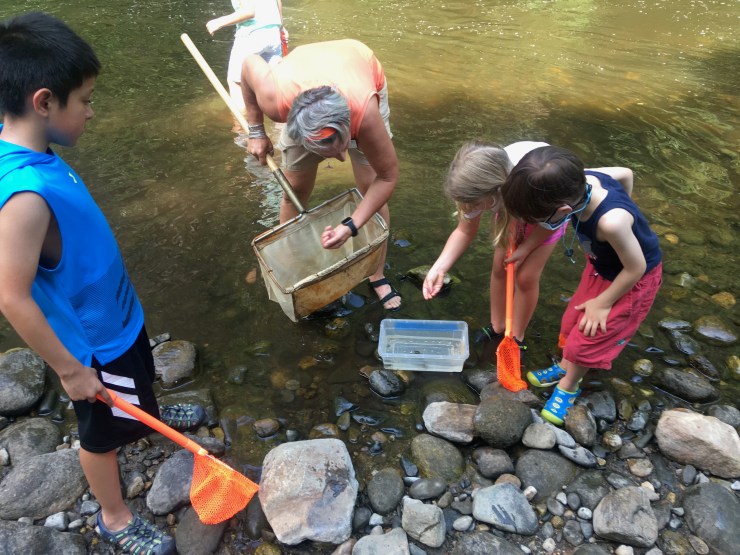
Weekly camps will have different experiences. On June 29- July 3 the theme is “Wonderful Wildlife” and will include exploring the forests and rivers of the Eastern Woodlands. The camp running from July 6- July 10 will focus on the gifts of the natural world and how Native Americans used their understanding of the natural world to thrive for thousands of years right here in Connecticut.

On July 13 to July 17, children will learn outdoor survival skills similar to those used for centuries by Native Americans. And, if your children love science and technology sign them up for the week of July 20-24 to learn how people of the past figured out creative ways to move around, construct shelter, find food, and make tools.”

For budding archeologists and kids that are intrigued by puzzles, don’t miss the July 27 – July 31 camp where they will learn how to dig and discover.

The last camp of our 2020 summer season, from August 3-7 is for kids that like a challenge – and don’t they all! If your kids want to be amazed, sign them up, and challenge them to put their skills to test! They will come away enriched and confident.

For complete registration information, visit http://www.iaismuseum.org.

About The Institute for American Indian Studies
L
ocated on 15 acres of woodland acres the Institute For American Indian Studies preserves and educates through archeology, research, exhibitions, and programs. They have the 16th c. Algonquian Village, Award-Winning Wigwam Escape, and a museum with temporary and permanent displays of authentic artifacts from prehistory to the present that allows visitors to foster a new understanding of the world and the history and culture of Native Americans. The Institute for American Indian Studies is located on 38 Curtis Road, Washington, CT.