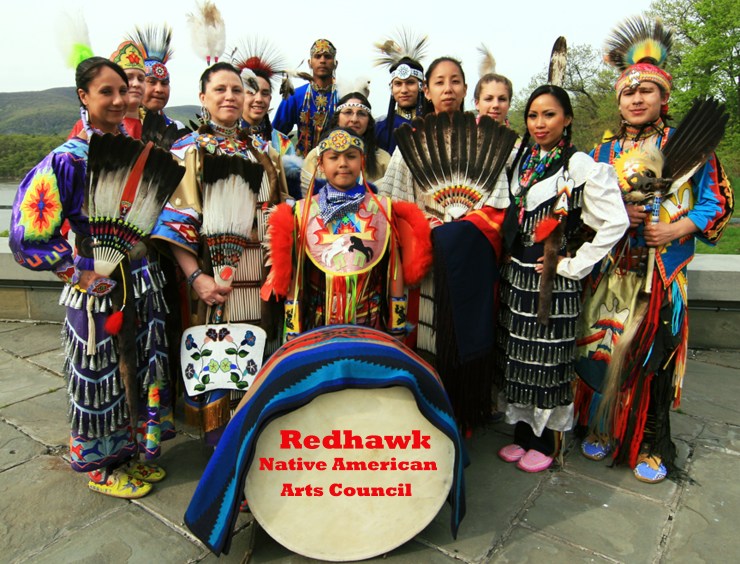
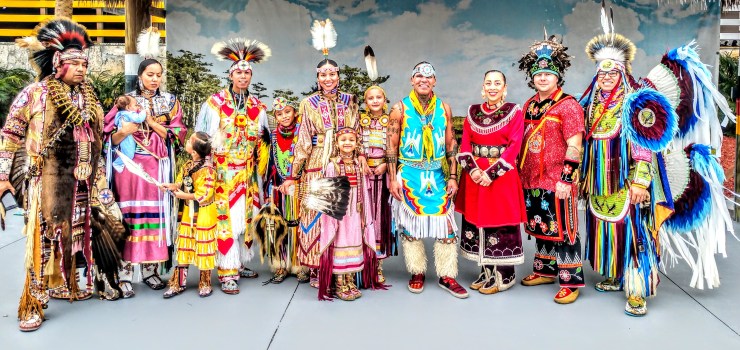
Warm Up to Winter – with Virtual Programs @ Institute for American Indian Studies

Whatever the weather is like outdoors, learning something new indoors can be the perfect way to spend a cold winter afternoon. With that in mind, the Institute for American Indian Studies has developed a new Saturday series of virtual programs that are intriguing and ideal for those seeking indoor diversions this winter.

This presentation is the third in the Institute’s Annual Native American-Archaeology Roundtable series. This ongoing series seeks to explore ecological ties, past and present, through the sharing of new technologies, new findings, and new analysis that helps bring Indigenous communities into greater focus.

On Saturday, January 27 at 2 p.m. the topic will focus on “Lessons in Food Sovereignty from White Tailed Deer and Wampum in 17th century New England.” Participants will join Elic M. Weitzel, a Ph.D. candidate in anthropology from the University of Connecticut along with the Institute’s Staff for this virtual presentation. Weitzel specializes in human ecology and anthropology and will discuss how recent analysis of deer and quahog remains from archaeological sites in Southern New England suggest that European colonialism and capitalism put unprecedented pressure on these species even though fewer people lived in this region at the time. The discussion will highlight that overexploitation wasn’t a demographic problem and that pre-colonial Indigenous methods of gathering the bounty of the land appear to have been more sustainable. According to Mr. Weitzel, these results corroborate traditional and Indigenous ecological knowledge asserting that food sovereignty can permit long-term sustainable resource use, a concept that is very important around the world today.
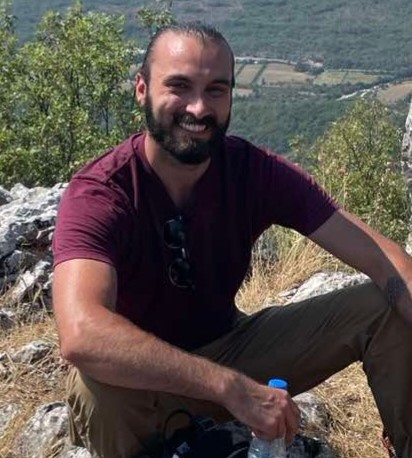
To participate in this program and to receive the Zoom link please register online at https://www.iaismuseum.org or call 860-868-0518 or email events@isismuseum.org. The price of participation is free for members of IAIS and LHAC members and $10 for non-members.

Please follow us on Facebook, Instagram, and our website for dates and times of further talks in this series in the coming months.

About the Institute for American Indian Studies
Located on 15 acres of woodland acres the Institute For American Indian Studies preserves and educates through archeology, research, exhibitions, and programs. They have the 16th c. Algonquian Village, Award-Winning Wigwam Escape, and a museum with temporary and permanent displays of authentic artifacts from prehistory to the present allows visitors to foster a new understanding of the world and the history and culture of Native Americans. The Institute for American Indian Studies is located at 38 Curtis Road, Washington, CT.

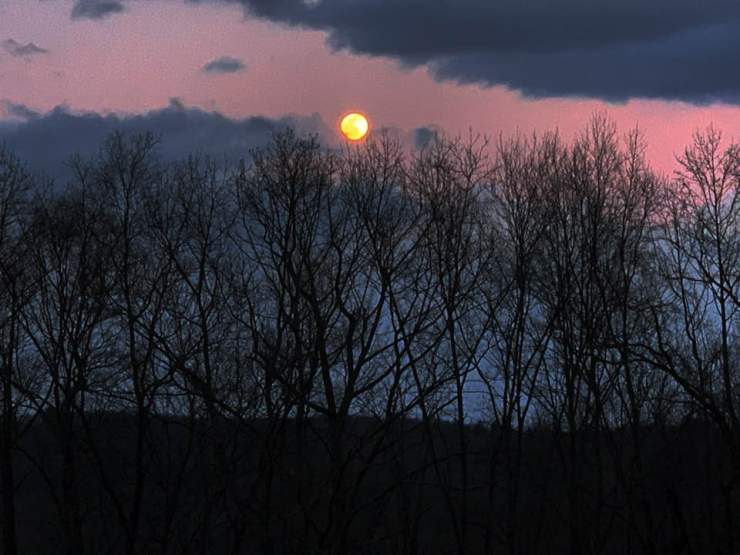
Full Moon Walk with Institute for American Indian Studies December 26 @ 6

If you are looking for a fun and refreshing way to walk off some of the holiday goodies you have been eating then join the staff of the Institute for American Indian Studies for a Full Moon Walk on Tuesday, December 26 at 6 p.m. This year, even the moon is in a festive mood and will be fully illuminated on December 25th, 26th, and 27th. This full moon after the Winter Solstice takes the highest and longest path along the night sky. One of the names of the December full moon is “Long Night Moon” because it shines above the horizon longer than most full moons, making this walk extra special.

As participants walk along the beautifully wooded trails on the grounds of the museum under the glistening full moon they will learn what names Native Americans gave the December full moon and what it meant to them. Participants will learn how different Native American peoples traditionally used the monthly cycles of the moon and nature’s corresponding signs to track the seasons.

A highlight of this experience is to witness and celebrate firsthand the beauty of December’s full moon, as Native American communities have done for centuries. For example, the most common name for the December Moon, attributed to the Mohawks, is the Cold Moon which perfectly describes the cold days and nights during this time of year. The woodland walk ends at the newly restored 16th-century Algonkian village where a warm fire, hot chocolate, and stories will greet participants.

Inside the wigwam

Please dress appropriately for the weather, bring a flashlight, and wear sturdy footwear. If there are weather-related concerns on the day of the program, please contact the museum at 860-868-0518. The price of participation is $5 for IAIS Members and $10 for Non-Members. To register click here https://iaismuseum.charityproud.org/EventRegistration/Index/14300

About The Institute for American Indian Studies

Located on 15 acres of woodland acres, the Institute For American Indian Studies preserves and educates through archeology, research, exhibitions, and programs. They have the 16th c. Algonquian Village, Award-Winning Wigwam Escape, and a museum with temporary and permanent displays of authentic artifacts from prehistory to the present allows visitors to foster a new understanding of the world and the history and culture of Native Americans. The Institute for American Indian Studies is located at 38 Curtis Road, Washington, CT.
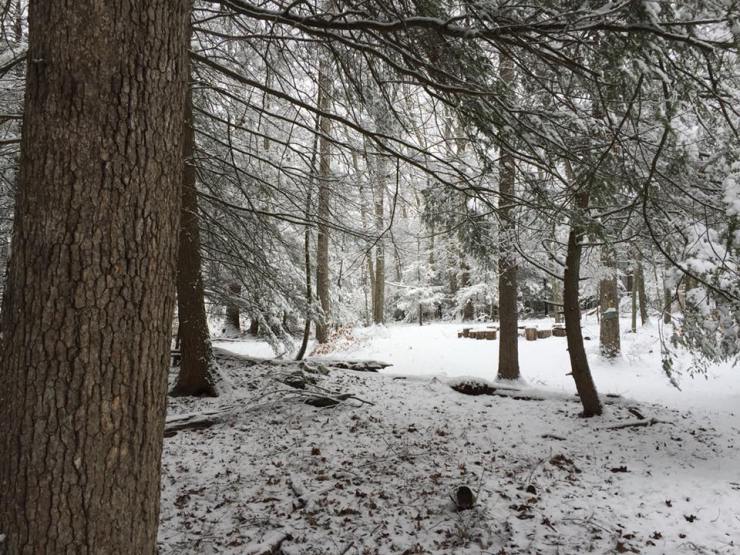
Holiday Market Features Indigenous Artists & @ Institute for American Indian Studies November 25 & 26, December 2 & 3, 9 & 10

Once again this year, the Institute for American Indian Studies located at 38 Curtis Road in Washington is hosting a one-of-a-kind holiday shopping experience that celebrates Native American culture. What makes this Holiday Market unique is that it offers both deeply traditional crafts and more contemporary artistic expressions rooted in Native American cultural experience. Artists represented here are some of the finest working in the area today. It is a celebration of Native American diversity and inspiration.

The Holiday Market throughout the Institute’s impressive exhibition galleries takes place on Saturday, November 25 and Sunday, November 26, and Saturday, December 2, and Sunday, December 3. The final weekend for the holiday market is on Saturday, December 9, and Sunday, December 10. The market is free and open to the public from 11 a.m. to 4 p.m. each day. This is one of the few Holiday Markets that showcases only Native American-inspired artwork.

There are so many gifts to choose from including Native American jewelry, paintings, photography, apparel, and candles, to decorative gourds, pottery, rattles, flutes and more at a variety of price points. The chance to talk with the artists who have created these one-of-a-kind objects and to learn about the culture that inspired them makes your gift purchase even more meaningful.

For music lovers, musicians, and collectors, the magical-sounding authentic Woodland Native American flutes handcrafted by Allen Madahbee are truly unique. Madahbee is an Anishinaabe, born on Manitoulin Island, and is a registered Native American in Canada and the United States. In addition to the one-of-a-kind flutes, Madahbee is offering handmade beaded moccasins, woodcarvings, rock sculptures, and original paintings inspired by his ancestors and experiences.

Another vendor, Kim Lewis from Native Visions will be offering an astounding array of Native American Art from Oklahoma and the Southwest including a fine selection of original paintings and prints, Zuni Fetishes, silver jewelry, pottery by Mel Cornshucker, plus Hopi, and Navajo Kachinas.

A long-time favorite of the Holiday Market is Primitive Technologies, a nationally known small business that has worked with everyone from filmmakers to museum curators to recreate the material culture of prehistoric Native American life. They offer exquisite wood-fired replica pottery, hand-constructed from local river clay, hand-carved flint arrowheads and flint animal necklaces, carved stone art, traditional stone tools, containers made out of natural materials, unusual jewelry, and decorative gourds.

Jeanne Morningstar Kent, a recognized Abenaki artist and enrolled member of the Nulhegan Band, Coosuk-Abenaki of Vermont will be offering her artfully crafted decorative gourds in all sizes. Kent’s work is housed in many museum collections including the Smithsonian’s National Museum of American Indian Studies, Lake Champlain Maritime Museum, Roger Williams University, Chimney Point Museum, and many more. What makes these gourds unusual is that they utilize traditional Abenaki and Wabanaki designs.

Brandy Sawyer Emmans of Cherokee descent and owner of bthunder will once again be at the holiday market. Runway model for the Sky Eagle Collection, Native American educator, and advocate for MMIW (Missing, Murdered Indigenous Women), which offers an evocative selection of contemporary Native American-inspired art, jewelry, apparel, candles, and accessories.

Not to be missed is Eva Newell, an enrolled citizen of the Pokanoket Tribe, Pokanoket Nation in Rhode Island. Eva is a multi-talented artist who offers a range of artwork including beadwork, coil baskets, paintings, and glass mosaic storyteller vases. When she is not vending, Eva is an exhibit artist and craft instructor who has worked with institutions throughout New England.”Newell’s beadwork and baskets are also extraordinary. Eva will be participating during the December 9th and 10th market only.

The Museum’s Gift Shop will be open and brimming with gifts large and small in many price ranges. Here you will find a distinctive collection of Native American jewelry, including wampum jewelry crafted by Annawon Weeden, Mashpee Wampanoag, and Pequot artist Dan Simonds, head of the Wampum Wear Collective. A highlight is the jewelry and gift items from Eighth Generation, owned by the Snoqualmie Tribe in Seattle, which partners with Native artists across the country. The result is some of the most beautiful and authentic items available.

For foodies, there is a wonderful selection of traditional Native American food products from Sweet Grass Trading Company from the Winnebago Tribe of Nebraska. And, in the spirit of the Metis culture, Pemmican Patty’s products offer a selection of bison berry-blended jerky that will connect you with Native foodways and nutrition. The gift shop also has a good selection of books and children’s items.

Although entrance to the museum and the Holiday Market are free, donations are always appreciated. A tour of the museum for a nominal fee is a fun and insightful experience that compliments this unique shopping experience.

About The Institute for American Indian Studies
Located on 15 acres of woodland acres the Institute For American Indian Studies preserves and educates through archeology, research, exhibitions, and programs. They have a 16th c. Algonquian Village, Award-Winning Wigwam Escape, and a museum with temporary and permanent displays of authentic artifacts from prehistory to the present allows visitors to foster a new understanding of the world and the history and culture of Native Americans. The Institute for American Indian Studies is located at 38 Curtis Road, Washington, CT.
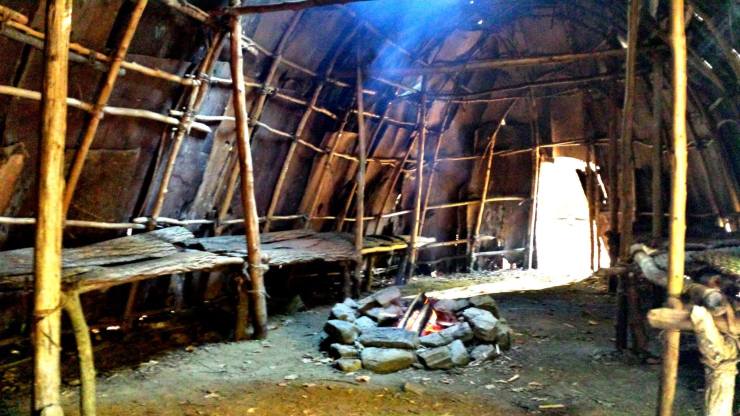
Finding Your Bearings October 15 @ Institute For American Indian Studies

Did you know there was something besides Google Maps or Waze for directions? For centuries people around the world have used a variety of techniques to mark their boundaries, measure distances, and find their sense of place.

Native Americans used many different means to navigate their environment. Different methods were used to mark tribal territories and hunting boundaries, as well as to designate their trails and, to convey important messages. It is fascinating to learn how the natural environment was used for directions.

If you want to learn about the various ways to find directions, including traditional indigenous techniques as well as how to read a map and a compass, don’t miss the “Find Your Bearings Orienteering Workshop” on Sunday, October 15 at 1 p.m. at the Institute for American Indian Studies at 38 Curtis Road in Washington Connecticut.

Participants will join IAIS educator and ecologist, Susan Scherf for an interactive in-person workshop to learn how to get their bearings should their GPS lose its signal! A highlight of the workshop is to practice these newly acquired skills by completing an orienteering scavenger hunt on the Museum’s colorful autumn trails, which add to the fun.

Most of this program is being held outside, and some of the woodland terrain may be uneven, so wear sturdy shoes and dress appropriately for the weather. Space is limited and pre-registration is requested at http://www.iaismusueum.org or by calling 860-868-0518 or via email at events@iaismuseum.org. This program costs $10 for non-members and $5 for members.

About the Institute for American Indian Studies
Located on 15 acres of woodland acres the Institute For American Indian Studies preserves and educates through archeology, research, exhibitions, and programs. They have the 16th c. Algonquian Village, Award-Winning Wigwam Escape, and a museum with temporary and permanent displays of authentic artifacts from prehistory to the present allows visitors to foster a new understanding of the world and the history and culture of Native Americans. The Institute for American Indian Studies is at 38 Curtis Road, Washington, CT.

Savor Indigenous Foods @ the Founders Clambake September 16 With the Institute for American Indian Studies

Lobsters, clams, corn, and potatoes are all hallmarks of Indigenous foods and every September, the Institute for American Indian Studies celebrates the bounty of New England and its waterways with a Founders Clambake. This year, on Saturday, September 16, from 6 p.m. to 8 p.m. the public is invited to the annual Founders Clambake. The location for the event is 11 a School Street in Washington Depot.

Guests will experience a sumptuous seafood feast while enjoying drumming and dancing performed by the members of the Redhawk Indigenous Arts Council. Traditional dances are combined with stories that have thrilled audiences around the globe and are sure to be the highlight of this event. In addition to being invited to dance with the troupe, guests will have the opportunity to meet the dancers and learn about the importance of dancing, regalia, and music to indigenous peoples.

Brought back by popular demand, the Institute is also holding a Silent Auction during the clambake. Auction items will be on display during this event and winning bids will be announced after the dancers’ performance.

To attend this festive event that gives thanks to the many members, visitors, and volunteers who have made this museum a success for 45 years register online at https://www.iaismuseum.org by September 14. Tickets are $60 per person for members and $65 for non-members and include a lobster dinner. A children’s menu is offered for $10 and includes hot dogs, chips, and lemonade. No tickets will be sold at the door.

About the Institute for American Indian Studies

Located on 15 acres of woodland acres the Institute For American Indian Studies preserves and educates through archeology, research, exhibitions, and programs. They have the 16th c. Algonquian Village, Award-Winning Wigwam Escape, and a museum with temporary and permanent displays of authentic artifacts from prehistory to the present allows visitors to foster a new understanding of the world and the history and culture of Native Americans. The Institute for American Indian Studies is located at 38 Curtis Road, Washington, CT.

About the Redhawk Indigenous Arts Council

Formed in 1994, this non-profit organization founded by Native American artists and educators is dedicated to educating the general public about Native American heritage through song, dance, works of art, and other cultural expressions.

August 27 Paddle Into the Past – Dugout Canoe Rides on Lake Waramaug With the Institute for American Indian Studies

Have you ever wanted to paddle into the past? On Sunday, August 27, from 11 a.m. to 1 p.m. at the Warren Town Beach (26D) North Shore Road in New Preston on beautiful Lake Waramaug, you can try your paddling skills in an authentically recreated dugout canoe with the Institute for American Indian Studies.

Canoes have been used for transportation, fishing, and recreation by indigenous peoples worldwide for centuries. In the Eastern Woodlands, dugout canoes were the major form of transportation for Native Americans for thousands of years. If you have ever wondered how a burned-out log could float on water and what it would feel like to ride in a traditional Native American canoe, don’t miss the “Can You Canoe” event!

Traditional Native American canoes were constructed out of a single log using a scorch and strip technique in which the builder used controlled burning and stone chiseling tools to carve out the center of the log. In Eastern North America, most dugout canoes were made from a single log of chestnut or pine. They were often small, light, and fast and used for hunting and transportation. Many of the canoes recovered in the northeast United States date back 5,000-plus years! However, archeologists believe that they were most likely constructed and used thousands of years earlier. Interestingly, all of the canoes discovered in New England were found submerged which helped to preserve them.

The canoe that will be used during this event belongs to the Institute for American Indian Studies and is reconstructed using traditional techniques by Jeff Kalin. Because they have been made within the last few years, they can be safely taken out for a ride on occasion. The highlight of this event is to experience how differently a traditional Native American canoe glides through the water as compared to modern canoes that are often feather-light and made of fiberglass. Each participant that takes a ride will receive a commemorative sticker for paddling into the past.

Pre-registration is required and can be made at http://www.iaismuseum.org or by calling 860-868-0518 or emailing events@iaismuseum.org. The Institute is asking participants to reserve time-slots when signing up online. The cost is $10 for members of the museum and $15 for non-members. If you are attending on the day of the event, cash and check are preferred although there will be card readers.

About The Institute for American Indian Studies
Located on 15 acres of woodland acres the Institute For American Indian Studies preserves and educates through archeology, research, exhibitions, and programs. They have a 16th c. Algonquian Village, Award-Winning Wigwam Escape, and a museum with temporary and permanent displays of authentic artifacts from prehistory to the present allow visitors to foster a new understanding of the world and the history and culture of Native Americans. The Institute for American Indian Studies is located at 38 Curtis Road, Washington, CT.