Stories from the Animals @ Institute for American Indian Studies with White Memorial Conservation Center

Everyone loves a good story. Listening to stories especially those passed down through generations is one of the best ways to connect with each other and the world around us. The Institute for American Indian Studies located on 38 Curtis Road in Washington Connecticut in partnership with Litchfield’s White Memorial Conservation Center is presenting a powerful program called “Stories from Animals,” beginning at 2 p.m. on Saturday, October 19th.
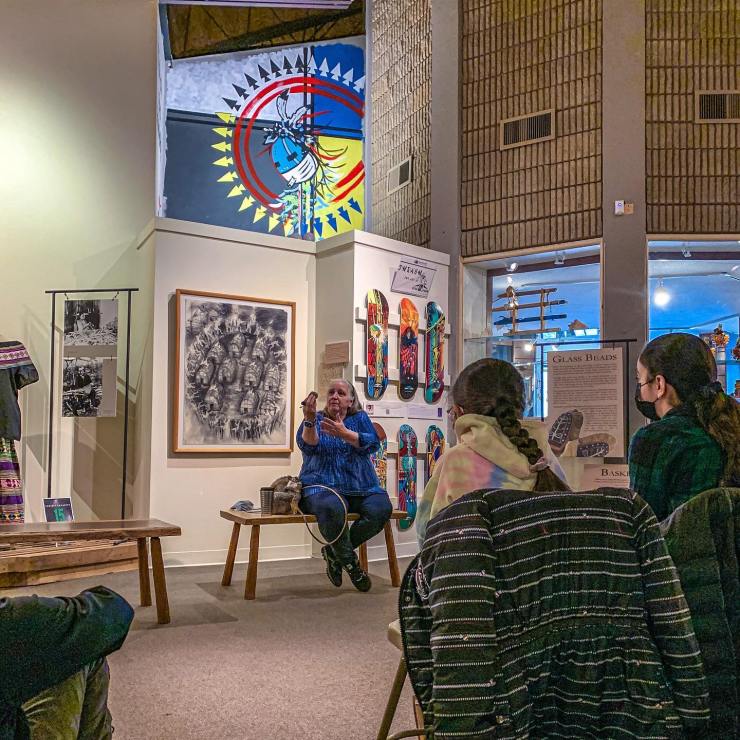
Colleen Harrak, White Memorial’s Environmental Educator will join award-winning storyteller, Darlene Kascak, of the Schaghticoke Tribal Nation and IAIS Educational Outreach Ambassador for an entertaining program that includes stories and live, local woodland animals. The goal of this program is to show participants how to experience Etuaptmumk – a Mi’kmaw saying that translates to “two-eyed seeing.” This idea encourages people to look at the same concept from both Western and Indigenous knowledge.

Oral tradition is an important cultural component in Native American culture because it is the very stories told that keep the knowledge and the traditions alive. “As a storyteller in Native communities, I bear a profound responsibility,” said Darlene Kascak. “I am entrusted with the task of preserving, protecting, and passing down oral stories that are hundreds if not thousands of years old. This role is not a duty it is also a deep-rooted passion that I hold dear. I am driven by the urgency to keep this tradition alive so that future generations can experience the beauty of learning through storytelling,” Kascak added.
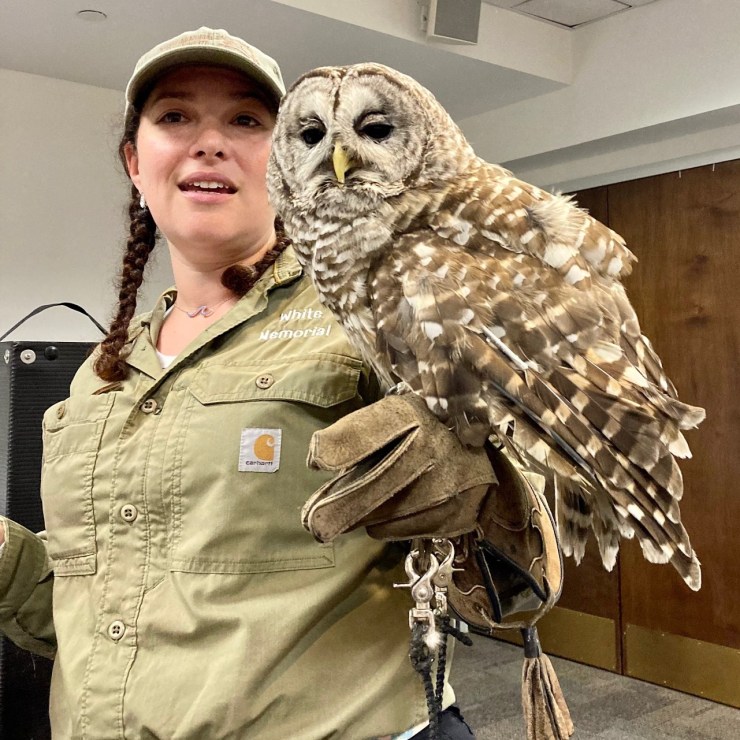
The highlight of this program is the combination of several live animal ambassadors brought by the White Memorial Conservation Center and the Native American stories about each of these animals that offer timeless life lessons. The price of participation is $15 for non-members and $5 for members of the Institute. Pre-registration is advised by visiting iaismusueum.org.

About the Institute for American Indian Studies

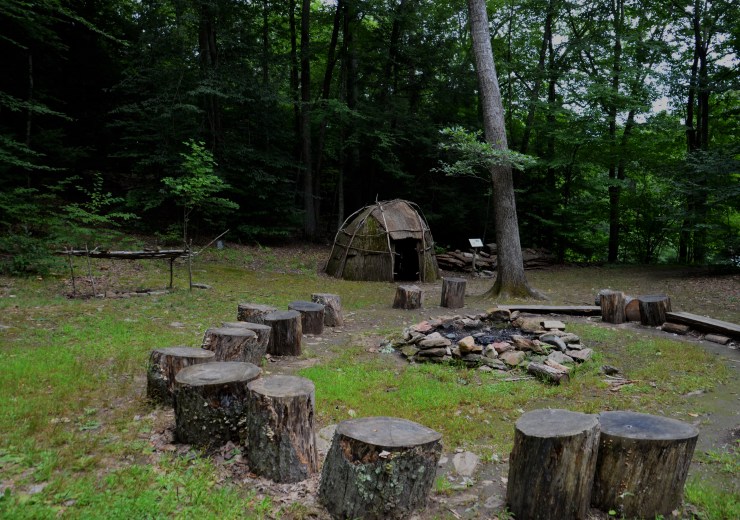
Located on 15 acres of woodland, the IAIS offers educational programs, both permanent and changing exhibits and a replicated 16th-century Algonkian village. Its research department maintains extensive archeological and ethnographic collections and conducts archeological digs and other research. Its “Wigwam Escape” escape room offers an opportunity to solve a puzzle while learning about Indigenous life before European settlement. With a focus on “two-eyed seeing”, visitors can learn about the history of the American continent that incorporates more than12,000-year history of human habitation. The Institute for American Indian Studies is located at 38 Curtis Road, Washington, Connecticut.

Annual Founders Day Clambake to Raise Funds for the Institute for American Indian Studies Local Indigenous Artists to be Celebrated

The Institute for American Indian Studies is celebrating its annual Founders Day Clambake on Saturday, September 14, from 6:00 p.m. to 8:00 p.m. at the Riverwalk Pavilion in Washington Depot, 11 School Street. Along with the traditional Indigenous foods of lobster, clams, corn, and potatoes, guests will be treated to an array of artworks by two featured artists, painter Claudine Purdue and fashion designer Brandi Sawyer-Emmons. A silent auction will feature original artwork by local artists such as Elizabeth McDonald and Ruth Jaffe, as well as prints by Cora Marshall, a Native American artist, gift certificates and items from local businesses, and many other items and collectibles. Ojibwe flute artist Allen Mahahbee will perform and is offering one of his hand-made flutes to the silent auction.

0

The cost to attend this fundraiser is $75.00 per person. Tickets are limited and must be purchased in advance. No tickets will be sold at the door. To register, visit online at https://www.iaismuseum.org by September 12.

The focus on Indigenous visual arts is new this year, as the IAIS is publicizing its annual art scholarship program. The Institute gives a small stipend to an emerging Native American artist currently enrolled in an arts program and offers them an opportunity for a one-person show at the museum. This year’s recipient will be announced at the event. Claudine Purdue is the 2023 artist. Her paintings explore the stories of Mi’Kimaq and Acadians who are her ancestors. Brandi Sawyer-Emmons, known as BThunder, creates Native American-inspired apparel and accessories including her popular Teepee handbag. Clambake attendees will have an opportunity to bid on items created by these two award-winning artists, along with the other silent auction items. Winners will be announced after this dinner.

About the Institute for American Indian Studies
Located on 15 acres of woodland, the IAIS offers educational programs, both permanent and changing exhibits and a replicated 16th-century Algonkian village. Its research department maintains extensive archeological and ethnographic collections and conducts archeological digs and other research. Its “Wigwam Escape” escape room offers an opportunity to solve a puzzle while learning about Indigenous life before European settlement. With a focus on “two-eyed seeing”, visitors can learn about the history of the American continent that incorporates more than 12,000-year history of human habitation. The Institute for American Indian Studies is located at 38 Curtis Road, Washington, Connecticut.

In Native American communities bark rattles are used in a number of traditional ceremonies, dances, and spiritual gatherings. For dancers, they help maintain the beat of the music by complimenting drums. On Saturday, June 22, at 10 a.m. the Institute for American Indian Studies is holding a Bark Rattle Workshop with Richard Chrisjohn (Oneida). An advocate for Indigenous sovereignty and the preservation of traditional teachings, Chrisjohn is a fourth-generation woodcarver who lives on the St. Regis Mohawk Reservation, Akwesasne, in Hogansburg, New York. This hands-on workshop will give participants a better understanding of the Iroquois culture and their traditional approach to our environment.

The highlight of this workshop is to make an elm bark rattle whose shape is dictated by the bark being used or a bark rattle necklace. Rattles and necklaces are made using the inner bark of the American elm tree. The inner portion of the rattle will be filled with small objects that create a rattling sound when shaken. During this workshop, participants will also learn about the history and culture of the Haudenosaunee (Iroquois) Confederacy, as well as the traditional uses of various trees and natural materials.

This is an outdoor program so participants should dress accordingly. If there is heavy rain or high temperatures, the program will move inside the Institute.

Space is limited and pre-registration is requested. Please visit our website to register online at http://www.iaismuseum.org, email events@iaismuseum.org, or call (860) 868 0518. The price of participation, including materials is $30 for non-members and $20 for members.


About The Institute for American Indian Studies
Located on 15 acres of woodland acres the Institute For American Indian Studies preserves and educates through archeology, research, exhibitions, and programs. They have a 16th c. Algonquian Village, Award-Winning Wigwam Escape, and a museum with temporary and permanent displays of authentic artifacts from prehistory to the present allows visitors to foster a new understanding of the world and the history and culture of Native Americans. The Institute for American Indian Studies is located at 38 Curtis Road, in Washington, Connecticut.

Moccasin Workshop 4/30 @ Institute for American Indian Studies

The Institute for American Indian Studies located at 38 Curtis Road in Washington Connecticut is holding a Moccasin Making Workshop on Saturday, March 30, from 11 a.m. to 2 p.m. Participants will not only leave this workshop with a pair of moccasins that they have made, they will also leave with a greater understanding of the cultural significance this footwear has with Native American communities throughout the country.

Across the United States, many Native American tribes created different styles of moccasins to suit their environment. The word moccasin itself comes from the Algonkian language – meaning “shoe.” They can be hard or soft-soled, ornately beaded, or plain, fur-lined, or cuffed. In short, the style of moccasins is as diverse as the many different tribes that they originate from.

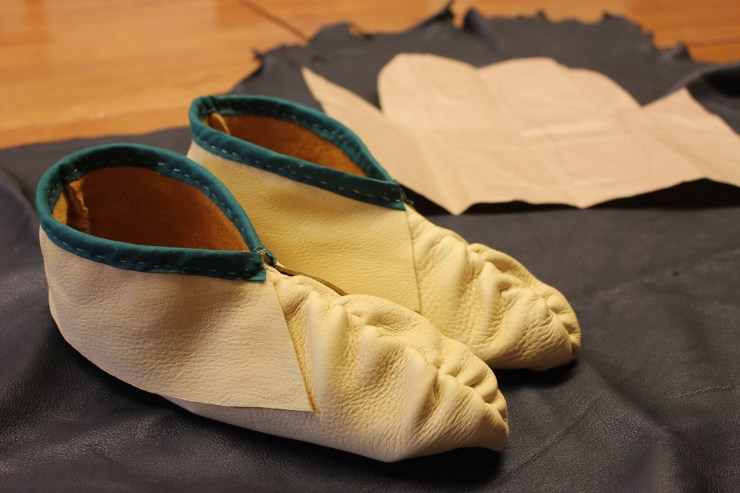
Traditionally, in the Eastern Woodlands, including Connecticut, soft-soled moccasins were commonly made out of a single piece of deer, elk or moose hide, and hand-sewn using sinew. A characteristic making it an Eastern Woodlands moccasin is the center seam that is gathered at the toe giving it a pucker shape. Today, moccasin-inspired shoes find their way into modern designs and fashion statements, even as Native culture keepers continue the centuries-old tradition of moccasin making.

This fascinating three-hour workshop, led by Darlene Kascak, Schaghticoke Tribal Nation, and Educational Outreach Ambassador for IAIS promises to be fun and informative. Participants will make a pair of pucker toe style moccasins out of deer hide while listening to the history of moccasins. It is a powerful feeling to make something that you can use in your everyday life, using methods that people have used for generations.

This workshop is recommended for adults and children ages 8 and up due to the dexterity required for sewing. To register for this workshop head to the website http://www.iaismuseum.org, call 860-868-0518, or email events@iaismuseum.org. The cost of this workshop, which includes all materials, is $80 for non-members of the museum and $70 for members.

About The Institute for American Indian Studies

Located on 15 acres of woodland acres the Institute For American Indian Studies preserves and educates through archeology, research, exhibitions, and programs. They have a 16th c. Algonquian Village, Award-Winning Wigwam Escape, and a museum with temporary and permanent displays of authentic artifacts from prehistory to the present allows visitors to foster a new understanding of the world and the history and culture of Native Americans. The Institute for American Indian Studies is located at 38 Curtis Road, in Washington, Connecticut.

Native American Culture Keeper Experience Women’s History Month @ Institute for American Indian Studies

During his message commemorating the first-ever National Women’s History Week in 1980, President Jimmy Carter said “From the first settlers who came to our shores, from the first American Indian families who befriended them, men and women have worked together to build this nation. Too often the women were unsung and sometimes their contributions went unnoticed. But the achievements, leadership, courage, strength, and love of the women who built America was as vital as that of the men whose names we know so well.”

To capture the spirit and to celebrate Women’s History Month, the Institute for American Indian Studies located at 38 Curtis Road in Washington, Connecticut is hosting a special virtual program that explores the life and legacy of Dr. Gladys Iola Tantaquidgeon (Mohegan) with her great-niece, Rachel Sayet (Mohegan) on Saturday, March 23 from 2 p.m. to 4 p.m.

Tantaquidgeon, born in 1899 was a Mohegan Medicine Woman, whose family members began passing down herbal knowledge to her at a young age. Educated at the University of Pennsylvania beginning in 1919, she studied anthropology and focused on researching the use of herbal medicine among Native American communities living on the East Coast of the United States. For her work, she was awarded many honors and honorary degrees from prestigious universities and organizations including Yale, the University of Connecticut, and the National Organization for Women. She also was honored for her accomplishments by many Native American tribes.

Among her many contributions, socially, environmentally, and politically, was helping with the founding of the first Native American Museum in 1931. The Tantaquidgeon Indian Museum located in Uncasville, Connecticut is the oldest Native American-owned and operated museum in the country. The mission of this museum is to acquaint visitors with Mohegan culture, traditions, and beliefs.

Dr. Gladys Iola Tantaquidgeon is widely considered to be an important Keeper of Native American Culture. This virtual conversation virtual presentation and discussion featuring Rachel Sayet, who has a master’s degree in anthropology and museum studies from Harvard University will focus on the life and legacy of her great aunt, Gladys Tantaquidgeon, who passed away at 106. The conversation will highlight her work as an anthropologist, ethnobotanist, and herbalist and will touch on how her knowledge influenced her family and the Native American community.

To join this Zoom presentation, on Saturday, March 23, please register online at https://iaismuseum.charityproud.org/EventRegistration/Index/15531, email events@iaismuseum.org or call 860-868-0518. The cost of participation is $10 for non-museum members and free for members of the museum.

About The Institute for American Indian Studies
Located on 15 acres of woodland acres the Institute For American Indian Studies preserves and educates through archeology, research, exhibitions, and programs. They have a 16th c. Algonquian Village, Award-Winning Wigwam Escape, and a museum with temporary and permanent displays of authentic artifacts from prehistory to the present allows visitors to foster a new understanding of the world and the history and culture of Native Americans. The Institute for American Indian Studies is located at 38 Curtis Road, in Washington, Connecticut.

The Magic of Courting Flutes @ Institute for American Indian Studies Feb. 17

The Institute of American Indian Studies at 38 Curtis Road in Washington has a wonderful way to end Valentine’s Day week. On Saturday, February 17, beginning at 1 p.m., Ojibway artist, and musician Allan Madahbee will explain the cultural significance and demonstrate the hauntingly beautiful sound of the Native American courting flute. A highlight for participants is to learn why the courting flute is deeply rooted in the traditions of many Native American Cultures.

Today, makers of Native American Flutes like Ojibway artist and musician Allan Madahbee craft their style and sound into their creations. Madahbee began to research the Chippewa flute culture and was influenced and mentored by Joseph Firecrow of the Cheyenne Nation. “We became friends and he provided guidance and feedback and explained some of his methods of flute making. With his passing, we have all lost a great Native American flute maker and musician. I am proud to continue our flute-making traditions.” The sound of the courting flute, which is usually made of cedar, has an uncommon scale for Western music and is entrancing.

Participants will listen to this haunting music performed by Madahbee, hear the legend of the courting flute, and examine the unique construction of a collection of flutes on display. There will also be a limited number of original, one-of-a-kind handmade courting flutes for purchase. Space is limited and pre-registration is requested. To reserve a spot head to http://www.iaismuseum.org, email events@iaismuseum.org, or call (860) 868-0518. The price of participation is $5 for IAIS Members and $15 for Non-Members.

About Allan Madhbee
Born on Manitoulin Island, the Home of the Great Spirit, Allan Madahbee is a member of the Ojibway (Chippewa) Nation who has pursued the traditional arts and crafts of his ancestors. He has been making Native American flutes for about ten years. “I had always thought they were a product of the Southwest Indian tribes, but a book that I found that was written during the 1800s about Chippewa culture, had a passage about the Chippewa flutes, along with pictures. This made me realize that they were indeed a part of my Chippewa culture. Knowing that my ancestors constructed these flutes for hundreds of years has inspired me to continue this tradition. Also, the haunting sound from these mystical instruments is a large part of my inspiration.”

About the Institute for American Indian Studies
Located on 15 acres of woodland acres the Institute For American Indian Studies preserves and educates through archeology, research, exhibitions, and programs. They have the 16th c. Algonquian Village, Award-Winning Wigwam Escape, and a museum with temporary and permanent displays of authentic artifacts from prehistory to the present allows visitors to foster a new understanding of the world and the history and culture of Native Americans. The Institute for American Indian Studies is located at 38 Curtis Road, Washington, CT.