Annual Founders Day Clambake to Raise Funds for the Institute for American Indian Studies Local Indigenous Artists to be Celebrated

The Institute for American Indian Studies is celebrating its annual Founders Day Clambake on Saturday, September 14, from 6:00 p.m. to 8:00 p.m. at the Riverwalk Pavilion in Washington Depot, 11 School Street. Along with the traditional Indigenous foods of lobster, clams, corn, and potatoes, guests will be treated to an array of artworks by two featured artists, painter Claudine Purdue and fashion designer Brandi Sawyer-Emmons. A silent auction will feature original artwork by local artists such as Elizabeth McDonald and Ruth Jaffe, as well as prints by Cora Marshall, a Native American artist, gift certificates and items from local businesses, and many other items and collectibles. Ojibwe flute artist Allen Mahahbee will perform and is offering one of his hand-made flutes to the silent auction.

0

The cost to attend this fundraiser is $75.00 per person. Tickets are limited and must be purchased in advance. No tickets will be sold at the door. To register, visit online at https://www.iaismuseum.org by September 12.

The focus on Indigenous visual arts is new this year, as the IAIS is publicizing its annual art scholarship program. The Institute gives a small stipend to an emerging Native American artist currently enrolled in an arts program and offers them an opportunity for a one-person show at the museum. This year’s recipient will be announced at the event. Claudine Purdue is the 2023 artist. Her paintings explore the stories of Mi’Kimaq and Acadians who are her ancestors. Brandi Sawyer-Emmons, known as BThunder, creates Native American-inspired apparel and accessories including her popular Teepee handbag. Clambake attendees will have an opportunity to bid on items created by these two award-winning artists, along with the other silent auction items. Winners will be announced after this dinner.

About the Institute for American Indian Studies
Located on 15 acres of woodland, the IAIS offers educational programs, both permanent and changing exhibits and a replicated 16th-century Algonkian village. Its research department maintains extensive archeological and ethnographic collections and conducts archeological digs and other research. Its “Wigwam Escape” escape room offers an opportunity to solve a puzzle while learning about Indigenous life before European settlement. With a focus on “two-eyed seeing”, visitors can learn about the history of the American continent that incorporates more than 12,000-year history of human habitation. The Institute for American Indian Studies is located at 38 Curtis Road, Washington, Connecticut.

Warm Up to Winter – with Virtual Programs @ Institute for American Indian Studies

Whatever the weather is like outdoors, learning something new indoors can be the perfect way to spend a cold winter afternoon. With that in mind, the Institute for American Indian Studies has developed a new Saturday series of virtual programs that are intriguing and ideal for those seeking indoor diversions this winter.

This presentation is the third in the Institute’s Annual Native American-Archaeology Roundtable series. This ongoing series seeks to explore ecological ties, past and present, through the sharing of new technologies, new findings, and new analysis that helps bring Indigenous communities into greater focus.

On Saturday, January 27 at 2 p.m. the topic will focus on “Lessons in Food Sovereignty from White Tailed Deer and Wampum in 17th century New England.” Participants will join Elic M. Weitzel, a Ph.D. candidate in anthropology from the University of Connecticut along with the Institute’s Staff for this virtual presentation. Weitzel specializes in human ecology and anthropology and will discuss how recent analysis of deer and quahog remains from archaeological sites in Southern New England suggest that European colonialism and capitalism put unprecedented pressure on these species even though fewer people lived in this region at the time. The discussion will highlight that overexploitation wasn’t a demographic problem and that pre-colonial Indigenous methods of gathering the bounty of the land appear to have been more sustainable. According to Mr. Weitzel, these results corroborate traditional and Indigenous ecological knowledge asserting that food sovereignty can permit long-term sustainable resource use, a concept that is very important around the world today.

To participate in this program and to receive the Zoom link please register online at https://www.iaismuseum.org or call 860-868-0518 or email events@isismuseum.org. The price of participation is free for members of IAIS and LHAC members and $10 for non-members.

Please follow us on Facebook, Instagram, and our website for dates and times of further talks in this series in the coming months.

About the Institute for American Indian Studies
Located on 15 acres of woodland acres the Institute For American Indian Studies preserves and educates through archeology, research, exhibitions, and programs. They have the 16th c. Algonquian Village, Award-Winning Wigwam Escape, and a museum with temporary and permanent displays of authentic artifacts from prehistory to the present allows visitors to foster a new understanding of the world and the history and culture of Native Americans. The Institute for American Indian Studies is located at 38 Curtis Road, Washington, CT.

Play Snow Snake @ IAIS January 20

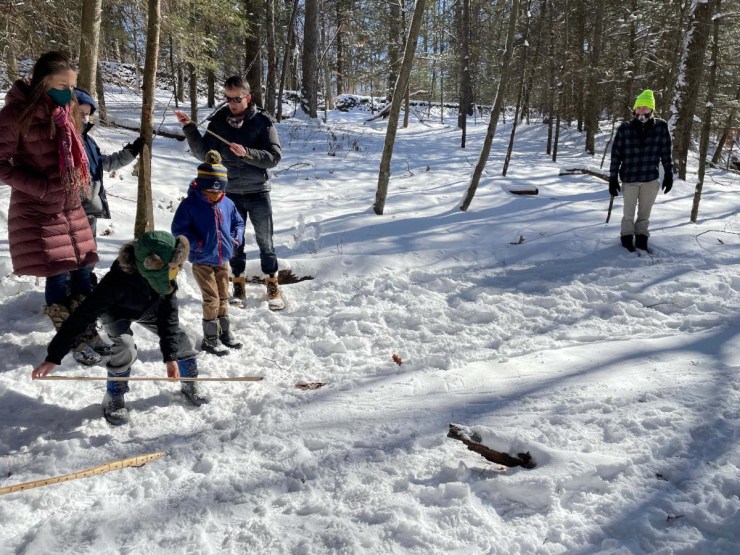
The snow snake game was once one of the most popular winter games played in North America. Many Native American Communities played it from Maine to California, Oklahoma to Alaska. Today, this game is being revitalized across the country. On Saturday, January 20 at 1 p.m. at the Institute for American Indian Studies on 38 Curtis Road in Washington Connecticut, competitors can make their very own snow snake and then test their skills playing this traditional game.

Originally, snow snake was the traditional Haudenosaunee (Iroquois) game played during the winter. The sport has its history in hunting when long spears were thrown like snow snakes across the ice and snow to catch prey, without coming too close and scaring them away. Most often, snow snake was played when the men of the village returned from their annual winter hunting trip. It was – and still is – an exciting game of skill to the Haudenosaunee people and many other Native Communities.

Snow Snake!

Snow snakes are hand-made from a flattened piece of wood with a notch at one end that makes them easy to throw. Some sticks are carved in intricate patterns that resemble a snake and then coated with wax. Participants in this workshop will learn how to make their very own snow snake with Susan Scherf, Educator, and wood crafter at the Institute. This workshop includes materials and wood-burning kits. Participants are welcome to bring their whittling knife if they have one although it is not required

A friendly competition follows the snow snake workshop at the specially prepared snow snake track. The object of the game is to see how far participants can throw the snow snake along a snow trench. The person who throws the snake the farthest after a number of rounds is the winner! The snow snake game is a test of both skill and strength, and a good throw can go more than 100 yards.

This game is often referred to as a medicine game because it lifted the spirits of the people during the long winter months. The Institute for American Indian Studies is excited to share this game that is great for socializing, and remembering the traditions of generations of Native Americans who came before us.

Space is limited and pre-registration is required. To register / The price of participation including materials is $20 for non-members and $10 for members. For more information call 860-868-0518, email events@iaismuseum.org, or click here to register online.

About the Institute for American Indian Studies
Located on 15 acres of woodland acres the Institute For American Indian Studies preserves and educates through archeology, research, exhibitions, and programs. They have the 16th c. Algonquian Village, Award-Winning Wigwam Escape, and a museum with temporary and permanent displays of authentic artifacts from prehistory to the present allows visitors to foster a new understanding of the world and the history and culture of Native Americans. The Institute for American Indian Studies is located at 38 Curtis Road, Washington, CT.

August 27 Paddle Into the Past – Dugout Canoe Rides on Lake Waramaug With the Institute for American Indian Studies

Have you ever wanted to paddle into the past? On Sunday, August 27, from 11 a.m. to 1 p.m. at the Warren Town Beach (26D) North Shore Road in New Preston on beautiful Lake Waramaug, you can try your paddling skills in an authentically recreated dugout canoe with the Institute for American Indian Studies.

Canoes have been used for transportation, fishing, and recreation by indigenous peoples worldwide for centuries. In the Eastern Woodlands, dugout canoes were the major form of transportation for Native Americans for thousands of years. If you have ever wondered how a burned-out log could float on water and what it would feel like to ride in a traditional Native American canoe, don’t miss the “Can You Canoe” event!

Traditional Native American canoes were constructed out of a single log using a scorch and strip technique in which the builder used controlled burning and stone chiseling tools to carve out the center of the log. In Eastern North America, most dugout canoes were made from a single log of chestnut or pine. They were often small, light, and fast and used for hunting and transportation. Many of the canoes recovered in the northeast United States date back 5,000-plus years! However, archeologists believe that they were most likely constructed and used thousands of years earlier. Interestingly, all of the canoes discovered in New England were found submerged which helped to preserve them.

The canoe that will be used during this event belongs to the Institute for American Indian Studies and is reconstructed using traditional techniques by Jeff Kalin. Because they have been made within the last few years, they can be safely taken out for a ride on occasion. The highlight of this event is to experience how differently a traditional Native American canoe glides through the water as compared to modern canoes that are often feather-light and made of fiberglass. Each participant that takes a ride will receive a commemorative sticker for paddling into the past.

Pre-registration is required and can be made at http://www.iaismuseum.org or by calling 860-868-0518 or emailing events@iaismuseum.org. The Institute is asking participants to reserve time-slots when signing up online. The cost is $10 for members of the museum and $15 for non-members. If you are attending on the day of the event, cash and check are preferred although there will be card readers.

About The Institute for American Indian Studies
Located on 15 acres of woodland acres the Institute For American Indian Studies preserves and educates through archeology, research, exhibitions, and programs. They have a 16th c. Algonquian Village, Award-Winning Wigwam Escape, and a museum with temporary and permanent displays of authentic artifacts from prehistory to the present allow visitors to foster a new understanding of the world and the history and culture of Native Americans. The Institute for American Indian Studies is located at 38 Curtis Road, Washington, CT.

New Exhibit @ Institute for American Indian Studies on Native American Identity

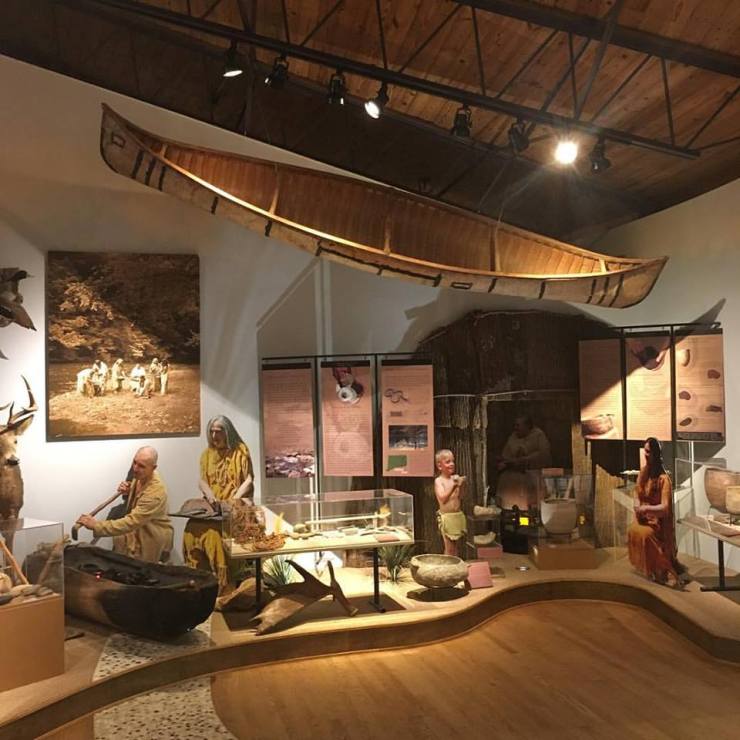
The Institute for American Indian Studies located at 38 Curtis Road in Washington Connecticut has just announced a new temporary traveling exhibit, “Native American Identity Stolen, Sold, and Reclaimed.” This exhibition invites guests of the museum to reflect on the stories that every one of us carries, consciously or not about Native American People. It is an enlightening and thoughtful journey through Native American stereotypes and more. This exhibit will be up through August. The Insitute is participating in the Summer at the Museum Program where one child from Connecticut 18 and under accompanied by an adult gets in free through September 4.


“Native American Identity Stolen, Sold, and Reclaimed,” traces the story of 500 years of Western perceptions that have been placed on Indigenous peoples of North America through family myths and popular culture that have been woven into a mythology depriving Native American People of their cultural, ethnic, and linguistic diversity.

Walking through this exhibit, visitors will see an interesting array of displays that explore misguided representations of Native American People in film, news, print media, literature, art, and commercial products. These displays highlight that Native Americans have a very limited scope of representation. They are most often represented either as historical figures belonging to the past or as stereotypical cliches, such as the Indian Princess, the Savage Indian, or the Noble Savage. Displays highlight tropes in advertising, films, T.V. shows, video games, and more that embrace these stereotypical generalizations, and in doing so, validate them in the way people view Indigenous people.

The final set of displays showcases an alternative narrative through a series of short bios on Native Americans from just about every walk of life and from many different time periods. Their stories and self-expression seek to help visitors break the cycle of misrepresentation in a positive and uplifting manner. As, Dr. Janine Pease concludes in one of the displays, “What’s been lost over many generations, it will take perhaps that many generations to restore…the challenge is to realize the power we do have. It’s not going to take some outside power. It’s power within that will really make the difference.”


About the Institute for American Indian Studies

Located on 15 acres of woodland acres the Institute For American Indian Studies preserves and educates through archeology, research, exhibitions, and programs. They have the 16th c. Algonquian Village, Award-Winning Wigwam Escape, and a museum with temporary and permanent displays of authentic artifacts from prehistory to the present allow visitors to foster a new understanding of the world and the history and culture of Native Americans. The Institute for American Indian Studies is located at 38 Curtis Road, Washington, CT

Free Admission this Summer at Institute for American Indian Studies Funding Provided by a Grant from CT Humanities

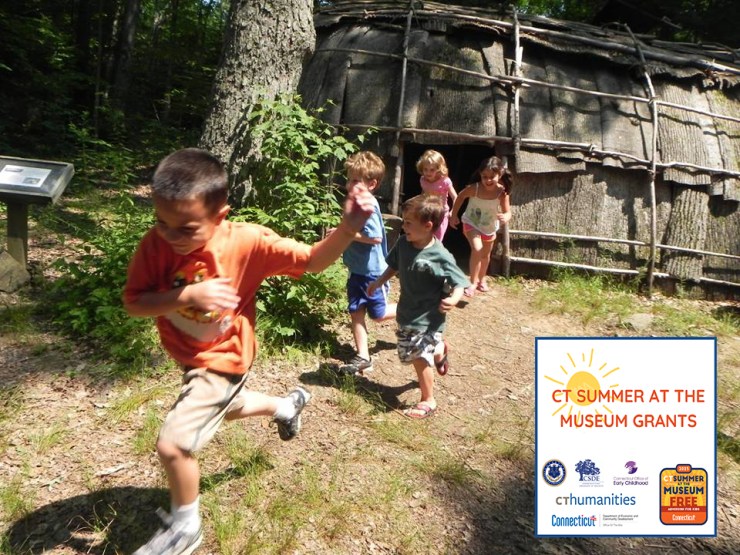
The Institute for American Indian Studies was awarded a grant from CT Humanities for participating in Connecticut Summer at the Museum 2023 initiative. This program invites Connecticut children ages 18 and under plus one accompanying Connecticut resident adult to visit participating museums free of charge from July 1 through September 4, 2023.
CT Humanities is honored to partner with the CT Office of the Arts again to administer the CT Summer at the Museum Initiative in 2023. The Department of Economic and Community Development, in partnership with the Office of the Governor, Connecticut State Department of Education, Office of Early Childhood, and Connecticut Humanities, will deliver these financially accessible summer enrichment opportunities to families and children of all ages using funding provided through ARPA (American Rescue Plan Act).

“The Summer at the Museum program in 2022 was very successful. We were delighted to be able to introduce so many new children to Native American culture and history and can’t wait to do it again this summer. We are very proud to be among the grant recipients,” said Chris Combs, Executive Director of the Institute for American Indian Studies. “This grant program allows us to expand our reach and also helps us achieve our mission of education by introducing children from Connecticut to the 12,000-year-old history of eastern woodland Native Americans,” Combs continued.

Children are welcome to explore the Institute’s galleries that trace the 12,000-yearlong stories of Connecticut’s Native American peoples from the distant past to their lives and culture today. The core exhibit takes children from a time at the end of the Ice Age to modern times. A second gallery presents artifacts, images, and themes reflecting both early colonial and modern tribal lifestyles across North America. The Children’s Discovery Room is an interactive space that shows children what life would have been like if they were a Native American living 600 years ago. An indoor longhouse is an elongated wigwam that contains both original and replicated artifacts and provides an immersive experience. A highlight of any visit is taking the trail to the replicated Algonkian Village that depicts life common to an Algonkian village of 350 to 1000 years ago.

About The Institute for American Indian Studies
Located on 15 acres of woodland acres the Institute For American Indian Studies preserves and educates through archeology, research, exhibitions, and programs. They have a 16th c. Algonquian Village, Award-Winning Wigwam Escape, and a museum with temporary and permanent displays of authentic artifacts from prehistory to the present allows visitors to foster a new understanding of the world and the history and culture of Native Americans. The Institute for American Indian Studies is located at 38 Curtis Road, in Washington, Connecticut.

About Connecticut Humanities
CT Humanities (CTH) is an independent, nonprofit affiliate of the National Endowment for the Humanities. CTH connects people to the humanities through grants, partnerships, and collaborative programs. State and federal matching funds, community foundations, and gifts from private sources support CTH projects, administration, and program development. Learn more by visiting cthumanities.org.

About Connecticut Office of the Arts
The Connecticut Office of the Arts (COA) is the state agency charged with fostering the health of Connecticut’s creative economy. The State of Connecticut as well as the National Endowment fund part of the state’s Department of Economic and Community Development, the COA for the Arts.