Warm Up to Winter – with Virtual Programs @ Institute for American Indian Studies

Whatever the weather is like outdoors, learning something new indoors can be the perfect way to spend a cold winter afternoon. With that in mind, the Institute for American Indian Studies has developed a new Saturday series of virtual programs that are intriguing and ideal for those seeking indoor diversions this winter.

This presentation is the third in the Institute’s Annual Native American-Archaeology Roundtable series. This ongoing series seeks to explore ecological ties, past and present, through the sharing of new technologies, new findings, and new analysis that helps bring Indigenous communities into greater focus.

On Saturday, January 27 at 2 p.m. the topic will focus on “Lessons in Food Sovereignty from White Tailed Deer and Wampum in 17th century New England.” Participants will join Elic M. Weitzel, a Ph.D. candidate in anthropology from the University of Connecticut along with the Institute’s Staff for this virtual presentation. Weitzel specializes in human ecology and anthropology and will discuss how recent analysis of deer and quahog remains from archaeological sites in Southern New England suggest that European colonialism and capitalism put unprecedented pressure on these species even though fewer people lived in this region at the time. The discussion will highlight that overexploitation wasn’t a demographic problem and that pre-colonial Indigenous methods of gathering the bounty of the land appear to have been more sustainable. According to Mr. Weitzel, these results corroborate traditional and Indigenous ecological knowledge asserting that food sovereignty can permit long-term sustainable resource use, a concept that is very important around the world today.

To participate in this program and to receive the Zoom link please register online at https://www.iaismuseum.org or call 860-868-0518 or email events@isismuseum.org. The price of participation is free for members of IAIS and LHAC members and $10 for non-members.

Please follow us on Facebook, Instagram, and our website for dates and times of further talks in this series in the coming months.

About the Institute for American Indian Studies
Located on 15 acres of woodland acres the Institute For American Indian Studies preserves and educates through archeology, research, exhibitions, and programs. They have the 16th c. Algonquian Village, Award-Winning Wigwam Escape, and a museum with temporary and permanent displays of authentic artifacts from prehistory to the present allows visitors to foster a new understanding of the world and the history and culture of Native Americans. The Institute for American Indian Studies is located at 38 Curtis Road, Washington, CT.

Take Part in Salisbury’s JumpFest Human Dog Sled Race February 2 @ Satre Hill

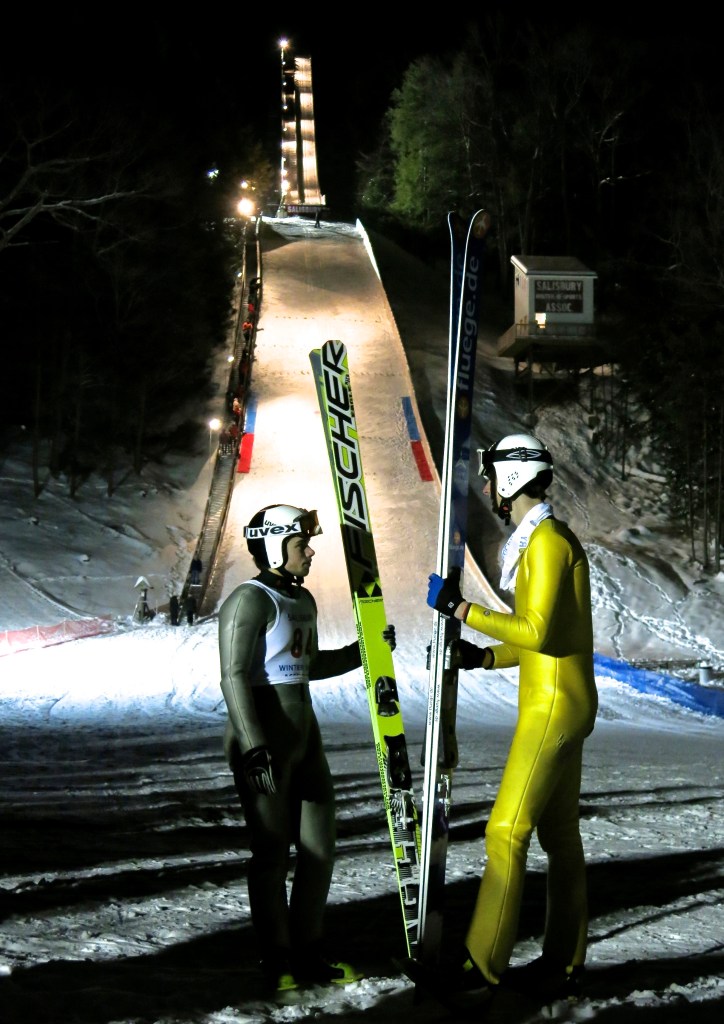
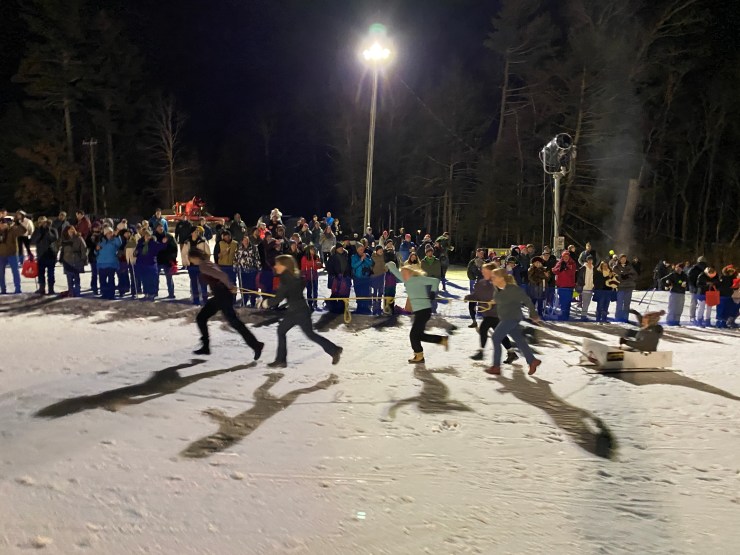
Jumpfest, organized by the Salisbury Winter Sports Association (SWSA), isn’t just about aspiring Olympic Ski Jumpers, it also offers tons of fun including one of the most sought-after winter events found only in six or so other places around the world…the Human Dog Sled Race! As a beloved tradition at Jumpfest, this year’s Human Dog Sled Race is taking place on Friday, February 2 at Satre Hill in Salisbury. The race will begin just after the Target Jumps conclude around 8:30 p.m. The ticket booth opens at 6 p.m. and that is when team members should arrive to organize their sled and confirm their registration.

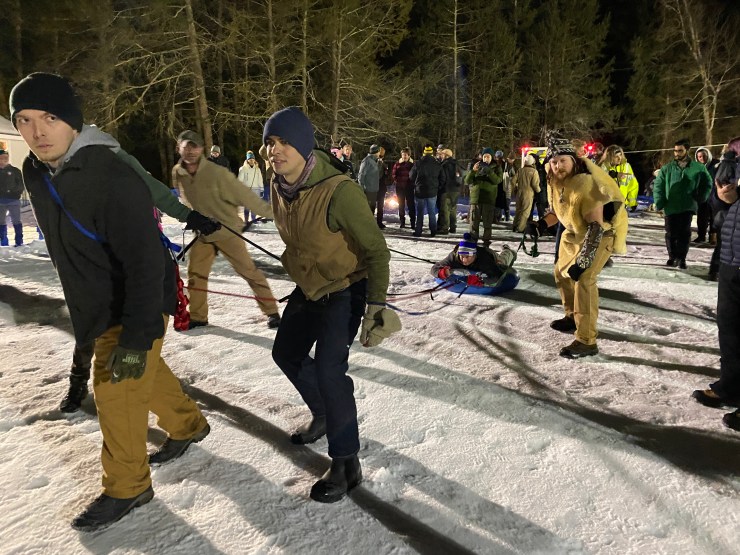
If you are wondering what a Human Dog Sled Race is…think traditional dogsledding with a twist! Participating is easy. All you have to do is gather up a kennel of friends who are at least 18 years old and have a moderate level of fitness because this .3-mile snow course is not without peril. The teams consist of six people including five pulling the sled and one riding in it.

Teams compete for trophies in men’s, women’s, and mixed categories. In addition to awards for speed and fleet of foot, a very special award is given out, the People’s Choice Award for the Best Costume and Sled, making designing your sled part of the fun and challenge. Sleds can be made from just about anything that will glide over the snow track. They can be as simple as an inner tube, elaborately colorful contraptions, or techy steam-punk inventions! Let your team’s imagination run wild! Many contestants dress for the occasion to raise team camaraderie.

Registration is open through February 1; just send an email to info@jumpfest, attention Brian to enter. The fee to enter is a modest $25 per team that includes free entrance to Jumpfest! Proceeds benefit SWSA’s Junior Ski Programs.

An added bonus is that Friday night of Jumpfest is an all-around great time in a beautiful alpine setting. An eighth of a mile of luminaries guide visitors to the site where there are two roaring bonfires and plenty of food and beverages to snack on. The target ski jumping and the Human Dog Sled Races are held under the lights, and both are professionally announced.! For more information about Jumpfest https://jumpfest.org

ABOUT SALISBURY WINTER SPORTS ASSOCIATION
The mission of the Salisbury Winter Sports Association is to acquaint the public with Nordic ski-jumping, cross –country and Alpine skiing, and to teach the skills necessary for their enjoyment. One way of fulfilling this mission is to host the annual Jumpfest Competition on Satre Hill to sustain and ski jumping in Salisbury, Connecticut and the Eastern United States.

Play Snow Snake @ IAIS January 20

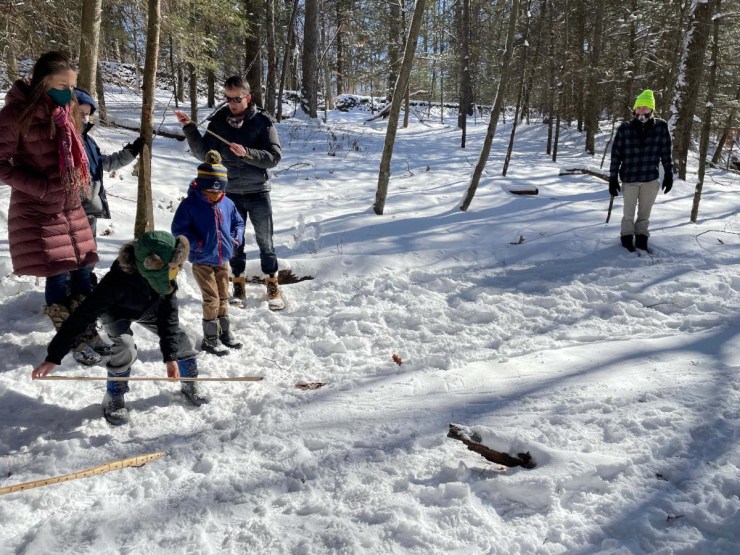
The snow snake game was once one of the most popular winter games played in North America. Many Native American Communities played it from Maine to California, Oklahoma to Alaska. Today, this game is being revitalized across the country. On Saturday, January 20 at 1 p.m. at the Institute for American Indian Studies on 38 Curtis Road in Washington Connecticut, competitors can make their very own snow snake and then test their skills playing this traditional game.

Originally, snow snake was the traditional Haudenosaunee (Iroquois) game played during the winter. The sport has its history in hunting when long spears were thrown like snow snakes across the ice and snow to catch prey, without coming too close and scaring them away. Most often, snow snake was played when the men of the village returned from their annual winter hunting trip. It was – and still is – an exciting game of skill to the Haudenosaunee people and many other Native Communities.

Snow Snake!

Snow snakes are hand-made from a flattened piece of wood with a notch at one end that makes them easy to throw. Some sticks are carved in intricate patterns that resemble a snake and then coated with wax. Participants in this workshop will learn how to make their very own snow snake with Susan Scherf, Educator, and wood crafter at the Institute. This workshop includes materials and wood-burning kits. Participants are welcome to bring their whittling knife if they have one although it is not required

A friendly competition follows the snow snake workshop at the specially prepared snow snake track. The object of the game is to see how far participants can throw the snow snake along a snow trench. The person who throws the snake the farthest after a number of rounds is the winner! The snow snake game is a test of both skill and strength, and a good throw can go more than 100 yards.

This game is often referred to as a medicine game because it lifted the spirits of the people during the long winter months. The Institute for American Indian Studies is excited to share this game that is great for socializing, and remembering the traditions of generations of Native Americans who came before us.

Space is limited and pre-registration is required. To register / The price of participation including materials is $20 for non-members and $10 for members. For more information call 860-868-0518, email events@iaismuseum.org, or click here to register online.

About the Institute for American Indian Studies
Located on 15 acres of woodland acres the Institute For American Indian Studies preserves and educates through archeology, research, exhibitions, and programs. They have the 16th c. Algonquian Village, Award-Winning Wigwam Escape, and a museum with temporary and permanent displays of authentic artifacts from prehistory to the present allows visitors to foster a new understanding of the world and the history and culture of Native Americans. The Institute for American Indian Studies is located at 38 Curtis Road, Washington, CT.

Full Moon Walk with Institute for American Indian Studies December 26 @ 6

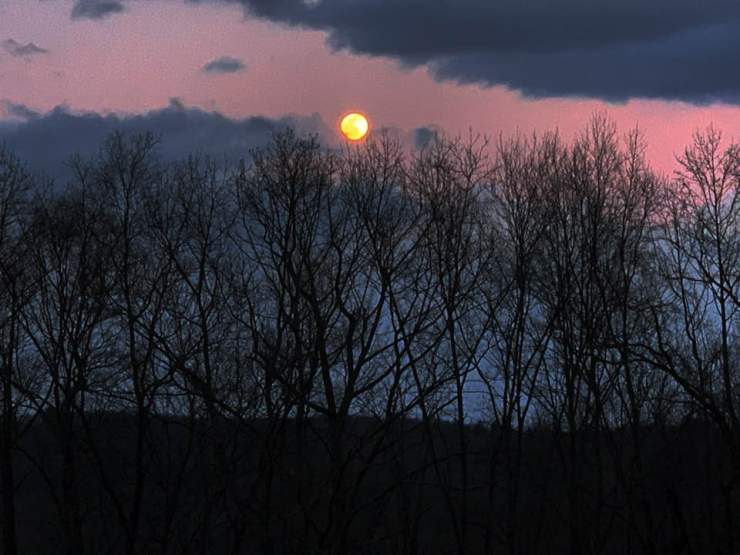
If you are looking for a fun and refreshing way to walk off some of the holiday goodies you have been eating then join the staff of the Institute for American Indian Studies for a Full Moon Walk on Tuesday, December 26 at 6 p.m. This year, even the moon is in a festive mood and will be fully illuminated on December 25th, 26th, and 27th. This full moon after the Winter Solstice takes the highest and longest path along the night sky. One of the names of the December full moon is “Long Night Moon” because it shines above the horizon longer than most full moons, making this walk extra special.

As participants walk along the beautifully wooded trails on the grounds of the museum under the glistening full moon they will learn what names Native Americans gave the December full moon and what it meant to them. Participants will learn how different Native American peoples traditionally used the monthly cycles of the moon and nature’s corresponding signs to track the seasons.

A highlight of this experience is to witness and celebrate firsthand the beauty of December’s full moon, as Native American communities have done for centuries. For example, the most common name for the December Moon, attributed to the Mohawks, is the Cold Moon which perfectly describes the cold days and nights during this time of year. The woodland walk ends at the newly restored 16th-century Algonkian village where a warm fire, hot chocolate, and stories will greet participants.

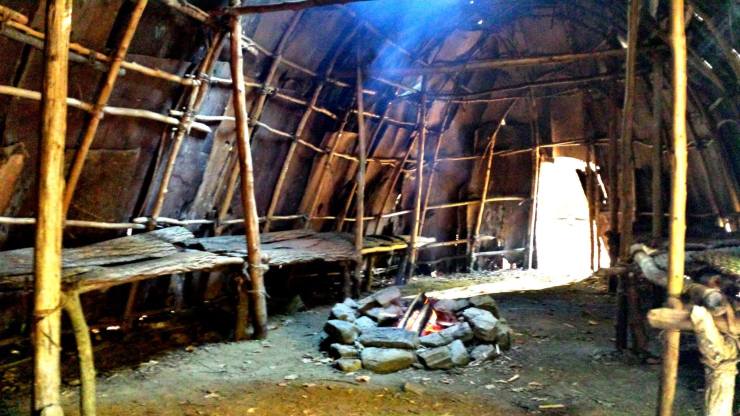
Inside the wigwam

Please dress appropriately for the weather, bring a flashlight, and wear sturdy footwear. If there are weather-related concerns on the day of the program, please contact the museum at 860-868-0518. The price of participation is $5 for IAIS Members and $10 for Non-Members. To register click here https://iaismuseum.charityproud.org/EventRegistration/Index/14300

About The Institute for American Indian Studies

Located on 15 acres of woodland acres, the Institute For American Indian Studies preserves and educates through archeology, research, exhibitions, and programs. They have the 16th c. Algonquian Village, Award-Winning Wigwam Escape, and a museum with temporary and permanent displays of authentic artifacts from prehistory to the present allows visitors to foster a new understanding of the world and the history and culture of Native Americans. The Institute for American Indian Studies is located at 38 Curtis Road, Washington, CT.

BraeVal’s Scottish Roots Offers Holiday Gifts Inspired by Heritage

Admittedly gift giving can be kind of selfish… what’s better than that feeling of satisfaction knowing you have found something wonderful for that special someone on your list? At BraeVal, one of Connecticut’s treasures located in the heart of Litchfield, shoppers will find something that is unique and not mass–produced at a variety of price points. Best of all, this is a shopping experience where folks not only get to see and feel the quality of this upmarket brand in person, but they also get to meet the founder of the company and learn how his heritage inspired him.

The story of BraeVal goes way back in American and Scottish history. It all began when Gregor McCluskey’s Great Uncle, Big Jock McCluskey was caught poaching on the land of a great Scottish Lord, not once but twice! It was then that Big Jock decided to leave Scotland for America because he believed that he would be free to hunt, fish, and wander, without trespassing on any royal estates.

In America, Big Jock McCluskey became a bounty hunter, fur trader, and gold miner. It was as a fur trader with Native Americans where Big Jock stuck gold. He became famous for trading his red and black tartan plaid with many Native Americans who were amazed at its deep red color. Legend has it that Native Americans had never seen such cloth dyed a brighter red and believed it was made from the blood of McCluskey’s prey and enemies. Today, we know this fabric as Buffalo Plaid.

BraeVal, a Scottish word for Upland Rivers is a love affair between Gregor McCluskey’s American soul and his Scottish heritage. Today’s clothing conceptualized by Gregor, a relative of Big Jock, exemplifies this because each piece is not designed; rather each piece is engineered with features found nowhere else and accented with authentically made Buffalo Plaid. McCluskey often says he channels his Great Uncle’s love of the great outdoors and the many summers he spent in Scotland when creating something new for BraeVal.

There are many things that make BraeVal’s clothing distinctive. First off, it is engineered to be the best of the best because it is infused with the style and finish of European sporting fashion that has been time-tested in the field, out on the town, and then merged with American comfort. The shirts are made of proprietary Tierra fabric made of ring-spun Merino wool and long staple Egyptian cotton developed by McCluskey that results in an eco-friendly machine washable garment. The shirts are comfortable, durable, breathable, and a natural alternative to synthetics. All of BraeVal’s limited designed tartans and checks are an exclusive contemporary interpretation of historic patterns found nowhere else, ensuring that BraeVal’s customers stand out in the crowd. Best of all, and too many to mention, BraeVal’s garments offer many unique features – shirts for example, have a hidden bi-swing back, triple stitching, roll-up sleeve stays, below-the-waist pockets, and many more features.

BraeVal is located at 3 South Street in Litchfield and is open from 11 a.m. through 5 p.m. through December. For online orders http://braeval.net.

About BRÃEVAL

BraeVal is a Scottish word for the Upland River Valleys that exist between the mountains and rugged brae of the Scottish highlands, where streams and rivers tumble to loch and sea. It is pronounced ‘brave-all’. It is a land of arduous challenges in a place where sporting adventure is welcomed as part of a very robust lifestyle. The name was chosen because it symbolizes the special sense of outdoor adventure that excites all sportsmen and women. At BraeVal, they believe that this imagery holds the heart of every sporting adventurer who ever hiked beyond the view of the town. BraeVal is a lifestyle brand of clothing that has endured for generations. They are an original American design born of comfort that offers time-tested classics in the Scottish tradition. Located in Litchfield Connecticut.

Holiday Market Features Indigenous Artists & @ Institute for American Indian Studies November 25 & 26, December 2 & 3, 9 & 10

Once again this year, the Institute for American Indian Studies located at 38 Curtis Road in Washington is hosting a one-of-a-kind holiday shopping experience that celebrates Native American culture. What makes this Holiday Market unique is that it offers both deeply traditional crafts and more contemporary artistic expressions rooted in Native American cultural experience. Artists represented here are some of the finest working in the area today. It is a celebration of Native American diversity and inspiration.

The Holiday Market throughout the Institute’s impressive exhibition galleries takes place on Saturday, November 25 and Sunday, November 26, and Saturday, December 2, and Sunday, December 3. The final weekend for the holiday market is on Saturday, December 9, and Sunday, December 10. The market is free and open to the public from 11 a.m. to 4 p.m. each day. This is one of the few Holiday Markets that showcases only Native American-inspired artwork.

There are so many gifts to choose from including Native American jewelry, paintings, photography, apparel, and candles, to decorative gourds, pottery, rattles, flutes and more at a variety of price points. The chance to talk with the artists who have created these one-of-a-kind objects and to learn about the culture that inspired them makes your gift purchase even more meaningful.

For music lovers, musicians, and collectors, the magical-sounding authentic Woodland Native American flutes handcrafted by Allen Madahbee are truly unique. Madahbee is an Anishinaabe, born on Manitoulin Island, and is a registered Native American in Canada and the United States. In addition to the one-of-a-kind flutes, Madahbee is offering handmade beaded moccasins, woodcarvings, rock sculptures, and original paintings inspired by his ancestors and experiences.

Another vendor, Kim Lewis from Native Visions will be offering an astounding array of Native American Art from Oklahoma and the Southwest including a fine selection of original paintings and prints, Zuni Fetishes, silver jewelry, pottery by Mel Cornshucker, plus Hopi, and Navajo Kachinas.

A long-time favorite of the Holiday Market is Primitive Technologies, a nationally known small business that has worked with everyone from filmmakers to museum curators to recreate the material culture of prehistoric Native American life. They offer exquisite wood-fired replica pottery, hand-constructed from local river clay, hand-carved flint arrowheads and flint animal necklaces, carved stone art, traditional stone tools, containers made out of natural materials, unusual jewelry, and decorative gourds.

Jeanne Morningstar Kent, a recognized Abenaki artist and enrolled member of the Nulhegan Band, Coosuk-Abenaki of Vermont will be offering her artfully crafted decorative gourds in all sizes. Kent’s work is housed in many museum collections including the Smithsonian’s National Museum of American Indian Studies, Lake Champlain Maritime Museum, Roger Williams University, Chimney Point Museum, and many more. What makes these gourds unusual is that they utilize traditional Abenaki and Wabanaki designs.

Brandy Sawyer Emmans of Cherokee descent and owner of bthunder will once again be at the holiday market. Runway model for the Sky Eagle Collection, Native American educator, and advocate for MMIW (Missing, Murdered Indigenous Women), which offers an evocative selection of contemporary Native American-inspired art, jewelry, apparel, candles, and accessories.

Not to be missed is Eva Newell, an enrolled citizen of the Pokanoket Tribe, Pokanoket Nation in Rhode Island. Eva is a multi-talented artist who offers a range of artwork including beadwork, coil baskets, paintings, and glass mosaic storyteller vases. When she is not vending, Eva is an exhibit artist and craft instructor who has worked with institutions throughout New England.”Newell’s beadwork and baskets are also extraordinary. Eva will be participating during the December 9th and 10th market only.

The Museum’s Gift Shop will be open and brimming with gifts large and small in many price ranges. Here you will find a distinctive collection of Native American jewelry, including wampum jewelry crafted by Annawon Weeden, Mashpee Wampanoag, and Pequot artist Dan Simonds, head of the Wampum Wear Collective. A highlight is the jewelry and gift items from Eighth Generation, owned by the Snoqualmie Tribe in Seattle, which partners with Native artists across the country. The result is some of the most beautiful and authentic items available.

For foodies, there is a wonderful selection of traditional Native American food products from Sweet Grass Trading Company from the Winnebago Tribe of Nebraska. And, in the spirit of the Metis culture, Pemmican Patty’s products offer a selection of bison berry-blended jerky that will connect you with Native foodways and nutrition. The gift shop also has a good selection of books and children’s items.

Although entrance to the museum and the Holiday Market are free, donations are always appreciated. A tour of the museum for a nominal fee is a fun and insightful experience that compliments this unique shopping experience.

About The Institute for American Indian Studies
Located on 15 acres of woodland acres the Institute For American Indian Studies preserves and educates through archeology, research, exhibitions, and programs. They have a 16th c. Algonquian Village, Award-Winning Wigwam Escape, and a museum with temporary and permanent displays of authentic artifacts from prehistory to the present allows visitors to foster a new understanding of the world and the history and culture of Native Americans. The Institute for American Indian Studies is located at 38 Curtis Road, Washington, CT.