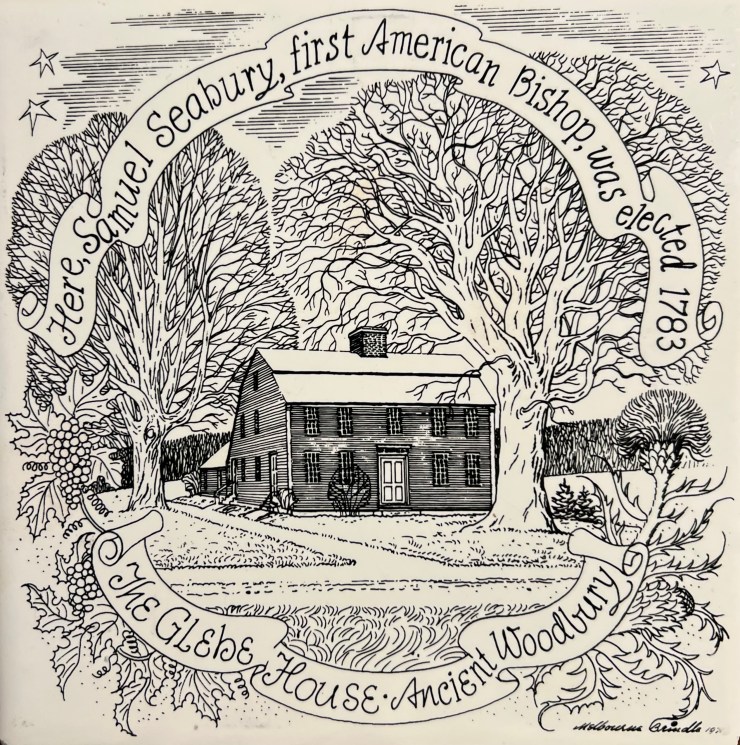
Before Salem: The Glebe House Museum Brings Connecticut’s Witchcraft History to Life

When most Americans think of witch trials, Salem, Massachusetts, immediately comes to mind. Its 1692 outbreak of fear and persecution has come to define the history of witchcraft accusations in colonial America.

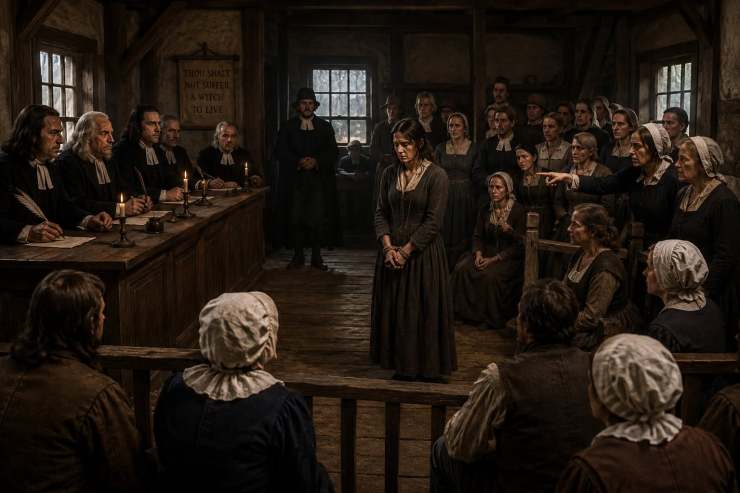
But long before Salem’s panic, Connecticut had already endured its own grim era of suspicion, imprisonment, exile, and execution. Connecticut’s witchcraft trials came first—and in many ways, their story is just as unsettling.

Unlike Salem’s single, concentrated crisis, Connecticut’s cases unfolded across several communities and over multiple decades. That scattered history, combined with incomplete surviving records, may help explain why the state’s witch trials are less familiar today.

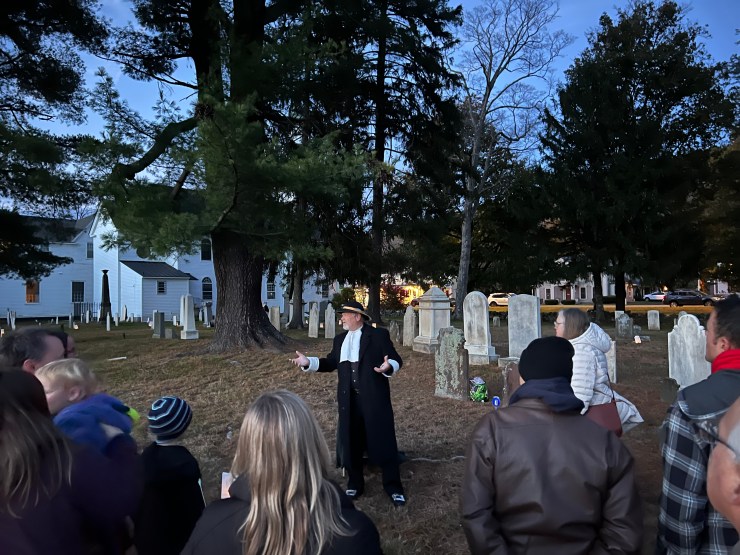
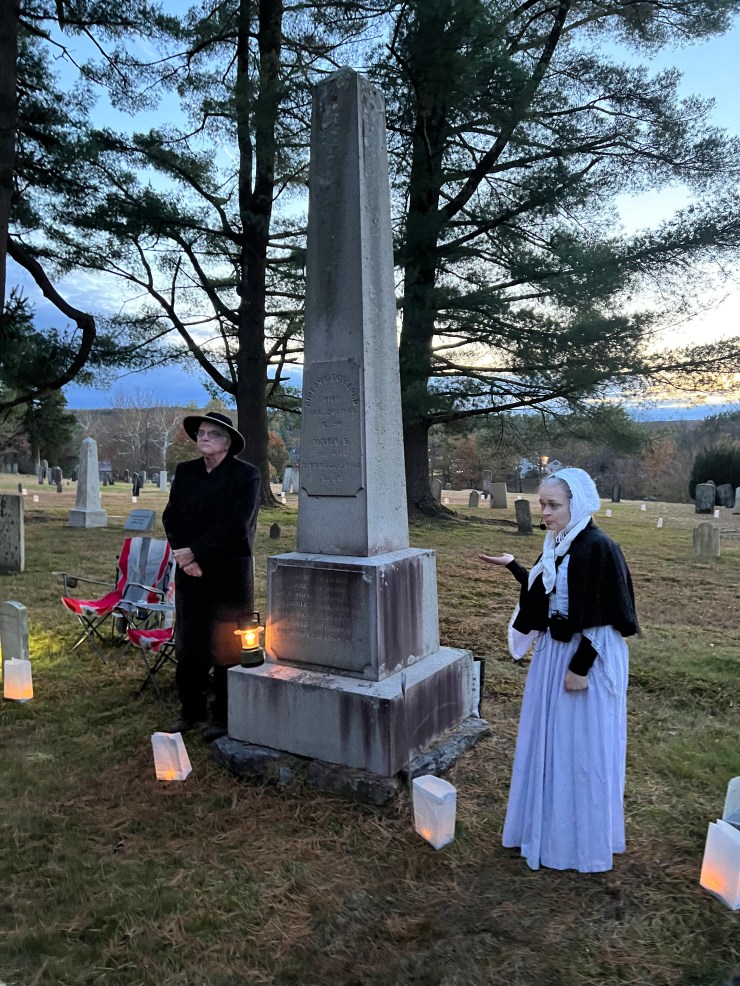
On October 3 at 5:30 p.m., the Glebe House Museum brings a powerful new presentation, “The First: Witchcraft in Connecticut,” to the Old Town Hall in Woodbury. This full-length live debut presentation revisits Connecticut’s first witchcraft trials and confronts a question that still resonates today: What happens when fear decides who belongs, who is believed, and who is condemned? Hosted by “The Witch of Woodbury,” Moll Cramer—a historical figure accused of witchcraft and banished from town—the evening moves beyond the label of “witch” to reveal the real people behind the accusations.

With continued research and support from Newtown Savings Bank, the Glebe House Museum and longtime historian and volunteer Linda Barr-Gale have developed this expanded presentation that places Moll Cramer’s experience in a wider historical context. This premiere also includes the stories of Thomas Allyn, Rebecca Greensmith, and Katherine Harrison—people whose lives reveal the breadth and human cost of Connecticut’s witchcraft prosecutions.

For those familiar with Salem but unfamiliar with Connecticut’s earlier trials, The First: Witchcraft in Connecticut offers a chance to see colonial history differently. Rather than treating the era as a sensationalized footnote, the program centers on the lives affected by injustice: people who survived, people who were cast out, and people whose stories ended in tragedy.

The evening is also a reminder that history is not only preserved in major events and famous names. Sometimes, it survives through fragments—court documents, diaries, depositions, church records, and the determination of local historians to ensure that forgotten stories are not lost altogether.

Registration Details
Date: October 3, 2026
Location: Old Town Hall, 5 Mountain Road, Woodbury, CT.
Doors open: 5:00 p.m.
Program begins: 5:30 p.m.
Running time: Approximately two hours, including an intermission
Seating: General Admission
Guests needing additional accommodations are encouraged to contact the Museum at 203-263-2855.
Due to the program’s runtime and content, it is not recommended for children under 14.
Complimentary refreshments will be served during intermission.
Tickets https://www.glebehousemuseum.org/single-post/the-first-witchcraft-in-connecticut
Advance tickets: $25 per person
Tickets at the door: $30 per person
Advance purchase is recommended, as seating is limited. Purchase tickets through the Glebe House Museum website or contact the Museum office at 203-263-2855 or office@glebehousemuseum.org.

Volunteers Sought to Help Restore Habitat for Native Forest Bees at Great Mountain Forest

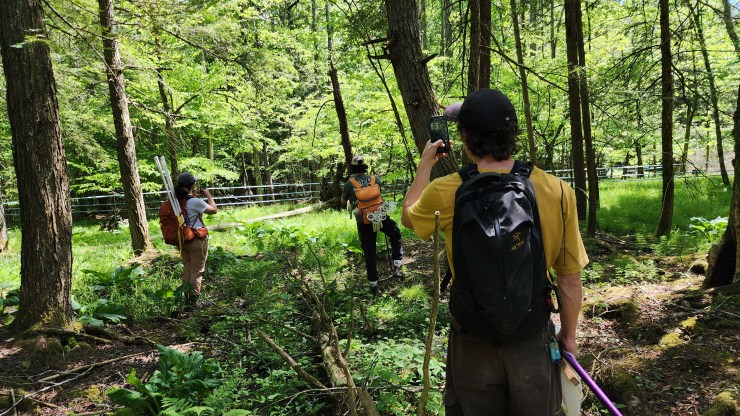
This September, volunteers will have the chance to make a meaningful impact on the local environment by supporting native bees and contributing to a five-year scientific study underway at Great Mountain Forest in Connecticut’s Northwest Corner.

Photo credit: Mickey Paletta

Great Mountain Forest will host a native-species planting event on Tuesday, Sept. 29, 2026, with a rain date of Thursday, Oct. 1. Participants may register for one of two shifts: a two-hour session from 10 a.m. to noon, or a four-hour session from 10 a.m. to 2 p.m. Participation is limited to approximately 10 volunteers. To reserve a spot, go to https://lp.constantcontactpages.com/ev/reg/aphasak. All participants will be required to sign a Xerces Society volunteer waiver.

Tools and gloves will be provided. Volunteers should wear boots and long pants and bring bug spray, drinking water, and snacks or lunch. The workday offers a hands-on chance to support forest restoration in a setting that pairs community stewardship with meaningful scientific research.

The planting is part of a regional project led by the Xerces Society for Invertebrate Conservation and Professor Katie Turo’s lab at Fordham University. Great Mountain Forest is among the Northeast sites selected for the study, which examines how healthier, more diverse forests can better support native bee populations.

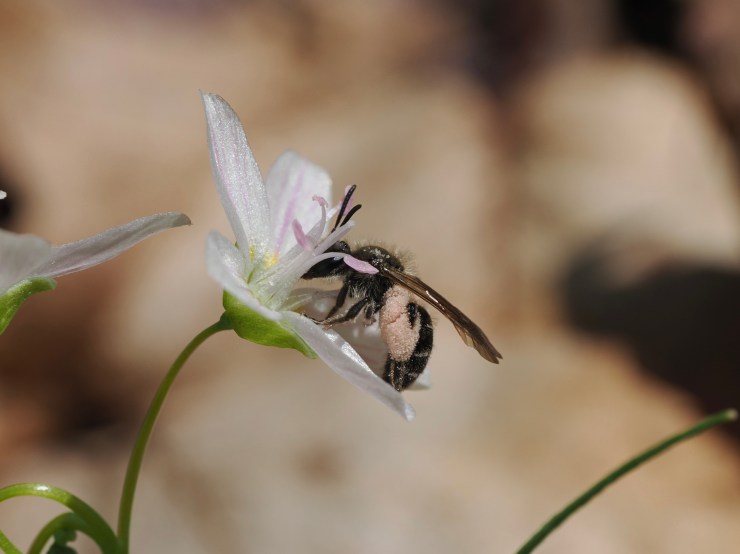
Photo credit: Isabelle Anderson

More than two-thirds of native bee species in the Northeast rely on forest habitats during some phase of their life cycle. Yet deer browsing, invasive plants, and the loss of flowering understory vegetation can diminish the spring blooms bees depend on for food.

Researchers are exploring how tree diversity, forest structure, and restored understory habitat shape bee communities and the flowering plants they use. This past spring, the research team surveyed native bees at 26 forests across the Northeast, documenting the plants bees visited before any restoration began.

Starting this fall, half of the study sites—including Great Mountain Forest—will receive plantings of locally sourced native plant species. Researchers will monitor how those plants become established over the next five years, comparing bee activity at restored sites with activity at sites left unrestored.

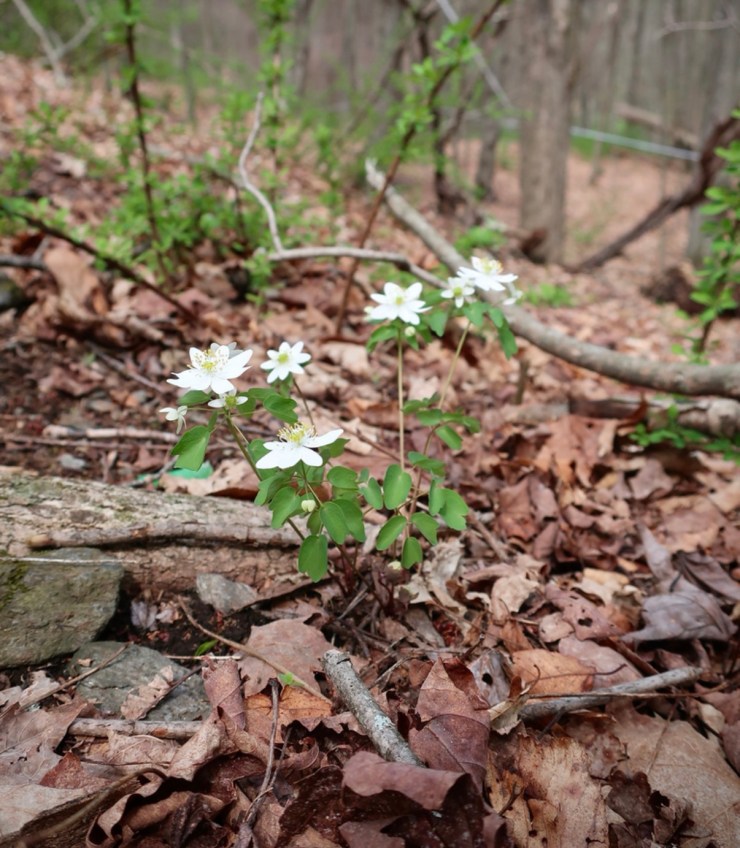
Photo credit: Mickey Paletta

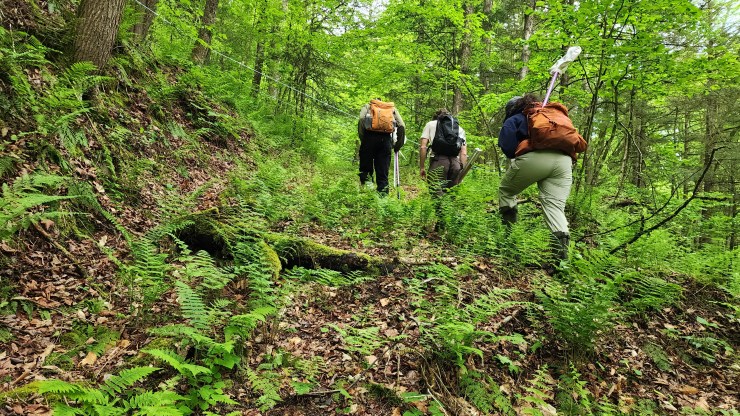
For those who take part, the planting day will be more than a few hours spent working in the woods. Each native plant placed in the ground will help build a richer spring food source for bees—and help researchers better understand how forest restoration can strengthen pollinator habitat across the Northeast.

Photo credit: Isabelle Anderson

About Great Mountain Forest
Great Mountain Forest (GMF) is a leader in forest stewardship. For more than a century, we have been demonstrating how sustainable management can protect biodiversity and support ecosystems. By serving as a hub for education and research, we are spreading the benefits of sustainable management so that communities across New England derive educational, economic, recreational, and health benefits from their forests—now and well into the future. GMF is a 501(c)(3) nonprofit encompassing 6,200 acres of contiguous forestland in Norfolk, Canaan, and Falls Village, Connecticut.

Aton Forest Centennial Science Lecture III Explores the Hidden Art and Ecology of Leafminers

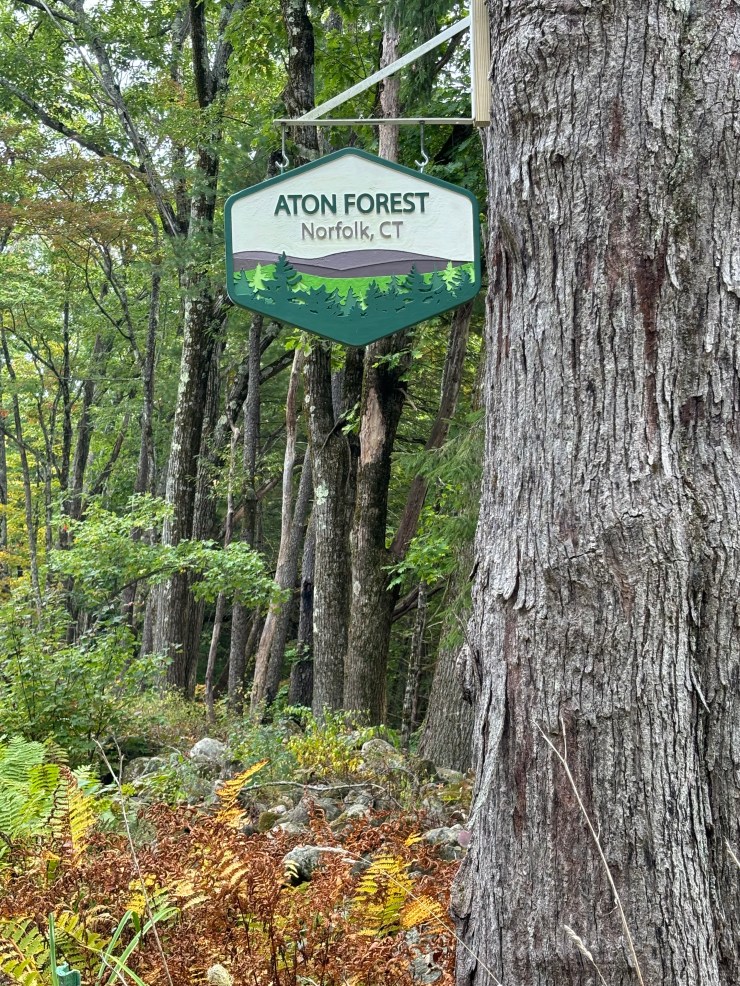
For 100 years, Aton Forest in northwest Connecticut has protected habitat, supported ecological research, and expanded understanding of the natural world. Its centennial celebration honors that legacy, including the 2026 addition of the 965-acre Spaulding Pond Mini-Wilderness in Norfolk, created by Egler’s wife, Happy Kitchel, bringing Aton Forest’s owned natural areas to 2,500 acres.


As part of the celebration, Aton Forest will present its third science lecture, “Aton Forest Leafminers,” featuring Charley Eiseman, Aton Forest Research Fellow and published field biologist. The lecture will take place Friday, September 18, 2026, at 4 p.m. at the Norfolk Hub in Norfolk, Connecticut.

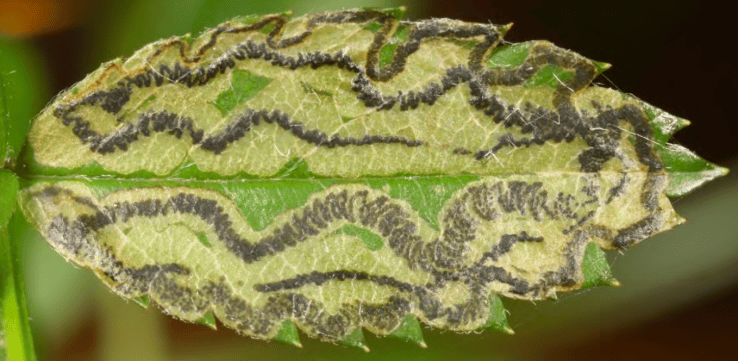
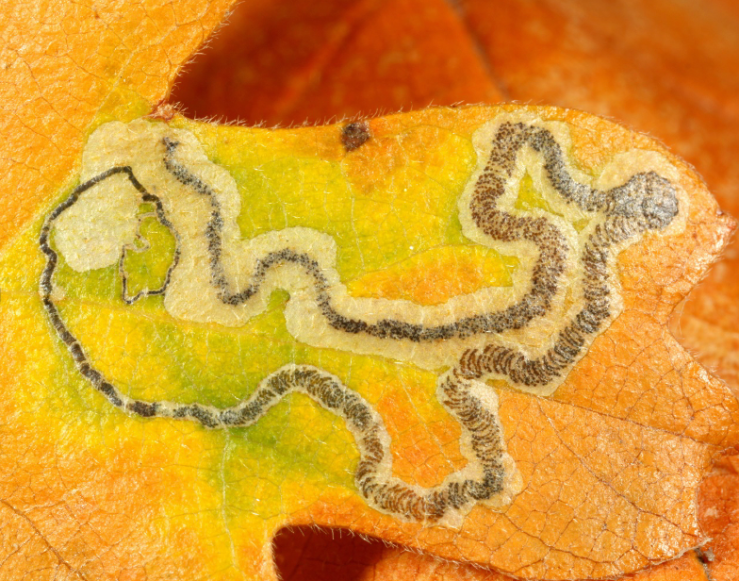
A recognized expert on leafminers, Eiseman will take audiences inside a fascinating and often overlooked corner of natural history. He will explore the world of leafminers—larvae of certain moths, flies, beetles, and sawflies that feed between the epidermal layers of leaves. Their activity leaves behind striking trails, blotches, and patterns known as leaf mines, creating a remarkable record on host plants. Eiseman will also highlight the complex relationship between insects and plants, and the vivid traces leafminers leave in their wake.

Since 2011, Eiseman has compiled and published natural-history information on leafminers across the continental United States and Canada, combining it with his own field observations and rearing records. He has traveled extensively to study leafminers in diverse bioregions and has written or coauthored more than 70 peer-reviewed publications, including descriptions of more than 90 new species.

Eiseman has served as an Aton Forest Fellow since 2022. In 2024, he received recognition from the Linnean Society of London and the Maxwell | Hanrahan Foundation for his contributions to insect natural history. He is the lead author of Tracks & Sign of Insects and Other Invertebrates and the author of Leafminers of North America, now in its second edition, with a third edition being released in monthly installments.

Science Lecture III is part of Aton Forest’s 2026 Centennial program and is sponsored by Aton Forest Inc., the Aton Forest Fellowship Trust, the Colebrook Conservation Commission, and the Norfolk Conservation Commission. The yearlong celebration has included a July exhibition at the Norfolk Hub that highlighted Aton Forest’s scientific research, the conservation work of the Egler and Kitchel families in Norfolk and Colebrook, Connecticut, and Frank Egler’s influence on Rachel Carson, author of Silent Spring.

The Centennial program also marks the publication of The Spirit of Aton Forest: Frank Egler, Rebel Ecologist, and the Pursuit of Science and Natural Area Protection by Billy Gridley, President of Aton Forest. The book is available at Les Renards Bookstore at Station Place in Norfolk, Connecticut.

About Aton Forest
Aton Forest is dedicated to protecting and stewarding its natural area preserves while advancing forest succession, ecological research, and demonstration work pioneered by its founder, Dr. Frank Egler. Through this mission, Aton Forest honors Dr. Egler’s practical and intellectual legacy and applies it to support both the natural environment and the human communities within the bioregion.

Rooted in Remedy: Colonial Herbal Wisdom Comes Alive at The Glebe House Museum & Gertrude Jekyll Garden

In Colonial America, families didn’t have modern pharmacies around the corner. Instead, they turned to what grew nearby. Knowledge of these remedies was practical, personal, and often passed down through generations. This September, The Glebe House & Gertrude Jekyll Garden, in Woodbury, invites curious minds, plant lovers, and history enthusiasts to explore herbal medicine in Colonial America in a two-part series led by Dr. Eugene Zampieron, known as Dr. Z.

With more than 25 years of experience as a licensed naturopathic physician, medical botanist, registered professional herbalist, professor, author, lecturer, radio personality, and Caribbean ethnobotanist, Dr. Z brings deep expertise and a lively teaching style to this one-of-a-kind program.

The series begins on Wednesday, September 23 at 6 p.m. with an engaging online presentation that introduces the foundations of colonial herbal medicine. Dr. Z will guide participants through the plants and practices that shaped early American healing traditions, highlighting the cultural and scientific roots of herbal care. This session sets a strong foundation for the garden and hands-on experience that follows.

The learning continues in person on Saturday, September 26, 2026, at 11 a.m. with a fascinating hands-on workshop that brings colonial herbal traditions to life. The day begins with a guided garden tour designed to help participants identify medicinal and edible plants. Along the way, Dr. Z will share insights into the folklore, chemistry, and traditional uses of the herbs growing at Woodbury’s historic Glebe House, which dates to the 1740s.

Then comes the fun part: making your own remedies. Using herbs gathered from the garden, foraged from the wild, and purchased locally, attendees will get hands-on experience crafting two traditional preparations: a healing salve and a choice between a classic Colonial-style cough remedy or an immune-supporting tonic. Best of all, each participant will leave with finished handmade medicines plus the knowledge and confidence to recreate them at home.

This is more than a workshop—it’s a chance to reconnect with a living tradition. Whether you’re interested in herbal medicine, history, gardening, or natural wellness, this program offers a thoughtful and practical experience rooted in place and heritage. It’s a reminder that the connection between people, plants, and wellness has deep roots—and that some of the best lessons from the past are still worth carrying forward.

Version 1.0.0

Registration Details

Program fee: $65 per person

Includes: both sessions, equipment use, and all supplies

Pre-registration required at https://www.glebehousemuseum.org/single-post/herbal-medicines-of-colonial-america-webinar-workshop

For additional information, email office@glebehousemuseum.org or call 203-263-2855.

A Special Treat at this Year’s Weekend In Norfolk for Gardeners, August 2, 2026

This year, Weekend in Norfolk is taking place from July 31 – August 2 and a highlight are Norfolk’s Gardens. There is something unmistakably magical about the summer gardens in Norfolk. At this summer’s WIN, on Sunday, August 2, 2026, one of the standout experiences is the rare opportunity to step inside four exceptional private gardens alongside a thoughtfully cultivated community garden. Each space offers its own personality, rhythm, and story—inviting visitors to slow down and truly see what makes a garden come alive. Private gardens have a special kind of quiet magic. Every path, planting choice, and tucked-away corner reflects the care and personality of the person who created it, making these spaces feel less like landscapes and more like deeply personal worlds.

At Feeding Body and Soul on 84 Maple Avenue, that idea comes to life beautifully: “Our garden’s focus is to feed us, our chickens, our bees—and our souls.” The garden is shaped by organic practices and a natural, thoughtful rhythm—from removing invasive species to working with challenging terrain and letting beauty emerge in its own time. Behind the house, a skillfully built kitchen garden rises from sloped, stone-filled ground, with raised beds lined with gravel, cold frames along a retaining wall, espaliered apple and pear trees, and space for bees, chickens, and future gatherings. Out front, the mood softens into a naturalized meadow, where native plants sway in shades of green and white, brightened by bursts of seasonal color.

At Connections (76 Maple Avenue), the garden does something rare: it stretches beyond a single property, seamlessly linking two neighboring landscapes through a network of peaceful woodland paths. As you wander along meandering, wood-chipped trails edged with salvaged sapling trunks, the journey gently guides you downhill through the woods. Along the way, the transition feels natural and unforced—paths glide through a shallow depression before opening into mature plantings that surround the house and lawn. The result is a landscape that feels truly connected in every sense. More than simply beautiful, these neighboring gardens are a quiet testament to the idea that outdoor spaces can unite people just as powerfully as they shape the land.

At 290 Bruey Road, professionally designed gardens create a beautiful story of transformation. What were once two separate properties have been thoughtfully brought together through woodland pathways, layered plantings, and carefully shaped garden spaces. Visitors move through a sweeping transition from structured lawn and mature shrubs into a more shaded woodland setting, where winding paths, curated shade gardens, and restored areas invite moments of discovery along the way.

The second property, now serving as the primary residence, continues to evolve as a living landscape. With expanded plantings and newly diversified vegetable beds, the garden remains a work in progress—one that keeps growing, changing, and revealing new layers of design over time.

Our next stop, Formal Borders, is at 152 Litchfield Road and features a lovely Arts and Crafts–style home and garden dating back to 1908. With care and thoughtful interpretation, the current owners have brought new energy to the original design by Marian Coffin, restoring the garden’s historic charm while giving it a fresh sense of life.

Highlights include a refined formal parterre stretching south from the house, along with a striking double border on the west side, recreated using guidance from an original working plan. One of the garden’s most delightful features is a graceful half-moon of dwarf and semi-dwarf evergreens. What began as a chance collection of gifted plants has grown into a lush natural screen, now enclosing an extra perennial bed and adding depth and intimacy to the space. Altogether, Formal Borders offers a serene blend of history, beauty, and thoughtful evolution.

The final stop, the Community Garden at 128 Greenwoods Road East, on the grounds of Botelle Elementary School, offers something just as meaningful as it is beautiful: a true sense of shared purpose. Sponsored by the town’s Recreation Committee, this welcoming space brings together neighbors, families, and young gardeners in a collaborative effort that blossoms throughout the season.
In the height of summer, visitors can see children from the Summer Gardening Club caring for their own beds, along with a vibrant mix of vegetables like pumpkins, tomatoes, peas, lettuce, kale, and more. Some plots are even dedicated to supporting the local Food Pantry, helping the garden make a difference in the wider community.

Guests will enjoy hands-on learning through composting demonstrations led by resident expert Doug Semmes, and the first 25 visitors will receive a complimentary herb seedling to take home. Looking ahead, the garden’s impact will continue to grow this fall through programming designed to engage local fifth- and sixth-graders in ongoing stewardship.

Whether you’re drawn by inspiration, tranquility, or the sheer visual beauty of a summer garden in full bloom, this experience offers more than a simple tour. It offers a way of seeing—one that stays with you long after the season fades. Because truly, there is something special about gardening. And in Norfolk, at the height of summer, you can feel it in every leaf, every blossom, and every carefully tended path. For more information about Weekend in Norfolk https://weekendinnorfolk.org/

Great Mountain Forest Launches 1st Annual Nature Writing Retreat at Historic Yale Camp

From August 7-9, 2026, Great Mountain Forest (GMF) will host its First Annual Nature Writing Retreat at the historic Yale Camp in Falls Village, CT, inviting writers of all levels to draw inspiration from one of New England’s most storied landscapes.

This immersive three-day retreat reflects on the legacy of American writer and longtime New York Times nature columnist Hal Borland, whose work was rooted in this landscape. It explores how wilderness shapes language and strengthens close observation, craft, and environmental understanding.

Michael Zafros, GMF executive director stated, “There are few uses of a forest more sustainable than serving as inspiration. Hosting writers and artists is a great way to explore and provide this use of our forests. This new program demonstrates how Great Mountain Forest can be an antidote to the challenges facing our world. The retreat brings people together, builds community in the forest, gets participants outside and off their screens, and uses nature sustainably to heal and inspire minds and souls.”

Set within GMF’s 6,400-acre forest, the program features six workshops led by nationally recognized authors, poets, and environmental experts. Participants will engage in field observation, writing, and discussion focused on description, ecological literacy, eco-poetry, and nature-based storytelling.

The weekend includes journaling and campfire conversation on Friday, a guided nature walk and workshops on Saturday, and a closing reflection on Sunday. Enrollment is limited, with an optional post-retreat online anthology of participant work.

As Hal Borland wrote, “I challenge anyone to stand on a hilltop and fail to see a new expanse not only around him, but in him, too.” This inaugural retreat invites writers to do exactly that while launching what GMF envisions as a signature annual event celebrating writing, conservation, and the enduring relationship between people and forests.

Yale Camp offers rustic lodging, quiet woodland trails, and shared gathering spaces with meals provided by Chef Stawitz of GMF catering.

The 2026 Great Mountain Forest Nature Writing Retreat is made possible in part with support from H. Bruce McEver, Roshy and Dalton Dwyer, and Housatonic Heritage. The Nature Writing Retreat is curated by Tom Shachtman.

Nature Writing Retreat Details

Dates: August 7-9, 2026
Location: Yale Camp, 209 Chattleton Road, Falls Village, CT

Registration Fees:
$385 through May 31; $435 after May 31
Students: $285 through May 31; $335 after May 31 (discount by request)

Registration Deadline: July 24, 2026. Enrollment is limited

Optional Lodging: $70 for two nights

For more information or to register, visit: https://greatmountainforest.org/writing-retreat-2026/

About Great Mountain Forest
Great Mountain Forest (GMF) is a leader in forest stewardship. For more than a century, we have been demonstrating how sustainable management can protect biodiversity and support ecosystems. By serving as a hub for education and research, we are spreading the benefits of sustainable management so that communities across New England derive educational, economic, and recreational and health benefits from their forests—now and well into the future. GMF is a 501(c)(3) nonprofit encompassing 6,300 acres of contiguous forestland in Norfolk, Canaan, and Falls Village Connecticut.