Treasures of the Jazz Age at the American Clock and Watch Museum

The American Clock & Watch Museum located on 100 Maple Street in Bristol has announced the opening of its latest exhibition Art Deco Timepieces: Treasures of the Jazz Age. This exhibit will be on view through December 8, 2013.
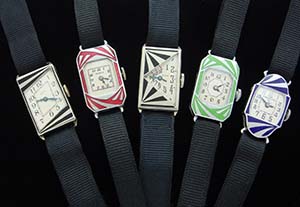
clocks

In the 1920’s after the “war to end all wars”, with prosperity on the horizon, people wanted to sport their fashions. Watchmakers were not left behind in this fashion craze that saw the introduction of wristwatches with cushion, tonneau, and large curved cases. Today, vintage art deco watches of the 1920’s and 1930’s are highly sought after by collectors and some of today’s large watch houses have replicated them because of their style and elegant look.
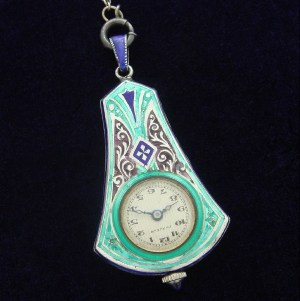
artpendant1

If you are an admirer of anything Art Deco, this is a must see exhibition that is a celebration of their triumph, the ‘Golden Age’ of timepieces and design. The exhibit that has been guest curated by Strickland Vintage Watches of Tampa showcases vintage watches and celebrates the design elements portrayed in the timepieces and advertisements of the 1920s and 1930s.
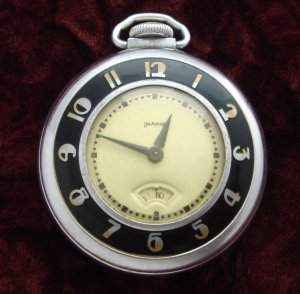
bristolingraham

The global phenomenon of Art Deco was brilliant, pervasive, and influential. It was a class distinction that rose above class and could be found on the wrists and in the pockets of anyone during that golden era. Watch manufacturers — specifically the great American watch houses — produced exquisite and attainable examples of Art Deco mastery. Art Deco design exudes sophistication and grace whether it’s portrayed in furniture, fine art, clothing styles, advertising, or timepieces. The museum is open daily from 10 a.m. to 5 p.m. through December 8.

ABOUT THE AMERICAN CLOCK AND WATCH MUSEUM

Learn about American clock & watchmaking with particular emphasis on Connecticut, once the clock capital of the US. The museum holds one of the largest displays of American clocks and watches in the world, over 5,500! As visitors travel through the museum’s eight galleries, these timekeeping devices chime and strike upon the hour. Located in the historic “Federal Hill” district of Bristol, the museum is housed in an 1801 Federal-style home with a sundial garden. For more information www.clockandwatchmuseum.org.
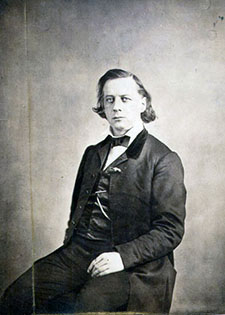
Celebrate Henry Ward Beecher’s 200th Birthday with the Litchfield Historical Society

Henry Ward Beecher Courtesy of the Helga J. Ingraham Memorial Library

This year is the 200th anniversary of Litchfield native and famous preacher Henry Ward Beecher’s birth. Join the Litchfield Historical Society on Monday, June 24 at 7:00 pm for a celebration of Beecher’s birthday, as well as a discussion of Debby Applegate’s 2007 Pulitzer Prize-winning biography, The Most Famous Man in America: The Biography of Henry Ward Beecher.

Led by retired Litchfield High School English teacher Jerry Geci, the conversation will focus on Beecher as a fascinating and complex man: celebrated in his own time, though not untouched by scandal. The Most Famous Man in America creates a powerful portrait of Beecher, highlighting both his charisma and his flaws. Applegate’s book has been touted as “Thoroughly researched, passionately written, and richly detailed” (Harry S. Stout). Joan Hendricks, a Harriet Beecher Stowe scholar calls it “A lively narrative of nineteenth-century religion, power, passion, and politics, as well as a perceptive study of the elusive preacher who rode them to the top.”

Whether you think Beecher was a saint or a scoundrel, please join us for a rousing book discussion. We will also view Beecher family-related items from the Historical Society’s collections and have birthday cake.

This event is free; a copy of the book can be purchased for $8 from the Historical Society. Please register by Friday, June 14, to receive a copy of the book. To register, call (860) 567-4501 or email registration@litchfieldhistoricalsociety.org.

The Litchfield History Museum is located at 7 South Street, Litchfield, CT. For more information about this or upcoming programs, please call (860) 567-4501 or see www.litchfieldhistoricalsociety.org.

For area information visit www.litchfieldhills.com

Open Your Eyes Studio Tour & Showcase in Litchfield Hills

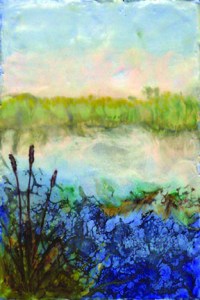
L. Petrocine - Wetlands
L. Petrocine – Wetlands

Artists in the Litchfield Hills are opening their doors to the public this summer on June 22 and 23 free of charge. In the Open your eyes Studio Tour sponsored by the Northwest CT Arts Council, twenty-nine artists and eight performers in New Milford and Kent will open their studios to the public.

Artists will open their creative spaces to the public on Saturday and Sunday along the tour route to show their work and discuss their creative processes. The artists’ media represented on the tour include painting, printmaking, sculpting, photography, metal sculpture, woodworking, wool spinning, dying & weaving, installation work, bookmaking, digital art, drawing, ceramics, and jewelry. The artists are Terri Tibbatts, Bill Merklein, Silver Sun Studio, Michael Everett, Linda Petrocine, Peter Kirkiles, Alison Palmer, Peter Kukresh, Lauri Zarin, Scott Bricher, Naya Bricher, Mary Terrizzi, Ed Martinez, Deborah Chabrian, Jill Scholsohn, Richard Stalter, Susan Grisell, Barbara Dull, Stephen Dull, Elizabeth Mullins, Susan Millins, Kathleen L’Hommedieu, Peter Catchpole, Patrick Purcell, Chris Osborne, Joel Spector, Anda Styler, Lynn WEllings, and Diane Dubreuil.

Tibbatts
Tibbatts

Performers for the Showcase on Saturday, June 22 from 5 – 9 pm on the New Milford Green will include TheatreWorks New Milford, musician Tom Hooker Hanford, Artists in Motion (dance), composer/pianist Sharon Ruchman, Larry Hunt from Masque Theatre, Buzz Turner on acoustic guitar, Rebecca Moore Dance, and True Jensen who perform rock and R & B cover music.

Jill Scholsohn
Jill Scholsohn

For more information about Open Your Eyes Studio Tour & Showcase go to OpenYourEyesTour.org or contact the Northwest Connecticut Arts Council at (860) 618-0075 or mcartsnwct@gmail.com.

Garden Club of America House and Garden Tour Celebrates 100 Years in Litchfield CT

“Garden of Margaret Hicks Gage, Litchfield Garden Club Archives, Litchfield Historical Society, Helga J. Ingraham Memorial Library.”

To fete their 100- year anniversary, the Litchfield Garden Club is hosting a flower show and house and garden tour including two Smithsonian Gardens on June 15 from 10 a.m. – 4 p.m. The Flower Show will take place at the Litchfield Community Center located on 421 Bantam Rd. (Rte. 202) in Litchfield and will feature outstanding horticulture and three exhibits one on garden history and design including details on four Smithsonian gardens, a second on the history of the Litchfield Garden Club and a third conservation exhibit on organic food. A boutique offering special garden items will also be a highlight. The Flower Show at the Community Center is free and open to the public.

In conjunction with the Flower Show, the Litchfield Garden Club has organized a very special house and garden tour of five members’ homes and gardens that includes judged design classes in each home. Tour tickets and maps are available for purchase at the Community Center and are $50 per person. Tour goers may also purchase a box lunch at Breeze Hill Farm Gardens for an additional $18 and enjoy lunch on the grounds of this spectacular garden. For tickets in advance visit www.litchfieldgardenclub.org for a printable registration form.

Houses featured for this very special tour include some of Litchfield’s most interesting homes and gardens.

The Ozias Lewis house, built in 1806 is a perfect example of a late traditional center chimney, 5 bay Federal style dwelling. The garden has newly installed stonewalls, terraces and imaginative gardens, including extensive beds of peonies. The gardens provide extensive views of Chestnut Hill to the east.

The Lismolin House named after a castle in Tipperary in Ireland is a gracious Colonial Revival style house complete with a Palladian window. The gardens with elegant stonewalls and garden beds afford wonderful eastern views and contain a former owner’s pet cemetery.

Perhaps one of the most interesting houses featured on this tour is the Oliver Wolcott House, built by Oliver Wolcott, Senior, the Colonial High Sheriff of Litchfield, a member of the Continental Congress, a signer of the Declaration of Independence and Governor of Connecticut, in 1753-1754, is the oldest house in the Borough of Litchfield. Many of the leading figures of their day, including General George Washington, Lafayette and Alexander Hamilton were entertained here. During the Revolution, the statue of King George III, torn down by a mob from its pedestal in Bowling Green in New York City, was brought by oxcart to the orchard behind the house, where the women and children of Litchfield melted it and molded bullets for the Continental Army.

The current owners bought the house in 1978 and carried out extensive renovations under the direction of expert restorers. The house has the original, hand-routed, beaded clapboards on its exterior and oak floors with handmade nails throughout the first floor. The “keeping room” contains a cooking fireplace and beehive ovens. The delft tiles in the dining room were installed about 1790 and the paneling over the dining room fireplace is original 18th century work. The rear terrace overlooks extensive gardens that are breathtaking.

Another beautiful home on the tour is the Ethan Allen House, the birthplace of Revolutionary war hero Ethan Allen in 1738. Today the house boasts a renovated kitchen, breakfast area and garden room. A landscape design is in process including renovating the parterres off of the terrace, originally designed in the early 1950’s. The gardens offer an extensive eastern view of Chestnut Hill.

Breeze Hill was built in 1800 as a summer home and the Oldmsted brothers were hired to landscape the grounds. In 2012, the owners of Breeze Hill Farm joined a select group of Garden Club of America homeowners whose garden documentation was accepted into the Smithsonian Institution’s Archives of American Gardens. On June 15th, you are invited to pick up your reserved boxed lunch here and enjoy a pastoral picnic lunch in these bucolic meadows and gardens.

Another Smithsonian Garden featured on the tour is Chestnut Hill Gardens that consists of a 240-foot perennial border composed of deer-resistant and native plants. The border surrounds a large vegetable garden, herb gardens, a water garden, pinetum, fruit trees and native shrubs.

For area information visit www.litchfieldhills.com

Steam at the Railroad Museum of New England

Steam_on_the_Naugy copy

This June, Steamin’ With Sadie will be the star attraction at the Railroad Museum of New England’s Thomaston Station as restored Lehigh Valley Coal Company Engine #126 leads weekend trips over our scenic railroad between June 8 through 23, including Father’s Day Weekend. Sadie, an 0-6-0 coal-fired steam engine and big sister to Hank the Tank, will be pulling their vintage train cars on hour-long trips along the Naugatuck River. For more information http://www.rmne.org. For area information www.litchifeldhills.com.

All trips are on Saturdays and Sundays for three weekends beginning June 8 at 10 AM, 12 PM and 2 PM, boarding at historic 1881 Thomaston Station. They will also have extra displays, story book readings, live music and activities for kids of all ages at the Station. Tickets are Adults $20 and Children $15 (ages 3 – 12), age 2 and under are free. Purchase tickets online or call (860) 283-7245 to purchase from their agent. This is a special event you will not want to miss!

Steam_at_Thomaston_Station

Between the 1830s and 1960, steam locomotives carried passengers and freight to every corner of America. They became part of our national history, a symbol of mobility and change. Over the years, steam locomotives became larger and more efficient. But technology advances after World War II changed the face of railroading forever. By 1948, steam engines were gone from the Naugatuck Valley, replaced by modern diesel locomotives on the New Haven Railroad from Bridgeport to Winsted, ending an important era in modern industrial history.

Lehigh Valley Coal Company #126 is a 40 ton coal-fired steam locomotive built by Vulcan Iron Works and put in service in 1931. It worked in Pennsylvania coal mines and was purchased by father and son team John and Barney Gramling from Indiana in 1993. Gramling Locomotive Works fully restored #126 to operating condition, completing it June 2011. Since then, #126 has traveled as far as Michigan, Illinois, Tennessee, North Carolina, South Carolina and now to Connecticut as a living, breathing Ambassador of Steam.

Print

About the Railroad Museum of New England
The Railroad Museum of New England is a not for profit historical and educational organization and an all-volunteer organization. We are located in historic 1881 Thomaston Station at 242 East Main St., Thomaston, CT. Our mission is to tell the story of the region’s rich railroad heritage through our educational exhibits and operation of the Naugatuck Railroad. The museum concept is more than artifacts; it’s also the story of the region and the development of society around the railroad. We offer an entertaining and scenic train ride along the Naugatuck River with vintage locomotives and restored passenger cars, also featuring displays of freight equipment and cabooses.

Norfolk Chamber Music Festival Announces its 2013 Season Through August 17

The Music Shed
The Music Shed

The Norfolk Chamber Music Festival, presented by the Yale School of Music, celebrates its 72nd season this year with performances and residencies by six internationally esteemed string quartets alongside students and young professionals from around the world. From June 22 to
August 17 Norfolk will host a roster of string quartets including: the Artis Quartet, the Brentano Quartet, the Emerson String Quartet, the Jasper String Quartet, the Keller Quartet, and the Tokyo String Quartet. The Tokyo String Quartet, which is retiring this year, will play its last concert on July 6 at the festival. And on August 3 the Emerson String Quartet will perform its New York area debut concert with the group’s new cellist, Paul Watkins.

Opening the 2013 festival on Saturday, June 22 is a choral program by the Yale Choral Artists, a new ensemble of 24 professional singers from around the country under the direction of the Yale Glee Club’s Jeffrey Douma. The Choral Artists will perform All Night Vigil (Vespers) by Sergei Rachmaninov along with a shorter work by Pavel Chesnokov, Salvation is Created.

From July 5 to August 17 Norfolk will host a six-week Chamber Music Session. Among the twelve concerts each Friday and Saturday night in July and August is a presentation of Franz Schubert’s song cycle Die Winterreise performed by pianist Peter Frankl and baritone Randall Scarlata on
Friday, July 12.

Back Camera

The Norfolk Festival, under the leadership of Paul Hawkshaw since 2004, includes a New Music Workshop led by composer Martin Bresnick, a Lecture series, a Young Artists’ Performance Series, Festival Artist concerts (Friday and Saturday nights), and a Family Day on July 14 that includes a performance of Yale’s Javanese ensemble, Gamelan Suprabanggo. This year’s festival concludes on August 17 with a performance of works for chorus and orchestra from the Renaissance to the contemporary by the Norfolk Festival Chorus and Orchestra directed by Simon Carrington.

For Tickets and Information: Concerts at: The Music Shed, 20 Litchfield Road (Rtes 44 & 272), Norfolk, CT Call: 203.432.1966 Email: norfolk@yale.edu Website: http://www.norfolkmusic.org Series Ticket Prices: $55 – $15; $10 Students (ages18-25), and KIDS COME FREE! Special Event Ticket Prices: The Tokyo String Quartet- The Last Concert $375 ($345 ltd view) – $225 ($175 ltd view) – $100 ($75 ltd view) – $45.

About the Norfolk Chamber Music Festival

Carl Stoeckel and Ellen Battell, both from families steeped in the Yale University tradition, married in 1895 and decided to honor Ellen’s father by founding a local musical society that would bring an abundance of musical excellence to their town of Norfolk, CT. Choral and musical societies already blossomed around the region; every town had a club and a quorum of musicians. Mrs. Stoeckel had long hosted informal evenings in her home, first in the Whitehouse, and later in the church next door. A great musical festival in Norfolk would provide a natural center to a region steeped in music. When the Litchfield County Choral Union came into being in 1899, it soon became the first internationally known music festival of its kind in America, and inspired the array of music centers that have since settled across the Berkshires.
After five years of concerts on their estate, the Stoeckels decided to build a hall worthy of truly great music.

A New York architect, E.K. Rossiter, designed the building, and the Music Shed opened for use on June 6, 1906. The Shed is built of cedar and lined with California redwood, which likely accounts for its brilliant acoustics and certainly for its rustic beauty. The original hall seated 700 audience members, but after several expansions it was enlarged to hold 2,100. (Fire regulations have since reduced its capacity back to under 1,000.) Audiences began to clamor for invitations from all over New England and as far away as Texas, Chicago and California, and within five years they could easily have filled a building many times as large. The Music Shed had begun its reign among the premiere concert halls in New England.

Mr. and Mrs. Stoeckel spared no expense in making the festival concerts extravagant musical events. They recruited a 70-piece orchestra of players from the Philharmonic and Metropolitan Opera orchestras in New York, and paid for a special train to transport the instrumentalists through the Litchfield hills. The appointments were eagerly sought; apart from the honor, the musicians had the pleasure of spending a week in the mountains, and the lawn parties that spread across the estate after rehearsals were soon famous.
Carl Stoeckel died in 1925 and the concerts continued for several years but activities came to a close during the 1930’s. When Ellen Battell Stoeckel passed away in 1939 she left her estate in trust for the use of the Yale School of Music, to continue “studies in music, art and literature,” and the Yale Summer School of Music/ Norfolk Chamber Music Festival began in 1941. Since that time countless gifted musicians have made for themselves a summer home in Norfolk, whether as students, faculty or performers at the Festival.

Since the beginning of the School and Festival, artists such as the Cleveland, Guarneri, Emerson, Juilliard, and Tokyo quartets have taught and performed in Norfolk. Fellows at Norfolk have included the oboist Allen Vogel, violinists Syoko Aki and Pamela Frank, clarinetist Richard Stoltzman, and soprano Frederica Von Stade. Recent ensembles have established themselves as students at Norfolk, including new music ensemble eighth blackbird, the Avalon quartet, the Calder quartet, the Claremont Trio, the Jasper Quartet, and the Miro quartet. In addition, Norfolk alumni are found in virtually every music conservatory and many major orchestras around the world, including the Boston, Chicago, and the Metropolitan Opera Orchestras.

Students from conservatories around the world audition each year to participate in the festival and those that are accepted receive fellowships to cover the cost of tuition, room, and board. Since 1906, Norfolk festival musicians (including Rachmaninov, Sibelius, Vaughn Williams, in the early decades of the 20th century, and the St. Lawrence Quartet, eighth blackbird, Frederica von Stade, Richard Stoltzman and Alan Gilbert more recently) have performed on the stage of the festival’s iconic venue, the “Music Shed.”