BraeVal and Rob Roy!

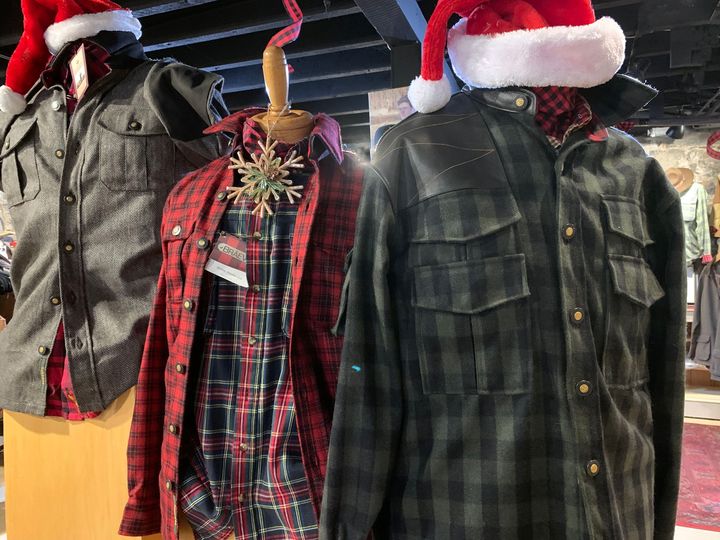
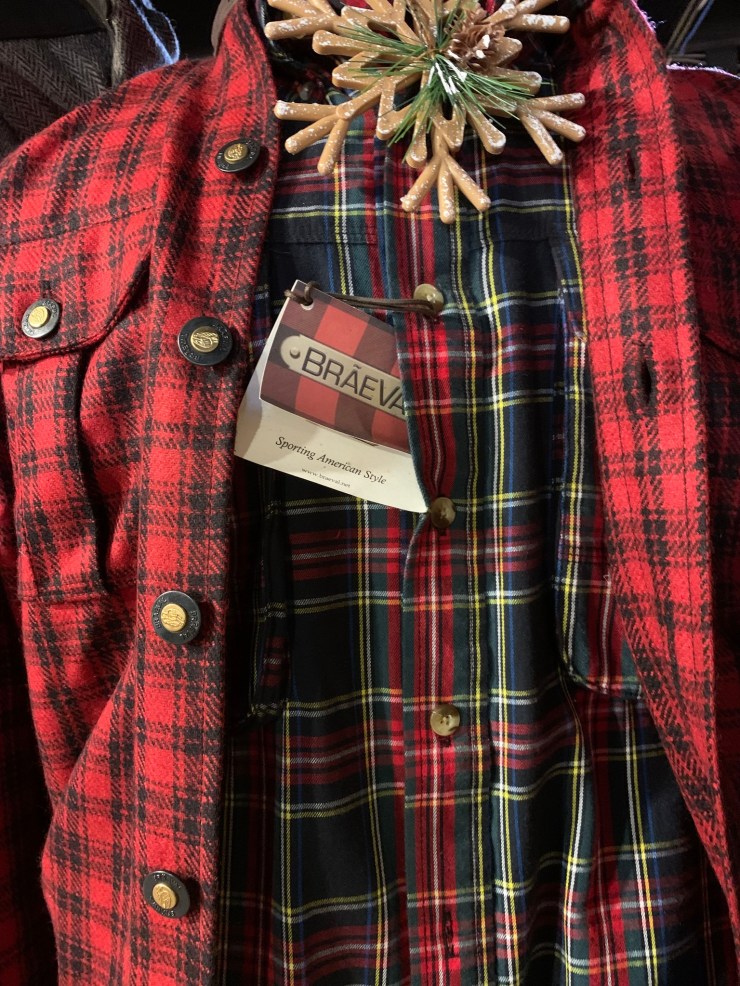
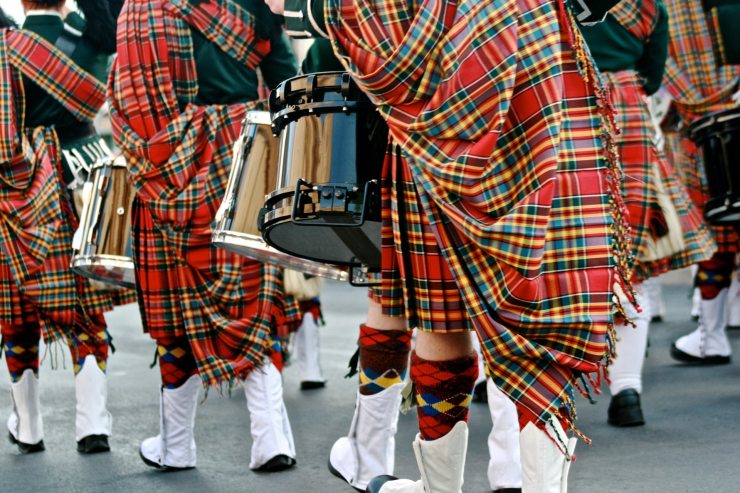
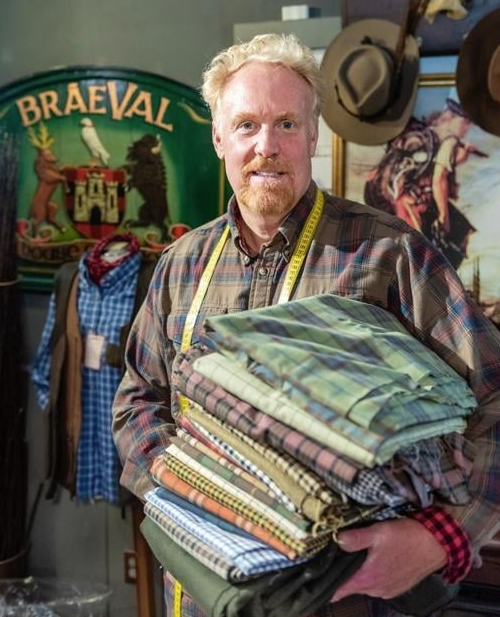
One of the leading men’s outdoor apparel companies, BraeVal, headquartered in Litchfield is well known for its field duty collection of shirts and jackets perfect for outdoor adventure. The foundation of this brand is on form and function in the field, at the office, or on a night in the town. One of the founder’s uncles brought the Rob Roy MacGregor tartan, known today as Buffalo Plaid to America in the 1800s. Today, the neckline and cuffs of every shirt and jacket hand-crafted by BraeVal are lined with Buffalo plaid.
Hero or villain, Rob Roy made an indelible impact on Scottish history for his dastardly deeds of cattle raiding and robbing from the rich and giving to the poor. The legend of Rob Roy is known throughout the world. It has been made popular by books, poems, and movies. There is even a drink created in his honor that dates back to 18th-century New York City.

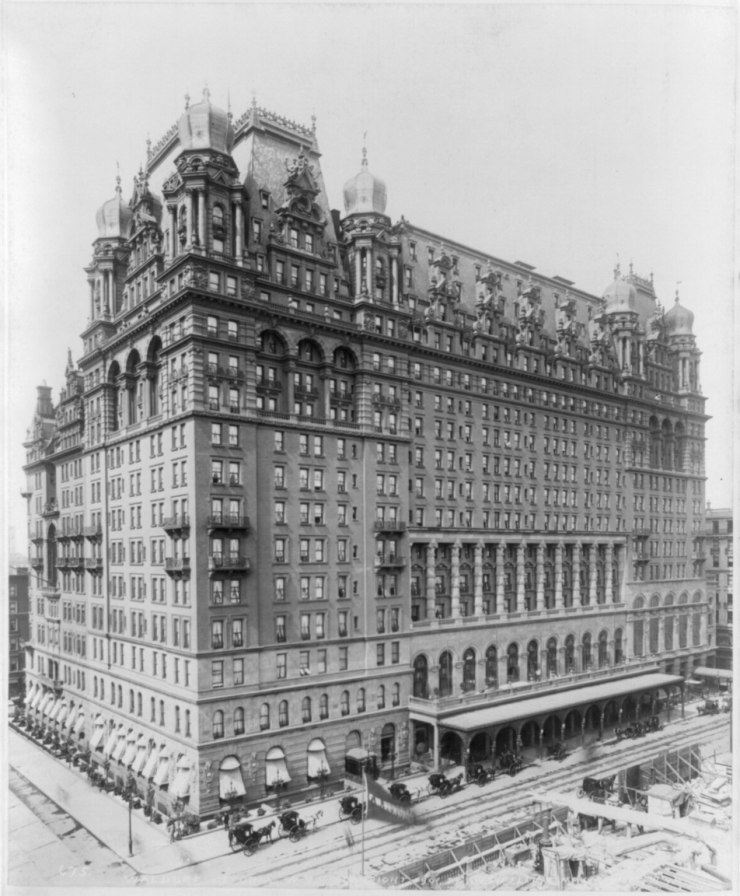
One of the ways to stay ahead of the pack as a hotelier and restaurateur in NYC in the 1890s was to create a new cocktail sensation and name it after a popular production to draw clients in the door. That said, most folks believe that the birthplace of the Rob Roy cocktail was at New York City’s infamous Waldorf Astoria in 1894. At that time, the Waldorf was located where the Empire State Building now stands. Just down the block from the Waldorf, The Herald Square Theater, was producing Reginald De Koven’s operetta called “Rob Roy,” based on the life of the Scottish folk hero. The bartender at the Waldorf decided to create a new drink, the Rob Roy, to promote the hotel and the opening of this performance. Similar to a Manhattan, the bartender prepared his new Rob Roy creation with scotch instead of rye whiskey. It was a sensation and became popular across the country.
Historian David Wondrich’s recent research led him to conclude that the Rob Roy cocktail was a creation borrowed from Duke’s House in Hoboken, New Jersey. The story goes that a salesman for Usher’s Scotch was invited to join a table of men drinking Manhattan’s at Duke’s and he said he would only join them if a round of drinks were made using his company’s scotch. The bartender, Henry A. Orphal, created the Rob Roy using Usher’s Scotch and it was a hit. Another historian claims that the birthplace of the Rob Roy was the swank Fifth Avenue Hotel, just up the street from the Waldorf.

Regardless of who created this cocktail, it is still popular today. Essentially a Rob Roy is a Manhattan created for a scotch lover. It is less sweet than a Manhattan because the scotch adds a touch of smoke to vermouth’s sweetness, giving this drink balance. It is made by combining scotch with sweet vermouth and a dash of bitters and served either with a Maraschino cherry or a twist of lemon… be decadent, have it with both!

Litchfield Restaurant Week Returns for 2nd Year March 22 – 29

Litchfield Restaurant Week returns for a second delicious year on March 22 – 29 and will feature 20 destinations ranging from bakery cafes and delis to pizza places, gourmet shops, and fine dining establishments.

West Street Grill

Each venue will offer a three-course prix fixe menu at $25, $35, or $45, some for lunch/during the day, others for dinner, and some for both lunch and dinner. See the official Restaurant Week page on the Visit Litchfield CT website (visitlitchfieldct.com) for a full list of participants, their locations, and their website and social media links. Restaurant Week menus will be added to the page in early March.

@ the corner

Litchfield Restaurant Week includes Connecticut’s Chef of the Year for 2023, David DiStasi, and his Materia Ristorante in Bantam, which was named Restaurant of the Year in Litchfield County by the Connecticut Restaurant Association and honored with a 2024 Overall Excellence award from Connecticut Magazine’s dining experts.

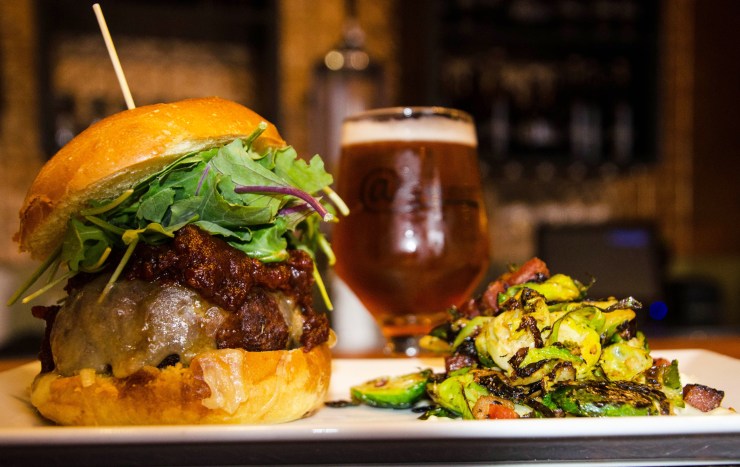
Many other participants also earned top awards from Connecticut Magazine’s dining experts, including Best Traditional American for The Village Restaurant, Best New American for West Street Grill, and At the Corner – which also won a Best Beer List award. Petraroia Deli won for Best Deli/Sandwich Shop, and Meraki for Best Lunch, Hidden Gem, and Best Deli/Sandwich Shop.

Litchfield Distillery is also participating in Litchfield Restaurant Week, and last year the craft distillery donated a bottle of its spirits to each participating restaurant that featured a cocktail or food item incorporating those award-winning spirits.

Visit Litchfield CT is the official source of news and updates about Litchfield Restaurant Week, which is sponsored by the Town of Litchfield CT Economic Development Commission.

BraeVal’s Scottish Roots Offers Holiday Gifts Inspired by Heritage

Admittedly gift giving can be kind of selfish… what’s better than that feeling of satisfaction knowing you have found something wonderful for that special someone on your list? At BraeVal, one of Connecticut’s treasures located in the heart of Litchfield, shoppers will find something that is unique and not mass–produced at a variety of price points. Best of all, this is a shopping experience where folks not only get to see and feel the quality of this upmarket brand in person, but they also get to meet the founder of the company and learn how his heritage inspired him.

The story of BraeVal goes way back in American and Scottish history. It all began when Gregor McCluskey’s Great Uncle, Big Jock McCluskey was caught poaching on the land of a great Scottish Lord, not once but twice! It was then that Big Jock decided to leave Scotland for America because he believed that he would be free to hunt, fish, and wander, without trespassing on any royal estates.

In America, Big Jock McCluskey became a bounty hunter, fur trader, and gold miner. It was as a fur trader with Native Americans where Big Jock stuck gold. He became famous for trading his red and black tartan plaid with many Native Americans who were amazed at its deep red color. Legend has it that Native Americans had never seen such cloth dyed a brighter red and believed it was made from the blood of McCluskey’s prey and enemies. Today, we know this fabric as Buffalo Plaid.

BraeVal, a Scottish word for Upland Rivers is a love affair between Gregor McCluskey’s American soul and his Scottish heritage. Today’s clothing conceptualized by Gregor, a relative of Big Jock, exemplifies this because each piece is not designed; rather each piece is engineered with features found nowhere else and accented with authentically made Buffalo Plaid. McCluskey often says he channels his Great Uncle’s love of the great outdoors and the many summers he spent in Scotland when creating something new for BraeVal.

There are many things that make BraeVal’s clothing distinctive. First off, it is engineered to be the best of the best because it is infused with the style and finish of European sporting fashion that has been time-tested in the field, out on the town, and then merged with American comfort. The shirts are made of proprietary Tierra fabric made of ring-spun Merino wool and long staple Egyptian cotton developed by McCluskey that results in an eco-friendly machine washable garment. The shirts are comfortable, durable, breathable, and a natural alternative to synthetics. All of BraeVal’s limited designed tartans and checks are an exclusive contemporary interpretation of historic patterns found nowhere else, ensuring that BraeVal’s customers stand out in the crowd. Best of all, and too many to mention, BraeVal’s garments offer many unique features – shirts for example, have a hidden bi-swing back, triple stitching, roll-up sleeve stays, below-the-waist pockets, and many more features.

BraeVal is located at 3 South Street in Litchfield and is open from 11 a.m. through 5 p.m. through December. For online orders http://braeval.net.

About BRÃEVAL

BraeVal is a Scottish word for the Upland River Valleys that exist between the mountains and rugged brae of the Scottish highlands, where streams and rivers tumble to loch and sea. It is pronounced ‘brave-all’. It is a land of arduous challenges in a place where sporting adventure is welcomed as part of a very robust lifestyle. The name was chosen because it symbolizes the special sense of outdoor adventure that excites all sportsmen and women. At BraeVal, they believe that this imagery holds the heart of every sporting adventurer who ever hiked beyond the view of the town. BraeVal is a lifestyle brand of clothing that has endured for generations. They are an original American design born of comfort that offers time-tested classics in the Scottish tradition. Located in Litchfield Connecticut.

Holiday Market Features Indigenous Artists & @ Institute for American Indian Studies November 25 & 26, December 2 & 3, 9 & 10

Once again this year, the Institute for American Indian Studies located at 38 Curtis Road in Washington is hosting a one-of-a-kind holiday shopping experience that celebrates Native American culture. What makes this Holiday Market unique is that it offers both deeply traditional crafts and more contemporary artistic expressions rooted in Native American cultural experience. Artists represented here are some of the finest working in the area today. It is a celebration of Native American diversity and inspiration.

The Holiday Market throughout the Institute’s impressive exhibition galleries takes place on Saturday, November 25 and Sunday, November 26, and Saturday, December 2, and Sunday, December 3. The final weekend for the holiday market is on Saturday, December 9, and Sunday, December 10. The market is free and open to the public from 11 a.m. to 4 p.m. each day. This is one of the few Holiday Markets that showcases only Native American-inspired artwork.

There are so many gifts to choose from including Native American jewelry, paintings, photography, apparel, and candles, to decorative gourds, pottery, rattles, flutes and more at a variety of price points. The chance to talk with the artists who have created these one-of-a-kind objects and to learn about the culture that inspired them makes your gift purchase even more meaningful.

For music lovers, musicians, and collectors, the magical-sounding authentic Woodland Native American flutes handcrafted by Allen Madahbee are truly unique. Madahbee is an Anishinaabe, born on Manitoulin Island, and is a registered Native American in Canada and the United States. In addition to the one-of-a-kind flutes, Madahbee is offering handmade beaded moccasins, woodcarvings, rock sculptures, and original paintings inspired by his ancestors and experiences.

Another vendor, Kim Lewis from Native Visions will be offering an astounding array of Native American Art from Oklahoma and the Southwest including a fine selection of original paintings and prints, Zuni Fetishes, silver jewelry, pottery by Mel Cornshucker, plus Hopi, and Navajo Kachinas.

A long-time favorite of the Holiday Market is Primitive Technologies, a nationally known small business that has worked with everyone from filmmakers to museum curators to recreate the material culture of prehistoric Native American life. They offer exquisite wood-fired replica pottery, hand-constructed from local river clay, hand-carved flint arrowheads and flint animal necklaces, carved stone art, traditional stone tools, containers made out of natural materials, unusual jewelry, and decorative gourds.

Jeanne Morningstar Kent, a recognized Abenaki artist and enrolled member of the Nulhegan Band, Coosuk-Abenaki of Vermont will be offering her artfully crafted decorative gourds in all sizes. Kent’s work is housed in many museum collections including the Smithsonian’s National Museum of American Indian Studies, Lake Champlain Maritime Museum, Roger Williams University, Chimney Point Museum, and many more. What makes these gourds unusual is that they utilize traditional Abenaki and Wabanaki designs.

Brandy Sawyer Emmans of Cherokee descent and owner of bthunder will once again be at the holiday market. Runway model for the Sky Eagle Collection, Native American educator, and advocate for MMIW (Missing, Murdered Indigenous Women), which offers an evocative selection of contemporary Native American-inspired art, jewelry, apparel, candles, and accessories.

Not to be missed is Eva Newell, an enrolled citizen of the Pokanoket Tribe, Pokanoket Nation in Rhode Island. Eva is a multi-talented artist who offers a range of artwork including beadwork, coil baskets, paintings, and glass mosaic storyteller vases. When she is not vending, Eva is an exhibit artist and craft instructor who has worked with institutions throughout New England.”Newell’s beadwork and baskets are also extraordinary. Eva will be participating during the December 9th and 10th market only.

The Museum’s Gift Shop will be open and brimming with gifts large and small in many price ranges. Here you will find a distinctive collection of Native American jewelry, including wampum jewelry crafted by Annawon Weeden, Mashpee Wampanoag, and Pequot artist Dan Simonds, head of the Wampum Wear Collective. A highlight is the jewelry and gift items from Eighth Generation, owned by the Snoqualmie Tribe in Seattle, which partners with Native artists across the country. The result is some of the most beautiful and authentic items available.

For foodies, there is a wonderful selection of traditional Native American food products from Sweet Grass Trading Company from the Winnebago Tribe of Nebraska. And, in the spirit of the Metis culture, Pemmican Patty’s products offer a selection of bison berry-blended jerky that will connect you with Native foodways and nutrition. The gift shop also has a good selection of books and children’s items.

Although entrance to the museum and the Holiday Market are free, donations are always appreciated. A tour of the museum for a nominal fee is a fun and insightful experience that compliments this unique shopping experience.

About The Institute for American Indian Studies
Located on 15 acres of woodland acres the Institute For American Indian Studies preserves and educates through archeology, research, exhibitions, and programs. They have a 16th c. Algonquian Village, Award-Winning Wigwam Escape, and a museum with temporary and permanent displays of authentic artifacts from prehistory to the present allows visitors to foster a new understanding of the world and the history and culture of Native Americans. The Institute for American Indian Studies is located at 38 Curtis Road, Washington, CT.

Why Were Tartans Once Banned?

Tartans have a long and complicated history. For many people, tartans conjure up the moody, misty, heather-strewn glens of the Scottish Highlands. Most historians, according to the Scottish Tartan Authority, believe that tartan was worn in the Scottish Highlands since the Third century. How it was conceptualized and exactly who produced the first tartan cloth remains lost in the mists of time.

Spellbinding beauty of the Scottish Highlands

Traditionally, made from wool, using a simple two-over-two twill weave to create a bright pattern of interlocking stripes, tartan cloth was made into clothes first worn by the Gaelic-speaking clans located in the north of Scotland. Today, we know this area as the Scottish Highlands. Tartans began to gain popularity in 1471 when the tartan cloth was purchased for King James and his Queen, making it popular in the Scottish court. In 1535, it became so popular that King James V wore tartan when hunting in the Highlands, and by 1587, documents show that Hector MacLean of Duart paid taxes owned on his land with his green, black, and white “hunting” tartan cloth, not with money. By the early 1700s, Scottish Regiments adopted tartans for their uniforms, with the Black Watch as the first Highland Regiment to appear in tartan.

The Battle of Culloden, David Morier

The trouble with tartans began to brew in 1746 when Scotland’s Bonnie Prince Charlie (Charles Edward Stewart) led an army of tartan-clad warriors, known as the Jacobites into England in 1745. This uprising attempted to topple England’s Protestant King George II from the throne and to restore Scotland’s Catholic House of Stuart. By wearing tartan and Highland dress, the warriors showed allegiance to Scotland’s Bonnie Prince Charlie, also known as “the Younger Pretender” due to his dashing good looks. After the Jacobite defeat at Culloden in 1746, which ended the Stuart cause, all Highland dress and traditional clothing that reflected the cultural heritage of the region was banned. It wasn’t until 1822 that King George IV lifted the ban by wearing tartan on his first visit to Scotland to encourage unity between Britain and Scotland.

Sir David Wilkie’s flattering portrait, painted in 1829, of King George IV in kilt during the visit to Scotland in 1822. The King wore the Royal Stewart tartan, flesh-colored hose and the green sash of the Order of the Thistle.

Through the centuries, tartan patterns have proven to be surprisingly flexible with a timeless appeal in regard to the whim of fashion, and in some cases politics. One of the key reasons why tartan has remained popular is because of its versatility. It can be worn up or down, in the field or out on the town. Today, actors and models, politicians and royalty, hip-hop musicians and punk rockers, as well as regular working folk – men, women, and children, all enjoy wearing tartan at one time or another.

The Best Place in Connecticut for Tartan

Connecticut’s best shop for tartan shirts, for men and women, is BraeVal in the center of Litchfield. BraeVal is a Scottish word for the Upland River Valleys that exist between the mountains and the rugged brae of the Scottish Highlands where streams and rivers tumble into the lochs and the turbulent North Sea and Atlantic Ocean. Best of all, there is no tartan ban here … they are alive and well – and thriving! A visit here is almost as good as a ticket to the Highlands! They also have a massive website.

BraeVal – Form, Function and Style

What makes BraeVal in Litchfield distinctive is that it is the home of Buffalo Plaid tartan brought to America by the owner’s uncle Big Jock McClusky. All the cuffs and collars of BaeVal’s custom-made tartan patterned shirts are embellished with Buffalo Plaid to acknowledge how this tartan crossed the Atlantic and became distinctly American. The tartan apparel found here is unique because it is made of a trademarked fabric that is an all-natural combination of ring-spun Merino wool and long-staple cotton that not only lasts for years, it also self-regulates in a variety of temperatures ensuring total comfort. At BraeVal, tartan patterns are always evolving to meet new fashion trends and environmental standards.

Learn How to Make Native American Leather Pouches @ Institute for American Indian Studies

A Sunday afternoon is the ideal time to learn how to make your own leather Native American style pouch on October 17 @ the Institute for American Indian Studies. This in-person small group workshop has been organized in one-hour time slots from 1 p.m. to 4 p.m. Under the guidance of the museum’s Education Department, you’ll learn how Native Americans used leather for clothing, pouches, bags, and other items of daily life.

Native Americans historically used leather pouches to carry many of life’s necessities. Pouches were made from a variety of materials, some were woven, and others were made from the hides of different animals, most commonly deer.

Sign up for a workshop that is both educational and engaging, as you learn how to make your very own unique and practical leather pouch that you can decorate with buttons, stones, and shells. After you have completed your project, you may find that you have a newfound appreciation for the artistry that went into making some of the artifacts in the museum’s collections.

Sign up with your friends and family to reserve a timeslot by clicking here. For questions call 860-868-0518 or email general@iaismuseum.org. The cost of participation including materials is $25 per person for non- members and $20 for members.

About the Institute for American Indian Studies
The Institute for American Indian Studies preserves and educates through discovery and creativity the diverse traditions, vitality, and knowledge of Native American cultures. Located on 15 acres of woodland IAIS is home to permanent and temporary exhibits, nature trails, and a replicated 16th century Replicated Algonkian village. During the school year, over 7,000 school-age children visit for hands-on programs to learn about the Indigenous people who have called Connecticut home for thousands of years.