Learn the Cultural Tradition of Corn Husk Weaving @ Institute for American Indian Studies

During this month of gratitude, the Institute for American Indian Studies located at 38 Curtis Road in Washington Connecticut is hosting a Corn Husk Weaving Workshop on Saturday, November 23rd at 1 p.m. Participants will learn the traditional art of weaving beauty from simple cornhusks into a seasonal craft perfect for gift giving.

Originating in South America, corn didn’t reach New England until about 1000 years ago. Corn was a useful crop that wasn’t grown just as a source of food. Many Native American traditions, including the Three Sisters Garden, various traditional stories, and annual ceremonies like the Green Corn Festival, encompass the cultural importance of corn including weaving art and everyday items from cornhusks.

A cornhusk is the outer leaf of the corn plant that protects the cob as it grows. Most of the time, this green outer shell is thrown out after corn is harvested. Readily available during the fall harvest season, skilled Native American artists and other artisans collect the husks and dry them until they turn an attractive shade of golden brown signaling that they are ready to be woven.

At this workshop participants will join an IAIS educator for a hands-on class where they will create crafts made from cornhusks to take home. Weaving with cornhusks has been around for thousands of years in Native American culture and this workshop presents a rare opportunity to experience a bit of Native American culture while creating something beautiful and meaningful.

Pre-registration for this workshop is required and can be made online at iaismuseum.org. The price to participate including all materials, is $20 for non-members and $10 for members of the Institute. If you have questions, please call 860-868-00518 or email events@iaismuseum.org

About the Institute for American Indian Studies

Its “Wigwam Escape” escape room offers an opportunity to solve a puzzle while learning about Indigenous life before European settlement. With a focus on “two-eyed seeing”, visitors can learn about the history of the American continent that incorporates more than 12,000-year history of human habitation. The Institute for American Indian Studies is located at 38 Curtis Road, Washington, Connecticut.

Annual Founders Day Clambake to Raise Funds for the Institute for American Indian Studies Local Indigenous Artists to be Celebrated

The Institute for American Indian Studies is celebrating its annual Founders Day Clambake on Saturday, September 14, from 6:00 p.m. to 8:00 p.m. at the Riverwalk Pavilion in Washington Depot, 11 School Street. Along with the traditional Indigenous foods of lobster, clams, corn, and potatoes, guests will be treated to an array of artworks by two featured artists, painter Claudine Purdue and fashion designer Brandi Sawyer-Emmons. A silent auction will feature original artwork by local artists such as Elizabeth McDonald and Ruth Jaffe, as well as prints by Cora Marshall, a Native American artist, gift certificates and items from local businesses, and many other items and collectibles. Ojibwe flute artist Allen Mahahbee will perform and is offering one of his hand-made flutes to the silent auction.

0

The cost to attend this fundraiser is $75.00 per person. Tickets are limited and must be purchased in advance. No tickets will be sold at the door. To register, visit online at https://www.iaismuseum.org by September 12.

The focus on Indigenous visual arts is new this year, as the IAIS is publicizing its annual art scholarship program. The Institute gives a small stipend to an emerging Native American artist currently enrolled in an arts program and offers them an opportunity for a one-person show at the museum. This year’s recipient will be announced at the event. Claudine Purdue is the 2023 artist. Her paintings explore the stories of Mi’Kimaq and Acadians who are her ancestors. Brandi Sawyer-Emmons, known as BThunder, creates Native American-inspired apparel and accessories including her popular Teepee handbag. Clambake attendees will have an opportunity to bid on items created by these two award-winning artists, along with the other silent auction items. Winners will be announced after this dinner.

About the Institute for American Indian Studies
Located on 15 acres of woodland, the IAIS offers educational programs, both permanent and changing exhibits and a replicated 16th-century Algonkian village. Its research department maintains extensive archeological and ethnographic collections and conducts archeological digs and other research. Its “Wigwam Escape” escape room offers an opportunity to solve a puzzle while learning about Indigenous life before European settlement. With a focus on “two-eyed seeing”, visitors can learn about the history of the American continent that incorporates more than 12,000-year history of human habitation. The Institute for American Indian Studies is located at 38 Curtis Road, Washington, Connecticut.

Moccasin Workshop 4/30 @ Institute for American Indian Studies

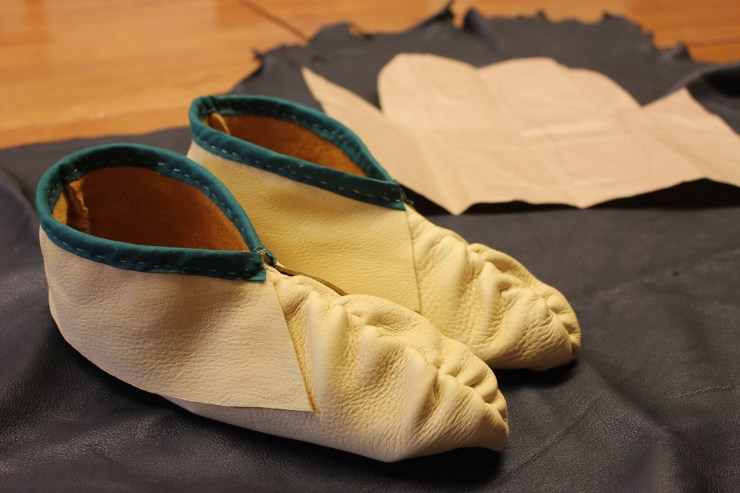
The Institute for American Indian Studies located at 38 Curtis Road in Washington Connecticut is holding a Moccasin Making Workshop on Saturday, March 30, from 11 a.m. to 2 p.m. Participants will not only leave this workshop with a pair of moccasins that they have made, they will also leave with a greater understanding of the cultural significance this footwear has with Native American communities throughout the country.

Across the United States, many Native American tribes created different styles of moccasins to suit their environment. The word moccasin itself comes from the Algonkian language – meaning “shoe.” They can be hard or soft-soled, ornately beaded, or plain, fur-lined, or cuffed. In short, the style of moccasins is as diverse as the many different tribes that they originate from.

Traditionally, in the Eastern Woodlands, including Connecticut, soft-soled moccasins were commonly made out of a single piece of deer, elk or moose hide, and hand-sewn using sinew. A characteristic making it an Eastern Woodlands moccasin is the center seam that is gathered at the toe giving it a pucker shape. Today, moccasin-inspired shoes find their way into modern designs and fashion statements, even as Native culture keepers continue the centuries-old tradition of moccasin making.

This fascinating three-hour workshop, led by Darlene Kascak, Schaghticoke Tribal Nation, and Educational Outreach Ambassador for IAIS promises to be fun and informative. Participants will make a pair of pucker toe style moccasins out of deer hide while listening to the history of moccasins. It is a powerful feeling to make something that you can use in your everyday life, using methods that people have used for generations.

This workshop is recommended for adults and children ages 8 and up due to the dexterity required for sewing. To register for this workshop head to the website http://www.iaismuseum.org, call 860-868-0518, or email events@iaismuseum.org. The cost of this workshop, which includes all materials, is $80 for non-members of the museum and $70 for members.

About The Institute for American Indian Studies

Located on 15 acres of woodland acres the Institute For American Indian Studies preserves and educates through archeology, research, exhibitions, and programs. They have a 16th c. Algonquian Village, Award-Winning Wigwam Escape, and a museum with temporary and permanent displays of authentic artifacts from prehistory to the present allows visitors to foster a new understanding of the world and the history and culture of Native Americans. The Institute for American Indian Studies is located at 38 Curtis Road, in Washington, Connecticut.

Tap into a Native American Tradition @ Maple Sugar Festival @ Institute for American Indian Studies March 2

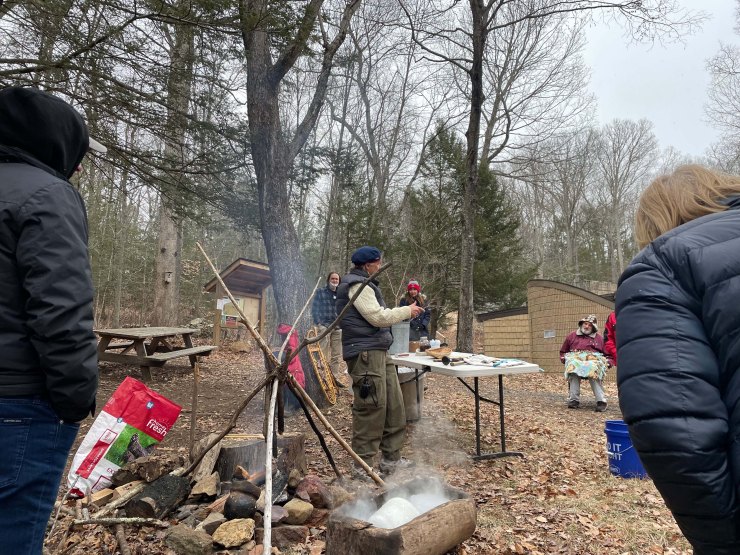
Maple syrup has long enjoyed pride of place on many breakfast tables. The origin of this sweet spring elixir isn’t part of a trendy branding campaign; it is the widely unknown discovery of Native Americans, who have tapped trees for maple syrup since time immemorial. On March 2, the Institute for American Indian Studies in Washington, Connecticut is hosting its annual Maple Sugar Festival, from 11 a.m. to 4 p.m. to celebrate the original legacy of maple syrup.

Indigenous communities in the Northeast and Canada harvested sap from maple trees, boiling down sap and turning it into sugar water and maple syrup long before European contact. Special sugar camps were set up in groves of sugar maple trees and much like this festival, sugaring became a social event. “At the Institute’s Maple Sugar Festival, families will see firsthand how Native Americans harvested this sugary delight, a process that has been passed on through stories and demonstrations from generation to generation,” said Chris Combs, Executive Director of the Institute. “Most importantly, they’ll learn why this process is such an important part of Native American culture,” Combs added.

At this event, IAIS Educator and Ecologist, Susan Scherf will demonstrate various traditional Native American techniques of collecting sap and boiling it down into syrup and sugar. Visitors will learn the importance of maple sugar to the diet of Native Americans as well as its usefulness as an item of trade, and even as medicine.

In keeping with the fun-filled traditions surrounding Native American sugar camps, children are invited to listen to Native American stories and play traditional family-friendly games that will take place throughout the day, adding to this culturally enriching experience. To satiate your taste buds, maple syrup, samples from the Passamaquoddy Tribe of Maine are being offered. And, if you want to bring some of this delicious amber nectar home, head to the Institute’s gift shop which is stocked up with maple syrup made by the Passamaquoddy Tribe.

The cost of participation is $15 for adults, $10 for children, and $5 for members of the Institute. To pre-register head to The Institute for American Indian Studies Museum & Research Center, email events@iaismuseum.org, or call (860) 868-0518.

About The Institute for American Indian Studies
Located on 15 acres of woodland acres the Institute For American Indian Studies preserves and educates through archeology, research, exhibitions, and programs. They have a 16th c. Algonquian Village, Award-Winning Wigwam Escape, and a museum with temporary and permanent displays of authentic artifacts from prehistory to the present allows visitors to foster a new understanding of the world and the history and culture of Native Americans. The Institute for American Indian Studies is located at 38 Curtis Road, in Washington, Connecticut.

Play Snow Snake @ IAIS January 20

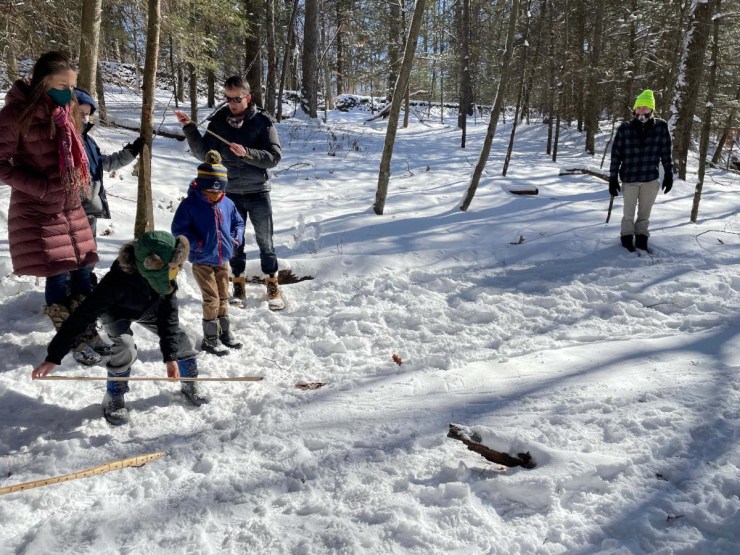
The snow snake game was once one of the most popular winter games played in North America. Many Native American Communities played it from Maine to California, Oklahoma to Alaska. Today, this game is being revitalized across the country. On Saturday, January 20 at 1 p.m. at the Institute for American Indian Studies on 38 Curtis Road in Washington Connecticut, competitors can make their very own snow snake and then test their skills playing this traditional game.

Originally, snow snake was the traditional Haudenosaunee (Iroquois) game played during the winter. The sport has its history in hunting when long spears were thrown like snow snakes across the ice and snow to catch prey, without coming too close and scaring them away. Most often, snow snake was played when the men of the village returned from their annual winter hunting trip. It was – and still is – an exciting game of skill to the Haudenosaunee people and many other Native Communities.

Snow Snake!

Snow snakes are hand-made from a flattened piece of wood with a notch at one end that makes them easy to throw. Some sticks are carved in intricate patterns that resemble a snake and then coated with wax. Participants in this workshop will learn how to make their very own snow snake with Susan Scherf, Educator, and wood crafter at the Institute. This workshop includes materials and wood-burning kits. Participants are welcome to bring their whittling knife if they have one although it is not required

A friendly competition follows the snow snake workshop at the specially prepared snow snake track. The object of the game is to see how far participants can throw the snow snake along a snow trench. The person who throws the snake the farthest after a number of rounds is the winner! The snow snake game is a test of both skill and strength, and a good throw can go more than 100 yards.

This game is often referred to as a medicine game because it lifted the spirits of the people during the long winter months. The Institute for American Indian Studies is excited to share this game that is great for socializing, and remembering the traditions of generations of Native Americans who came before us.

Space is limited and pre-registration is required. To register / The price of participation including materials is $20 for non-members and $10 for members. For more information call 860-868-0518, email events@iaismuseum.org, or click here to register online.

About the Institute for American Indian Studies
Located on 15 acres of woodland acres the Institute For American Indian Studies preserves and educates through archeology, research, exhibitions, and programs. They have the 16th c. Algonquian Village, Award-Winning Wigwam Escape, and a museum with temporary and permanent displays of authentic artifacts from prehistory to the present allows visitors to foster a new understanding of the world and the history and culture of Native Americans. The Institute for American Indian Studies is located at 38 Curtis Road, Washington, CT.

Full Moon Walk with Institute for American Indian Studies December 26 @ 6

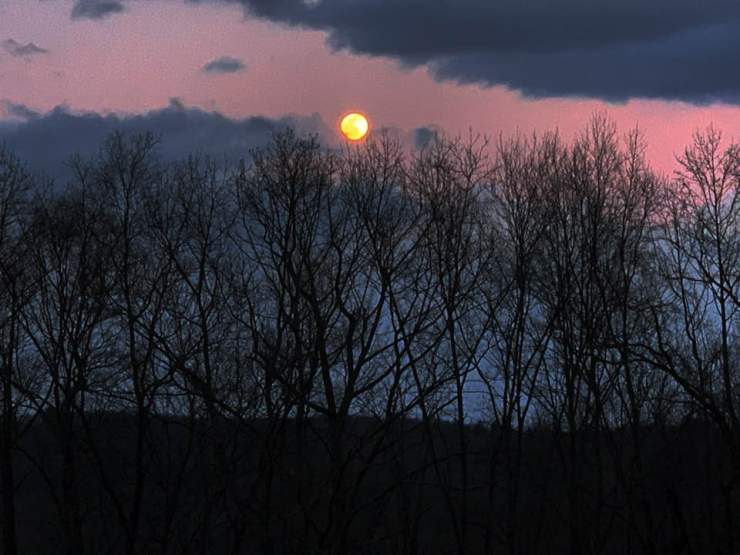
If you are looking for a fun and refreshing way to walk off some of the holiday goodies you have been eating then join the staff of the Institute for American Indian Studies for a Full Moon Walk on Tuesday, December 26 at 6 p.m. This year, even the moon is in a festive mood and will be fully illuminated on December 25th, 26th, and 27th. This full moon after the Winter Solstice takes the highest and longest path along the night sky. One of the names of the December full moon is “Long Night Moon” because it shines above the horizon longer than most full moons, making this walk extra special.

As participants walk along the beautifully wooded trails on the grounds of the museum under the glistening full moon they will learn what names Native Americans gave the December full moon and what it meant to them. Participants will learn how different Native American peoples traditionally used the monthly cycles of the moon and nature’s corresponding signs to track the seasons.

A highlight of this experience is to witness and celebrate firsthand the beauty of December’s full moon, as Native American communities have done for centuries. For example, the most common name for the December Moon, attributed to the Mohawks, is the Cold Moon which perfectly describes the cold days and nights during this time of year. The woodland walk ends at the newly restored 16th-century Algonkian village where a warm fire, hot chocolate, and stories will greet participants.

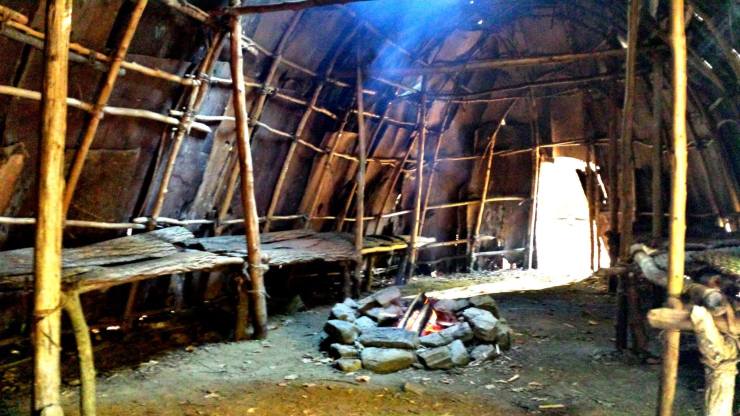
Inside the wigwam

Please dress appropriately for the weather, bring a flashlight, and wear sturdy footwear. If there are weather-related concerns on the day of the program, please contact the museum at 860-868-0518. The price of participation is $5 for IAIS Members and $10 for Non-Members. To register click here https://iaismuseum.charityproud.org/EventRegistration/Index/14300

About The Institute for American Indian Studies

Located on 15 acres of woodland acres, the Institute For American Indian Studies preserves and educates through archeology, research, exhibitions, and programs. They have the 16th c. Algonquian Village, Award-Winning Wigwam Escape, and a museum with temporary and permanent displays of authentic artifacts from prehistory to the present allows visitors to foster a new understanding of the world and the history and culture of Native Americans. The Institute for American Indian Studies is located at 38 Curtis Road, Washington, CT.