Celebrate with the Institute for American Indian Studies

The Institute for American Indian Studies is celebrating 50 years since its founding in 1975 with two summer events. On Sunday, August 10, we will present our renowned Green Corn Festival in Hollow Park, Woodbury. The 20th year of this festival recognizes that corn is an integral part of the annual life cycle of Native American People and celebrates the time when the first tender ears are ripe for picking. Welcome the first corn of the season with drumming, dancing, Indigenous-focused activities, vendors, Native storytelling, and more! Enjoy the Native Nations Dance Troupe led by Erin Lamb Meeches (Schaghticoke Tribal Nation) and flute music by Allan Madahbee (Ojibwe). The event will occur rain or shine from noon to 4:00 pm. Tickets are available on the website: www.iaismuseum.org, and on the day of the event.
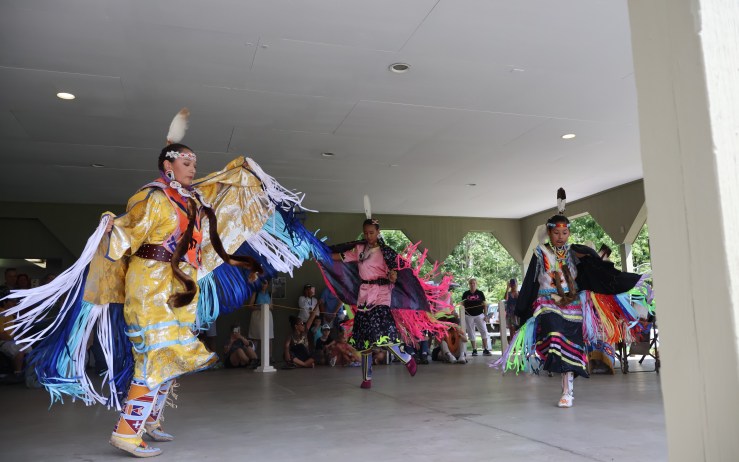
On Thursday, August 14, we will celebrate our 50th Anniversary with a gala at Hopkins Vineyard. Honorary Chairs Darlene Kascak (Schaghticoke Tribal Nation) and Matt Kent, Pilobolus Artistic Director, invite you to join IAIS for hearty hors d’oeuvres, wine and other libations, flute music by Allan Madahbee (Ojibwe), and a special dance performance by Pilobolus. Darlene, the Institute’s Outreach Ambassador and acclaimed Native storyteller, collaborated with Matt Kent to provide narration and insight on Indigenous-inspired dances. The evening will also acknowledge founding member Edmund Swigart, respected archaeologist and teacher, and the inspiring guidance provided by Adelphena Logan, an esteemed elder of the Onondaga Tribe.

Gala tickets range from Quinnetukut, Wigwam, and Three Sisters sponsorship levels to individual tickets. Reservations are available at http://www.iaismuseum.org. For additional information, email events@iaismuseum.org or call 860-868-0518.

About The Institute for American Indian Studies
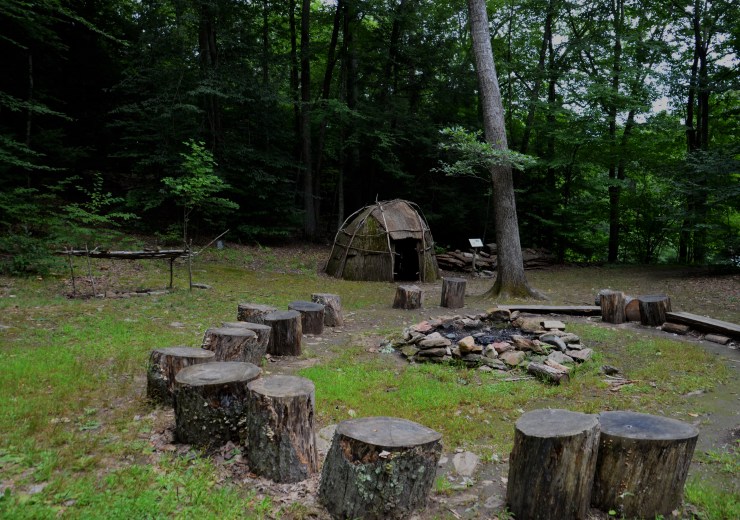
The Institute for American Indian Studies is a museum and research center dedicated to tracing more than 12,000 years of Indigenous accomplishments and celebrating the vibrant lifeways of contemporary Indigenous communities. Exhibits, programs, and a replicated Algonkian village provide opportunities to learn about the Woodland Indians who have lived in the northeast since time immemorial.
Honoring Native American Veterans November 3 @Institute for American Indian Studies

Many people may be unaware of the major contributions Native Americans have made to our armed forces. They have fought valiantly in the United States military in every conflict since the American Revolution, even before Native Americans gained U.S. citizenry in 1924.

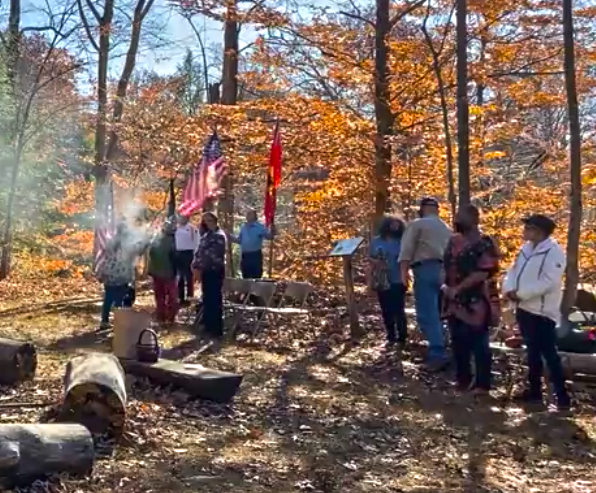
Each year, in honor of Veterans Day, the Institute for American Indian Studies in Washington Connecticut honors the exceptional military service of Native Americans in a formal dedication and ceremony. This year, the Institute is once again inviting the public to participate in the program that will honor Native and non-Native Americans whose passion and loyalty have helped to make America what it is today on Sunday, November 3 at 12:30 p.m. The Institute is located at 38 Curtis Road in Washington Connecticut.

This year the Institute is honoring three people that collectively represent three branches of the military: Army, Coast Guard, and Navy. The honorees are, Valerie Gambrell (US Army, Eastern Pequot), Sargeant, Reginald Mitchell (US Coast Guard, Golden Hill Paugussett), and Petty Officer 2nd Class
Alicia King (US Navy, Golden Hill Paugussett).

Culturally, Native Americans have always celebrated their warriors. This year the Institute is honoring several local Native Americans who have served in the United States Armed Forces. The Crow Hill Singers Drum Group led by Aaron Athey (Mohegan) from Uncasville will perform traditional songs to honor the contributions made by Native American Veterans and all Veterans. A new highlight is that Tails of Joy will have a canine ambassador as part of the proceedings. Tails of Joy is a non-profit dedicated to providing animal-assisted therapy. Following the ceremony, attendees are invited to enjoy light refreshments in the museum.

Although this planned event will take place outdoors, if the weather is, inclement it may move indoors. Advance registration is appreciated for this free event. Click here for tickets
https://iaismuseum.charityproud.org/EventRegistration/Index/20669

About the Institute for American Indian Studies
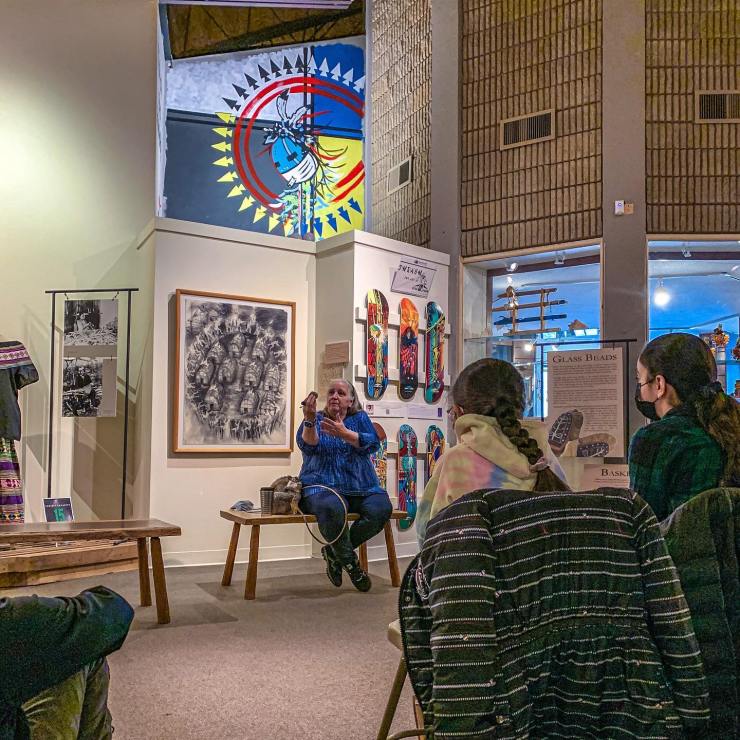
Located on 15 acres of woodland, the IAIS offers educational programs, both permanent and changing exhibits and a replicated 16th-century Algonkian village. Its research department maintains extensive archeological and ethnographic collections and conducts archeological digs and other research. Its “Wigwam Escape” escape room offers an opportunity to solve a puzzle while learning about Indigenous life before European settlement. With a focus on “two-eyed seeing”, visitors can learn about the history of the American continent that incorporates more than 12,000-year history of human habitation. The Institute for American Indian Studies is located at 38 Curtis Road, Washington, Connecticut.

About Veterans Day
Veterans Day originated as “Armistice Day” on Nov. 11, 1919, the first anniversary marking the end of World War I. Congress passed a resolution in 1926 for the annual observance and Nov. 11 became a national holiday beginning in 1938. President Dwight D. Eisenhower signed legislation in 1954 to change the name to Veterans Day as a way to honor those who served in all American wars. The day honors military veterans with parades and speeches across the nation and a remembrance ceremony takes place at the Tomb of the Unknowns at Arlington National Cemetery in Arlington, VA. The ceremony honors and thanks all who served in the U.S. armed forces.

Stories from the Animals @ Institute for American Indian Studies with White Memorial Conservation Center

Everyone loves a good story. Listening to stories especially those passed down through generations is one of the best ways to connect with each other and the world around us. The Institute for American Indian Studies located on 38 Curtis Road in Washington Connecticut in partnership with Litchfield’s White Memorial Conservation Center is presenting a powerful program called “Stories from Animals,” beginning at 2 p.m. on Saturday, October 19th.

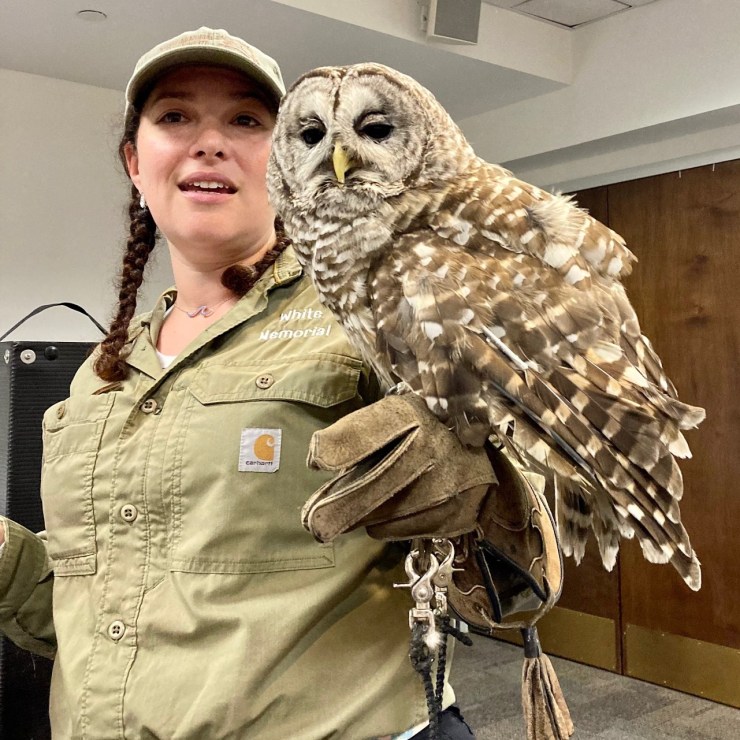
Colleen Harrak, White Memorial’s Environmental Educator will join award-winning storyteller, Darlene Kascak, of the Schaghticoke Tribal Nation and IAIS Educational Outreach Ambassador for an entertaining program that includes stories and live, local woodland animals. The goal of this program is to show participants how to experience Etuaptmumk – a Mi’kmaw saying that translates to “two-eyed seeing.” This idea encourages people to look at the same concept from both Western and Indigenous knowledge.

Oral tradition is an important cultural component in Native American culture because it is the very stories told that keep the knowledge and the traditions alive. “As a storyteller in Native communities, I bear a profound responsibility,” said Darlene Kascak. “I am entrusted with the task of preserving, protecting, and passing down oral stories that are hundreds if not thousands of years old. This role is not a duty it is also a deep-rooted passion that I hold dear. I am driven by the urgency to keep this tradition alive so that future generations can experience the beauty of learning through storytelling,” Kascak added.

The highlight of this program is the combination of several live animal ambassadors brought by the White Memorial Conservation Center and the Native American stories about each of these animals that offer timeless life lessons. The price of participation is $15 for non-members and $5 for members of the Institute. Pre-registration is advised by visiting iaismusueum.org.

About the Institute for American Indian Studies

Located on 15 acres of woodland, the IAIS offers educational programs, both permanent and changing exhibits and a replicated 16th-century Algonkian village. Its research department maintains extensive archeological and ethnographic collections and conducts archeological digs and other research. Its “Wigwam Escape” escape room offers an opportunity to solve a puzzle while learning about Indigenous life before European settlement. With a focus on “two-eyed seeing”, visitors can learn about the history of the American continent that incorporates more than12,000-year history of human habitation. The Institute for American Indian Studies is located at 38 Curtis Road, Washington, Connecticut.

2024 Summer Camp at the Institute for American Indian Studies Registration is Open

Registration is now open for the 2024 summer camp weekly programs for children ages 6 – 12 at the Institute for American Indian Studies at 38 Curtis Road in Washington, Connecticut. The summer camp runs for six consecutive weeks from June 24 through the week of August 5 (excluding the week of July 1), Monday through Friday, from 9 a.m. to 5 p.m. The Institute’s summer camp programs strive to get children unplugged from indoor activities through exciting hands-on programs that get them outdoors. Weekly programs encourage children to practice team building, make new friends, appreciate nature, and connect with an enriching culture that is more than 12,000 years old. To find out more and to register online visit https://www.iaismuseum.org/summer-camp. For questions call 868-0518 ext. 453 or email gbenjamin@iaismuseum.org.

Native American history comes alive through the educationally entertaining activities curated by the professional Educational Department of the Institute. Trailblazing through the woods, investigating the natural world, mock archaeological digs, educational games, listening to traditional Native American stories, learning new crafts, and working together to complete a group project are just some of the ways children will enjoy their time at the Institute. Each week the Institute will offer a different series of exciting programs to engage and educate children.

A connection to nature plays a critical role in a child’s development. Children that want to learn more about the natural environment and how they relate to it might want to register for, “Getting in Touch with Your Senses,” from June 24 – June 28.

“Planting Seeds for Growth: Project Week,” from July 8-July 12 will teach children invaluable skills that have been passed down through generations of Native American communities. Foraging, building from natural materials, sewing, and weaving, are just some of the topics that will be covered. This program will help build confidence, teach basic survival skills, and enhance understanding of the great outdoors.

Children who are budding writers, actors, actresses, puzzle solvers, and researchers will enjoy “A Play on Words: Imagination and Learning Through Storytelling,” from July 15- July 19. These programs are finely tuned to help further develop children’s communication skills by sharpening their abilities to record, pass on, and interpret information in many ways from storytelling to theatrical expression.

Perfect for children concerned about the environment and how to survive naturally, “Power of the Eighth Generation: Eco-Survival Skills,” from July 22 – July 26 promises to be as fun as it is informative. Campers will practice traditional survival skills like navigation, carving, lashing, and more as they explore technologies that Native Americans used for thousands of years to thrive in the Eastern Woodlands. Through these programs, campers will also learn how we impact our environment.

For children interested in archeology, “Time Travel: Understanding the Past, Present, and Future,” from July 29 – August 2 is a must. Campers will learn how to put scientific methods into practice and learn the power of oral tradition through games, mock digs, and other activities.

Ideal for children who have a thirst for knowledge and want a deeper understanding of our natural environment, “Ecological Explorations: Two-Eyed Seeing in the Natural World,” from August 5- August 9, is perfect for them. The programs being offered explore the concept of both traditional indigenous ecological knowledge and Western scientific concepts to help children better understand the natural environment from two informative and yet different perspectives. Plant and animal identification, traditional ways Native American communities have used and respected the land and water, animal adaptations, and much more make this a unique educational experience.

About The Institute for American Indian Studies
Located on 15 acres of woodland acres the Institute For American Indian Studies preserves and educates through archeology, research, exhibitions, and programs. They have a 16th c. Algonquian Village, Award-Winning Wigwam Escape, and a museum with temporary and permanent displays of authentic artifacts from prehistory to the present allows visitors to foster a new understanding of the world and the history and culture of Native Americans. The Institute for American Indian Studies is located at 38 Curtis Road, Washington, CT.

The Magic of Courting Flutes @ Institute for American Indian Studies Feb. 17

The Institute of American Indian Studies at 38 Curtis Road in Washington has a wonderful way to end Valentine’s Day week. On Saturday, February 17, beginning at 1 p.m., Ojibway artist, and musician Allan Madahbee will explain the cultural significance and demonstrate the hauntingly beautiful sound of the Native American courting flute. A highlight for participants is to learn why the courting flute is deeply rooted in the traditions of many Native American Cultures.

Today, makers of Native American Flutes like Ojibway artist and musician Allan Madahbee craft their style and sound into their creations. Madahbee began to research the Chippewa flute culture and was influenced and mentored by Joseph Firecrow of the Cheyenne Nation. “We became friends and he provided guidance and feedback and explained some of his methods of flute making. With his passing, we have all lost a great Native American flute maker and musician. I am proud to continue our flute-making traditions.” The sound of the courting flute, which is usually made of cedar, has an uncommon scale for Western music and is entrancing.

Participants will listen to this haunting music performed by Madahbee, hear the legend of the courting flute, and examine the unique construction of a collection of flutes on display. There will also be a limited number of original, one-of-a-kind handmade courting flutes for purchase. Space is limited and pre-registration is requested. To reserve a spot head to http://www.iaismuseum.org, email events@iaismuseum.org, or call (860) 868-0518. The price of participation is $5 for IAIS Members and $15 for Non-Members.

About Allan Madhbee
Born on Manitoulin Island, the Home of the Great Spirit, Allan Madahbee is a member of the Ojibway (Chippewa) Nation who has pursued the traditional arts and crafts of his ancestors. He has been making Native American flutes for about ten years. “I had always thought they were a product of the Southwest Indian tribes, but a book that I found that was written during the 1800s about Chippewa culture, had a passage about the Chippewa flutes, along with pictures. This made me realize that they were indeed a part of my Chippewa culture. Knowing that my ancestors constructed these flutes for hundreds of years has inspired me to continue this tradition. Also, the haunting sound from these mystical instruments is a large part of my inspiration.”

About the Institute for American Indian Studies
Located on 15 acres of woodland acres the Institute For American Indian Studies preserves and educates through archeology, research, exhibitions, and programs. They have the 16th c. Algonquian Village, Award-Winning Wigwam Escape, and a museum with temporary and permanent displays of authentic artifacts from prehistory to the present allows visitors to foster a new understanding of the world and the history and culture of Native Americans. The Institute for American Indian Studies is located at 38 Curtis Road, Washington, CT.

Warm Up to Winter – with Virtual Programs @ Institute for American Indian Studies

Whatever the weather is like outdoors, learning something new indoors can be the perfect way to spend a cold winter afternoon. With that in mind, the Institute for American Indian Studies has developed a new Saturday series of virtual programs that are intriguing and ideal for those seeking indoor diversions this winter.

This presentation is the third in the Institute’s Annual Native American-Archaeology Roundtable series. This ongoing series seeks to explore ecological ties, past and present, through the sharing of new technologies, new findings, and new analysis that helps bring Indigenous communities into greater focus.

On Saturday, January 27 at 2 p.m. the topic will focus on “Lessons in Food Sovereignty from White Tailed Deer and Wampum in 17th century New England.” Participants will join Elic M. Weitzel, a Ph.D. candidate in anthropology from the University of Connecticut along with the Institute’s Staff for this virtual presentation. Weitzel specializes in human ecology and anthropology and will discuss how recent analysis of deer and quahog remains from archaeological sites in Southern New England suggest that European colonialism and capitalism put unprecedented pressure on these species even though fewer people lived in this region at the time. The discussion will highlight that overexploitation wasn’t a demographic problem and that pre-colonial Indigenous methods of gathering the bounty of the land appear to have been more sustainable. According to Mr. Weitzel, these results corroborate traditional and Indigenous ecological knowledge asserting that food sovereignty can permit long-term sustainable resource use, a concept that is very important around the world today.

To participate in this program and to receive the Zoom link please register online at https://www.iaismuseum.org or call 860-868-0518 or email events@isismuseum.org. The price of participation is free for members of IAIS and LHAC members and $10 for non-members.

Please follow us on Facebook, Instagram, and our website for dates and times of further talks in this series in the coming months.

About the Institute for American Indian Studies
Located on 15 acres of woodland acres the Institute For American Indian Studies preserves and educates through archeology, research, exhibitions, and programs. They have the 16th c. Algonquian Village, Award-Winning Wigwam Escape, and a museum with temporary and permanent displays of authentic artifacts from prehistory to the present allows visitors to foster a new understanding of the world and the history and culture of Native Americans. The Institute for American Indian Studies is located at 38 Curtis Road, Washington, CT.