Finger Weaving Workshop offers Native American Instruction @ Institute for American Indian Studies Sept. 23, 2023

Most archeologists believe that the art of basket making is one of the oldest crafts in the world. In Native American culture, baskets have always been an integral part of their material culture. For centuries Native Americans have relied on baskets for gathering, storing, preparing, and cooking food. Finger weaving is one of several techniques used among Eastern Woodland Indigenous peoples to make baskets as well as an array of decorative and ceremonial items.

Make a Native American Inspired Basket

On Saturday, September 23 at 1 p.m. the Institute for American Indian Studies at 38 Curtis Road in Washington Connecticut is holding a finger-weaving basket workshop, ideal for those who want to learn this traditional art form. “We think that experiences learning about cultural art forms is important because it gives people insight into Native American culture, “ said Chris Combs, Executive Director.

The focus of September’s class is on the art of finger weaving using natural fibers like jute and raffia. Participants will join Pokanoket Nation and Tribe member, Eva Newell of Cape Sable Island Wampanoag, Nauset, and Cree ancestry for this finger-weaving workshop.

The essence of finger weaving is that it is like an elaborate braid where you move the warp and weft threads with your fingers in order to create beautiful baskets. What makes finger weaving unique is that the same threads are used for both warp and weft; they just change places as you work. In this finger-weaving workshop, two of the most important things participants will learn are how to position their fingers and the best way to hold their hands. Each participant will take home a small finger woven traditionally inspired coil basket.

Have fun embellishing your basket

This workshop is recommended for those 12 and older because of the patience and dexterity required for this project. Space is limited and pre-registration is required. The cost of the workshop, which includes all materials, is $35 for non-members and $30 for members. To register visit http://iaismuseum.org, For questions, email events@iaismuseum.org.

August 27 Paddle Into the Past – Dugout Canoe Rides on Lake Waramaug With the Institute for American Indian Studies

Have you ever wanted to paddle into the past? On Sunday, August 27, from 11 a.m. to 1 p.m. at the Warren Town Beach (26D) North Shore Road in New Preston on beautiful Lake Waramaug, you can try your paddling skills in an authentically recreated dugout canoe with the Institute for American Indian Studies.

Canoes have been used for transportation, fishing, and recreation by indigenous peoples worldwide for centuries. In the Eastern Woodlands, dugout canoes were the major form of transportation for Native Americans for thousands of years. If you have ever wondered how a burned-out log could float on water and what it would feel like to ride in a traditional Native American canoe, don’t miss the “Can You Canoe” event!

Traditional Native American canoes were constructed out of a single log using a scorch and strip technique in which the builder used controlled burning and stone chiseling tools to carve out the center of the log. In Eastern North America, most dugout canoes were made from a single log of chestnut or pine. They were often small, light, and fast and used for hunting and transportation. Many of the canoes recovered in the northeast United States date back 5,000-plus years! However, archeologists believe that they were most likely constructed and used thousands of years earlier. Interestingly, all of the canoes discovered in New England were found submerged which helped to preserve them.

The canoe that will be used during this event belongs to the Institute for American Indian Studies and is reconstructed using traditional techniques by Jeff Kalin. Because they have been made within the last few years, they can be safely taken out for a ride on occasion. The highlight of this event is to experience how differently a traditional Native American canoe glides through the water as compared to modern canoes that are often feather-light and made of fiberglass. Each participant that takes a ride will receive a commemorative sticker for paddling into the past.

Pre-registration is required and can be made at http://www.iaismuseum.org or by calling 860-868-0518 or emailing events@iaismuseum.org. The Institute is asking participants to reserve time-slots when signing up online. The cost is $10 for members of the museum and $15 for non-members. If you are attending on the day of the event, cash and check are preferred although there will be card readers.

About The Institute for American Indian Studies
Located on 15 acres of woodland acres the Institute For American Indian Studies preserves and educates through archeology, research, exhibitions, and programs. They have a 16th c. Algonquian Village, Award-Winning Wigwam Escape, and a museum with temporary and permanent displays of authentic artifacts from prehistory to the present allow visitors to foster a new understanding of the world and the history and culture of Native Americans. The Institute for American Indian Studies is located at 38 Curtis Road, Washington, CT.

New Exhibit @ Institute for American Indian Studies on Native American Identity

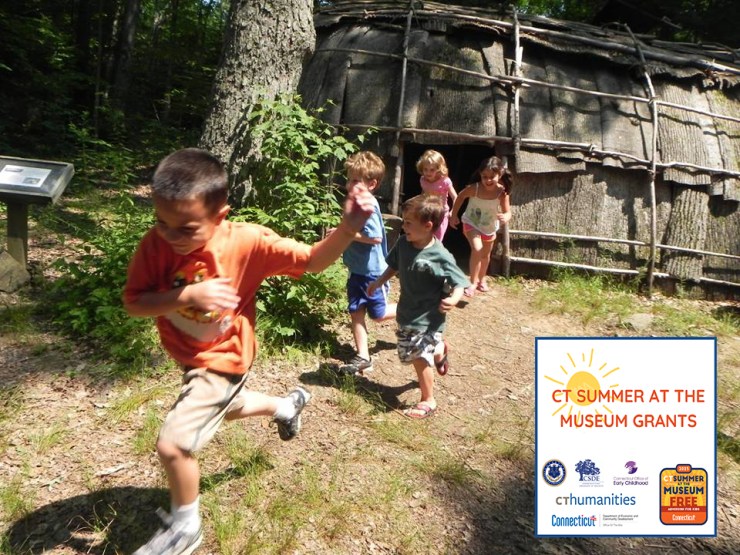
The Institute for American Indian Studies located at 38 Curtis Road in Washington Connecticut has just announced a new temporary traveling exhibit, “Native American Identity Stolen, Sold, and Reclaimed.” This exhibition invites guests of the museum to reflect on the stories that every one of us carries, consciously or not about Native American People. It is an enlightening and thoughtful journey through Native American stereotypes and more. This exhibit will be up through August. The Insitute is participating in the Summer at the Museum Program where one child from Connecticut 18 and under accompanied by an adult gets in free through September 4.


“Native American Identity Stolen, Sold, and Reclaimed,” traces the story of 500 years of Western perceptions that have been placed on Indigenous peoples of North America through family myths and popular culture that have been woven into a mythology depriving Native American People of their cultural, ethnic, and linguistic diversity.

Walking through this exhibit, visitors will see an interesting array of displays that explore misguided representations of Native American People in film, news, print media, literature, art, and commercial products. These displays highlight that Native Americans have a very limited scope of representation. They are most often represented either as historical figures belonging to the past or as stereotypical cliches, such as the Indian Princess, the Savage Indian, or the Noble Savage. Displays highlight tropes in advertising, films, T.V. shows, video games, and more that embrace these stereotypical generalizations, and in doing so, validate them in the way people view Indigenous people.

The final set of displays showcases an alternative narrative through a series of short bios on Native Americans from just about every walk of life and from many different time periods. Their stories and self-expression seek to help visitors break the cycle of misrepresentation in a positive and uplifting manner. As, Dr. Janine Pease concludes in one of the displays, “What’s been lost over many generations, it will take perhaps that many generations to restore…the challenge is to realize the power we do have. It’s not going to take some outside power. It’s power within that will really make the difference.”


About the Institute for American Indian Studies

Located on 15 acres of woodland acres the Institute For American Indian Studies preserves and educates through archeology, research, exhibitions, and programs. They have the 16th c. Algonquian Village, Award-Winning Wigwam Escape, and a museum with temporary and permanent displays of authentic artifacts from prehistory to the present allow visitors to foster a new understanding of the world and the history and culture of Native Americans. The Institute for American Indian Studies is located at 38 Curtis Road, Washington, CT

Free Admission this Summer at Institute for American Indian Studies Funding Provided by a Grant from CT Humanities

The Institute for American Indian Studies was awarded a grant from CT Humanities for participating in Connecticut Summer at the Museum 2023 initiative. This program invites Connecticut children ages 18 and under plus one accompanying Connecticut resident adult to visit participating museums free of charge from July 1 through September 4, 2023.
CT Humanities is honored to partner with the CT Office of the Arts again to administer the CT Summer at the Museum Initiative in 2023. The Department of Economic and Community Development, in partnership with the Office of the Governor, Connecticut State Department of Education, Office of Early Childhood, and Connecticut Humanities, will deliver these financially accessible summer enrichment opportunities to families and children of all ages using funding provided through ARPA (American Rescue Plan Act).

“The Summer at the Museum program in 2022 was very successful. We were delighted to be able to introduce so many new children to Native American culture and history and can’t wait to do it again this summer. We are very proud to be among the grant recipients,” said Chris Combs, Executive Director of the Institute for American Indian Studies. “This grant program allows us to expand our reach and also helps us achieve our mission of education by introducing children from Connecticut to the 12,000-year-old history of eastern woodland Native Americans,” Combs continued.

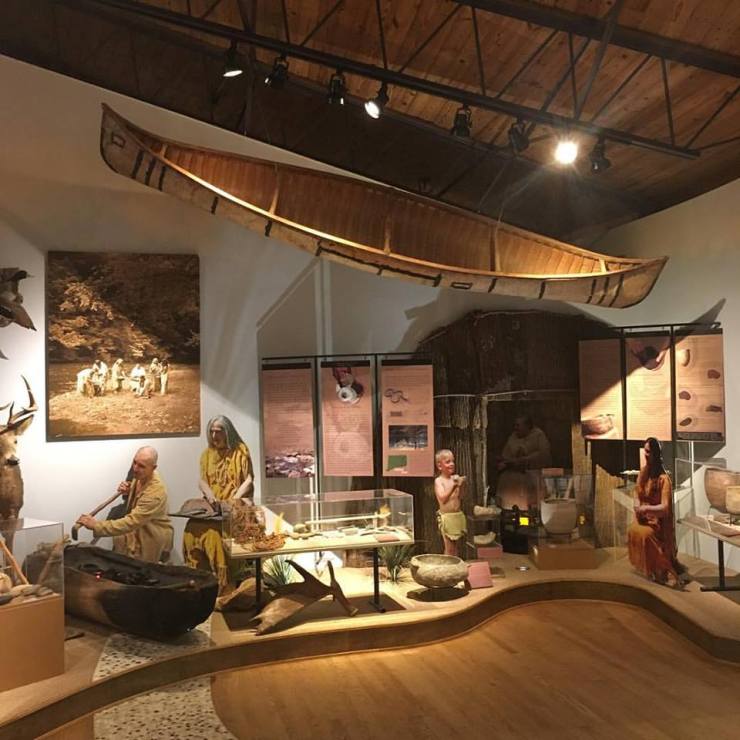
Children are welcome to explore the Institute’s galleries that trace the 12,000-yearlong stories of Connecticut’s Native American peoples from the distant past to their lives and culture today. The core exhibit takes children from a time at the end of the Ice Age to modern times. A second gallery presents artifacts, images, and themes reflecting both early colonial and modern tribal lifestyles across North America. The Children’s Discovery Room is an interactive space that shows children what life would have been like if they were a Native American living 600 years ago. An indoor longhouse is an elongated wigwam that contains both original and replicated artifacts and provides an immersive experience. A highlight of any visit is taking the trail to the replicated Algonkian Village that depicts life common to an Algonkian village of 350 to 1000 years ago.

About The Institute for American Indian Studies
Located on 15 acres of woodland acres the Institute For American Indian Studies preserves and educates through archeology, research, exhibitions, and programs. They have a 16th c. Algonquian Village, Award-Winning Wigwam Escape, and a museum with temporary and permanent displays of authentic artifacts from prehistory to the present allows visitors to foster a new understanding of the world and the history and culture of Native Americans. The Institute for American Indian Studies is located at 38 Curtis Road, in Washington, Connecticut.

About Connecticut Humanities
CT Humanities (CTH) is an independent, nonprofit affiliate of the National Endowment for the Humanities. CTH connects people to the humanities through grants, partnerships, and collaborative programs. State and federal matching funds, community foundations, and gifts from private sources support CTH projects, administration, and program development. Learn more by visiting cthumanities.org.

About Connecticut Office of the Arts
The Connecticut Office of the Arts (COA) is the state agency charged with fostering the health of Connecticut’s creative economy. The State of Connecticut as well as the National Endowment fund part of the state’s Department of Economic and Community Development, the COA for the Arts.

Rooted in Tradition: Giving Thanks To the Strawberry @ Institute for American Indian Studies

Traditionally, Native American communities tracked time by observing the change of seasons and following the lunar full moon cycle. Native American named each full moon cycle after activities or events that they associated with that time of year. Colonial Americans adopted some of the Native American full moon names and applied them to their own calendars. These descriptive names are still in use today.

The Algonquian’s of Connecticut named June’s full moon the “Strawberry Moon” because this is the time of year when the wild red strawberries began to ripen. To celebrate this treasured fruit, the Institute for American Indian Studies located on 38 Curtis Road in Washington, Connecticut is hosting a family-friendly series of activities honoring the gifts and the significance this fruit has to many Native American communities. This fun-filled cultural event is being held on Saturday, June 17 from 1 p.m. to 4 p.m.

Most of us would agree that it is difficult to resist a perfectly ripe strawberry, which is one of the most popular fruits in the world! At this event, guests will learn how strawberries were used as a medicine, in cuisine, and in ceremonies. Visitors of all ages will enjoy strawberry refreshments as they listen to traditional Native American stories. A high point of the afternoon will be a guided plant walk along the museum’s trails with Jesse Rose Komaromi, a member of the Schaghticoke Tribal Nation. Along the way, guests will learn about reclaiming relationships with the natural world as seen through an Indigenous lens. A takeaway from this experience is that this humble fruit represents life, good health and so much more.

Pre-registration for this event is advised because space is limited on the walk. To register, visit https://www.iaismuseum.org, email events@iaismuseum.org, or call 860-868-0518, ext. 453. The price to participate is $15 for non-members, $5 for members, and an additional $5 for the guided forest walk.

About The Institute for American Indian Studies
Located on 15 acres of woodland acres the Institute For American Indian Studies preserves and educates through archeology, research, exhibitions, and programs. They have a 16th c. Algonquian Village, Award-Winning Wigwam Escape, and a museum with temporary and permanent displays of authentic artifacts from prehistory to the present that allows visitors to foster a new understanding of the world and the history and culture of Native Americans. The Institute for American Indian Studies is located at 38 Curtis Road, Washington, CT.