Great Mountain Forest Partners with Northwest Conservation District and UConn 4-H to bring Ethan Tapper’s “How to Love a Forest” to Norfolk

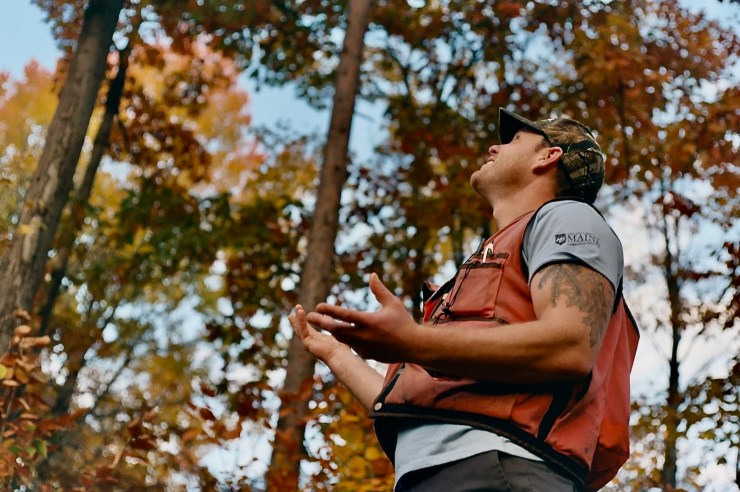
On Friday, August 14 at 4:30 p.m., Great Mountain Forest, UConn 4-H, and Northwest Conservation District will host “How to Love a Forest,” a timely and thought-provoking conversation at Norfolk United Church of Christ. This presentation features Ethan Tapper—an internationally recognized forester, best-selling author, and digital storyteller—whose work has challenged long-held assumptions about conservation and land management. Tapper is the author of How to Love a Forest: The Bittersweet Work of Tending a Changing World, which has earned wide acclaim since its publication in September 2024, including the 2025 New England Book Award for nonfiction.

This program offers the public a rare opportunity to hear from a leading voice in contemporary forestry and to engage with one of the most important questions facing conservation today: How to balance preservation and management? Participants will learn that at the center of Tapper’s approach is a clear but often uncomfortable idea: caring for a forest does not always mean leaving it untouched.

Tapper’s talk will draw from “Bear Island,” the Vermont forest he has worked to restore. Once burdened by invasive plants, exotic pests, overabundant deer, and the long shadow of poor logging practices, the land had reached a critical point. Tapper chose to intervene with management actions that may sound counterintuitive at first—bringing in loggers, using chemicals where necessary, and intentionally disrupting parts of the forest to support its long-term recovery. The result is a powerful case study in modern stewardship.
For anyone interested in forests, ecology, or the future of environmental stewardship, this is a program not to be missed. To register for this free program, visit https://greatmountainforest.org/events

This event is sponsored by Doolittle Lake Company, Haystack Book Festival, Society of American Foresters, and the Norfolk United Church of Christ Congregational (UCC).
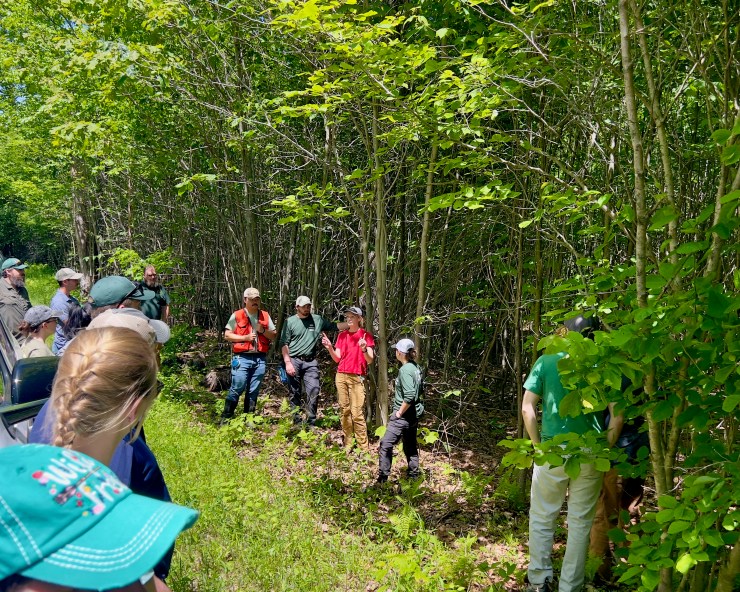
Great Mountain Forest Undertakes Bold Climate-Smart Forestry Initiative

Great Mountain Forest (GMF) is taking a powerful step in the fight against climate change with an innovative approach to forest stewardship that strengthens ecosystem health, boosts biodiversity, and prepares its forest for an uncertain future.

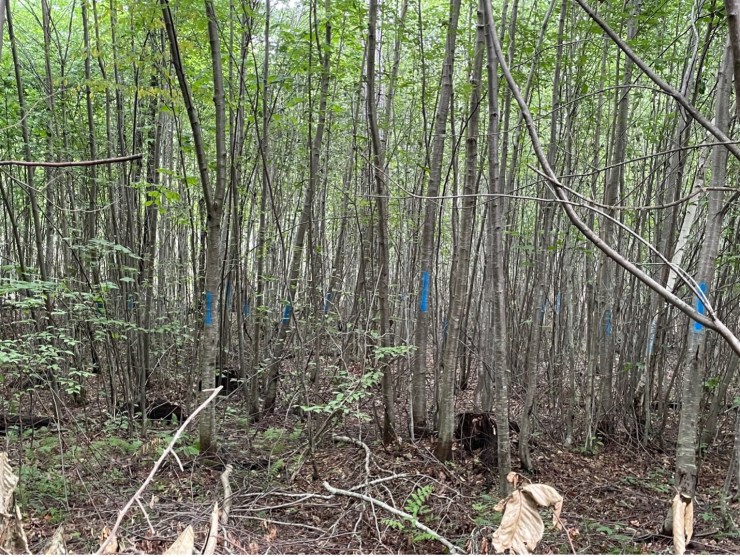
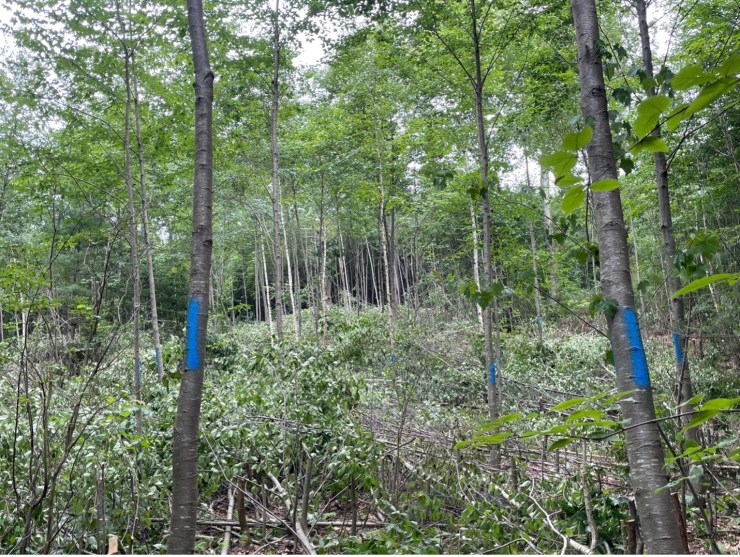
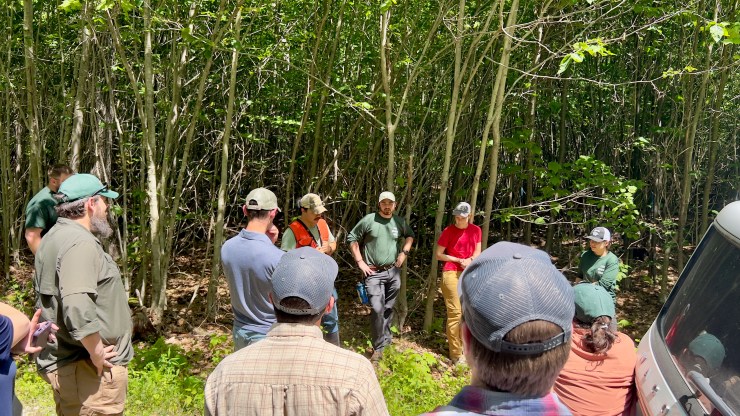
Thanks to the Connecticut Land Conservation Council’s (CLCC) Climate Smart Land Stewardship Grant Program, GMF has launched a forest management project based on a proven silvicultural technique called Pre-Commercial Thinning (PCT), a science-based method that removes competing trees in dense, young stands. In three 20-year-old forest stands, GMF foresters thinned trees, retaining those trees from species resilient to climate change and disease, while also selecting the most diverse cohort possible. These trees will make up GMF’s canopy for years to come.

Before thinning the forest

By reducing competition for sunlight, nutrients, and water, PCT promotes vigorous growth of desirable species, creating conditions where wildlife and diverse plant communities can thrive, and encourages lush herbaceous growth and tree seedlings, thus fostering a healthier, more resilient ecosystem.

This effort goes beyond improving forest health—it serves as a living classroom for the next generation of forest managers, continuing a legacy inspired by GMF Forester Emeritus Jody Bronson’s pioneering work.

After thinning the forest

With climate change driving more frequent severe storms, pest outbreaks, and other disturbances, GMF’s proactive strategy ensures that its forests are poised for rapid recovery and long-term vitality. “As New England faces intensifying climate pressures, resilient and diverse forests are more important than ever,” said Mike Zarfos, GMF’s Executive Director. “This kind of pre-commercial thinning builds diverse, adaptive ecosystems capable of withstanding unpredictable climate disruptions.”

Kate Regan-Loomis, GMF’s Natural Resource Manager, adds: “By investing in young forests now, we’re preparing them for a healthier and more balanced future. Thanks to CLCC’s support, we’re able to demonstrate what climate-smart forestry looks like on the ground.”

This climate-resilient project underscores GMF’s century-long commitment to innovation, sustainability, and science-based land management—ensuring that the forests of today will continue to provide ecological, economic, and recreational benefits for
generations to come.

Funding for this project was provided by the Climate Smart Farming: Agriculture and Forestry Grant awarded and administered by the Connecticut Department of Agriculture and the Connecticut Land Conservation Council.