Discover the Power of Forest Stewardship with Woodland Academy

The Great Mountain Forest (GMF) Woodland Academy is continuing its commitment to forest education with a robust lineup of workshops this July, August, and September. Tailored for forest owners and stewards—including individuals, nonprofit organizations, and municipal leaders—these sessions aim to deepen participants’ understanding of forest management and promote sustainable land use practices. In addition to supporting professional continuing education, the Academy also fosters meaningful connections and collaboration within the regional forest community. All workshops are held at the historic Yale Camp in the heart of GMF, in Falls Village, Connecticut.

On July 21, GMF will host a workshop on Managing Forests for Birds, in partnership with Audubon Connecticut. This one-day session, 9 a.m. – 3 p.m., offers insights into the habitat needs of our region’s diverse bird populations, including migratory species. Participants will gain practical insights on how forest management choices can enhance bird habitats and support biodiversity. The workshop will also review Audubon’s Bird-Friendly Maple program and share resources for adopting bird-conscious forestry practices. Registration is $25. Click here to register.
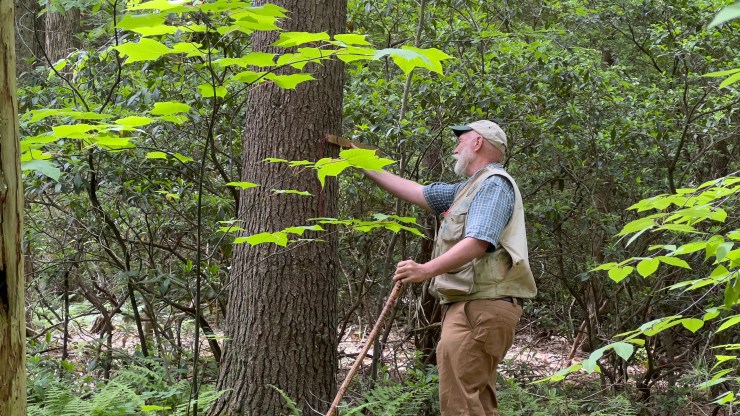
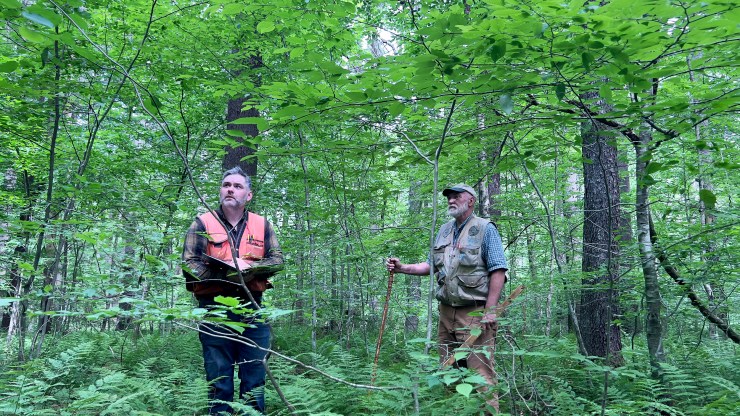
On August 8, forest professionals Star Childs, Founding Trustee of GMF, and David Beers from CT DEEP Forestry Division, will lead a full-day workshop on Land Navigation and Mapping. Attendees will receive hands-on instruction in both traditional map and compass methods as well as modern digital navigation tools. Running from 9 a.m. to 4 p.m., this course is ideal for those looking to build confidence in navigating and thinking about the management of their land. Registration is $25. Click here to register.

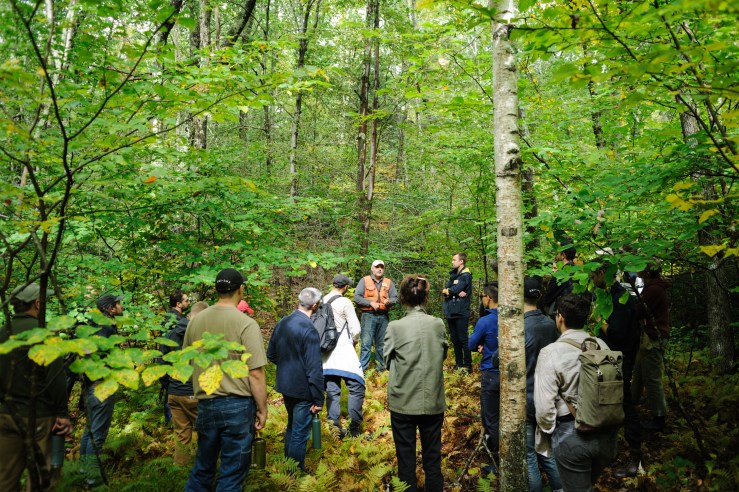
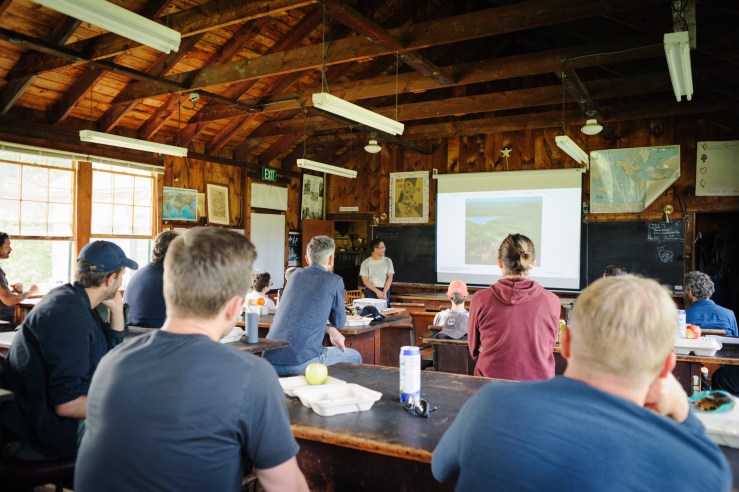
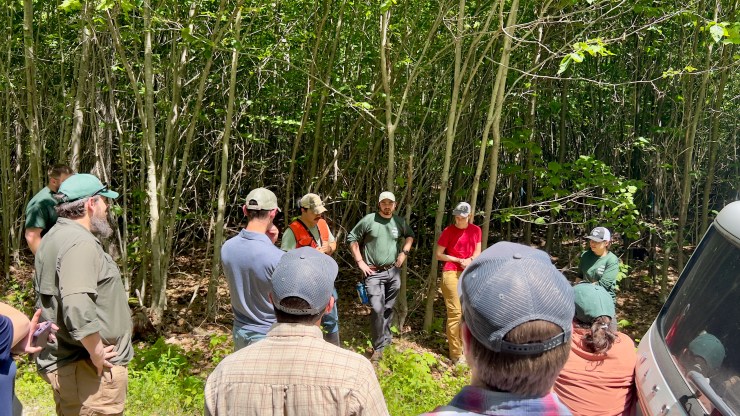
For those seeking an in-depth experience, GMF’s three-day intensive Forest Management Workshop Series—held on August 1, August 15, and September 12 offers a good starting foundation in forest stewardship. Held in the heart of the 6,300-acre Great Mountain Forest, this series combines classroom instruction with immersive fieldwork guided by seasoned forestry professionals. Participants will gain vital skills in tree and shrub identification, explore forest ecology, learn how to align management practices with various landowner goals, and get an introduction to financial and technical assistance programs. Whether you’re managing a family woodland, stewarding a community forest, are a student, or are interested in better understanding forests, these workshops will help you make informed, sustainable decisions about the land. The three-day intensive series is available for $75. To register, click here.

These workshops provide an invaluable opportunity to gain foundational skills and connect with a network of fellow forest stewards. Whether you manage land for timber, wildlife, recreation, or conservation, there is a program to help you meet your stewardship goals. Ultimately, the goal of Woodland Academy is to help stewards care for more forests, enhance biodiversity, and bring more forest benefits to the communities around them

About Great Mountain Forest

Great Mountain Forest (GMF) is a leader in forest stewardship. For more than a century, we have been demonstrating how sustainable management can protect biodiversity and support ecosystems. By serving as a hub for education and research, we are spreading the benefits of sustainable management so that communities across New England derive educational, economic, and recreational and health benefits from their forests, now and well into the future. GMF is a 501(c)(3) nonprofit encompassing 6,300 acres of contiguous forestland in Norfolk, Canaan, and Falls Village, Connecticut.

Why Nature is the Best Medicine — Experience it at Great Mountain Forest

In today’s fast-paced, screen-saturated world, it’s easy to forget how healing nature can be. Yet for centuries, humans have found peace and rejuvenation in forest environments, drawn by the quiet atmosphere, fresh air, and the simple beauty of trees swaying in the breeze. Few places embody this restorative experience better than Great Mountain Forest, a 6,000-acre gem spanning Norfolk, Canaan, and Falls Village in the northwest corner of Connecticut. Here, the ancient practice of forest immersion—also known as Shinrin-yoku or forest bathing—can be truly embraced. This isn’t about hiking or physical exertion; it’s about slowing down, engaging all five senses, and reconnecting with the natural world in a meaningful, mindful way.

Jean’s Trail – photo credit Tom Blagdon

Scientific research has consistently shown that spending time in forest environments can reduce cortisol levels, lower blood pressure, improve sleep quality, boost the immune system, and enhance cardiovascular health. At Great Mountain Forest, these benefits are just a walk away.

With 13 miles of trails ranging from easy to challenging, Great Mountain Forest offers something for everyone. More than 16 trails weave through diverse ecosystems, where there are a multitude of sensory experiences waiting to be discovered. Whether you’re listening to the whispers of rustling leaves, looking for wildlife, catching the earthy scent of moss and pine, or watching sunlight flicker through the canopy, each step brings you closer to nature—and to yourself.

Old Man McMUllen Pond, Gt. Mtn. Forest, Norfolk, CT Photo credit Tom Blagdon

Whether you’re a beginner enjoying the peaceful Tamarack Interpretive Trail around a dragonfly-dotted pond or an adventurer exploring the historic Charcoal Pit Trail, where remnants of 19th-century industry meet modern conservation, there’s a path for everyone. More adventurous explorers can venture into the Tobey Bog Trail, a unique ecosystem rich with pitcher plants and black spruce trees, or stand in awe among 400-year-old hemlocks on the North Forty Trail. Each trail offers a distinct sensory experience designed to help you slow down and truly be present.

More than just a place to walk, Great Mountain Forest is a living classroom. With year-round guided walking tours, tours, educational programs, and hands-on workshops in sustainable forest management, visitors of all ages can deepen their understanding of the natural world and their place within it. As Michael Zarfos, Executive Director of GMF, puts it: “In an age dominated by artificial surroundings and constant noise, forest immersion is a simple, powerful return to our roots.” At Great Mountain Forest, that return is always just a walk away.

For event information and to download maps, visit greatmountainforest.org. To sign up for the Woodland Academy, visit greatmountainforest.org/woodlandacademy.

Old Man McMullen Pond, Great Mountain Forest, Norfolk, CT photo credit Tom Blagden

About Great Mountain Forest
Great Mountain Forest (GMF) is a leader in forest stewardship. For more than a century, we have been demonstrating how sustainable management can protect biodiversity and support ecosystems. By serving as a hub for education and research, we are spreading the benefits of sustainable management so that communities across New England derive educational, economic, and recreational and health benefits from their forests, now and well into the future. GMF is a 501(c)(3) nonprofit encompassing 6,300 acres of contiguous forestland in Norfolk, Canaan, and Falls Village, Connecticut.

Photo credit: Tom Blagden

A New Era of Sustainable Wood Management The Second Forest Form Summit

In an era when sustainability and climate change is top of mind, how we obtain and use wood is essential to the health of our planet. Tri-Lox, a Brooklyn based company known for its ethical and environmentally conscious approach to using wood as a renewable resource and Connecticut’s Great Mountain Forest have partnered to put together the second Forest Forum Summit held in New England. “We are pleased to have partnered with Tri-Lox in hosting their Forest Summit at Great Mountain Forest,” said John Perkins, Board Chair of GMF.

Photo Credit P. J. Roundtree

Bridging Nature and Design
The focus of the summit was to explore ways to connect the built and the natural environment through sustainable forest management. The most important result of this evolving partnership with Tri-Lox is that it brings designers, foresters, and land managers together in an immersive experience to conceptualize strategies for how to responsibly source and use local wood. “Our work with Tri-Lox highlights the potential for combining the principles of sustainable forestry with those of sustainable design in the ethical sourcing of materials for use in local construction,” said John Perkins, Chair of GMF.

Photo Credit P. J. Roundtree

Immersive Learning Highlights
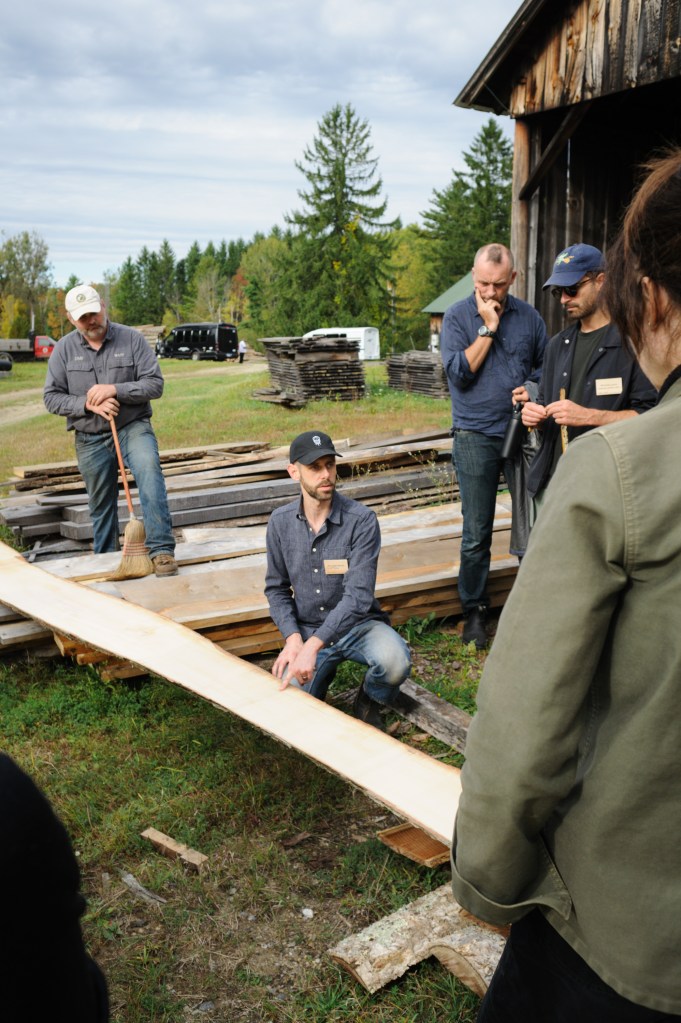
Highlights of the summit included a forest walk guided by GMF forester, Matt Gallagher. The walk provided participants with an up close look at different management strategies, timescales, and threats to the forest. The importance of selective harvests such as a future white pine thinning was discussed and why it was important to forest health and regeneration. A working sawmill demonstration showed how grading and sizing impacts the yield of a log and why it is beneficial to connect a harvest with a particular design project. Two case studies; “Connecting the Built and Natural Environment” and “Rural and Urban Land Management” rounded out the summit.

Photo Credit P. J. Roundtree


A Promising Partnership

“This evolving relationship is very exciting,” said Mike Zarfos, Ph.D., Executive Director of Great Mountain Forest. “One of the many benefits of this relationship is that it may help to catalyze more local wood sourcing. If sourcing and use are localized to the same region, this decreases the potential for our consumption to drive unsustainable deforestation abroad and lowers the carbon footprint of wood harvest and use. If the wood is then used in durable products, this can tie up the carbon for a long time while the forest regrows – drawing down more carbon from the atmosphere,” continued Zarfos.

Photo Credit P. J. Roundtree

This relationship is very encouraging because wood is a finite resource. It is reassuring to know that designers, builders, foresters, educators and the general public are interested in sustainable ways to use and manage wood so that it will be available for generations to come. In the future, Great Mountain Forest plans to organize additional educational forms and summits for those interested in sustainable forest management’s potential to benefit local economies, craftspeople, and housing.

CaptureTool


About Great Mountain Forest

Great Mountain Forest (GMF) is a leader in forest stewardship. For more than a century, we have been demonstrating how sustainable management can protect biodiversity and support ecosystems. By serving as a hub for education and research, we are spreading the benefits of sustainable management so that communities across New England derive educational, economic, and recreational and health benefits from their forests—now and well into the future. GMF is a 501(c)(3) nonprofit encompassing 6,200 acres of contiguous forestland in Norfolk, Canaan, and Falls Village Connecticut.

About Tri-Lox

Tri-Lox is a research, design, and fabrication practice that work with regional, sustainable wood. Based in Brooklyn, New York, Tri-Lox sources wood in ways that have a positive impact on forests, conducting applied research with experts in the fields of forestry, conservation, and building technology. Since its establishment in 2010, the company has been committed to innovative design, environmental integrity, and community stewardship.

2024 Forestry Interns Complete Summer Intensive at Great Mountain Forest

For each of the last 76 years, Great Mountain Forest (GMF) has offered a select group of forestry undergraduate students from around the country an immersive summer program in all aspects of forest management in GMF’s more than 6,000 acres of diverse landscapes and managed forests in Norfolk, Canaan, and Falls Village, Connecticut.
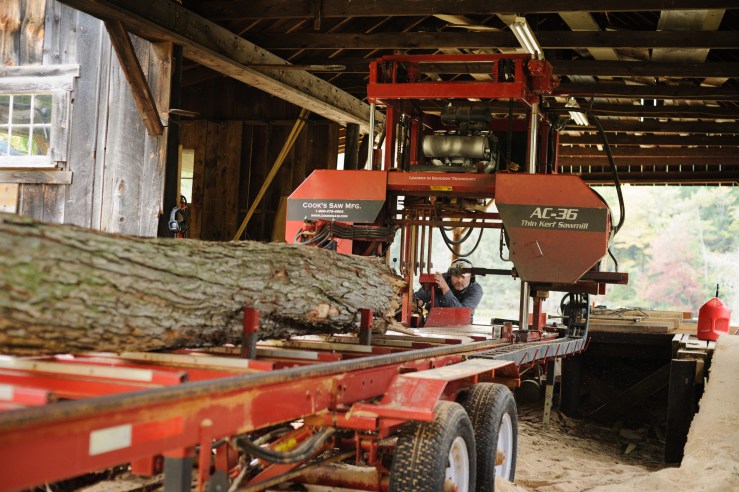
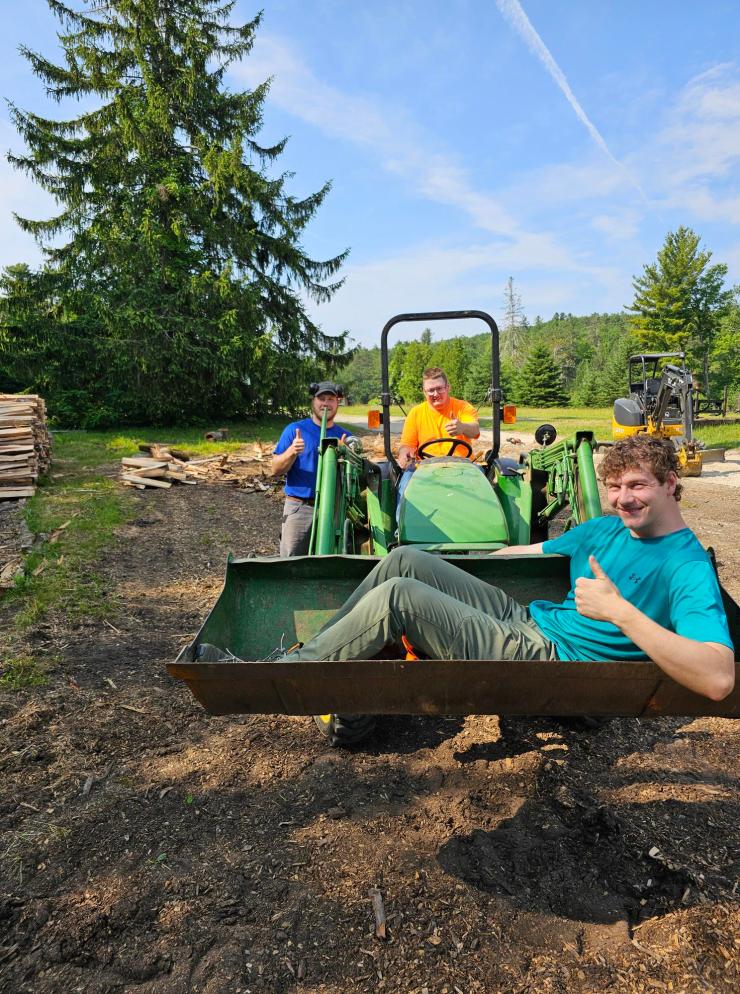
Working under the direction of experienced forester Matt Gallagher, who holds a Master of Forestry from the Yale School of the Environment, this summer’s forestry interns gained hands-on, in-depth experience and skills working through a curriculum that included measuring forest tree species diversity and regeneration on 550-acres, harvesting, and processing timber, managing invasive plants and insects, and maintaining the infrastructure of a working forest. In addition to hard work, the interns explored some of the career paths they might pursue visiting a local sawmill, shadowing a researcher at the Connecticut Agricultural Experiment Station, and visiting with state and nonprofit forestry and conservation professionals.

The 2024 GMF Forest Interns were Ian Montgomery-Gehrt, a senior at Paul Smith’s College majoring in Forest Ecological Management, Kyle Joray, a junior at Paul Smith’s College studying Ecological Forest Management, and Daniel Semmel, an undergrad at the University of Connecticut in the Natural Resource Program. The long-term impact of the Great Mountain Forestry Intern program can be seen through the careers of hundreds of men and women graduates who have gone on to a range of important forestry and conservation-related professions throughout the country from professors of ecology and forest firefighters to forest managers, directors of land trusts, and loggers.

To learn more, see this short video celebrating the 75th Anniversary of the GMF Forest Intern Program at https://vimeo.com/870470040

“It is so rewarding to see the way these forest professionals grow, working out in the field and developing a diversity of skills whether it is learning how to work the sawmill, collect forest data, or simply build professional relationships,” said Michael Zarfos, Ph.D., and GMF Executive Director. “Our ultimate goal is to impart meaningful skills, experience, and a landscape of possibilities, positively influencing the interns’ careers. They are the future of our New England forests.”

About Great Mountain Forest
Great Mountain Forest (GMF) is a leader in forest stewardship. For more than a century, we have been demonstrating how sustainable management can protect biodiversity and support ecosystems. By serving as a hub for education and research, we are spreading the benefits of sustainable management so that communities across New England derive educational, economic, and recreational and health benefits from their forests—now and well into the future. GMF is a 501(c)(3) nonprofit encompassing 6,200 acres of contiguous forestland in Norfolk, Canaan, and Falls Village Connecticut.

Learning to Manage Forests to Meet Today’s Needs – The Woodland Academy at Great Mountain Forest Norfolk, Canaan, and Falls Village

People who own and manage woodlands play a vital role in our region because a healthy forest delivers essential benefits for our climate, wildlife, and communities, including recreational and economic opportunities.

To spread the art and science of making sound forest management decisions, Great Mountain Forest (GMF) is launching a Woodland Academy for people who steward forested land on three Saturdays, Aug. 3, Aug. 17, and Sept. 14. GMF is one of Connecticut’s leaders in sustainable forest management, located on 6,000 acres in Norfolk and Canaan. These first Woodland Academy workshops will take place from 8 a.m. to 4:30 p.m. at the Yale Forestry Camp located in the heart of this independent non-profit’s vast forest.

One of the goals of the Woodland Academy is to assist both experienced and new stewards of the land to develop, reevaluate, or enhance their forest management plan to keep their land productive and healthy, now and into the future.

While this program is best suited to landowners and forest managers, such as land trust stewards, GMF welcomes all who love the woods including foresters, environmental advocates, engaged citizens, educators, and students. This workshop’s modules will help participants navigate the evolving woodland landscape they manage amid the challenges of sustainability, invasive pests, and climate change.

The curriculum was created and will be delivered by the foresters at Great Mountain Forest and collaborators from the Connecticut Agricultural Experiment Station and Sharon Audubon. The Woodland Academy is inspired by the Coverts Project previously led by UConn Extension, the Connecticut Forest and Park Association, and CT DEEP. The three modules will cover the ecological underpinnings of land management, how to assess habitat viability for wildlife, show participants how to identify and interpret woody plant species, and review the public management resources and tools of the trade available to manage one’s forest.

“We believe that forest management strategies should be flexible and adaptable over time, meeting the needs of each unique forest, landowner, and community. This workshop will help forest stewards to make the informed decisions needed to achieve their goals” said Michael Zarfos, Ph.D., and Executive Director, Great Mountain Forest.

Pre-registration for each workshop is required. Each seminar is $75 and includes time in the classroom as well as in the field, and lunch. Sign up via the GMF events page: https://greatmountainforest.org/events/

About Great Mountain Forest
Great Mountain Forest (GMF) is a leader in forest stewardship. For more than a century, we have been demonstrating how sustainable management can protect biodiversity and support ecosystems. By serving as a hub for education and research, we are spreading the benefits of sustainable management so that communities across New England derive educational, economic, recreational, and health benefits from their forests—now and well into the future. GMF is a 501(c)(3) nonprofit encompassing 6,200 acres of contiguous forestland in Norfolk, Canaan, and Falls Village Connecticut.