Great Mountain Forest Undertakes Bold Climate-Smart Forestry Initiative

Great Mountain Forest (GMF) is taking a powerful step in the fight against climate change with an innovative approach to forest stewardship that strengthens ecosystem health, boosts biodiversity, and prepares its forest for an uncertain future.
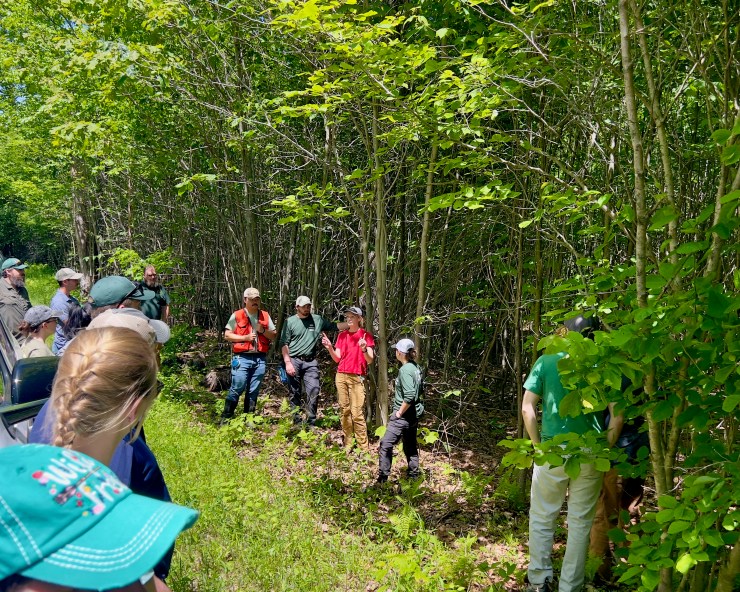
Thanks to the Connecticut Land Conservation Council’s (CLCC) Climate Smart Land Stewardship Grant Program, GMF has launched a forest management project based on a proven silvicultural technique called Pre-Commercial Thinning (PCT), a science-based method that removes competing trees in dense, young stands. In three 20-year-old forest stands, GMF foresters thinned trees, retaining those trees from species resilient to climate change and disease, while also selecting the most diverse cohort possible. These trees will make up GMF’s canopy for years to come.
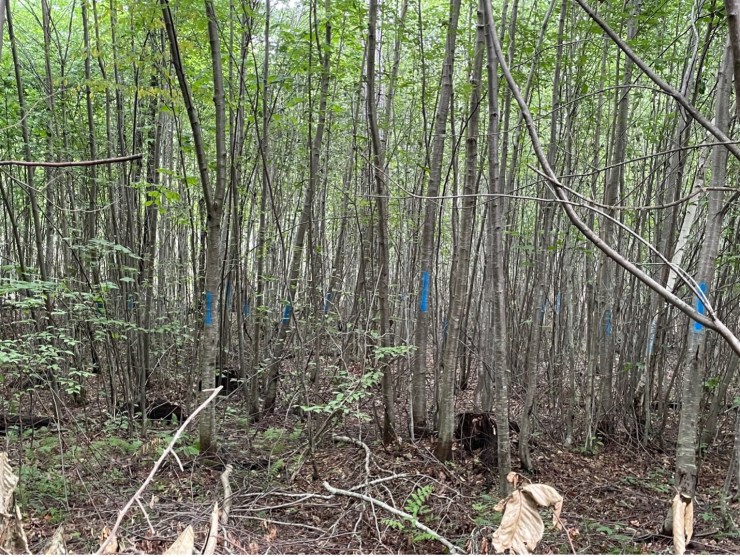
Before thinning the forest

By reducing competition for sunlight, nutrients, and water, PCT promotes vigorous growth of desirable species, creating conditions where wildlife and diverse plant communities can thrive, and encourages lush herbaceous growth and tree seedlings, thus fostering a healthier, more resilient ecosystem.

This effort goes beyond improving forest health—it serves as a living classroom for the next generation of forest managers, continuing a legacy inspired by GMF Forester Emeritus Jody Bronson’s pioneering work.
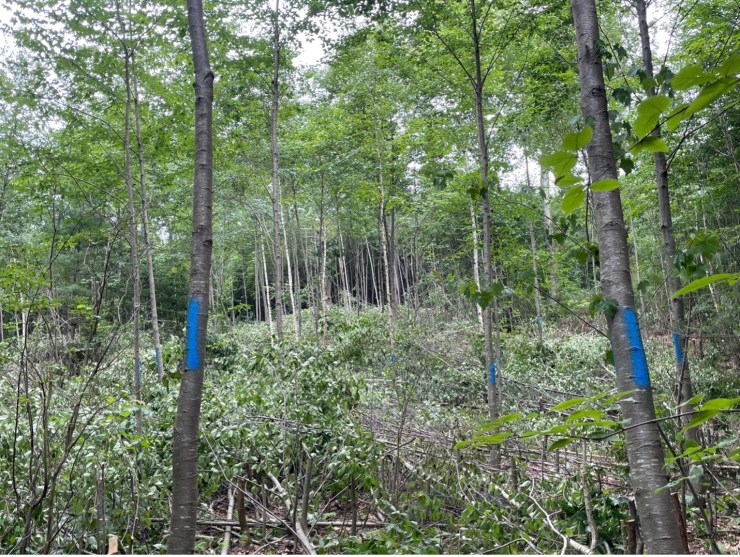
After thinning the forest

With climate change driving more frequent severe storms, pest outbreaks, and other disturbances, GMF’s proactive strategy ensures that its forests are poised for rapid recovery and long-term vitality. “As New England faces intensifying climate pressures, resilient and diverse forests are more important than ever,” said Mike Zarfos, GMF’s Executive Director. “This kind of pre-commercial thinning builds diverse, adaptive ecosystems capable of withstanding unpredictable climate disruptions.”

Kate Regan-Loomis, GMF’s Natural Resource Manager, adds: “By investing in young forests now, we’re preparing them for a healthier and more balanced future. Thanks to CLCC’s support, we’re able to demonstrate what climate-smart forestry looks like on the ground.”

This climate-resilient project underscores GMF’s century-long commitment to innovation, sustainability, and science-based land management—ensuring that the forests of today will continue to provide ecological, economic, and recreational benefits for
generations to come.
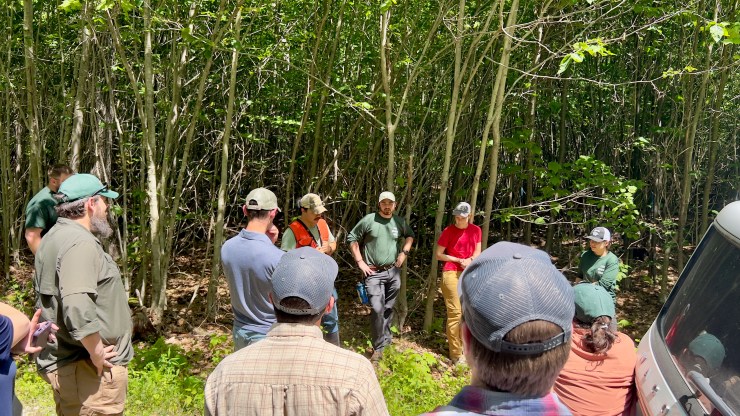
Funding for this project was provided by the Climate Smart Farming: Agriculture and Forestry Grant awarded and administered by the Connecticut Department of Agriculture and the Connecticut Land Conservation Council.
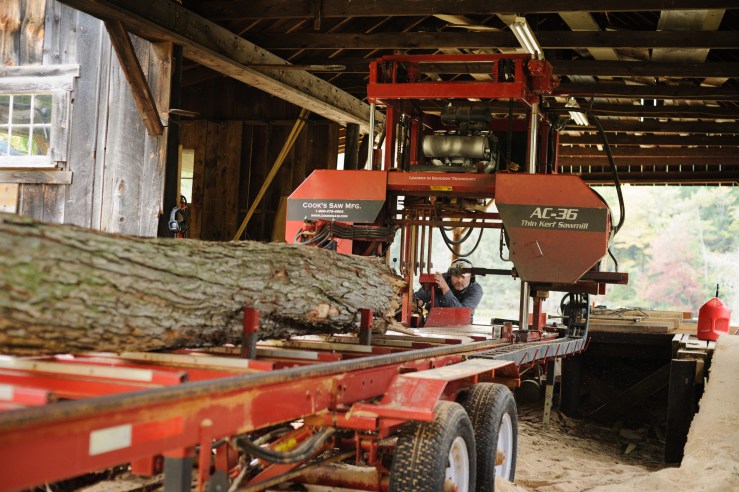
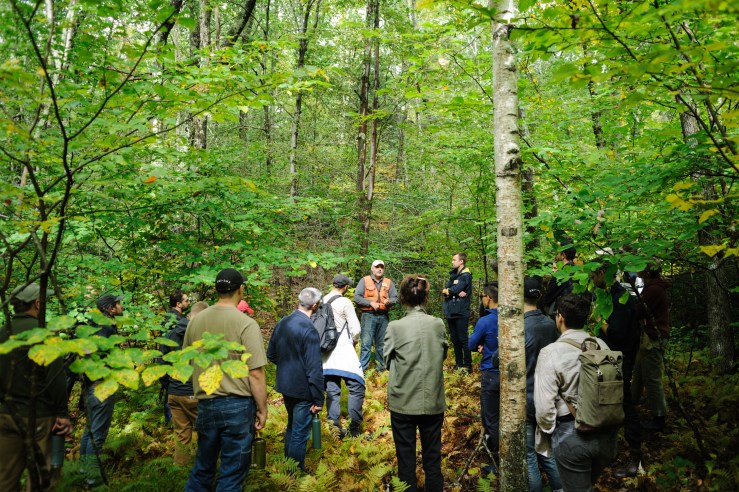
A New Era of Sustainable Wood Management The Second Forest Form Summit

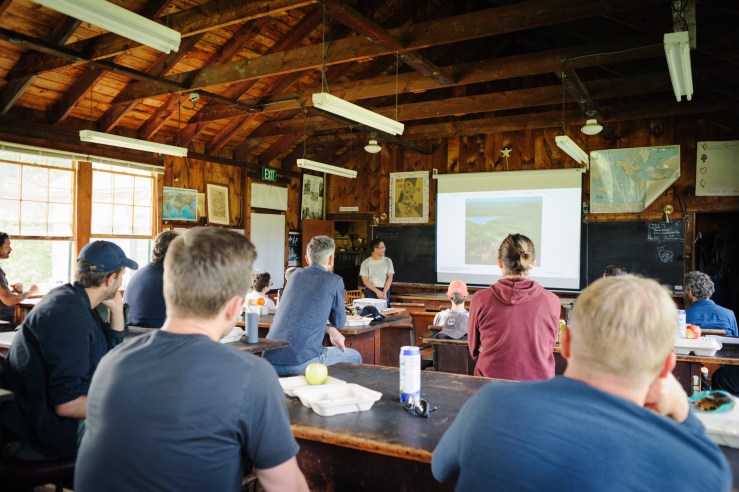
In an era when sustainability and climate change is top of mind, how we obtain and use wood is essential to the health of our planet. Tri-Lox, a Brooklyn based company known for its ethical and environmentally conscious approach to using wood as a renewable resource and Connecticut’s Great Mountain Forest have partnered to put together the second Forest Forum Summit held in New England. “We are pleased to have partnered with Tri-Lox in hosting their Forest Summit at Great Mountain Forest,” said John Perkins, Board Chair of GMF.

Photo Credit P. J. Roundtree

Bridging Nature and Design
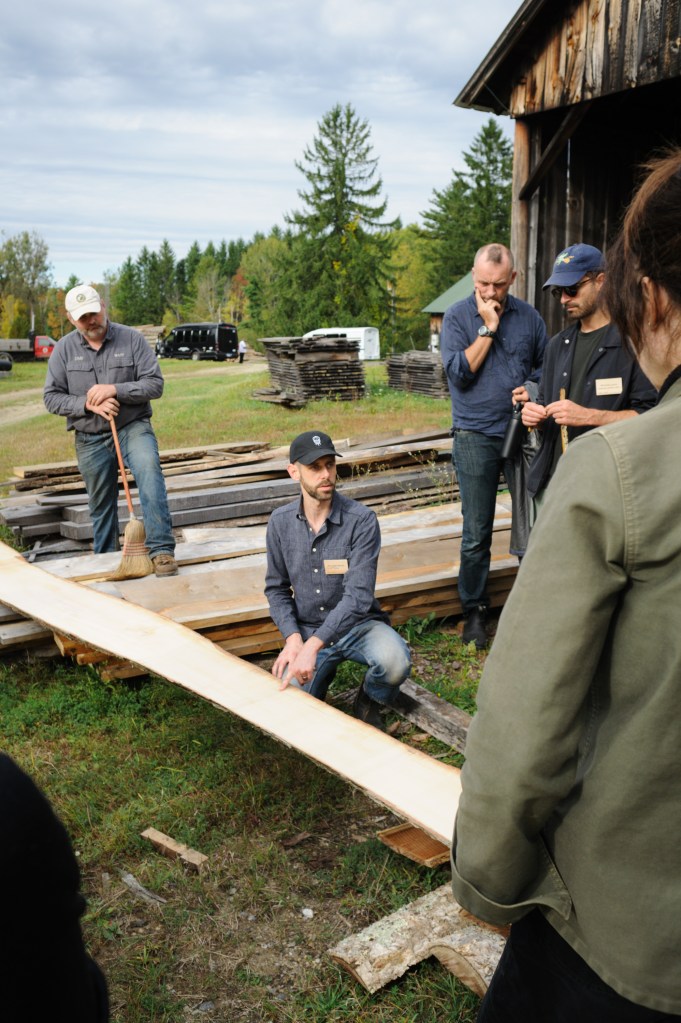
The focus of the summit was to explore ways to connect the built and the natural environment through sustainable forest management. The most important result of this evolving partnership with Tri-Lox is that it brings designers, foresters, and land managers together in an immersive experience to conceptualize strategies for how to responsibly source and use local wood. “Our work with Tri-Lox highlights the potential for combining the principles of sustainable forestry with those of sustainable design in the ethical sourcing of materials for use in local construction,” said John Perkins, Chair of GMF.

Photo Credit P. J. Roundtree

Immersive Learning Highlights
Highlights of the summit included a forest walk guided by GMF forester, Matt Gallagher. The walk provided participants with an up close look at different management strategies, timescales, and threats to the forest. The importance of selective harvests such as a future white pine thinning was discussed and why it was important to forest health and regeneration. A working sawmill demonstration showed how grading and sizing impacts the yield of a log and why it is beneficial to connect a harvest with a particular design project. Two case studies; “Connecting the Built and Natural Environment” and “Rural and Urban Land Management” rounded out the summit.

Photo Credit P. J. Roundtree


A Promising Partnership

“This evolving relationship is very exciting,” said Mike Zarfos, Ph.D., Executive Director of Great Mountain Forest. “One of the many benefits of this relationship is that it may help to catalyze more local wood sourcing. If sourcing and use are localized to the same region, this decreases the potential for our consumption to drive unsustainable deforestation abroad and lowers the carbon footprint of wood harvest and use. If the wood is then used in durable products, this can tie up the carbon for a long time while the forest regrows – drawing down more carbon from the atmosphere,” continued Zarfos.

Photo Credit P. J. Roundtree

This relationship is very encouraging because wood is a finite resource. It is reassuring to know that designers, builders, foresters, educators and the general public are interested in sustainable ways to use and manage wood so that it will be available for generations to come. In the future, Great Mountain Forest plans to organize additional educational forms and summits for those interested in sustainable forest management’s potential to benefit local economies, craftspeople, and housing.

CaptureTool


About Great Mountain Forest

Great Mountain Forest (GMF) is a leader in forest stewardship. For more than a century, we have been demonstrating how sustainable management can protect biodiversity and support ecosystems. By serving as a hub for education and research, we are spreading the benefits of sustainable management so that communities across New England derive educational, economic, and recreational and health benefits from their forests—now and well into the future. GMF is a 501(c)(3) nonprofit encompassing 6,200 acres of contiguous forestland in Norfolk, Canaan, and Falls Village Connecticut.

About Tri-Lox

Tri-Lox is a research, design, and fabrication practice that work with regional, sustainable wood. Based in Brooklyn, New York, Tri-Lox sources wood in ways that have a positive impact on forests, conducting applied research with experts in the fields of forestry, conservation, and building technology. Since its establishment in 2010, the company has been committed to innovative design, environmental integrity, and community stewardship.

2024 Forestry Interns Complete Summer Intensive at Great Mountain Forest

For each of the last 76 years, Great Mountain Forest (GMF) has offered a select group of forestry undergraduate students from around the country an immersive summer program in all aspects of forest management in GMF’s more than 6,000 acres of diverse landscapes and managed forests in Norfolk, Canaan, and Falls Village, Connecticut.

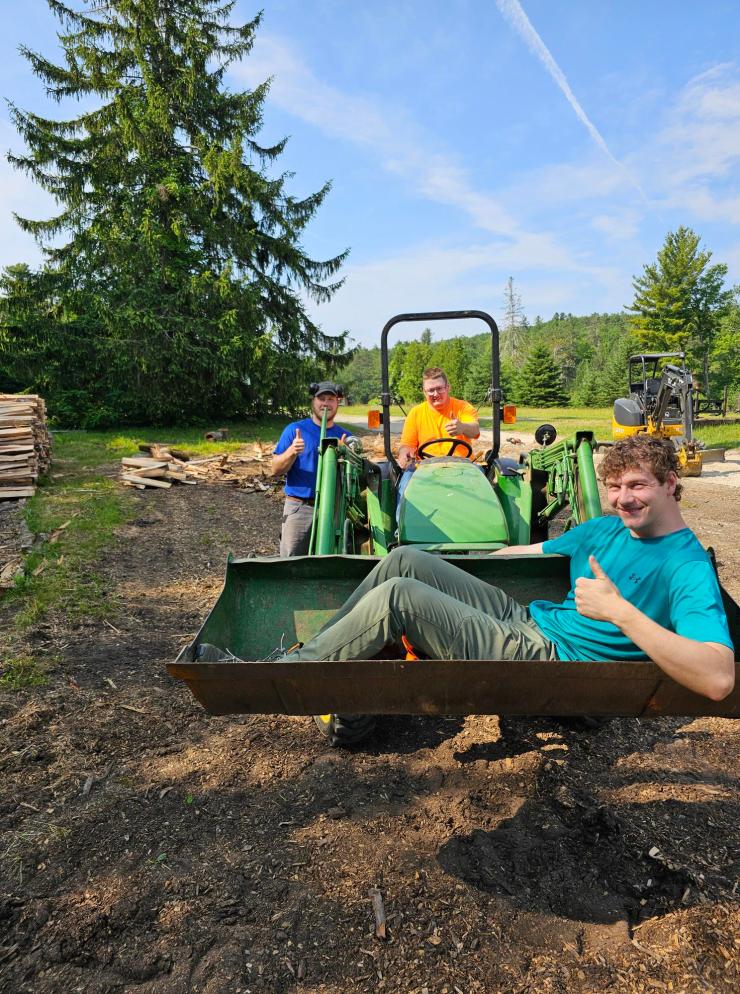
Working under the direction of experienced forester Matt Gallagher, who holds a Master of Forestry from the Yale School of the Environment, this summer’s forestry interns gained hands-on, in-depth experience and skills working through a curriculum that included measuring forest tree species diversity and regeneration on 550-acres, harvesting, and processing timber, managing invasive plants and insects, and maintaining the infrastructure of a working forest. In addition to hard work, the interns explored some of the career paths they might pursue visiting a local sawmill, shadowing a researcher at the Connecticut Agricultural Experiment Station, and visiting with state and nonprofit forestry and conservation professionals.

The 2024 GMF Forest Interns were Ian Montgomery-Gehrt, a senior at Paul Smith’s College majoring in Forest Ecological Management, Kyle Joray, a junior at Paul Smith’s College studying Ecological Forest Management, and Daniel Semmel, an undergrad at the University of Connecticut in the Natural Resource Program. The long-term impact of the Great Mountain Forestry Intern program can be seen through the careers of hundreds of men and women graduates who have gone on to a range of important forestry and conservation-related professions throughout the country from professors of ecology and forest firefighters to forest managers, directors of land trusts, and loggers.

To learn more, see this short video celebrating the 75th Anniversary of the GMF Forest Intern Program at https://vimeo.com/870470040

“It is so rewarding to see the way these forest professionals grow, working out in the field and developing a diversity of skills whether it is learning how to work the sawmill, collect forest data, or simply build professional relationships,” said Michael Zarfos, Ph.D., and GMF Executive Director. “Our ultimate goal is to impart meaningful skills, experience, and a landscape of possibilities, positively influencing the interns’ careers. They are the future of our New England forests.”

About Great Mountain Forest
Great Mountain Forest (GMF) is a leader in forest stewardship. For more than a century, we have been demonstrating how sustainable management can protect biodiversity and support ecosystems. By serving as a hub for education and research, we are spreading the benefits of sustainable management so that communities across New England derive educational, economic, and recreational and health benefits from their forests—now and well into the future. GMF is a 501(c)(3) nonprofit encompassing 6,200 acres of contiguous forestland in Norfolk, Canaan, and Falls Village Connecticut.