Resources From the River with Griffin Kalin Native American Fishing Techniques

The end of a long winter signals the first in a stream of returning opportunities. It is the time of year when rivers and streams come back to life with the opening of the fishing season. If you have ever wondered what resources Native peoples had access to local waterways, then join Institute for American Indian Studies Educator and Traditional Skills expert, Griffin Kalin, on April 30, at either 11 a.m. or 1 p.m., for a program along the Shepaug River, which boasts a 10,000 plus year history of Native American communities living along its banks. This event will begin at the Institute for American Indian Studies located at 38 Curtis Road in Washington, Connecticut.
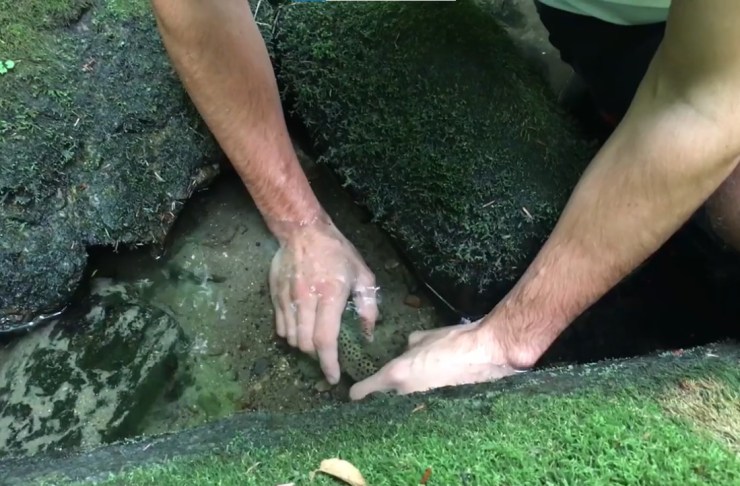
Griffin Handfishing

The programs at 11 a.m. and 1 p.m. include an informative hike to the banks of the Shepaug River that borders the Institute’s grounds and runs through Steep Rock Reservation. Through hands-on experiences and engaging demonstrations, participants will get their feet wet with traditional fishing methods including learning how to make and maintain a fish house, and how to make a fish trap from the surrounding environment. Participants will also learn about the production and function of fishing weirs, a technology used by Native American communities that is still widely used today.

Participants will also wade into discussions about the role that turtles, crayfish, freshwater mussels, and edible and useful aquatic plants played in Native American communities that lived along rivers and streams.

Space is limited and pre-registration is required. Visit the website to register, call 860-868-0518, or email events@iaismuseum.org. Tickets are $15 for non-members and $5 for IAIS Members.

Traditional Native American Fishing Tools

About The Institute for American Indian Studies
Located on 15 acres of woodland acres the Institute For American Indian Studies preserves and educates through archeology, research, exhibitions, and programs. They have a 16th c. Algonquian Village, Award-Winning Wigwam Escape, and a museum with temporary and permanent displays of authentic artifacts from prehistory to the present allow visitors to foster a new understanding of the world and the history and culture of Native Americans. The Institute for American Indian Studies is located at 38 Curtis Road, Washington, CT.
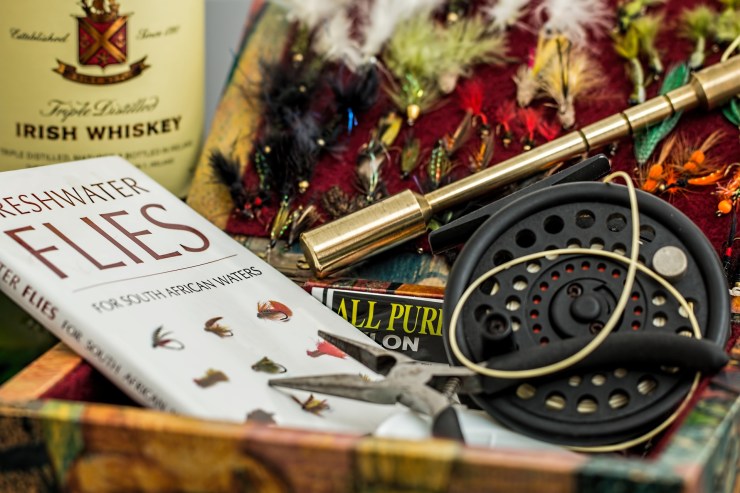
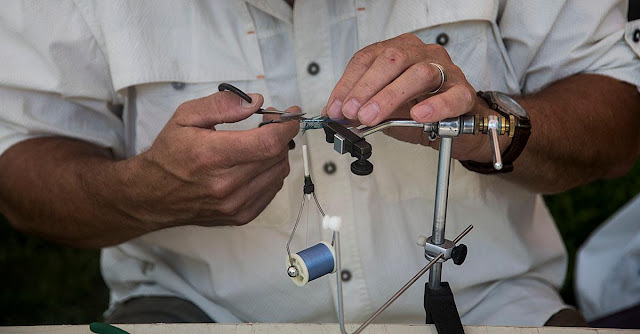
Learn the Art of Fly Tying @ Weekend in Norfolk Feb. 25 & 26

Fly fishing is a popular activity enjoyed by millions of Americans each year. It is considered to be an almost meditative activity. Spending time in nature has a calming effect on the mind and fly-fishing provides people with a break from the hustle and bustle of everyday life, giving them the chance to reflect and unwind.

Norfolk is a fly-fishing paradise that boasts streams and ponds that offer fly-fishermen a rich and diverse angling experience. Although Norfolk offers year-round fly fishing action in most lakes and ponds, the fly fishing season for rivers and streams runs from the third Saturday in April through the end of February.

To fly-fishing at Campbell Falls State Park, take a woodland path to the base of the falls. Here anglers will find a deep pool perfect for fly-fishing. If you prefer to fly fish at a pond, head to Wood Creek Pond where you can fish for largemouth bass, chain pickerel, spotted bass, pumpkinseed, and black crappie. Another spot in Norfolk is the Blackberry River which is stocked by the State of Connecticut with 9,200 trout annually. For access points to the river click here.

Fly-fishing is angling with the use of a fly reel, fly line, fly rod, and leader. A fly is an artificial lure made with hair, feathers, tinsel, or thread and is used to imitate mayflies, stoneflies, or caddisflies in order to attract fish. Many consider fly-tying an art form because a fly tyer does his or her best to imitate the look, flutter, wiggle, color, and silhouette of a bug in order to present unwary fish with a delectable treat.

At this year’s Winter Weekend in Norfolk, join master fisherman and fly- tyer, Doug McDeavitt to learn the skills or sharpen your skills of making flys. This free fly-tying workshop is on Saturday, February 25, from 10 a.m. to 5 p.m., and on Sunday, February 26, from 10 a.m. to 4 p.m. Fly fishing enthusiasts will learn about different flies and watch tying demonstrations. McDeavitt will offer tips on where to go for the best fly-fishing experience and trade fish tales with participants. This is the ideal event for fish enthusiasts of all ages and levels. It is sure to get you ready for the spring fishing season that begins in April.

For more information on other events happening at Winter WIN click here.