Lorikeets Arrive at The Maritime Aquarium at Norwalk

This summer the The Maritime Aquarium at Norwalk will welcome colorful exhibit of lorikeets that are native to the south Pacific. Visitors will step into a lush aviary to share a laugh and a squawk with beautiful tropical birds that will sip food right out of your hands !

Aquar.twolorikeets

“Lorikeets” will be open from May 25 through Sept. 2 on the Aquarium’s riverfront courtyard and will feature about a dozen varieties of lorikeets, which are colorful medium-sized parrots native to the south Pacific (SE Asia, eastern Australia, Polynesia). They’re naturally found in rainforests and woodlands, but also in wooded urban areas, where they primarily feed on the nectars of various blossoms and fruits.

Aquar.lorikeet_feeding

Visitors will be invited to purchase a small cup of nectar before you go into the exhibit, that will encourage the lorikeets to land on your hand, or your arm, or even your head to get to your nectar.

Lorikeets are specially adapted to their sweet diet through their specialized tongue. Tiny hair-like appendages called papillae form a U shape on the end of the tongue. When the tongue is extended, these papillae stand up like bristles on a brush, expanding the tongue’s surface area and allowing the birds to easily soak up nectar. Unique to lorikeets, these papillae have earned the birds the nickname “brush-tongued parrots.”

Aquar.lorikeet
Entry into “Lorikeets” will be free with Aquarium admission. There will be a small fee for the nectar cups.

For visitors with an aversion to close encounters with birds, viewing of the lorikeets will be possible from outside the aviary.

The Aquarium is located on 10 N. Water St. in Norwalk. FOR INFORMATION: Call (203) 852-0700 or go online to www.maritimeaquarium.org. For area information www.visitfairfieldcountyct.com

Lime Rock Starts Summer Racing Season May 24-26

lime rock copy

Lime Rock Park located on Rte. 112 in Lime Rock CT kicks off the summer racing season with several exciting events. The Memorial Day Race weekend Friday, May 24, Saturday, May 25 and Sunday, May 26 (no Monday event) will be jam-packed with top rank sports car series races topped off by a fabulous car show.

New this year, the sports car race series will feature the newly revitalized SCCA Pro Racing Trans-Am Series. This is Detroit’s big “iron” that includes Mustangs, Camaros and Corvettes going head to head with each other while fending off advances of some of Europe’s best sports cars. In addition to this, there will be the added excitement of heart pounding Formula F and F2000 races.

On Sunday, May 26 one of the most popular events, the 4th annual Royals Car Show will return to the historic Lime Rock track again this year from 10 a.m. to 4 p.m. It is exciting to be able to get out on the track to view all the fantastic cars that will be showing off. Participating vehicles include muscle cars, tuners and imports, street rods, motorcycles, classic cars, antiques, antique trucks, race cars, exceptional contemporary cars and fire trucks – the list is endless. The car show entry fees is $10 for adults, $5 for military, and kids 12 and under are free. Proceeds raised from the car show at Lime Rock Park benefits the Wounded Warrior Project.

For tickets for the Trans-Am Races and Royals Car Show visit http://tickets.limerock.com. For general information on Lime Rock Park http://www.limerock.com. For area information www.litchfieldhills.com.

lime rock track copy

About Lime Rock Park

Dreamed up in 1956 by Jim Vaill and with the help of John Fitch and Cornnell Aeronautical Labs, Lime Rock is 1.50 miles of up hill and down dale, a track that looks deceivingly simple but is immensely challenging to drive at high speeds. Its setting is in a village in the heart of the Litchfield Hills renowned for its great natural beauty and cultural heritage.

In its 55 year existence, almost all of the sport’s greats have raced here: Andretti, Moss, Gurney, Posey, Rodriguez, Hobbs, Hill, Donohue, Ward, Fitch…the list of great drivers who’ve raced here is endless.

Lime Rock has also seen virtually every kind of racecar grace its corners and straights…from ground-pounding NASCAR stock cars to Can-Am, Camel GTP, F5000, Trans-Am and Atlantic, this list also goes on and on.

Today, Lime Rock is the leading edge of American LeMans Series and Grand-Am with their own stars and cars that are writing history.

May at Audubon Greenwich

The Greenwich Audubon, http://greenwich.audubon.org
is celebrating May in style with a series of events that will be fun and educational for lovers of nature.
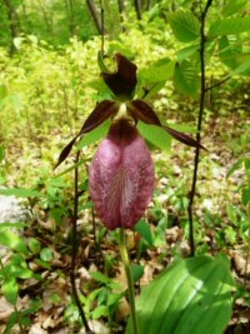
Lady Slipper
Lady Slipper

On two Wednesdays, May 15 and May 22, there is a bird walk from 7 a.m. – 8:30 a.m. at Fairchild Wildflower Garden on North Porchuck Road. For this free event RSVP to 203-869-5272 x230 and don’t forget to bring your binoculars and camera

On Saturday, May 18 and May 25 there will be a bird walk at the Main Sanctuary on Riversville Rd. from 7 a.m. – 8:45 a.m. Morning bird walks are a spring tradition at the Audubon and participants are asked to RSVP to 203-869-5272 x230 and to meet at the Greenwich parking area on Riversville Road.

Also on Saturday, May 18, the Audubon is hosting a program from 2 pm. – 3:30 p.m. called Fast Food Feasts for Songbirds. As neo-tropical migrants return from their wintering areas, emerging insects and other invertebrates provide them with essential foods. Participants will search for feeding birds visit local plant life in search of insects, spiders, and other creatures that make quick treats for spring’s hungry avian travelers.

To finish up the month of May, on the 25th the Audubon Greenwich is hosting Turtle Time with Ted Gilman from 2 p.m. – 3:30. Participants will learn about turtle natural history, nesting behavior, how to help protect turtles, and meet some of our local turtle species. The program is finished with a hike to Mead Lake in search of nesting turtles. This program is appropriate for all ages. Please. RSVP to 203-869-5272 x230.
Birds of New England

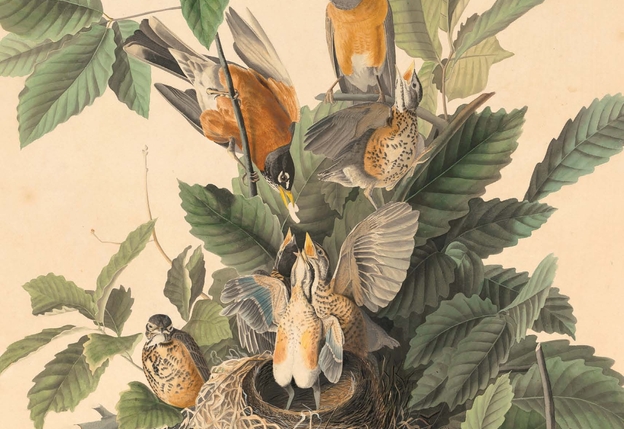
When visiting the Audubon, don’t miss the Birds of New England now on display in in Kiernan Hall at Audubon Greenwich through July 16th. While in New England and the North Atlantic coast, John James Audubon observed many, possibly hundreds of species of birds that lived or migrated here. Audubon painted many of these species, 52 of them while actually on location in New England, and 34 prints are included in this exhibition.

For area information www.visitfairfieldcountyct.com

Creating Habitat Oases for Migrating Songbirds

Join Audubon’s Patrick Comins and Michelle Frankelon April 28 at the Garden Education Center of Greenwich on 1 Bible Street in Cos Cob for a special presentation and walk through Greenwich’s Montgomery Pinetum to learn about simple ways to enhance backyards, school grounds and public parks to provide quality habitat for migrating songbirds. This event is co-sponsored by Audubon Connecticut, Greenwich Tree Conservancy, Bruce Museum and Garden Education Center. An RSVP is suggested to the Greenwich Tree Conservancy at 203- 869-1464. The program takes place from 2 p.m. to 4 p.m.

Garden Education Center of Greenwich

The Audubon’s Habitat Oases program identifies, improves and conserves important stop-over habitat for migrating songbirds all along the Atlantic migratory flyway, focusing on urban and suburban areas and other landscapes where there is limited quality habitat. The program, performed in collaboration with Audubon chapters, state and municipal parks departments, and other groups, engages volunteer birdwatchers – citizen scientists – in migratory songbird surveys of urban/suburban green spaces. The surveys help to determine the characteristics of high quality stop-over habitat and which species of plants are most beneficial as food sources for migrating songbirds.

Audubon and its partners are using the results of this study to promote the protection of critical stop-over habitats by helping government agencies, corporations, land trusts, and other landowners make informed land use and land protection decisions
They also work to improve the quality of public and private lands as stop-over habitat for migrating birds by guiding the management and landscaping practices of natural resource managers, private landowners and professional landscapers
and strive to develop regionally-specific lists of “bird-friendly” native plants that may be used to guide landscaping practices in parks, gardens and backyards.

Patrick Comins is a graduate of Trinity College in Hartford, and has worked in the bird conservation arena for the last 15 years. Patrick began his career with the Connecticut Audubon Society, doing bird surveys on the coast at the Stewart B. McKinney National Wildlife Refuge and then worked for the US Fish and Wildlife Service as a biological technician at the refuge. He has been with Audubon Connecticut as the Director of Bird Conservation for Connecticut since 2000, overseeing Connecticut’s Important Bird Areas and other conservation programs. He is the principal author of Protecting Connecticut’s Grassland Heritage. Patrick is a past resident of the Connecticut Ornithological Association and was the 2007 recipient of their Mabel Osgood Wright Award. He has written several articles on bird conservation and identification for the Connecticut Warbler and is currently chairman and vice president of the Friends of the Silvio O. Conte National Fish and Wildlife Refuge.

Michelle Frankel, Ph.D., is a Conservation Biologist with Audubon Connecticut and is coordinating the Habitat Oases program in CT, and facilitating the implementation of the program in a number of other states along the Atlantic migratory flyway. Michelle previously worked with Audubon of Florida, where she originally piloted the Habitat Oases program. Prior to her work with Audubon, she was Education Director for Earthspan, a nonprofit that develops and applies advanced technologies for wildlife conservation. Michelle received her Ph.D. in behavioral ecology from Boston University, focusing on forest fragmentation effects on migratory songbirds. She subsequently pursued a post-doctoral fellowship with Tel Aviv University and the International Center for the Study of Bird Migration in Israel, where she studied the impacts of urbanization on the globally-threatened Lesser Kestrel.

The Beauty of Botanical Illustrations in Litchfield Hills

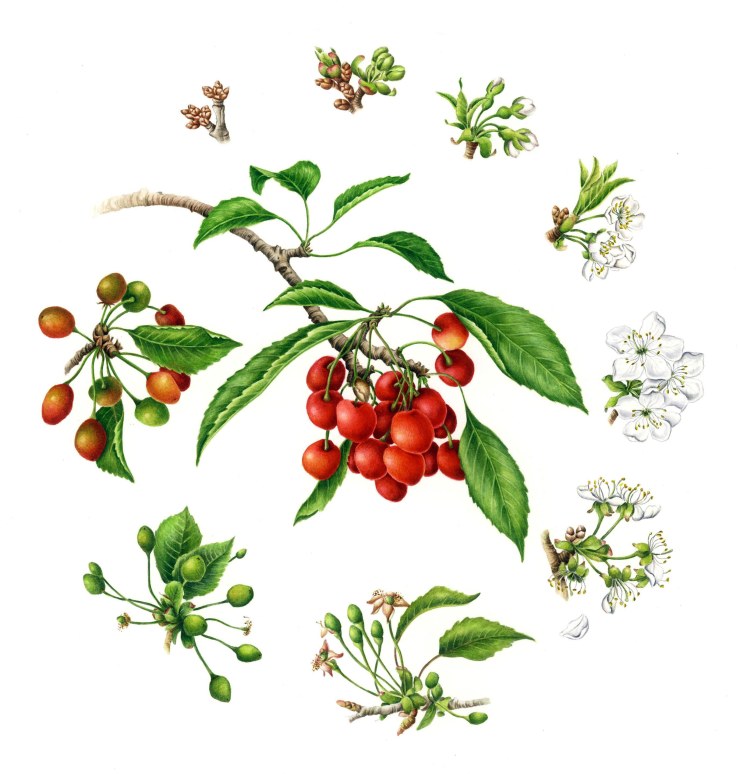
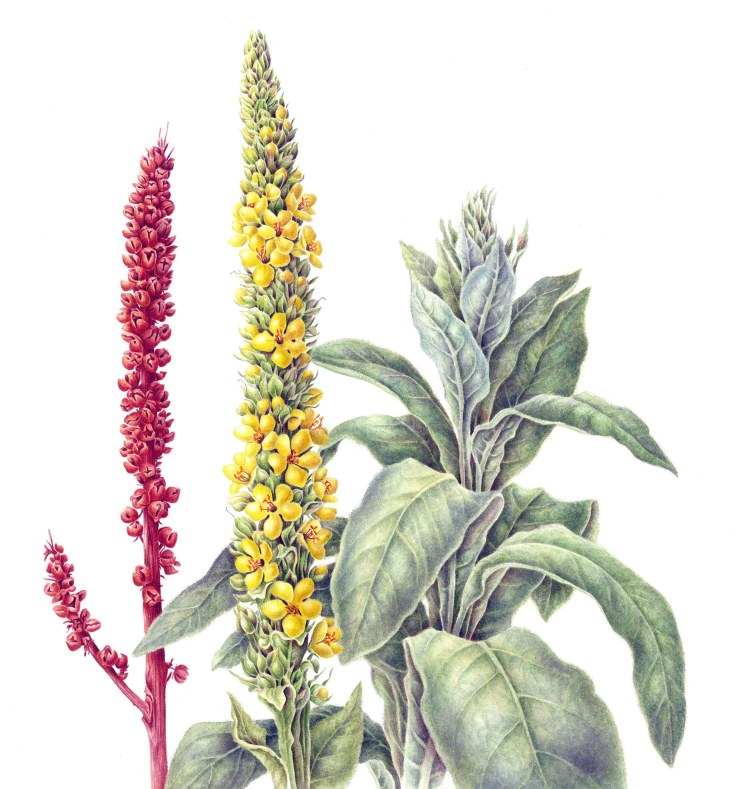
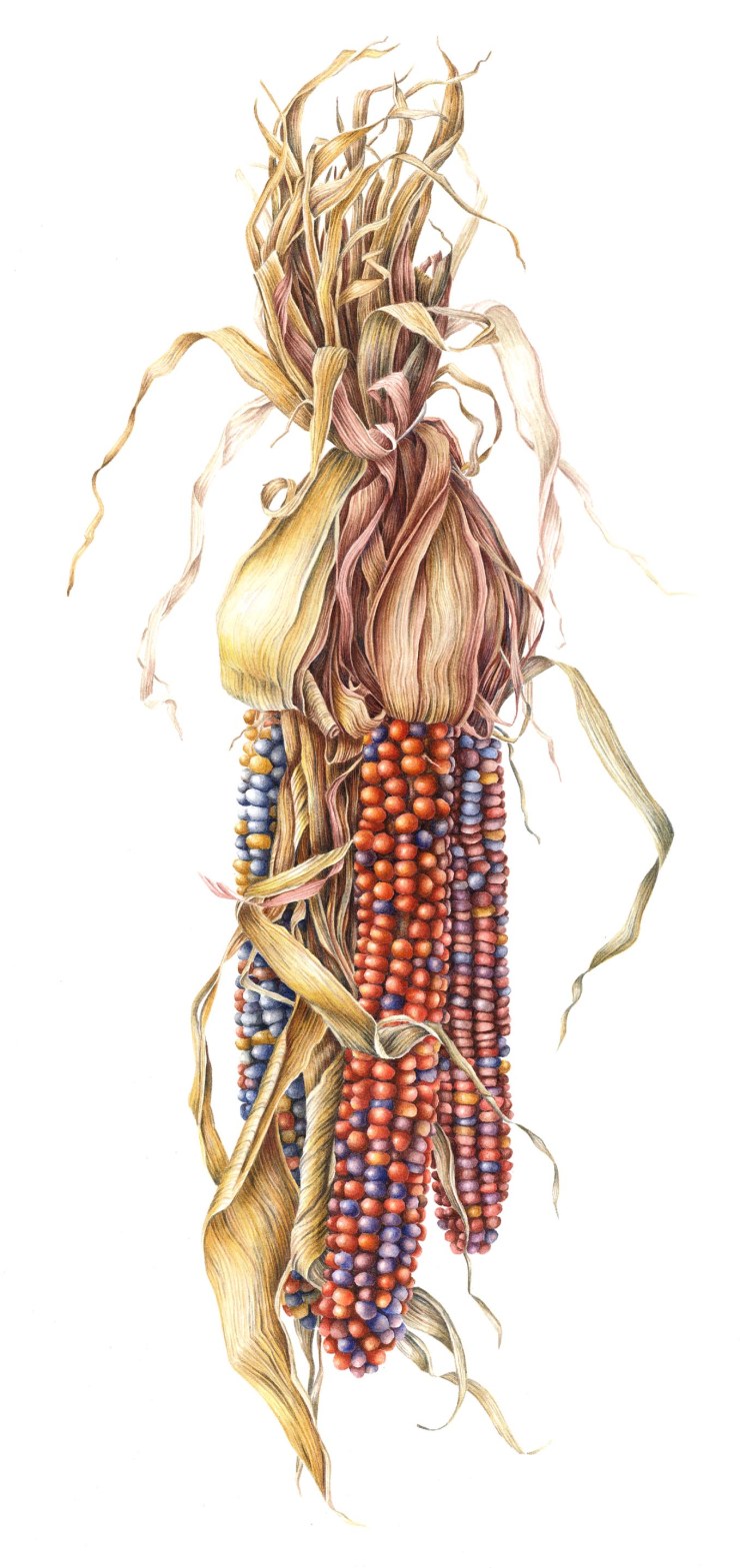
Betsy Rogers-Knox has been drawing and painting since childhood. Her interest in botanical illustration began in Boulder, Colorado where she worked for a botanist and learned by close observation to appreciate the intricate beauty of Colorado wildflowers. This interest led her to the botanical illustration program at the New York Botanical Garden. Her final project included paintings of historic plants from the gardens of the Bellamy Ferriday House in Bethlehem, Connecticut.

Betsy_R-Knox-_Cherry

Betsy is enchanted by the full lifecycle of the plants she portrays in watercolor, and typically observes a plant for a full year before beginning a composition. Published work includes cover designs for Herb Quarterly magazine, the illustrations for the bookHerbs, Leaves of Magic and White Flower Farm’s catalog, as well as over thirty greeting card designs internationally distributed by Renaissance Greeting Card Company and Sunrise Publications.

Betsy_R-Knox-Common_Mullein

She has exhibited extensively including the Smithsonian in Washington, D.C., London’s Kew Gardens, the Horticultural Society of New York, and the New York Botanical Garden. In April 2013 she will show several works at the Royal Horticultural Show in London. Betsy also teaches drawing and watercolor painting to both adults and children from her studio in Bethlehem. Her website is www.betsyrogersknox.com.

Betsy_R-Knox-_Indian_Corn

A selection of the work of Betsy Rogers Knox will appear in the Gallery of the Oliver Wolcott Library located on 160 South Street, Litchfield, CT. through April 26 2013. For more information call 860-567-8030. or visit www.owlibrary.org. For area information www.litchfieldhills.com

African Penguins Return to Maritime Aquarium At Norwalk through April 22

The Maritime Aquarium at Norwalk is bringing back one of the most popular species it’s ever displayed: African penguins, who will waddle in for a celebratory encore exhibit through April 22, 2013.

Aquar.AfricanPenguin

African Penguins” will be open through April 22 in an outdoor exhibit on the Aquarium’s riverfront courtyard. It’s free with admission. The small colony of penguins will be on loan from the Leo Zoological Conservation Center in Greenwich (www.LEOzoo.org).

Educating visitors on where penguins live may be one of the first basic goals of the exhibit. None of them live at the North Pole, or with Eskimos or polar bears. Some species do live in Antarctica. But many penguins can be found in warmer climates of the southern hemisphere, like African penguins in South Africa and several species that live up the western coast of South America, all the way to the equator and the Galapagos Islands. The African penguins – whose conservation status is listed as endangered – will help call attention to Africa’s troubled coastal environments, which receive far less conservation protection than the continent’s inland savannahs, plains and jungles.

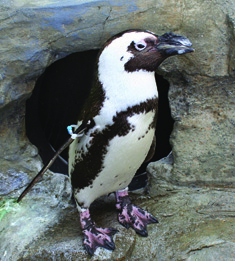
African penguins (Spheniscus demersus) stand about two feet tall and weigh 8 pounds. They’re recognizable by the black stripe that loops up across their chest and their pink “eyebrows.” The pink “eyebrows” actually are an adaptation that helps them to survive in a warmer habitat like South Africa – or Norwalk. The “eyebrows” are featherless patches with lots of blood vessels underneath. When a penguin gets too hot, these patches get brighter as the penguin circulates more blood there to dissipate body heat.

African penguins also have evolved shorter feathers because, unlike Antarctic species, they do not face extreme cold.

The previous penguins exhibit at the Aquarium was open from February 2009-December 2010. For more details about The Maritime Aquarium’s exhibits, programs and IMAX movies, go to http://www.maritimeaquarium.org or call (203) 852-0700.