Go on a treasure hunt at the Wilton Spring Antiques Show April 16 & 17

The Wilton Historical Society has announced the return of the Wilton Spring Antiques Show, April 16 and 17 at the Wilton High School Field House on Route 7, in Wilton, Connecticut. Plan on a weekend of collecting fun with more than 35 diverse, top-notch dealers from eight states that will be offering early formal and country American and European furniture, historical ceramics, Oriental rugs, fine art, decorative signs, Asian arts, hooked rugs, folk art, fine prints and paper, colorful textiles, French pottery, early treenware, lighting, brass, tall case clocks, weathervanes, nautical objects, and much more.

Wilton_Spring_Antiques_Show_2

This show is noted for the thought, enthusiasm and preparation shown by exhibitors in regard to the selection of objects that they bring to this show. New this year is the boutique floor plan that makes it easier to enjoy the show without being rushed or cramped as you visit with familiar dealers and new ones as well. In a nut shell, Wilton is one stop shopping for those just beginning to collect as well as those that are advanced collectors.

Wilton_Spring_Show_2016_1

The Wilton Spring Antiques Show customers will have a full two days to shop on their weekend schedule, meet up with friends, and enjoy a delectable lunch at the show’s café. Event goers can also take advantage of the unlimited re-entry throughout the show’s run.

Wilton_Spring_Show_Victor_Weinblatt

The show dates are Saturday, April 16, from 10:00 – 5:00 and Sunday, April 19, from 11:00 – 4:00. Admission is $10 per person with unlimited re-entry. Sorry, no pets allowed in the school. The Wilton Spring Antiques Show will be located at the Wilton High School Field House at 395 Danbury Road (Route 7) in Wilton, CT. There is ample free parking, handicap accessibility, show café, courtesy table with complimentary color magazines, popular antiques newspapers and upcoming event announcements. This show is presented by Barn Star Productions and proceeds benefit the Society. For more information www.wiltonhistorical.org or call (845) 876-0616. For more area information www.visitfairfieldcountyct.com
Pequot Library Mid.-Winter Book Sale Feb. 13-14

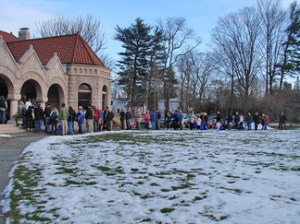
Pequot Library’s Mid-Winter Book Sale is the little sister of the Library’s nationally known Summer Book Sale. The Mid-Winter Sale is smaller but more intimate with many treasures and bargains to be found. The sale runs from Saturday, February 13 – 14, from 9:00am – 5:00pm daily. If there is snow and the library has to close one of these days, the sale will resume on Monday, February 15.

Mid-winter_Book_Sale

To add to the fun there will be live acoutic music on Saturday and Sunday afternoon. Admission to the book sale is free and all Sale proceeds help fund Pequot Library’s over 700 annual programs, serving 100,000 participants of all ages. Categories include: Fiction; Classics; Mystery; Biography; History; Cookbooks, including Americana regional cookbooks; LP Records including Vocal, Stage and Screen, and World; CDs, DVDs, other Media; Comics 1970s – 1990s; and Connecticut/New England books.

Please visit www.pequotlibrary.org to learn more about this vibrant library, educational, arts and cultural institution. For more area information on what to do and where to go visit www.visitfairfieldcountyct.com

Walls of Color: The Murals of Hans Hofmann at the Bruce Museum

This spring and summer the Bruce Museum located on One Museum Drive in Greenwich will be awash in the vibrant hues of
Abstract Expressionist Hans Hofmann.

Walls of Color: The Murals of Hans Hofmann, is the first ever exhibition to focus on the artist’s varied and under-appreciated public
mural projects that will be on view at the Bruce Museum through September 6. The show will then travel to The Patricia
and Phillip Frost Art Museum at Florida International University, Miami, FL (October 10, 2015 to January 3, 2016), and to the Ackland Art Museum, University of North Carolina, Chapel Hill, NC (January 22 to April 10, 2016).

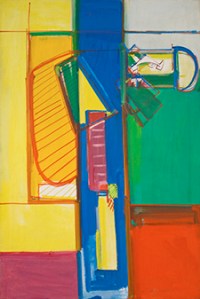
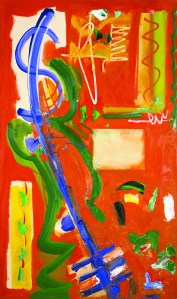
Awakening Hans Hofmann (1880-1966) Awakening, 1947 Oil on canvas, 59 ¼  x 40 ¼ in. Private Collection Photograph by Paul Mutino  Works by Hans Hofmann used with permission of the Renate, Hans and Maria Hofmann Trust
Awakening
Hans Hofmann (1880-1966)
Awakening, 1947
Oil on canvas, 59 ¼ x 40 ¼ in.
Private Collection
Photograph by Paul Mutino
Works by Hans Hofmann used with permission of the Renate, Hans and Maria Hofmann Trust

A towing figure among the New York School painters and one of the most important teachers and theoretician of the Abstract
Expressionist movement, Hans Hoffman is well known for his dynamic approach to color. The centerpiece of Walls of Color: The Murals of Hans Hofmann will be nine oil studies by Hofmann,each seven feet tall, for the redesign of the Peruvian city of Chimbote. This was Hofmann’s extraordinary collaboration, in 1950, with Catalan architect José Luis Sert – the man who designed the
Spanish Pavilion at the Paris World’s Fair in 1937, for which Picasso’s great mural Guernica was conceived. Although never realized, this visionary project was to include a huge mosaic wall – a freestanding bell tower in the town center – designed by Hofmann, which would incorporate not only his own highly evolved notions of Abstract Expressionist visual dynamics, but also forms symbolic of traditional Peruvian culture, religion and history.

6_Apartment Sketch

Although now nearly forgotten, Hofmann also created two huge public murals in Manhattan. In 1956, for the developer William Kaufman, and in collaboration with the noted pioneer modernist architect William Lescaze, Hofmann created an astonishing, brilliantly colored mosaic mural, wrapped around the elevator bank in the main entrance hall of the office building at 711 Third Avenue. Two years later, in 1958, commissioned by the New York City Board of Education, Hofmann created a 64-foot long and
11-foot tall mosaic-tile mural for the High School of Printing (now the High School of Graphic Arts Communication) on West 49th Street.
These large scale stunning works will be brought back to life at the Bruce Museum via varied painted studies, mosaic maquettes, photos, and ephemera – as well as studies for a mural for an unrealized New York apartment house of the same period – which will show Hofmann’s working methods.

5_Sketch 711

A scholarly catalogue has been created for the exhibition, with a foreword from the Renate, Hans and Maria Hofmann Trust, and essays by Curator Kenneth Silver and Mary McLeod, Professor at the Graduate School of Architecture, Planning and Preservation, Columbia University. Public programming planned for the exhibition includes the 2015 Bob and Pam Goergen Lecture Series, with lectures by Curator Kenneth E. Silver on Tuesday, May 5; Stacey Gershon, principal at Stacey Gershon Fine Art/MLG Art Advisory on Thursday, June 11; and Mary McLeod, Professor at the Graduate School of Architecture, Planning & Preservation, Columbia University, on Thursday, June 25. All lectures will be held at the Museum and will begin at 7:30 p.m.

About the Bruce Museum
The Bruce Museum is a museum of art and science and is located at One Museum Drive in Greenwich, Connecticut. The Museum is open Tuesday through Sunday from 10 am to 5 pm; closed Mondays and major holidays. Admission is $7 for adults, $6 for students up to 22 years, $6 for seniors and free for members and children less than five years. Individual admission is free on Tuesday. Free on-site parking is available and the Museum is accessible to individuals with disabilities. For additional information, call the Bruce Museum at (203) 869-0376 or visit the website at http://brucemuseum.org. For area information www.visitfairfieldcountyct.com

Greenwich Historical Society – Over Here and Over There: The Popular Music of WWI

On February 26, 2015, 7:00 pm and Sunday, March 1, 2015, 4:00 pm the Greenwich Historical Society is presenting a program on music during WWII. The Society is located on 39 Strickland Road in Cos Cob. The event will take place in the Vanderbilt Education Center on the grounds of the Society. Tickets are $10 for members and $15 for nonmembers. Purchase tickets at http://greenwichhistory.org or call 203-869-6899, Ext. 10.

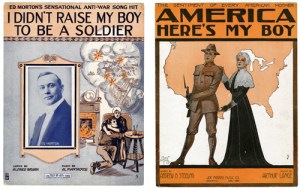
warposters

Music played a key role in the development of popular opinion during WWI. Lyrics and sheet music art were often designed to influence public opinion As the political climate shifted from neutrality to support for the allies, so did mainstream music.

Prior to US involvement in 1917 many songs supported neutrality with more than one song invoking a mother’s love as a reason enough for a son to stay at home. After 1917, when the United States joined the conflict, patriotic themes became more popular.

Led by Stefanie Kies and Bea Crumbine, the program will juxtapose performances of period music with background information and slides. Also, performing are vocalist Dan Swartz and John Goldschmid on piano.

Discovering the “New World”: Maps & Sea Charts from the Age of Exploration

There is a time honored fascination with maps and sea charts. The new exhibition at the Bruce Museum is featuring maps to be admired… not for navigation!
This exhibition features more than thirty maps and charts dated between 1511 and the 1757. The maps — woodcuts or metal-plate engravings, many with original hand-applied color — represent Renaissance-period attempts by European ateliers to edify their clientele by revealing our “new” hemisphere and its approaches, as discoveries and claims came ashore from those daring enough to pack their sea bags and head for the unknown.

Today, we live in routine harmony, with cartography: on television and the Web; in newspapers, books and magazines. Satellite maps signify weather; detail maps illustrate locales of crucial events; GPS screens send us, often correctly, to new locales. On land, at sea, and in the air—digitized geography helps deliver goods and people everywhere, often without human intervention.

It was not always so. More than five hundred years ago, two European empires began daringly (and competitively) seeking the most efficient seaborne routes to the riches of Arabia and The Orient—Spain sailing west; Portugal sailing east. Mapmakers back home (nearly all landlubbers happy to sit by the fire) scrambled to gather the latest explorers’ reports to enable them to draw up-to-date maps, print them as separate sheets, and sell them largely to the wealthy as bound atlases—massive compendia that glorified leather-filled libraries and enriched cultural reputations.

But much of the news sent home was erroneous, owing to imperfect navigation, honest misreadings of reality, or deliberate misrepresentations. (As he wandered around the Caribbean Sea, for example, Columbus believed he had found India.) Altogether, these factors make historic “New World” maps a fascinating study in geographic and human progress—and occasional regression.

The Bruce Museum is open Tuesday – Sunday 10 am – 5 pm, Doors close 1/2 hour before closing, and the last admission is at 4:30 pm. For additional information call 203-869-0376 or visit https://brucemuseum.org.

For area information www.visitfairfieldcountyct.com
Rick Shaefer Draws the Line at Housatonic Museum of Art

The Housatonic Museum of Art presents Rick Shaefer: Drawing the Line on view in the Burt Chernow Galleries, 900 Lafayette Blvd., Bridgeport, CT, from February 12 through March 27, 2015 with a reception open to the public on February 12 from 5:30-7:00 pm. The Burt Chernow Galleries are free and open seven days a week. Visit the website, www.HousatonicMuseum.org for gallery hours.

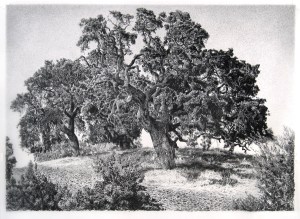
LIVE OAKS

Drawing is essential to the training of an artist. It is the most direct medium between the artist and his observations, thoughts, feelings and experiences—serving both as a record and as a revealer of truth. Drawing is both a cognitive and manual process that provides the foundation for painting, sculpture and architecture. Fairfield artist Rick Shaefer’s monumental, breath-taking drawings offer viewers an adventure in looking with his technically precise and visually poetic drawings of animals and nature.

At first glance, it is clear that Shaefer has more than a passing acquaintance with works of art across time. Of all the masters he has studied, it is Albrecht Durer that has influenced him most. In the 16th century, the natural world of animals and plants had become the focus of scientific and cultural interest as explorers returned from far-flung places carrying examples and illustrations of exotic new species. One of Durer’s best known pen drawings, Rhinoceros, 1515, demonstrates the artist’s fascination with recording the curiosities and wonders of the world. Paradoxically, Shaefer’s own African Rhinoceros, beautifully rendered in rich charcoal on vellum, comes full circle by documenting what now may be the waning days of these magnificent beasts.

BELGIAN BLUE

Shaefer’s trees, crowned with leaves or barren and in varying states of decay, are densely detailed and sensitively modeled through the use of tonal gradations. Majestic oaks and tangled vines allow the artist to mine the sculptural properties of a charcoal line, expressing not only what he observes but how he feels. A dramatic narrative unfolds before the eye, compelling the viewer to travel along through the light and into the shadows.

And, like the rhinoceros, these powerful and confident drawings circle around a common theme: the effects of human activity on nature. Climate change specifically could lead to the massive destruction of forests as well as the extinction of countless species. Global warming has led to the increase of forest fires as well as a proliferation of pests and diseases. Rick Shaefer: Drawing the Line looks to the rich tradition of drawing in order to explore the critical issues of our time.

For area event information www.visitfairfieldcountyct.com