Greenwich Historical Society – Over Here and Over There: The Popular Music of WWI

On February 26, 2015, 7:00 pm and Sunday, March 1, 2015, 4:00 pm the Greenwich Historical Society is presenting a program on music during WWII. The Society is located on 39 Strickland Road in Cos Cob. The event will take place in the Vanderbilt Education Center on the grounds of the Society. Tickets are $10 for members and $15 for nonmembers. Purchase tickets at http://greenwichhistory.org or call 203-869-6899, Ext. 10.
warposters

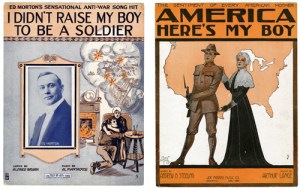
Music played a key role in the development of popular opinion during WWI. Lyrics and sheet music art were often designed to influence public opinion As the political climate shifted from neutrality to support for the allies, so did mainstream music.

Prior to US involvement in 1917 many songs supported neutrality with more than one song invoking a mother’s love as a reason enough for a son to stay at home. After 1917, when the United States joined the conflict, patriotic themes became more popular.

Led by Stefanie Kies and Bea Crumbine, the program will juxtapose performances of period music with background information and slides. Also, performing are vocalist Dan Swartz and John Goldschmid on piano.
Rick Shaefer Draws the Line at Housatonic Museum of Art

The Housatonic Museum of Art presents Rick Shaefer: Drawing the Line on view in the Burt Chernow Galleries, 900 Lafayette Blvd., Bridgeport, CT, from February 12 through March 27, 2015 with a reception open to the public on February 12 from 5:30-7:00 pm. The Burt Chernow Galleries are free and open seven days a week. Visit the website, www.HousatonicMuseum.org for gallery hours.

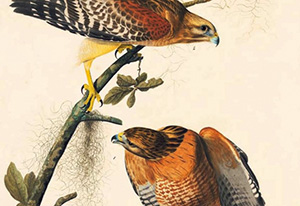
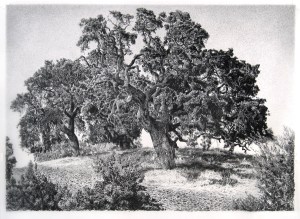
LIVE OAKS

Drawing is essential to the training of an artist. It is the most direct medium between the artist and his observations, thoughts, feelings and experiences—serving both as a record and as a revealer of truth. Drawing is both a cognitive and manual process that provides the foundation for painting, sculpture and architecture. Fairfield artist Rick Shaefer’s monumental, breath-taking drawings offer viewers an adventure in looking with his technically precise and visually poetic drawings of animals and nature.

At first glance, it is clear that Shaefer has more than a passing acquaintance with works of art across time. Of all the masters he has studied, it is Albrecht Durer that has influenced him most. In the 16th century, the natural world of animals and plants had become the focus of scientific and cultural interest as explorers returned from far-flung places carrying examples and illustrations of exotic new species. One of Durer’s best known pen drawings, Rhinoceros, 1515, demonstrates the artist’s fascination with recording the curiosities and wonders of the world. Paradoxically, Shaefer’s own African Rhinoceros, beautifully rendered in rich charcoal on vellum, comes full circle by documenting what now may be the waning days of these magnificent beasts.

BELGIAN BLUE

Shaefer’s trees, crowned with leaves or barren and in varying states of decay, are densely detailed and sensitively modeled through the use of tonal gradations. Majestic oaks and tangled vines allow the artist to mine the sculptural properties of a charcoal line, expressing not only what he observes but how he feels. A dramatic narrative unfolds before the eye, compelling the viewer to travel along through the light and into the shadows.

And, like the rhinoceros, these powerful and confident drawings circle around a common theme: the effects of human activity on nature. Climate change specifically could lead to the massive destruction of forests as well as the extinction of countless species. Global warming has led to the increase of forest fires as well as a proliferation of pests and diseases. Rick Shaefer: Drawing the Line looks to the rich tradition of drawing in order to explore the critical issues of our time.

For area event information www.visitfairfieldcountyct.com

February Fun at the Greenwich Audubon

The Greenwich Audubon located on 613 Road in Greenwich has planned a fun filled February for the entire family. The month starts off on February 1 with the FIrst Sunday Bird Walk at Greenwich Point Park from 9:30 – 11:00 a.m. Participants will enjoy a coastal bird walk in one of Greenwich’s most important bird areas. Participants should meet at the flag pole near the second concession stand at 9:00 am. This event is free and guided and all skill levels are welcome. If you are not available for this walk on the first or if you want to repeat it, the Audubon is also offering this walk on the 8th.

2013-09-19-oppenheimergallery-invite-greenwich_page_1

On February 4, the Audubon has teamed up with The Avon Theatre in Stamford for a screening of “Pelican Dreams” from 7:30 pm – 9 pm at the Avon Theate. This documentary follows a wayward, starving California brown pelican from her “arrest” on the Golden Gate Bridge into care at a wildlife rehabilitation facility, and from there explores pelican nesting grounds, Pacific coast migration and survival challenges. Following the film, Audubon Naturalist Ted Gilman will discuss waterbirds and ways Audubon is working to conserve birds in Important Bird Areas across Connecticut. Avon or Audubon Members: $6 or $11 otherwise. Purchase online: http://www.avontheatre.org or call 203-967-3660, x2 for tickets.

A Winter Vacation Nature Exploration Days is taking place from Feb. 10-18 from 9:30 am – 3:30 pm. Audubon’s solution to the winter vacation blues! Explore the season with us as we enjoy learning how animals and plants survive New England’s harsh winter conditions. Pack the winter gear and snacks and sign now up for 1 or 2 days. Grades K-6. For registration forms, visit website and send to Gigi at glombardi@audubon.org.

The Audubon is a proud participant in this unique citizen-led scientific bird count, whose results are reported online to Cornell University’s Laboratory of Ornithology and will aid research on where bird species are spending the winter. To learn more, visit http://www.birdcount.org or join the Audubon on Feb. 13 – 16 for one of these wonderful programs. Please register for these free programs. RSVP to Ted at 203-869-5272 x353. Bring binoculars or a spotting scope if you have them. Loaner binoculars will be available.

On February 22 from 1 pm – 2:30, the Audubon is hosting a program on Coyotes and Foxes. Eastern coyotes and red foxes play important ecological roles and have become more common in our region. Frank Vincenti, founder of The Wild Dog Foundation, will explain how people and predators can live in harmony. Chris Nagy, Director Research & Land Management, for the Mianus River Gorge Preserve will discuss coyote biology and the unique Gotham Coyote Project. Q&A will follow. Proceeds directly benefit Audubon’s local conservation initiatives. $10/adult. $5/child. Ages 7 & up suggested. RSVP to Jeff at 203-869-5272×349.

For more information on the Greenwich Audubon http://greenwich.audubon.org. For area information www.visitfairfieldcountyct.com

The Millionaires’ Unit Documentary Film Screening

On January 29, the Greenwich Historical Society is hosting the screening of The Millionaires’ Unit Documentary from 3 pm to 5 pm. at the Vanderbilt Education Center on the grounds of the Society. The tickets are Members: $10; nonmembers: $15 and can be purchased at http://greenwichhistory.org or by calling 203-869-6899, Ext. 10.

Millionaires-Unit

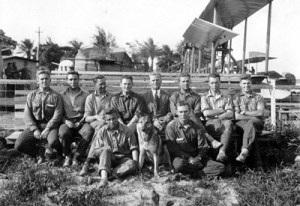
The Millionaires’ Unit is the story of an elite group of college students from Yale who formed a private air militia in preparation for America’s entry into World War One. Known as the First Yale Unit and dubbed “the millionaires’ unit” by the New York press, they became the founding squadron of the U.S. Naval Air Reserve and were among the first to fight for the United States in the Great War. Using the squadron members’ letters and diaries, the documentary chronicles the coming of age of these young pioneers against the backdrop of an event that signaled America’s emergence as a world power.

The film focuses on their service and sacrifice and chronicles a great, untold story of early aviation in America. The documentary was inspired by the book The Millionaires’ Unit by Marc Wortman. After seven years in development and production by co-producers Ron King and Darroch Greer, the film is being presented to the public to commemorate the centennial of World War I.

LEGOS AND LIGHTHOUSES BRIGHTEN THE SEASON IN CONNECTICUT

There’s no merrier place to be this season than Fairfield County in Western Connecticut where two of the most original exhibits in New England brighten the season at local museums.

A lavish moving landscape made of a billion LEGO® bricks delights visitors to the Stamford Museum and Nature Center while the 13th annual Festival of Lighthouses contest at the Maritime Aquarium in Norwalk shows off dozens of fabulous new miniature creations.

WIDE WORLD OF LEGOS®

Trains and planes. Cars, tractors and trucks. Ships, shuttles and monorails. Helicopters and spaceships

Just about anything that moves on land, sea, air and space will be seen as colorful LEGO® sculptures, moving through a three-dimensional imaginary landscape at the Billion Bricks 2 exhibit at the Stamford Museum & Nature Center. Everything in the amazing exhibit is made of LEGO blocks.
Master builder Bill Probert & I LUG (LEGO® Users Group) NY return to the Museum Galleries for a sixth season of their popular displays, promising a LEGO world that is even bigger and better this year. The exhibit runs from November 22 to January 25.

billionbricks2014

Starting in January, families are invited to make their own LEGO® creations in weekend workshops. Participants on Saturday, January 3 will build and race a LEGO® car while the group on Sunday January 4 will build and fly a Lego helicopter or space ship.

Lights! Camera! Action! Animation Workshops on Saturday and Sunday January 17 and 18 for ages 10 and up will be led by Alex Kobbs, of KooberzStudios. Kobbs will teach techniques for film stop action animation using LEGO® creations and mini figures.

Workshops are limited in size and advance reservations are required. Phone 203-977-6521 to register and see www.stamfordmuseum.org for more information.

LIGHTHOUSES LIGHT UP THE SEASON

Some are funny. Some are clever. Some are beautiful.

For the 13th year, artists and would-be-artists will compete for the most original entry in the Festival of Lighthouses at the Maritime Aquarium at Norwalk from November 22 through January. 19.

Aquar.lighthouse2012.Sudell

The rules are simple. Entries must be three to six feet tall and have a working light. They may not include animal remains such as shells. Beyond that, it’s up to the creators’ imaginations and the results are guaranteed to amaze. Past entries have been made of stained glass, stone, yarn, clay, candy and tiny coffee cups. One entry was made of holiday greeting cards, another included computer animation. One memorable entry featured all the makings of the 12 days of Christmas.

This year’s exhibit will showcase 24 lighthouses and there is no telling what the creative results will be. Aquarium visitors will follow these one-of-a-kind beacons through the galleries and then cast a vote for their favorite. The winner takes home the $1,500 first prize. Runner-ups divide the rest of the $3300 in prize money. To learn more, see www.maritimeaquarium.org.

Aquar.lighthouse2012.Sudell

For more information about holiday events and a free copy of Unwind, a full-color, 152-page booklet detailing what to do and see, and where to stay, shop and dine in Fairfield County as well as in the Litchfield Hills, contact the Western Connecticut Visitors Bureau, PO Box 968, Litchfield, CT 06759, (860) 567-4506, or visit their web site at www.visitwesternct.com.

/x

The Pequot War and the Founding of Fairfield

The Fairfield Museum and History Center presents a new exhibition, The Pequot War and the Founding of Fairfield, 1637-1639, on view through January 18, 2015, concluding a full year of exhibits, programs and events that celebrated Fairfield’s 375th anniversary.

indian

A collaboration with the Mashantucket Pequot Museum, this exhibit presents the story of the Pequot War in 1637, which led to Fairfield becoming established as an English settlement 375 years ago. Roger Ludlow, then a member of the Windsor Settlement, came south to join the fight. He was so taken with the area and its beauty, he returned in 1639 and founded the town of Fairfield.

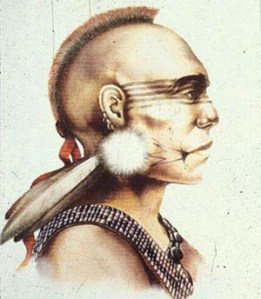
An Algonquian-speaking people, the Pequot had been living in southeastern Connecticut for thousands of years prior to European contact. Before the arrival of the Europeans, roughly 13,000 Pequot lived in villages along Long Island Sound and the estuaries of the Thames, Mystic, and Pawcatuck Rivers, raising food through farming, hunting, and gathering

POnhhpaAjy7vQcXB-lY4pZHhYSk-9pIiBzWu8fMtGFc,XPtjheQWQUu5q7Vh_SWo_fWQCZT1etz78BJJmJZo1wg,40OYPRz2gPuYQL496edlFXtSBG9GaMOpM90eNReu4d4

The Pequot War (1637-38) was the first serious conflict in New England between European colonizers and the indigenous population. Historians have referred to the war as a seminal event in early American history, as it paved the way for English control of southern New England and the subjugation of the region’s Native people.
Among the many objects displayed in the exhibit is the sword of Captain John Mason, on loan from the Stonington Historical Society. Mason was the leader of the Connecticut troops during the Pequot War, and he most probably used this sword to fight the Pequot.

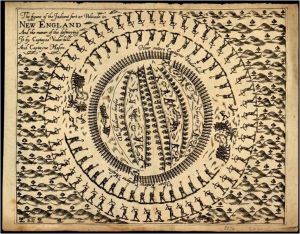
The exhibit also includes an original copy of John Underhill’s Newes from America (1638), on loan from the Connecticut Historical Society, rarely on public display. Captain John Underhill led the Mass Bay troops during the war and later published this account of the events. It is not only one of the most important primary sources of the war, but the publication also includes a remarkable woodcut of the attack on Mistick Fort that has become an iconic image. Also on view are other early 17th century examples of English arms and armor, including a helmet and matchlock gun, as well as a period bale seal and religious book, all on loan from the Plimoth Plantation.

OCRAv8DaJ_-QoX69B4YSivwKzoeoixOq1bo2vZmufVY

Also featured is a photograph of George Avison’s artwork, commissioned during the Great Depression by the Works Progress Administration to paint a series of five murals depicting Fairfield’s history, including one of the Swamp Fight. When he completed them in 1937, they were hung in the Roger Ludlowe High School building, now known as Tomlinson Middle School, where they remain today.

About the Fairfield Museum and History Center
The Fairfield Museum and History Center is a nonprofit, community cultural arts and education center established in 2007 by the 103-year old Fairfield Historical Society. The 13,000 square-foot museum includes modern galleries, a research library, a museum shop and community spaces overlooking Fairfield’s historic Town Green. The Fairfield Museum and History Center believes in the power of history to inspire the imagination, stimulate thought and transform society. Located at 370 Beach Road in Fairfield, CT, the Museum is open seven days a week, 10 am – 4 pm. Admission is $5 for adults, $3 for students and seniors. Members of the Museum and children are free. For more information www.fairfieldhistory.org.

For area information www.visitfairfieldcountyct.com