A Brush With the Civil War At Weir Farm April 15

Weir Farm National Historic Site

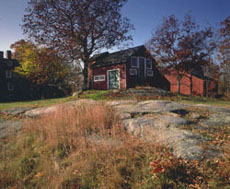
Wilton Connecticut’s Weir Farm National Historic Site is hosting a special commemorative event on the relationship between J. Alden Weir and the Civil War on Sunday, April 15 from 2:00 PM – 3:00 PM.

Weir Farm celebrates the life, artwork and artistic legacy of J. Alden Weir. What most people don’t know is that Weir and his family held deep ties to the Civil War. Born in 1852 in West Point New York, by 1861 nine year-old J. Alden Weir witnessed firsthand the escalating tensions at the U.S. Military Academy, and later watched his older brothers march off to war.

Join Park Ranger Allison Jordan for A Brush with War: The Weir Family and the Civil War, a special presentation to commemorate the Civil War sesquicentennial, and learn about the incredible connections the Weir family had to our nation’s bloodiest conflict.

Weir’s family included a Professor at West Point, a winner of the Medal of Honor, a sailor caught in the battle of Mobile Bay, a commander of the United States Colored Troops, and an artillery lieutenant whose actions at Gettysburg haunted him for the rest of his life.

There is no fee to attend A Brush with War, but registration is requited. Plenty of seating will be available. To register, or for additional information call 203-834-1896×12 or visit www.nps.gov/wefa/index.htm Weir Farm is located on 735 Nod Hill Rd. in Wilton CT.

About Weir Farm

In June of 1882, painter J. Alden Weir boarded a train from New York bound for his modest farm among the hills of Branchville, CT. Once here, Weir and his family transformed their summer retreat into a creative refuge for friends and fellow artists. After Weir, artists Mahonri Young and Sperry Andrews lived and worked here, continuing the legacy of artistic expression that still inspires today.
Three Historic Photojournalists Featured at Westport Arts Center

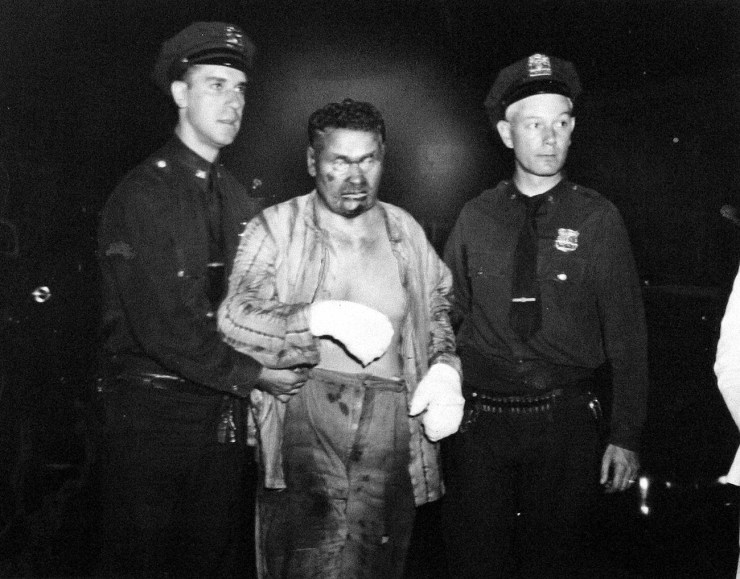
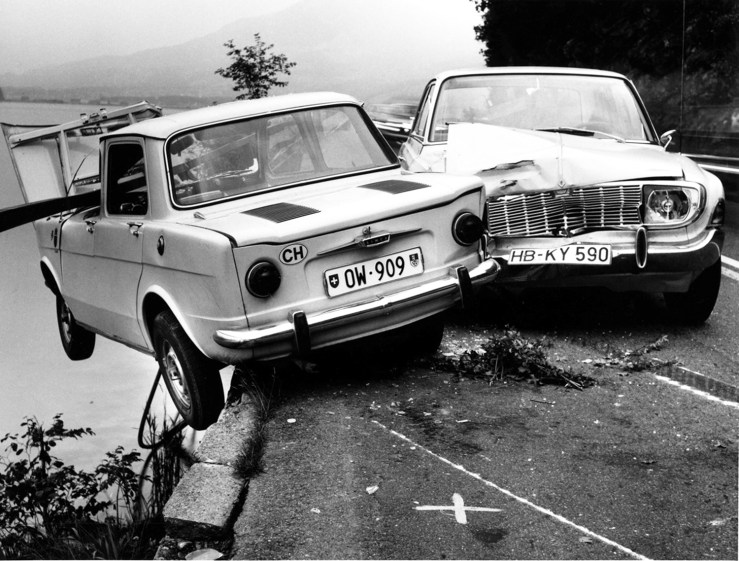
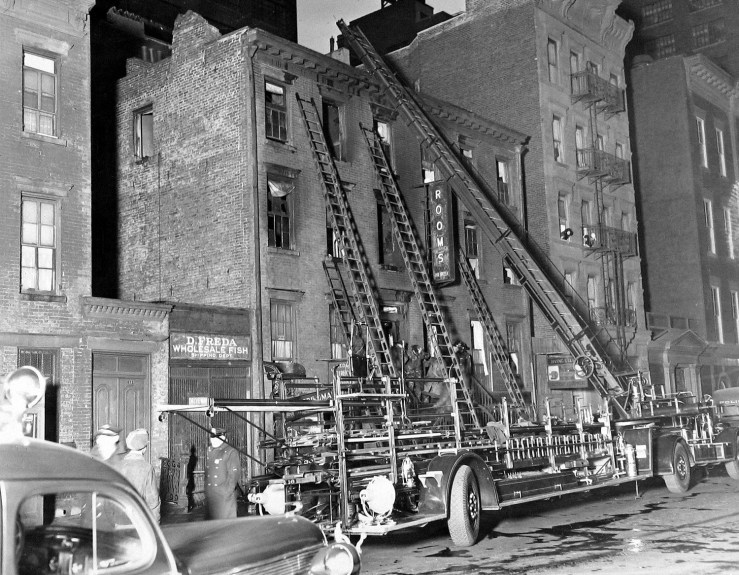
The Westport Arts Center will present “On Duty: Weegee, Metinides, Odertmatt,” featuring works by three influential photographers who worked in the late 1930s to the present day: A Swiss policeman, Arnold Odermatt; a Mexican photojournalist, Enrique Metinides; and New York photojournalist, Arthur Fellig, known as “Weegee.” The exhibition will open with a public reception on Friday, November 18, 6 – 8pm, and will run through Sunday, January 15.

The Westport Arts Center Gallery on 51 Riverside Avenue is free and open to the public seven day a week, Monday – Saturday, 10am – 5pm and Sunday, 12pm – 4pm. http://www.westportartscenter.org

This exhibition will feature 45 works by Weegee, Metinides, and Odermatt. All three, while on duty in their respective professions, cross the line of simply documenting accidents and day-to-day mayhem. The content of the imagery, often tragic or unsettling, transcends the rawness of the event.

Perhaps the most notorious and influential photographer in the exhibition is Weegee, who began shooting the streets on New York in the early ‘20s. Some sources speculate his name to be adapted phonetically from the “Ouija Board,” as he had an “Uncanny ability to make such early appearances at scenes of violence and catastrophe…[and took] mostly shots of bloody murders, fire, the seedy Bowery district, and sympathetic views of people who lived on the streets of New York at Night,” (Mary Christian, Oxford University Press).

Weegee’s immediate arrival to the scene can be credited to toting a shortwave police scanner in his car as well as his bedside. His trunk was a mobile studio with a typewriter, developing equipment, and, of course, plenty of cigars. By using a strong bulb flash and often-times developing the photograph immediately at the scene, Weegee created works that were extremely high-contrast and gritty. The raw and graphic nature of his work has inspired many subsequent photographers and artists, including Diane Arbus and Andy Warhol.

Shooting the same subject matter as Weegee, but in a radically different style, Enrique Metinides is Mexico’s most famous crime photographer. Taking his first photograph at age 12, Metinides caught the bug early, sleeping with a police scanner by his bedside with the goal to arrive on the scene of an accident moments before the police to get the perfect shot. Metinides’ work is deliberate in its composition; he uses a wider lens and carefully frames his subjects. Now retired, he captured the cultural milieu of Mexico City for more than five decades.

There are artists that happen upon their careers accidently, and Arnold Odertmatt is one such artist. The official police photographer in a small town in Swizerland from 1948 – 1990, Odermatt took archival images for police documentation and insurance claims. Odermatt would linger at the scene to shoot another round of photographs of the wreckage for himself. Odermatt captured an era of changing landscapes, where small country roads transitioned to highways that gave way to higher speeds and car accidents. His black and white photographs portray mostly cars and other vehicles, precariously placed in the person-less scene like crushed toys.

About the Westport Arts Center

The Westport Arts Center is a visual and performing arts organization dedicated to creating arts experiences that enrich the lives of area residents and the entire community.

For more information, contact Westport Arts Center at 203-222-7070, www.westportartscenter.org. Gallery hours are Monday-Saturday, 10 a.m. to 5 p.m., and Sunday, 12 p.m. to 4 p.m., at 51 Riverside Avenue, Westport, CT.