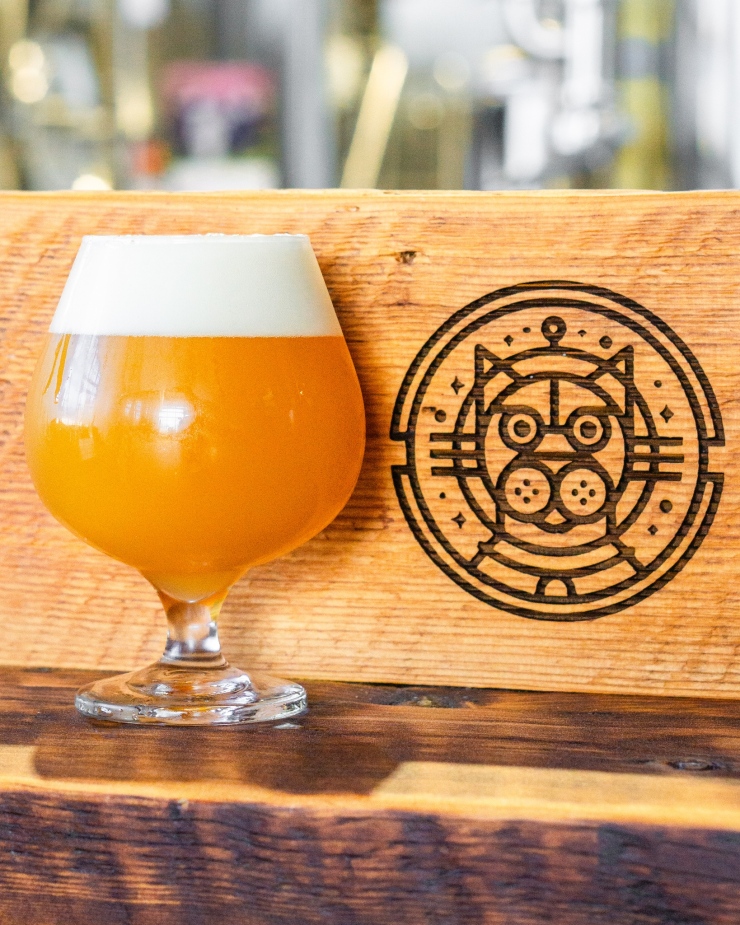
Tequila Tasting to Benefit the Weston History & Culture Center

Start your Cinco de Mayo fun a week early at the Weston History & Culture Center’s Tequila and Mezcal Tasting Party on Saturday, April 27, 2024, from 7pm – 10pm. Tickets are $100 per person and can be purchased at: https://westoncthistory.org.

Ticket includes a variety of tequila and mezcal samples, a tasting talk led by the publisher and editor of Modern Distillery Age, Gregg Glaser, hearty appetizers by Old Mill Market & Cafe, specialty cocktails, beer and wine service. Bid on fabulous silent auction items that include JetBlue tickets, an overnight stay at the Union League Club, and more! All to support the Weston History & Culture Center’s mission to discover, collect, and preserve Weston’s history! Sponsored by Diageo. Attendees must be 21 and over. IDs will be checked at the door.

About the presenter: Gregg Glaser is the Publisher/Editor of Modern Distillery Age, a weekly trade magazine covering the spirits business; Editor in Chief Emeritus of Yankee Brew News, a bimonthly consumer newspaper covering craft beer in the Northeast; and the founder and producer of the Great International Beer, Cider, Mead & Sake Competition, the largest such professional competition on the East Coast. For many years he was a contributing editor for Modern Brewery Age, a trade magazine for the beer business established in 1934, and also a News Editor for All About Beer Magazine, a consumer magazine. Gregg has a degree in Communications with concentrations in Cinema, Television, and Radio from Ithaca College. He studied comparative media in Britain at the BBC, IBA, and Pinewood Film Studios and in Italy at RAI and Cinecittà.

The Weston History & Culture Center is located at 104 Weston Road Weston, CT. Parking and entrance is on High Acre Road. The Weston Historical Society D/B/A The Weston History and Culture Center is a 501(c)(3) non-profit organization. The Center would like to thank its annual sponsors: Fairfield County Bank and KMS Team at Compass as well as the Daniel E. Offutt, III Charitable Trust. For more information and how to donate, visit www.WestonCTHistory.org email: info@westoncthistory.org or call: 203-226-1804.

Tap into a Native American Tradition @ Maple Sugar Festival @ Institute for American Indian Studies March 2

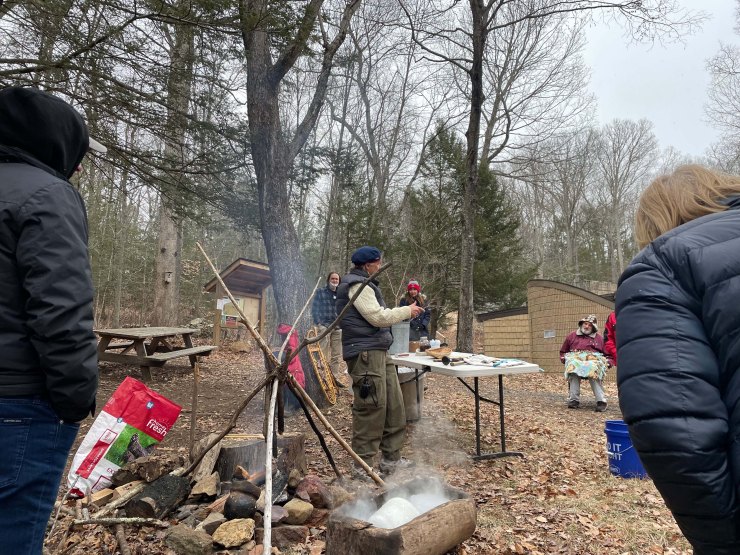
Maple syrup has long enjoyed pride of place on many breakfast tables. The origin of this sweet spring elixir isn’t part of a trendy branding campaign; it is the widely unknown discovery of Native Americans, who have tapped trees for maple syrup since time immemorial. On March 2, the Institute for American Indian Studies in Washington, Connecticut is hosting its annual Maple Sugar Festival, from 11 a.m. to 4 p.m. to celebrate the original legacy of maple syrup.

Indigenous communities in the Northeast and Canada harvested sap from maple trees, boiling down sap and turning it into sugar water and maple syrup long before European contact. Special sugar camps were set up in groves of sugar maple trees and much like this festival, sugaring became a social event. “At the Institute’s Maple Sugar Festival, families will see firsthand how Native Americans harvested this sugary delight, a process that has been passed on through stories and demonstrations from generation to generation,” said Chris Combs, Executive Director of the Institute. “Most importantly, they’ll learn why this process is such an important part of Native American culture,” Combs added.

At this event, IAIS Educator and Ecologist, Susan Scherf will demonstrate various traditional Native American techniques of collecting sap and boiling it down into syrup and sugar. Visitors will learn the importance of maple sugar to the diet of Native Americans as well as its usefulness as an item of trade, and even as medicine.

In keeping with the fun-filled traditions surrounding Native American sugar camps, children are invited to listen to Native American stories and play traditional family-friendly games that will take place throughout the day, adding to this culturally enriching experience. To satiate your taste buds, maple syrup, samples from the Passamaquoddy Tribe of Maine are being offered. And, if you want to bring some of this delicious amber nectar home, head to the Institute’s gift shop which is stocked up with maple syrup made by the Passamaquoddy Tribe.

The cost of participation is $15 for adults, $10 for children, and $5 for members of the Institute. To pre-register head to The Institute for American Indian Studies Museum & Research Center, email events@iaismuseum.org, or call (860) 868-0518.

About The Institute for American Indian Studies
Located on 15 acres of woodland acres the Institute For American Indian Studies preserves and educates through archeology, research, exhibitions, and programs. They have a 16th c. Algonquian Village, Award-Winning Wigwam Escape, and a museum with temporary and permanent displays of authentic artifacts from prehistory to the present allows visitors to foster a new understanding of the world and the history and culture of Native Americans. The Institute for American Indian Studies is located at 38 Curtis Road, in Washington, Connecticut.
The Magic of Courting Flutes @ Institute for American Indian Studies Feb. 17

The Institute of American Indian Studies at 38 Curtis Road in Washington has a wonderful way to end Valentine’s Day week. On Saturday, February 17, beginning at 1 p.m., Ojibway artist, and musician Allan Madahbee will explain the cultural significance and demonstrate the hauntingly beautiful sound of the Native American courting flute. A highlight for participants is to learn why the courting flute is deeply rooted in the traditions of many Native American Cultures.

Today, makers of Native American Flutes like Ojibway artist and musician Allan Madahbee craft their style and sound into their creations. Madahbee began to research the Chippewa flute culture and was influenced and mentored by Joseph Firecrow of the Cheyenne Nation. “We became friends and he provided guidance and feedback and explained some of his methods of flute making. With his passing, we have all lost a great Native American flute maker and musician. I am proud to continue our flute-making traditions.” The sound of the courting flute, which is usually made of cedar, has an uncommon scale for Western music and is entrancing.

Participants will listen to this haunting music performed by Madahbee, hear the legend of the courting flute, and examine the unique construction of a collection of flutes on display. There will also be a limited number of original, one-of-a-kind handmade courting flutes for purchase. Space is limited and pre-registration is requested. To reserve a spot head to http://www.iaismuseum.org, email events@iaismuseum.org, or call (860) 868-0518. The price of participation is $5 for IAIS Members and $15 for Non-Members.

About Allan Madhbee
Born on Manitoulin Island, the Home of the Great Spirit, Allan Madahbee is a member of the Ojibway (Chippewa) Nation who has pursued the traditional arts and crafts of his ancestors. He has been making Native American flutes for about ten years. “I had always thought they were a product of the Southwest Indian tribes, but a book that I found that was written during the 1800s about Chippewa culture, had a passage about the Chippewa flutes, along with pictures. This made me realize that they were indeed a part of my Chippewa culture. Knowing that my ancestors constructed these flutes for hundreds of years has inspired me to continue this tradition. Also, the haunting sound from these mystical instruments is a large part of my inspiration.”

About the Institute for American Indian Studies
Located on 15 acres of woodland acres the Institute For American Indian Studies preserves and educates through archeology, research, exhibitions, and programs. They have the 16th c. Algonquian Village, Award-Winning Wigwam Escape, and a museum with temporary and permanent displays of authentic artifacts from prehistory to the present allows visitors to foster a new understanding of the world and the history and culture of Native Americans. The Institute for American Indian Studies is located at 38 Curtis Road, Washington, CT.

Warm Up to Winter – with Virtual Programs @ Institute for American Indian Studies

Whatever the weather is like outdoors, learning something new indoors can be the perfect way to spend a cold winter afternoon. With that in mind, the Institute for American Indian Studies has developed a new Saturday series of virtual programs that are intriguing and ideal for those seeking indoor diversions this winter.

This presentation is the third in the Institute’s Annual Native American-Archaeology Roundtable series. This ongoing series seeks to explore ecological ties, past and present, through the sharing of new technologies, new findings, and new analysis that helps bring Indigenous communities into greater focus.

On Saturday, January 27 at 2 p.m. the topic will focus on “Lessons in Food Sovereignty from White Tailed Deer and Wampum in 17th century New England.” Participants will join Elic M. Weitzel, a Ph.D. candidate in anthropology from the University of Connecticut along with the Institute’s Staff for this virtual presentation. Weitzel specializes in human ecology and anthropology and will discuss how recent analysis of deer and quahog remains from archaeological sites in Southern New England suggest that European colonialism and capitalism put unprecedented pressure on these species even though fewer people lived in this region at the time. The discussion will highlight that overexploitation wasn’t a demographic problem and that pre-colonial Indigenous methods of gathering the bounty of the land appear to have been more sustainable. According to Mr. Weitzel, these results corroborate traditional and Indigenous ecological knowledge asserting that food sovereignty can permit long-term sustainable resource use, a concept that is very important around the world today.

To participate in this program and to receive the Zoom link please register online at https://www.iaismuseum.org or call 860-868-0518 or email events@isismuseum.org. The price of participation is free for members of IAIS and LHAC members and $10 for non-members.

Please follow us on Facebook, Instagram, and our website for dates and times of further talks in this series in the coming months.

About the Institute for American Indian Studies
Located on 15 acres of woodland acres the Institute For American Indian Studies preserves and educates through archeology, research, exhibitions, and programs. They have the 16th c. Algonquian Village, Award-Winning Wigwam Escape, and a museum with temporary and permanent displays of authentic artifacts from prehistory to the present allows visitors to foster a new understanding of the world and the history and culture of Native Americans. The Institute for American Indian Studies is located at 38 Curtis Road, Washington, CT.

Play Snow Snake @ IAIS January 20

The snow snake game was once one of the most popular winter games played in North America. Many Native American Communities played it from Maine to California, Oklahoma to Alaska. Today, this game is being revitalized across the country. On Saturday, January 20 at 1 p.m. at the Institute for American Indian Studies on 38 Curtis Road in Washington Connecticut, competitors can make their very own snow snake and then test their skills playing this traditional game.

Originally, snow snake was the traditional Haudenosaunee (Iroquois) game played during the winter. The sport has its history in hunting when long spears were thrown like snow snakes across the ice and snow to catch prey, without coming too close and scaring them away. Most often, snow snake was played when the men of the village returned from their annual winter hunting trip. It was – and still is – an exciting game of skill to the Haudenosaunee people and many other Native Communities.

Snow Snake!

Snow snakes are hand-made from a flattened piece of wood with a notch at one end that makes them easy to throw. Some sticks are carved in intricate patterns that resemble a snake and then coated with wax. Participants in this workshop will learn how to make their very own snow snake with Susan Scherf, Educator, and wood crafter at the Institute. This workshop includes materials and wood-burning kits. Participants are welcome to bring their whittling knife if they have one although it is not required

A friendly competition follows the snow snake workshop at the specially prepared snow snake track. The object of the game is to see how far participants can throw the snow snake along a snow trench. The person who throws the snake the farthest after a number of rounds is the winner! The snow snake game is a test of both skill and strength, and a good throw can go more than 100 yards.

This game is often referred to as a medicine game because it lifted the spirits of the people during the long winter months. The Institute for American Indian Studies is excited to share this game that is great for socializing, and remembering the traditions of generations of Native Americans who came before us.

Space is limited and pre-registration is required. To register / The price of participation including materials is $20 for non-members and $10 for members. For more information call 860-868-0518, email events@iaismuseum.org, or click here to register online.

About the Institute for American Indian Studies
Located on 15 acres of woodland acres the Institute For American Indian Studies preserves and educates through archeology, research, exhibitions, and programs. They have the 16th c. Algonquian Village, Award-Winning Wigwam Escape, and a museum with temporary and permanent displays of authentic artifacts from prehistory to the present allows visitors to foster a new understanding of the world and the history and culture of Native Americans. The Institute for American Indian Studies is located at 38 Curtis Road, Washington, CT.

Full Moon Walk with Institute for American Indian Studies December 26 @ 6

If you are looking for a fun and refreshing way to walk off some of the holiday goodies you have been eating then join the staff of the Institute for American Indian Studies for a Full Moon Walk on Tuesday, December 26 at 6 p.m. This year, even the moon is in a festive mood and will be fully illuminated on December 25th, 26th, and 27th. This full moon after the Winter Solstice takes the highest and longest path along the night sky. One of the names of the December full moon is “Long Night Moon” because it shines above the horizon longer than most full moons, making this walk extra special.

As participants walk along the beautifully wooded trails on the grounds of the museum under the glistening full moon they will learn what names Native Americans gave the December full moon and what it meant to them. Participants will learn how different Native American peoples traditionally used the monthly cycles of the moon and nature’s corresponding signs to track the seasons.

A highlight of this experience is to witness and celebrate firsthand the beauty of December’s full moon, as Native American communities have done for centuries. For example, the most common name for the December Moon, attributed to the Mohawks, is the Cold Moon which perfectly describes the cold days and nights during this time of year. The woodland walk ends at the newly restored 16th-century Algonkian village where a warm fire, hot chocolate, and stories will greet participants.

Inside the wigwam

Please dress appropriately for the weather, bring a flashlight, and wear sturdy footwear. If there are weather-related concerns on the day of the program, please contact the museum at 860-868-0518. The price of participation is $5 for IAIS Members and $10 for Non-Members. To register click here https://iaismuseum.charityproud.org/EventRegistration/Index/14300

About The Institute for American Indian Studies

Located on 15 acres of woodland acres, the Institute For American Indian Studies preserves and educates through archeology, research, exhibitions, and programs. They have the 16th c. Algonquian Village, Award-Winning Wigwam Escape, and a museum with temporary and permanent displays of authentic artifacts from prehistory to the present allows visitors to foster a new understanding of the world and the history and culture of Native Americans. The Institute for American Indian Studies is located at 38 Curtis Road, Washington, CT.