Walking Tours of Historic Litchfield June 6 & 21

Litchfield is often referred to as the most well preserved colonial town in America and with good reason as the center was the first in Connecticut to be placed on the National Register of Historic Places in the state in 1959.

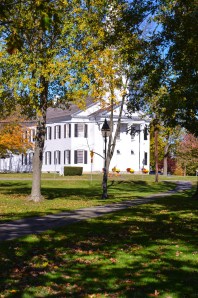
litch congo church

The Litchfield Historical Society’s annual slate of walking tours for June begins at 10:00 am. During each tour, a museum educator or guest tour guide offers participants a new way to look at their surroundings with themed walks through Litchfield’s history. Each tour lasts about an hour—make sure to bring a bottle of water and wear comfortable shoes!

Saturday, June 7 the theme of the tour will be on Litchfield and the Beecher Family. “This country is inhabited by sinners, saints, and Beechers.” Join the Historical Society on a tour through the places relating to the Beecher family, from the Congregational Church to the sites of their homestead and the Litchfield Female Academy on North Street. Hear the Beechers’ reflections on their childhood in Litchfield and the events that shaped their lives as activists, authors, and preachers in America’s most famous family.

016

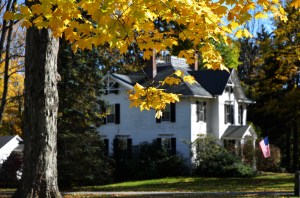
Saturday, June 21 is a very special “Curators” tour of Litchfield’s colonial revival architecture. In conjunction with the Society’s new exhibit on Litchfield during the Colonial Revival, The Lure of the Litchfield Hills, curator of collections Jessica Jenkins will lead a walking tour exploring some of the Colonial Revival hot spots around town.

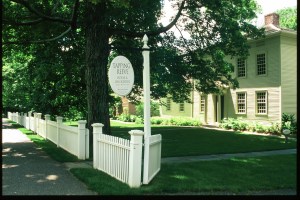
litc house

Taking the stories of the Colonial Revival out of the museum, participants will have a chance to hear about how areas of town, such as the business block and town green, underwent major changes in the first part of the 20th century. Ms. Jenkins will also explore the motives behind the social movement and touch on the evolution of the appearance of private homes as well as such iconic building as the Congregational Church. Join them for a intimate look at the Colonial Revival Movement in Litchfield and take a walk through history as you learn why Litchfield looks the way it does today.

This program is free for members and $10 for non-members; registration is required. Please call (860) 567-4501 or email registration@litchfieldhistoricalsociety.org to register.

The Litchfield History Museum is located at 7 South St., Litchfield, CT. For more information about this or other programs, please see www.litchfieldhistoricalsociety.org or call (860) 567-4501.

For information on where to stay, dine and shop visit www.litchifeldhills.com

June fun at Greenwich Historical Society

The Greenwich Historical Society has planned four fun filled events for the month of June beginning with a lecture on June 10 by Dr. Jackson Lears on Two Gilded Ages from 7 p.m. – 8 p.m. at the Vanderbilt Education Center.

Dr. Jackson Lears
Dr. Jackson Lears

For some years, historians have theorized that we are living in a second Gilded Age, a reprise of the era that occurred a century ago. The decades between the1980s and the 2010s hold a remarkable similarity to those between the 1880s and the 1910s, both periods characterized by unregulated economic expansion, flagrant corruption on Wall Street, growing class divisions, the concentration of wealth within a conspicuously consuming elite and a series of imperial adventures (or misadventures) abroad.

Dr. Jackson Lears will examine the parallels and differences between the two eras to explain why the growth of inequality 100 years ago provoked widespread demands for reform among the populace (even among the well-to-do, motivated then by a paternalistic sense of responsibility), while contemporary comment on the situation is largely absent.

DixonPalette

Connecticut’s Open House Day falls on June 14 this year and the Greenwich Historical Society is planning a collage workshop that will focus on creating two-dimensional collages crafted from papers, fabrics, photographs, found objects and natural materials such as dried grasses, twigs, leaves, or petals. All materials will be provided, but participants may also bring copies of favorite photos, newspaper articles or other items to incorporate into their work. The workshop will take place in the Vanderbilt Education Center from noon to 2:00 pm, and all ages are welcome.

HistoryWheels

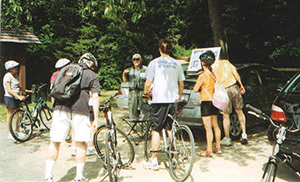
On June 21, from 1:30 to 3:00 pm the Greenwich Historical Society is planning a two-wheeled adventure and will provide a historical bike tour of Greenwich Point as a part of the annual Experience the Sound event. Participants are invited to explore the rich history of Greenwich point looking at everything from its geology to the many features that make it the beloved town park it is today. Participants will meet at the first parking lot on the right after entering the park. As the group travels around the point they will stop to hear stories, take a closer look at some of the ruins and see vintage photos from the Historical Society’s collection. There will also be a scavenger hunt for children. Participants must bring their own bike and helmet and a water bottle is highly recommended. No reservations required and participation is free, but a park or guest pass is required for entry to Greenwich Point. All ages are welcome but children must be able to ride a bike.

Festa

The month ends with a Festa Al Fresco, on June 29 from 4 pm to 7 pm a potluck supper to celebrate the history and the community of Italian immigrants who settled in Greenwich in the early twentieth century. The family “festa” was launched last year as part of the Historical Society’s programming for the exhibition From Italy to America and in celebration of the Town of Greenwich’s twinning ( “Gemallagio”) with the Italian cities of Rose and Morra di Sanctis, where many of Greenwich’s Italian early immigrants came from. The event proved so successful that it’s back by popular demand. Guests are invited to demonstrate their culinary skills and to show off favorite family recipes (enough to share with 6-8) in one of four categories: antipasti/appetizers, pasta/main dishes, sides and salads or desserts. Wine, musical entertainment and crafts for kids are included in the price of admission. Mangiamo!

For more information about the Greenwich Historical Society visit http://greenwichhistory.org/

New Season for the Clay and Wattles Theatre in Bethlehem

The 2014 Season at The Gary-The Olivia Theater in Bethlehem (on the grounds of the Abbey of Regina Laudis) begins with two one-act plays written by American Playwright Horton Foote. “Blind Date” and “The Actor” will be performed on June 13, 14, 20, 21 at 7:30 pm and June 15 and 22 at 2:30 pm.

sideviewtheater

These beautifully written comedies set in the fictional town of Harrison, Texas are guaranteed to delight audiences with their poetry, insight into human nature and comic touch.

A prolific writer and winner of many awards. Mr. Foote wrote over 60 plays, television dramas and screenplays spanning a sixty year career. Perhaps most widely know for his screenplays for the films To Kill a Mockingbird (1962) and Tender Mercies (1983), winning the Oscar for both, Mr. Foote received the Pulitzer Prize for Drama in 1995 for the play, The Young Man From Atlanta.

Both comedies deal with conflicts between the generations. In Blind Date, a former beauty pageant queen tries to persuade her recalcitrant and unwilling niece on the art of “How to attract a suitor,” and in The Actor, the well-intentioned parents try to dissuade their young son from pursuing a career in the theater.

Set in the fictional South Texas town of Harrison in the 1930’s, these plays bring out both the charm and pitfalls of small town USA in a humorous and engaging way.

On Friday, June 13, 2014, our opening night gala performance for Blind Date and The Actor will include complimentary wines from Walker Road Vineyards and local artisan made cheeses. Tickets are $25 per person for opening night and $20 per person for the run of the show. Season Subscription Package and Senior Discounts are available at: http://www.thegarytheolivia.com. 11 yrs and younger are admitted free.

Admission for opening night and details on our 2014 season is at: thegarytheolivia.com. More information:info@thegarytheolivia.com or 203-273-5669.

Jiggle a Jelly at the Maritime Aquarium Norwalk

Apparently it’s a lot of fun to touch jellyfish when you know you won’t be stung. “Jiggle A Jelly” has become a permanent offering at The Maritime Aquarium at Norwalk. The display, will now will be open on weekends, holidays and school-vacation days through June 30, and then daily in July and August. It’s free with Aquarium admission.

Aquar.JiggleAJelly

Visitors will be able to experience the unusual sensation of touching jellies making Jiggle A Jelly’ one of the Aquarium regular hands-on features, along with their Intertidal Touch Tank and our Shark & Ray Touch Pool.

Visitors can safely touch live moon jellyfish, one of the most common species in Long Island Sound. Maritime Aquarium volunteers staff the exhibit, encouraging visitors to use two fingers to gently touch the top of the jellyfishes’ gelatinous body or “bell.”

Moon jellies (Aurelia aurita) do have tentacles but their stings are generally benign to people. A common species in Long Island Sound, they grow to dinner-plate size during the warmth of summer. Short tentacles rim their bell, and four “oral arms” extend underneath. Moon jellies are colorless and translucent, except for four central horseshoe-shaped reproductive organs.

Aquar.JIggleAJelly2 (1)

Letting visitors get close to jellyfish is nothing new for The Maritime Aquarium. A mesmerizing gallery featuring moon jellies, sea nettles, lion’s mane and other live species of jellyfish is now in its 19th year at the Aquarium and remains among the most popular and memorable exhibits.

Plus, displays of jellies in their various life stages in the Jellyfish Culture Lab let visitors see how the Aquarium keeps a year-round supply of the seasonal creatures on exhibit. But “Jiggle A Jelly” is the first time visitors have been able to touch them.

Learn more about the Aquarium’s exhibits, IMAX® movies and programs at www.maritimeaquarium.org or by calling (203) 852-0700. For information about Fairfield County www.visitfairfieldcountyct.com

Arthur Carter at Washington’s Stairwell Gallery

The Stairwell Gallery at Gunn Memorial Library in Washington, CT is honored to present an exhibition of sculptures, orthogonals and paintings by Arthur Carter. The exhibit will be on view through June 21.

Arthur_Carter_-_Studio_in_Roxbury,CT_photo_taken_by_Maggie_Nimkin_2008

Mr. Carter’s early years might seem like another person’s full lifetime of events. He was trained as a classical pianist, majored in French literature at Brown University, served three years in the United States Coast Guard as a lieutenant commanding officer of an air search and rescue craft, then received his MBA in finance from Dartmouth, followed by a 25 year career as an investment banker.

In 1981, he started a new venture. Founding the Litchfield County Times and six years later the New York Observer, he began his career as a publisher. He was also the publisher of theNation and the East Hampton Star. And in 2008, the Arthur L. Carter Journalism Institute was founded at New York University where Mr. Carter is a trustee and chairman of the Board of Overseers of the Faculty of Arts and Science. Mr. Carter has also held adjunct professorships in philosophy and journalism at NYU.

Orthogonal_Construction_15,_2010_-_Acrylic_on_Stainless_Steel_48_X_30_in

Now we come to the “art part” of Mr. Carter – the grid design and layout of the front page of his newspapers inspired him to reproduce that same theme but in a three dimensional format and using stainless steel. This was a material he had learned to master when he was in Officer Candidate School where he learned welding. Thus, sculpting “became the latest statement of his polymath proclivities.”

Artists naturally evolve and he was soon working with wood, clay and copper wire and then larger constructions in silicon bronze and stainless steel. Many of his larger pieces are on permanent public display in New York City. The fabrication process can take months to complete and involves all the complexities of a machine shop, but each piece begins with one common denominator, his sketch pad.

The Stairwell Gallery exhibit will include Mr. Carter’s Orthogonals. A catalog of his exhibit at the New Britain Museum of American Art from the Fall of 2011, describes the pieces as follows: “Arthur Carter’s bold new series, which he calls collectively the Orthogonals, offers a fine example of a mixed mode that channels the powers of painting and sculpture through the distinguished medium of the relief.” These pieces are complex in their simplicity. They are strong, mathematical and like his other work, they vary in finish and are affected by the changing light and reflection. Carter has said, “My work focuses on simplifying and eliminating the excessive. The question is how does purity of design lend itself to making a beautiful and elegant piece?”

Untitled_No._1_-__2013_-_Bronze,_36_X_24_X_14_inches

Arthur Carter maintains a production facility and design studio in Roxbury, CT. He has been a featured solo artist at many galleries, including the Tennessee State Museum, The Grey Art Gallery, 80WSE Galleries at New York University and the New Britain Museum of American Art. Mr. Carter is the author of two hardcover books, Arthur Carter: Sculptures, Paintings, Drawings (2009) and Arthur Carter: Studies for Construction (2012).

Gunn Memorial is most pleased to welcome this prolific artist who is still immersed in the world of manufacturing and finance around the world. Perhaps his philosophy can help unify this “polymath” for us. Mr. Carter has said, “The simpler the economics are, the better; if you don’t understand it, you don’t do it. Purity in both design and business function means never dilute, never diffuse, and never bloat.”
For further information please call (860) 868-7586 or email chartman@biblio.org . The Gunn Memorial Library is located at 5 Wykeham Road at the juncture of Route 47 opposite the Green in Washington, CT. For library hours and to learn more about our programs and events visit our website www.gunnlibrary.org .

For information on Litchfield Hills www.litchfieldhills.com

Pasture to Pond: Connecticut Impressionism

Pasture to Pond: Connecticut Impressionism at the Bruce Museum in Greenwich, CT, runs through June 22, brings American Impressionism back to its roots, according to the Museum’s Executive Director, Peter C. Sutton.

Metcalf_Autumn  Willard Leroy Metcalf, (American, 1858-1925)
Metcalf_Autumn
Willard Leroy Metcalf, (American, 1858-1925)

“The history of art proves that Connecticut has long been one of the most fertile states for the creation of new art movements,” says Peter Sutton. “In no small measure it was the birthplace of American Impressionism.”

Drawn from the permanent collection of the Bruce, private collectors, area museums, and the trade, this exhibition of more than 25 works of American Impressionism speaks to the quality and beauty of this perennially popular art, and to Connecticut’s important role in its creation.

Before the turn of the 20th century, Connecticut was a logical birthplace for American Impressionism, as artists sought a nearby, rural respite from the burgeoning urban and rapidly industrializing world. While their artistic predecessors, the landscape painters of the Hudson River School, had championed dramatic landscapes of panoramic sweep and awe-inspiring majesty, the artists who came of age after the calamity and chaos of the Civil War sought a more intimate, bucolic and orderly landscape. They found these reassuring views among the farms, rolling hills, rivers and picturesque shoreline of Connecticut.

 Davis_Uplands  Charles H. Davis, (American, 1856-1933)
Davis_Uplands
Charles H. Davis, (American, 1856-1933)

While steeped in pre-Revolutionary history, Connecticut was readily accessible by train to these escaping urbanites, many of whom had winter studios in New York City. Artists’ colonies sprang up in Cos Cob and Old Lyme and landscapists took to recording favored sites in places like Branchville, Farmington, Mystic and the Litchfield Hills. The names of these artists – John H. Twachtman, J. Alden Weir, Childe Hassam, and Willard Metcalf – are among the most famous landscapists in American art history. While some, like Robinson, made regular pilgrimages to France to paint alongside the great French Impressionist Claude Monet, others learned the style second hand, and collectively they made it a uniquely American manner.

“Several of the artists featured in the show exhibited in the famous Armory Show in New York in 1913, which is generally regarded as the watershed moment that introduced Modern Art and the likes of Marcel Duchamp to America,” says Peter Sutton. “It is with pleasure then that we remember with this exhibition an era of enduring local creativity and the celebration of the beauty of our own special corner of New England.”

Pasture to Pond: Connecticut Impressionism is generously underwritten by People’s United Bank, a Committee of Honor co-chaired by Leora Levy and Alice Melly, a grant from the Connecticut Office of the Arts, and The Charles M. and Deborah G. Royce Exhibition Fund.

_Crane_Harvest Moon  Bruce Crane, (American, 1857-1937)
_Crane_Harvest Moon
Bruce Crane, (American, 1857-1937)

And when you go, don’t forget your cell phone: This exhibition, like many others at the Bruce, will be accompanied by a compelling cell phone audio tour guide program, Guide by Cell, generously underwritten by Nat and Lucy Day. The Guide by Cell program for Pasture to Pond: Connecticut Impressionism will include a driving tour of sites in Greenwich that are featured in some of the paintings on view. Easy to follow Guide by Cell instructions will be available at the front admissions desk, and in the case of this exhibition will include a physical map for the driving tour.

About the Bruce Museum

The Bruce Museum of Art and Science is located at One Museum Drive in Greenwich, Connecticut. The Museum is open Tuesday through Saturday from 10 am to 5 pm and Sunday from 1 pm to 5 pm; closed Mondays and major holidays. Admission is $7 for adults, $6 for students up to 22 years, $6 for seniors and free for members and children less than five years. Individual admission is free on Tuesday. Free on-site parking is available and the Museum is accessible to individuals with disabilities. For additional information, call the Bruce Museum at (203) 869-0376 or visit the website at www.brucemuseum.org.