Celebrate Green Corn in Litchfield Hills

The Institute for American Indian Studies Museum and Research Center in Washington CT is hosting it’s Annual Green Corn Festival on Saturday, August 2 from 11:00 am – 3:00 pm on the grounds of the Museum located on 38 Curtis Road. The event will be held rain or shine. Adults: $10; children: $6.

Green_Corn_Festival_2

Green Corn Festivals are held all over Native America between May and October. The events are both a celebration and a religious ceremony. They celebrate the ripening of the first corn of the year depending on geographic location. The whole idea is to give thanks to the Creator, the Great Spirit, for the corn, the rain and sun that nurture it.

Traditionally corn has been an integral part of the annual cycle of life for Native American People and this Festival celebrates the first corn of the season. Fun filled activities for the whole family including drumming, dancing, face painting, kids’ crafts, and more make this event memorable.
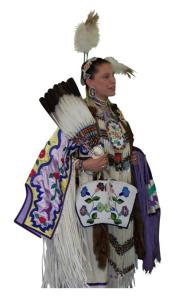
Green_Corn_Festival

Highlights of the event include exciting Native American ceremonies including traditional Eastern Woodland song & dance with the Native Nation Dancers, Schaghticoke, Objiwa and Lumbee, dancing both Northern and Southern Traditional styles. A highlight this year will be the all female drumming group, Spirit of Thunderheart of Schaghticoke, Mohawk, Blackfoot, Cree and Cherokee ancestry; other performers include musician Allan Madahbee, Ojibwa; Storyteller Janis Us, Mohawk-Shinnecock descent, and Abenaki Chef and Author, Dale Carson.

A favorite of young and old alike are the Native American folktales told by storyteller, Janis Us of Mohawk-Shinnecock descent. Kids will enjoy Native American inspired crafts and facepainting.

Two not to be missed features of the Festival are the crafts for sale by local Native American artisans and a taste of traditional cooking including Pow-wow style food for sale in the outdoor Algonkian Village hosted by Dale Carson, of Abenaki descent.

About the Institute for American Indian Studies Museum and Research Center
The focus of the Institute has always been stewardship and preservation. In 1991, the name was changed to the Institute for American Indian Studies. With the name change there was a shift in focus to include education in conjunction with research.

The ethnographic collection of the Institute for American Indian Studies contains over 6,000 cultural items. While focusing on the Eastern Woodlands Peoples, the collection represents indigenous communities throughout the western hemisphere. Items vary in raw material composition – textiles, wood, stone, clay, glass, shell and semi-precious jewels – function and style from moccasins, rugs, baskets and leggings to containers, weaponry, personal accessories, recreational objects and fine art.

The Research & Collections Building is artifact-friendly with a climate controlled vault and spacious laboratory. It is home to an abundance of collections, both ethnographic and archaeological. It also houses both an education and research library, containing over 2,000 books and journals and is open only by appointment (860-868-0518 ext.109).

For Museum hours and other special events visit: http://www.birdstone.org. For information on Litchfield Hills www.litchfieldhills.com

Summer exhibitions at the Mattatuck Museum Waterbury

This summer, the Mattatuck Museum in Waterbury Connecticut is presenting an art show called Haven and Inspiration that runs through August 24. This fascinating exhibition traces the evolution of the Kent Connecticut Art Colony.

Nichols-1

Haven and Inspiration explores the wide range of artistic styles and subjects produced by the art colony’s founding members: Rex Brasher (1869-1960) Eliot Candee Clark (1883-1980), Carl Hirschberg (1854-1923), Francis Luis Mora (1874-1940), G. Laurence Nelson (1887-1978), Spencer Baird Nichols (1875-1950), Robert Nisbet (1879-1961), Willard Paddock (1873-1956) and Frederick Judd Waugh (1861-1940). Of all the villages in Connecticut, Kent attracted the most permanent colony of artists and developed the only artists’ organization that exists to this day. It remains, until now, however, the one least examined.

Building upon the scholarship of Robert Michael Austin, whose publication, Artists of the Litchfield Hills devotes a chapter to the Kent Art Colony, this exhibition focuses on the period 1910 to 1930. Robert Nisbet moved to Kent in 1910; shortly after, like-minded artists who started as visitors became neighbors. By the summer of 1922, there were enough artists in Kent for them to consider organizing into a group. While landscape was the primary subject, they also painted portraits, genre scenes and still lifes.

Magna steel Magnolias5056

Another exhibition at the Mattatuck, The Way We Worked that runs through August 3 explores how ork became a central element in American culture by tracing the many changes that affected the workforce and work environments. The exhibition draws from the Archives’ rich photographic collections, covering more than 150 years to tell this compelling story. Why, where, and how do we work? What value does work have to individuals and communities? What does our work tell others about us?

Included in this exhibit are paintings by Anna Held Audette and Duvian Montoya. Audette is a contemporary woman artist who paints industrial ruins and abandoned machinery and Montoya’s painting’s act as a personal journal of observations made during his travels, childhood, and life experiences.

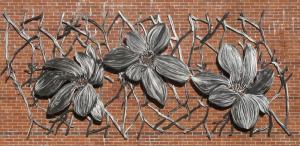
A third exhibition that runs through August 31 and is titled Steel Garden showcases the work of Sculptor Babette Bloch. Considered a is a pioneer in the use of laser-cut and water jet-cut stainless steel in creating works of art, Bloch’s sculptures explore form and the interplay between object and light, reflect their environments, and expand the ways in which stainless steel is used in contemporary art.
Bloch’s works of art embrace her eclectic tastes, her pleasure in aesthetics and her technical curiosity. Drawing on several traditions in American art, she creates works that touch on Modernist abstraction, the cut outs and collage found in Pop art, and the long-standing practice of storytelling in art. In cutting, shaping, burnishing, and grinding stainless steel, Bloch has developed the material’s natural properties of brightness and reflectivity while making the dense metal seem nearly weightless and ethereal.

shoes

A not to be missed continuing exhibition, Fancy This: The Gilded Age of Fashion displays beautiful, rarely seen costume pieces from the Mattatuck’s collection. Many of these delicate objects have not been on view for decades. Guest curator Mary Daniel is the winner of the 2013 Summer Fling “Curator for the Day” auction prize and has been working with the Museum’s curatorial department to organize this exhibition which also includes accessories such as shoes, purses, fans and gloves.

The Mattatuck Museum is located on 144 West Main Street, Waterbury CT. The museum is open Tues. – Sat. 10 a.m. – 5 p.m., Sundays from 12 noon to 5 p.m. and open late the first Thursday of the Month until 7:30 p.m. For additional information https://www.mattatuckmuseum.org.

For information about the Litchfield Hills www.litchfieldhills.com

Vintage Children’s Book Fair in Southport

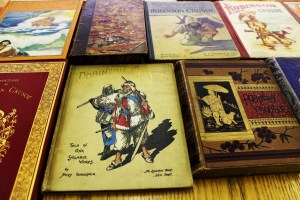
Over 300 vintage children’s books from the early-19th – mid-20th centuries will be included in Pequot Library’s 54th Annual Summer Book Sale, including more than 100 different editions on Robinson Crusoe by Daniel Defoe. Variations on this classic children’s book offered at this sale include multiple versions produced by different publishers of Robinson Crusoe rewritten in one syllable words, as well as unusual adaptations of the story, including Dog Crusoe, Little Robinson Crusoe of Paris, and Arctic Crusoe. Typical of what is being offered is a beautifully illustrated 1882 edition.

Robinson Crusoe was first published on April 25, 1719. The first edition credited the work’s fictional protagonist Robinson Crusoe as its author, leading many readers to believe he was a real person and the book a travelogue of true incidents. Despite its simple narrative style, Robinson Crusoe was well received in the literary world and is often credited as marking the beginning of realistic fiction as a literary genre.

1882_robinson_crusoe_one_syllable

Pequot Library’s 54th Annual Summer Book Sale runs from Friday, July 25 – Tuesday, July 29, 2014. It is known as “The Best Book Sale in New England.” Admission is free and all Sale proceeds help fund Pequot Library’s over 400 yearly inter-generational programs and events. High quality books at reasonable prices, with Visa, MasterCard, Discover, and American Express accepted.

Interior_spread_1882_robinson_crusoe

Over 40 categories, including the favorites: Children’s Books; Art and Photography; Business; Biography; Several sections of History (USA, European, World, and Military); Computer Software and Books; Cooking; Crafts and Style; Foreign Language; Gardening; Mystery and Thriller; Romance; Science; Sports; Science Fiction; Current Fiction; Classic Fiction; Poetry and Drama; Trade Paperbacks; CDs, DVDs, records, tapes, and Audiobooks; Sheet music, music books, comic books, prints.

Please visit http://www.pequotlibrary.org to learn more about this vibrant library, educational, arts and cultural institution. All classes and programs are open to everyone. For information: (203) 259-0346 ext. 15. The Pequot Library is located on 720 Pequot Rd. in Southport, CT.

Samples_of_vintage_childrens_books_robinson_crusoe

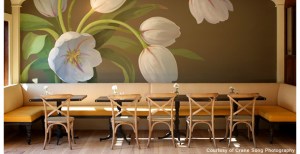
After enjoying the book fair, be sure to stop in at the Delamar in Southport http://delamarsouthport2-px.trvlclick.com/dining.html for lunch, dinner or a thirst quenching beverage! The restaurant combines local, seasonal flavors through New England inspired cuisine. Dine in the elegant yet relaxed dining room or on the outdoor patio with a lovely garden that is the perfect place for dining al fresco. For more information 203-307-4222.

photo-dining2

Beatles festival “Danbury Fields Forever” at Ives Concert Park

The New York/New England regional Beatles festival, “Danbury Fields Forever,” will “come together” Saturday, July 26 & Sunday, July 27, 2014 at Ives Concert Park in Danbury, Connecticut. Doors will open at noon, and the music will continue until 8pm daily.

beatles

The Music, Foods & Arts Festival is in its third year, with 10 bands per day playing the music of The Beatles, solo material and songs from the 60s. The full line-up of performers has been announced. Acts include The Hofners, The Oh-Nos, The Mystery Tour, AfterFab, Fools On The Hill, Charlie Guitar, Studio Two, Beatlehead, Thunder Road, The Way-Back Machine, Rotary and the national touring group Beatlemania Again. There will be live tributes to George Harrison by Pete Santora (formerly of Broadway’s “Beatlemania”), Sir Paul McCartney by Mike Miller’s “One Sweet Dream,” John Lennon by Dave Pal in his “Lennon Legacy” show and to Elton John by Bill Connors. Students from School of Rock in both New York and Connecticut will have their star students performing sets of Beatles classics. Also, the winners of the web talent search project StarOnTheWeb.com will be performing.

To celebrate the 50th Anniversary of The Beatles’ U.S. arrival in 1964, one-day “Ticket to Ride” admissions to the Festival start at only $19.64, but these special discounted early-bird advance prices are good for a limited time only. Advance ticket available at: https://www.eventbrite.com/e/danbury-fields-forever-iii-tickets-11495548495. There are also V.I.P. tickets available, discounted two-day passes and hotel packages. Tickets will be higher at the door. For guests staying overnight, there is a reduced rate hotel package.

Ives Concert Park is located at 43 Lake Avenue Ext. on the campus of Western CT State University in Danbury, CT. This year there will be more Beatle and memorabilia dealers and vendors, exhibitors, along with a larger variety of food options available.

“Danbury Fields Forever lll” is presented by Charles F. Rosenay!!!’s Liverpool Productions, the same company that presented “NYC FAB 50,” The Beatles’ 50th Anniversary Celebration in New York City in February, and organizers of the annual Magical History Tours to Liverpool & London (www.LiverpoolTours.com). A portion of ticket proceeds will benefit a designated charity.
For further info, visit website: www.Fab4Musicfestival.com, or phone (203) 795-4737.

Railway Post Office Dog Day at the Danbury Railway Museum

On Saturday, July 19, the Danbury Railway Museum will host a celebration
honoring the legacy of Owney, the Railway Post Office dog. A centerpiece
of the day will be the museum’s fully-restored Pennsylvania Railroad
circa-1910 Railway Post Office (RPO) car. The museum at 120 White Street
is open from 10am to 4pm. Admission for this event is $8.00 (under 3 is
free) which includes a train ride, access to all activities, and a free hot
dog!

Owney_the_Post_Office_Dog

Owney was a stray dog which found its way into the Albany, NY post office
in 1888 and was soon adopted by the Railway Mail Service clerks and became
the mascot of this elite government service. He traveled throughout the
state, and then all over the country, in the RPO cars, eventually venturing
around the world as a U.S. Post Office Department “emissary” in 1895. In
2011, the U.S. Postal Service issued a postage stamp to honor him. Owney
has been preserved and is on display at the National Postal Museum in
Washington, DC. Visitors to the museum on the 19th will hear the true
story of Owney, the mascot of the U.S. Railway Mail Service, and can tour
the lovingly-restored RPO car.

The “Railyard Local” – a short train ride in a 1920’s passenger coach or a
vintage caboose pulled by a 1947 GE “44-Tonner” or ALCo RS-1 locomotive –
will take visitors through the historic rail yard and past over 60 vintage
railroad cars and locomotives, including a Boston & Maine steam locomotive
built in 1907. Riders will have an opportunity to “go for a spin” on the
operating turntable. Trains depart hourly from 10:30 to 2:30. Of course,
the fascinating exhibits inside the restored 1903 Danbury station will be
open, along with a fully-stocked gift shop. The model train layouts inside
will also be operating.

The Danbury Railway Museum is a non-profit organization, staffed solely by
volunteers, and is dedicated to the preservation of, and education about,
railroad history. The museum is located in the restored 1903 Danbury
Station and rail yard at 120 White Street, Danbury, CT. For further
information, visit the Web site at http://www.danburyrail.org, email to
info@danburyrail.org, or call the museum at 203-778-8337.

Extreme Habitats: Into the Deep Sea at the Bruce Museum

Extreme Habitats: Into the Deep Sea at the Bruce Museum in Greenwich explores the vast and extraordinary deep sea. This show focuses on the highly adapted survival strategies utilized by creatures of the deep and the technology that enables researchers to record ground-breaking observations of what is often called the last frontier on this planet.

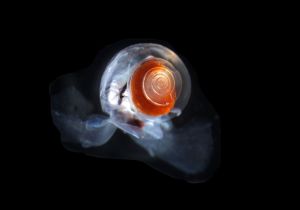
Sea butterfly (Thecosomata)  Photo by Larry Madin © Woods Hole Oceanographic Institution
Sea butterfly (Thecosomata)
Photo by Larry Madin © Woods Hole Oceanographic Institution

Museum visitors might feel like they are in a deep-sea submersible as they look through view ports to observe the mesopelagic – or twilight zone – of the sea with its bioluminescent inhabitants. The exhibit will show visitors the extremophiles that form the foundation of a hydrothermal vent as well as the bizarre appearances and adaptations of deep-sea species. One of the take aways from experiencing this exhibit is an understanding of the technology that makes deep-sea explorations possible.

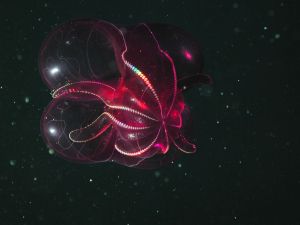
Bloodbelly comb jelly (Lampocteis cruentiventer) almost 2000 meters  below the surface in Monterey Canyon.  Photo by MBARI ©2002 MBARI
Bloodbelly comb jelly (Lampocteis cruentiventer) almost 2000 meters
below the surface in Monterey Canyon.
Photo by MBARI ©2002 MBARI

The Bruce Museum has created highly accurate casts of deep-sea organisms such as the Pacific Viperfish, Cock-Eyed Squid, Bloodbelly Comb Jelly, Gulper Eel, Giant Tube Worms, and more, created from molds on loan from the American Museum of Natural History. Yale Peabody Museum of Natural History is lending preserved deep- sea specimens collected from various deep-sea explorations and dives around the globe. The University of Connecticut is assisting with interpretation of the New England seamounts, or underwater mountain ranges. Rare footage of creatures of the deep comes from Monterey Bay Aquarium Research Institute, and Woods Hole Oceanographic Institution is sharing cutting edge information on the deep-sea submersible Alvin as well as their expertise on deep-sea ecosystems around the world.

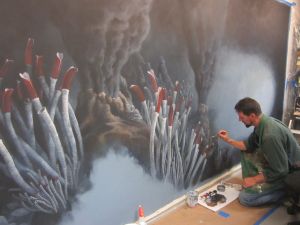
_Display Background  Bruce Museum Exhibition Preparator Sean Murtha painting  hydrothermal vent display background.  Photo by Sean Murtha
_Display Background
Bruce Museum Exhibition Preparator Sean Murtha painting
hydrothermal vent display background.
Photo by Sean Murtha

The exhibition is the second in a series at the Bruce Museum looking at extreme biological, chemical and physical factors that affect different ecosystems around the world. Extreme Habitats: Into the Deep Sea opens runs through November 9.

And when you go, don’t forget your cell phone: This exhibition, like many others at the Bruce, will be accompanied by a compelling cell phone audio tour guide program, Guide by Cell, generously underwritten by Nat and Lucy Day. Easy to follow Guide by Cell instructions will be available at the front admissions desk.

About the Bruce Museum
The Bruce Museum is a museum of art and science and is located at One Museum Drive in Greenwich, Connecticut. The Museum is open Tuesday through Saturday from 10 am to 5 pm and Sunday from 1 pm to 5
pm; closed Mondays and major holidays. Admission is $7 for adults, $6 for students up to 22 years, $6 for seniors and free for members and children less than five years. Individual admission is free on Tuesday. Free on-site parking is available and the Museum is accessible to individuals with disabilities. For additional information, call the Bruce Museum at (203) 869-0376 or visit the website at www.brucemuseum.org.