Volunteers Sought to Help Restore Habitat for Native Forest Bees at Great Mountain Forest

This September, volunteers will have the chance to make a meaningful impact on the local environment by supporting native bees and contributing to a five-year scientific study underway at Great Mountain Forest in Connecticut’s Northwest Corner.
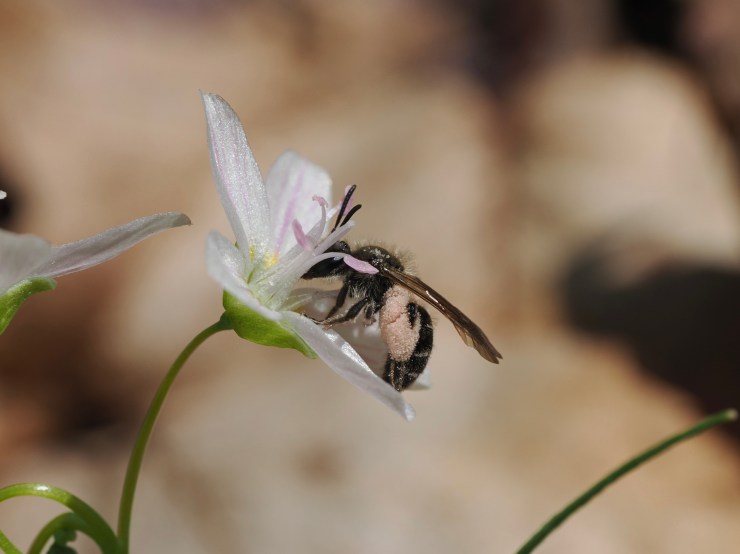
Photo credit: Mickey Paletta

Great Mountain Forest will host a native-species planting event on Tuesday, Sept. 29, 2026, with a rain date of Thursday, Oct. 1. Participants may register for one of two shifts: a two-hour session from 10 a.m. to noon, or a four-hour session from 10 a.m. to 2 p.m. Participation is limited to approximately 10 volunteers. To reserve a spot, go to https://lp.constantcontactpages.com/ev/reg/aphasak. All participants will be required to sign a Xerces Society volunteer waiver.

Tools and gloves will be provided. Volunteers should wear boots and long pants and bring bug spray, drinking water, and snacks or lunch. The workday offers a hands-on chance to support forest restoration in a setting that pairs community stewardship with meaningful scientific research.

The planting is part of a regional project led by the Xerces Society for Invertebrate Conservation and Professor Katie Turo’s lab at Fordham University. Great Mountain Forest is among the Northeast sites selected for the study, which examines how healthier, more diverse forests can better support native bee populations.
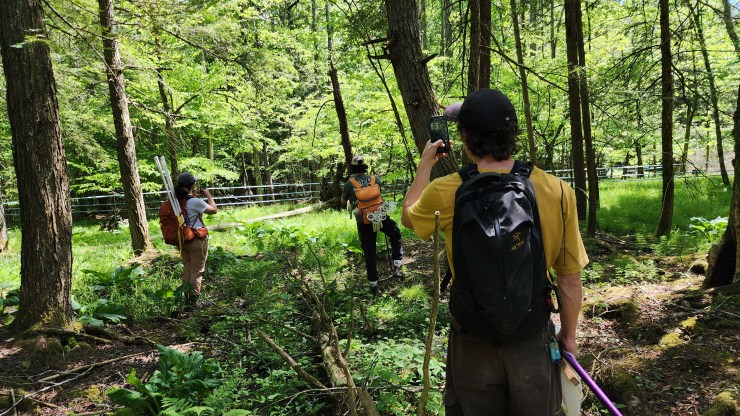
Photo credit: Isabelle Anderson

More than two-thirds of native bee species in the Northeast rely on forest habitats during some phase of their life cycle. Yet deer browsing, invasive plants, and the loss of flowering understory vegetation can diminish the spring blooms bees depend on for food.

Researchers are exploring how tree diversity, forest structure, and restored understory habitat shape bee communities and the flowering plants they use. This past spring, the research team surveyed native bees at 26 forests across the Northeast, documenting the plants bees visited before any restoration began.

Starting this fall, half of the study sites—including Great Mountain Forest—will receive plantings of locally sourced native plant species. Researchers will monitor how those plants become established over the next five years, comparing bee activity at restored sites with activity at sites left unrestored.
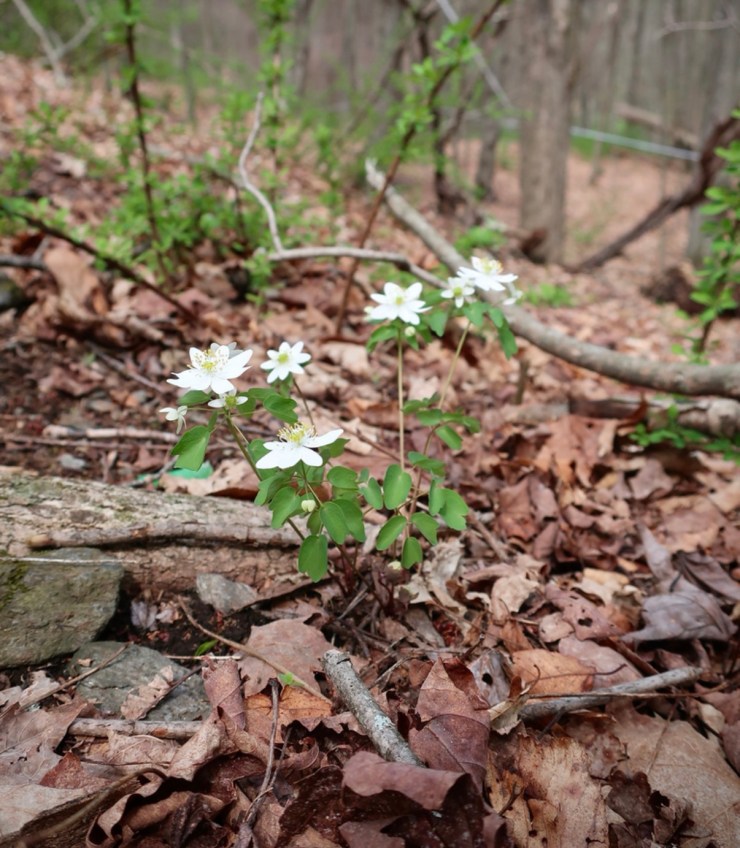
Photo credit: Mickey Paletta

For those who take part, the planting day will be more than a few hours spent working in the woods. Each native plant placed in the ground will help build a richer spring food source for bees—and help researchers better understand how forest restoration can strengthen pollinator habitat across the Northeast.
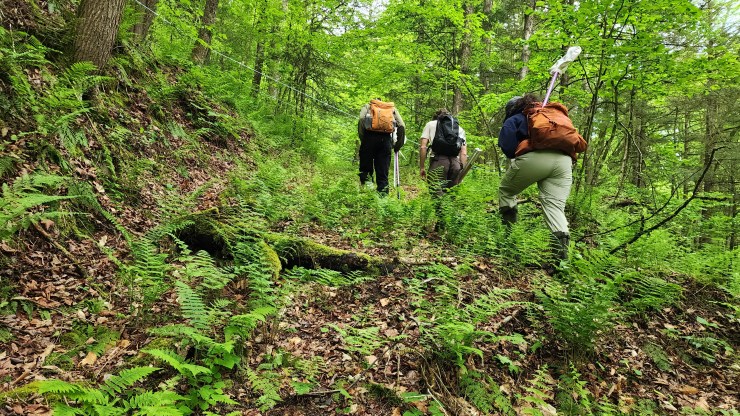
Photo credit: Isabelle Anderson

About Great Mountain Forest
Great Mountain Forest (GMF) is a leader in forest stewardship. For more than a century, we have been demonstrating how sustainable management can protect biodiversity and support ecosystems. By serving as a hub for education and research, we are spreading the benefits of sustainable management so that communities across New England derive educational, economic, recreational, and health benefits from their forests—now and well into the future. GMF is a 501(c)(3) nonprofit encompassing 6,200 acres of contiguous forestland in Norfolk, Canaan, and Falls Village, Connecticut.
Bee Aware at Fairfield Museum and History Center

The Fairfield Museum Shop located on 370 Beach Street in Fairfield is all abuzz with a new selection of bee-related items including honey produced by their own honeybees!

Skeps at the Ogden House

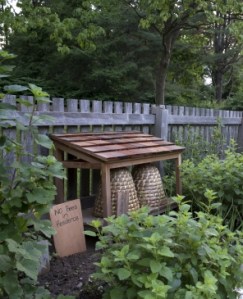
This year, for the first time, the Museum raised bees near the 1750 Ogden House in keeping with their mission to explore the past and to imagine the future. The museum has used bees to pollinate the colonial garden and has harvested the honey in much the same way as our ancestors did.

The Ogden House located on 1520 Bronson Rd., is an authentic saltbox home with a colonial kitchen garden containing plantings dating back to the home’s origin. Visitors to the garden can see replica straw bee skeps that represent the importance of beekeeping in the colonies in terms of pollination and wax production, as well as the medicinal, culinary, and household uses of honey. In fact, apple trees and honeybees used to pollinate trees were brought across the Atlantic in the early 1600s so settlers could make cider because water was not considered portable. Honey was used to preserve food, weatherproof leather and medicinally to help prevent infection.

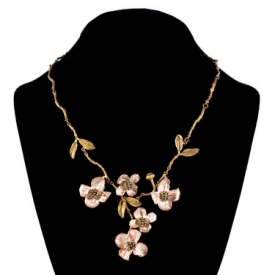
Shop_DogwoodNecklace_web

Today, visitors to the gift shop at the Fairfield Museum will find the museum’s newly harvested honey along with bee-themed tea towels, coasters, and pure beeswax candles. In addition to these “sweet” products, the museum shop offers an interesting selection of locally made items such as art by Michael Michaud and beach inspired jewelry.
In conjunction with the Museum’s current maps exhibit, There’s a Map for That! the Museum Shop offers map themed pieces such as passport covers, journals, and flasks. Specialty jewelry items from CHART metalworks, including pendants, earrings and key chains, exclusively designed for the Museum, feature maps of Fairfield Beach and Southport Harbor.

The Fairfield Museum Gift Shop is open daily from 10 a.m. – 4 p.m. and weekends from 12 p.m. – 4 p.m. For more information visit www.fairfieldhistory.org.

For area information www.visitfairfieldcountyct.com

Audubon Greenwich ~ The Birds & The Bees?

Since the beginning of society, the origin and nature of the honeybee has awakened the curiosity of humankind. For five million years, bees, best known for their sweet gift of nature, has been an animal of special sanctity, symbolizing many things to a diverse cultural cross section of people world-wide. Today, more than ever, bees play a crucial role in our ecosystem. Over one- third of the fruits and vegetables we eat depend on bees for pollination. Because of their important role as pollinators, the tracing of their sudden-die off (Colony Collapse Disorder) in recent years is a critical environmental issue. On February 25 and 26 the Greenwich Audubon is offering two important programs on Bees and how it relates to our environment and future.

FILM SCREENING & PRESENTATION BY GUNTHER HAUK
Queen of the Sun: What Are the Bees Telling Us?
Saturday, February 25 ~ 6:30-9:00 pm
Join Gunther Hauk for a local screening of the acclaimed film ‘Queen of the Sun’. Gunther has been a biodynamic beekeeper for 35 years and is featured in the film. An introduction by Gunther will precede the film. The film is a profound, alternative look at the global bee crisis from Taggart Siegel, director of THE REAL DIRT ON FARMER JOHN. Taking us on a journey through the catastrophic disappearance of bees and the mysterious world of the beehive, this engaging and ultimately uplifting film weaves an unusual and dramatic story of the heartfelt struggles of beekeepers, scientists and philosophers from around the world including Michael Pollan, Gunther Hauk and Vandana Shiva. $10-$20 suggested donation for Audubon and Spikenard Farm. Space very limited. RSVPs required to Jeff: 203-869-5272 x239.

BEEKEEPING WORKSHOP WITH GUNTHER HAUK

Toward Saving The Honeybee: An Introduction to Sustainable & Biodynamic Beekeeping Practices and Principles
Sunday, February 26 ~ 1:00-4:00 pm
This workshop is for current beekeepers and those who are interested in learning more about beekeeping with natural approaches, including biodynamic beekeeping. Don’t miss this exciting and rare opportunity to learn from the master himself! Gunther’s beekeeping workshops are full of information, lively discussion, Q&A, and inspiration. Space very limited. $50 workshop fee will be donate to the Spikenard Honeybee Sanctuary efforts for bees and to Audubon Greenwich’s conservation and education initiatives. RSVP required to Jeff Cordulack: 203-869-5272 x239

More about Gunther Hauk: Gunther Hauk was a Waldorf teacher for 23 years and was co-founder of Spikenard Farm in 2006 and the Pfeiffer Center in 1996. Hauk is the author of Toward Saving the Honeybee (published by the Biodynamic Association). He and his wife Vivian are now located in Floyd, Virginia, where they are building up the honeybee sanctuary in which people can experience the healing of the land, the honeybees, and, ultimately, the human being. www.spikenardfarm.org.

For more information about Gunther Hauk, the Spikenard Farm Sanctuary, and the issues facing honeybees and other native pollinators, visit our event website: www.greenwich.audubon.org

Audubon Greenwich’s Nature Store Hours:
Tues-Sat. 9 a.m.-5 p.m./ Sundays 12-5 p.m. / Store Closed Mondays

NATURE SANCTUARY ADMISSION
Members: No charge
Nonmembers: Adults $3.00/Students & Seniors $1.50
(Please pay in the store)