Medicinal Monday – Sacred Smoke – The Art of Smudging

These days health is on everyone’s mind with the spread of the coronavirus. Native Americans believe that natural herbs and plants affect the spirit and the soul of a person. This type of healing combines many elements such as spirituality, preparation, ceremonies, and rituals using natural preparations. Burning sage, for example, is a powerful ritual that has its roots in some Native American traditions. Today, many people burn sage to cleanse a space or environment of negative energy, to encourage wisdom and clarity, and to promote healing.

About Smudging

Smudging traditions vary depending on the location of a particular Native American community. One factor is constant, smudging must be done carefully and with a positive frame of mind because you are communicating with the powers of the plants and the spirits of this ritual. Smudging must be completed with respect and honor if it is to work.

Smudging can be thought of as a purification ceremony – it is like bathing in sacred smoke, and the way to remove negative energy and to restore balance. According to the teachings of the Medicine Wheel, the four medicines are tobacco, sweetgrass, sage, and cedar. Tobacco comes from the east and represents balance. Sweetgrass comes from the south and represents kindness and attracts positive energy. Cedar is the western direction and represents harmony and wards off sickness. Sage is the northern direction and represents protection from negative energy and brings spiritual blessings.

Sage and Smudging

Many people use sage in the smudging ceremony because it purifies your life from negativity. When smudging, use an abalone shell and light the herbs. Fan the smoke with a feather, many use the feather of an eagle to keep the smoke active. The use of a feather is symbolic of our connection to the Creator.

Traditionally, when lighting the smudge, face east, the traditional direction of the beginning and of birth. After lighting the smudge, wash your hands in the smoke then bring the smoke to your eyes to see good things, your nose to smell good things, your mouth to say good things, and your ears to hear good things. You can also wash the smoke over your head, down your arms, past your heart to feel good things, down your legs, and behind your back. You may want to offer thanks for all that is good in your life as this is time for reflection and connection to a higher power, your spiritual self, or whatever you are comfortable in believing in a positive way.

It is important to set the proper stage and attitude for your smudging ceremony. Set a time when you won’t be distracted and use this ceremony to take away bad energy and to bring good energy to you. For a traditional healing video on smudging see https://www.youtube.com/watch?v=db-Dxzf0CJw

The Gift Shop at the Institute for American Indian Studies on 38 Curtis Road in Washington, CT has a supply of sage for smudging available for sale!

Ives Concert Hall – Nicholas Wallace – Illusionist

Some say life is an illusion… and watching Nicholas Wallace… you might believe it is true! Nicholas Wallace is a true Master of subtle illusion and manipulation, and a gifted storyteller. Nick Wallace can best be described as a minimalist – who has forgone fancy props and special effects and prefers to conjure with an audience’s imagination by presenting magic and mind-reading in a way that is both entertaining and thought-provoking. He has been described as pure evil wrapped in Mr. Rogers’ sweater.

Nick has appeared on season 14 of America’s Got Talent, Penn, and Teller: Fool Us, as well as FOX TV’s Houdini & Doyle’s World of Wonders. He has been named the Canadian Champion of Magic by the Canadian Association of Magicians and is the 2018 recipient of the Allan Slaight Award for Canadian Rising Star.

Nick Wallace is performing at Ives Concert Hall located at Western CT University on 181 White Stree in Danbury on Friday, March 13 at 7 p.m. This is a show that you will not want to miss! For tickets click here.

Native American Traditional Maple Sugar Festival March 14

​​Maple Sugaring has been a tradition in New England for centuries that heralds the first glimpse of spring. This tradition was practiced long before the colonists arrived by Native Americans, who in fact where the first people to tap the sugar maple in order to make sugar. The gathering of sap and production of maple sugar is an important event in the annual lifecycle of Native Americans. It is a time when large extended families would gather at Sugar Maple plots to share in the work of making maple sugar.

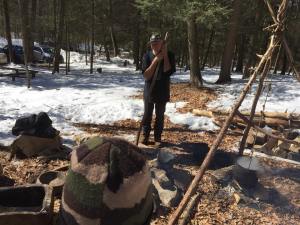
On March 14 from 11 a.m. to 3 p.m. at the Institute for American Indian Studies ​on 38 Curtis Road in Washington Connecticut, there will be a maple sugaring demonstration by Jeff and Judy Kalin of Primitive Technologies. The Kalins will demonstrate several traditional techniques of collecting sap and boiling it down into sugar. This maple sugar celebration, collection and boiling down process will take place in the newly restored 16th century replicated Algonquian Village. Visitors will listen to traditional Native American stories of the ways the sap was collected and how important the seasonal gift of maple sap is to the Native American community.

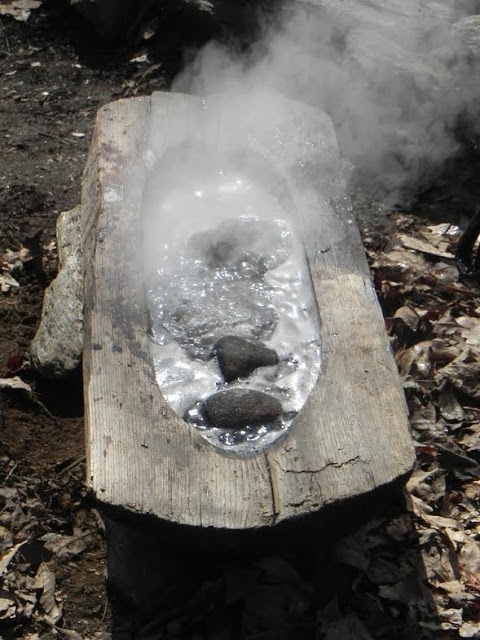
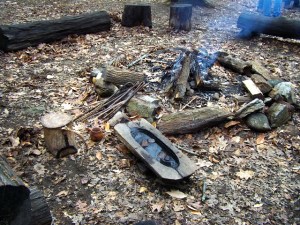
“We want visitors to the Institute to understand how Native people learned to transform the sap from a tree into sugar,” explains Jeff Kalin. “We will be demonstrating the traditional techniques of collecting and evaporating this sap using a variety of tools and containers. Hot stones pulled from the fire, will be used to evaporate the sap from wood containers, which alone would not have been able to withstand the direct fire.” Kalin will explain how water is evaporated from sap using simple techniques and items made and collected from the forest, which is key to how Native Americans made maple sugar traditionally. Visitors will also learn about the importance of how understanding seasonality and their environment, made it possible for local inhabitants to use the sap from the maple tree to provide an annual supply of sugar for their use or trade among the Native American communities and colonists.

An added sweet bonus of this event is the “made from scratch” pancakes served up with local maple sugar, coffee, and orange juice. The Maple Sugar Demonstration is noon – 3 pm., the Pancake Brunch is 11 am – 2 p.m., and children’s activities are 11:30 a.m. – 2:30 pm. The cost is $10 for adults, $8 for seniors, children are $6, and members are free. The pancake breakfast is an additional $5.

About The Institute for American Indian Studies
Located on 15 acres of woodland acres the Institute For American Indian Studies​ preserves and educates through archeology, research, exhibitions, and programs. They have the 16th c. Algonquian Village, Award-Winning Wigwam Escape, and a museum with temporary and permanent displays of authentic artifacts from prehistory to the present that allows visitors to foster a new understanding of the world and the history and culture of Native Americans. The Institute for American Indian Studies is located on 38 Curtis Road, Washington, CT.

WCSU Observatory to offer spring planetarium shows & sky viewings

Western Connecticut State University will host planetarium shows and telescope viewings of the evening sky during the spring Public Nights series from March 14 through May 16 at the WCSU Planetarium and Observatory on the university’s Westside campus, 43 Lake Ave. Extension in Danbury. Each of the six Saturday events will feature two one-hour planetarium shows, including a new presentation starting at 4 p.m. during March and April and at 5 p.m. during May. The early show has been introduced this spring to accommodate families with children and other individuals who wish to enjoy the planetarium feature without needing to stay out late.

The second planetarium show each evening, starting around sunset, will be followed by telescope viewing of the moon, Venus and prominent star systems, clusters and nebulae visible during the spring months. The WCSU Observatory, located atop a hill near Pinney Hall, offers viewings through a 20-inch, computer-controlled Ritchey-Chretien reflector telescope.

Admission is free and the public is invited; planetarium seating is limited to a maximum of 40 persons and entry will not be allowed once capacity is reached or the show has begun. Limited parking is provided adjacent to the observatory, with more extensive parking available on University Boulevard. Planetarium shows are appropriate for adults and older children and will be canceled only in the event of hazardous road conditions or severe weather that would pose a safety risk. The viewing period will not be offered on evenings when cloud cover prevents sky observations. For updates to confirm plans for a scheduled show and viewing, call (203) 837-8672 on the day of the event.

Following is the schedule of WCSU Planetarium and Observatory Public Nights, with the most prominent visible objects listed in the order of their celestial appearance during the viewing period for the evening:

• March 14: The hourlong planetarium shows will start at 4 p.m. and at 7 p.m., with sky observation following from 8 to 10 p.m. Visible objects will include Venus, the Orion Nebula and Sirius.

• March 28: The hourlong planetarium shows will start at 4 p.m. and at 7 p.m., with sky observation following from 8 to 10 p.m. Visible objects will include the crescent moon, Venus, the Orion Nebula, Sirius and the Beehive star cluster.

• April 4: The hourlong planetarium shows will start at 4 p.m. and at 7:30 p.m., with sky observation following from 8:30 to 10:30 p.m. Visible objects will include the waxing gibbous moon, the double star Mizar and Alcor, and the binary star Algieba.

• April 18: The hourlong planetarium shows will start at 4 p.m. and at 7:30 p.m., with sky observation following from 8:30 to 10:30 p.m. Visible objects will include Algieba, the red giant variable star R Leonis, and Mizar and Alcor.

• May 2: The hourlong planetarium shows will start at 5 p.m. and at 8 p.m., with sky observation following from 9 to 11 p.m. Visible objects will include the waxing gibbous moon, Algieba, Mizar and Alcor, the red giant variable star Y Canum Venaticorum, and the M5 star cluster.
.
• May 16: The hourlong planetarium shows will start at 5 p.m. and at 8 p.m., with sky observation following from 9 to 11 p.m. Visible objects will include Mizar and Alcor, and the M5 and M13 star clusters.

For more information, contact the Office of University Relations at (203) 837-8486.

Maple Sugaring Legend – The Iroquois and the Fiesty Red Squirrels

March is a month of transition between winter and spring. It is also the time when maple trees produce sap that can be boiled down to make maple sugar. Native American communities called the full moon in March the worm moon because this was the time when worms came out of the ground and robins started to reappear. Another name for the moon in March is the Sap Moon because this is when the sap from maple trees begins to flow.

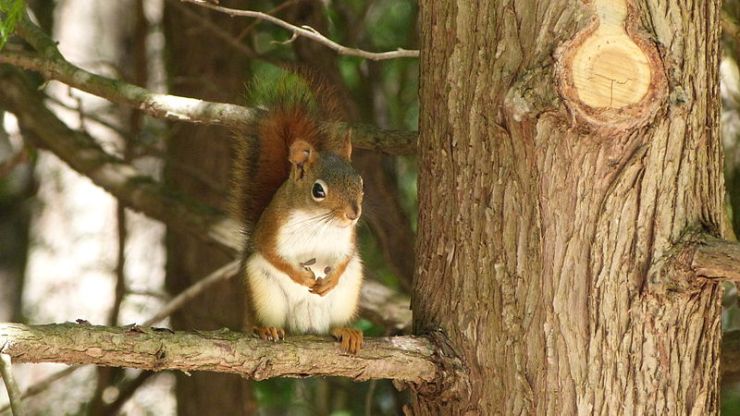
There is an Iroquois folktale that explains that Native Americans initially observed a red squirrel cutting into the tree bark with its teeth and later returning to lick the sap. An Iroquois youth observed this behavior and decided to use his knife to cut into the bark of a tree…thus discovering the maple tree’s sweet secret. ​

In a study in the 1990s, scientists observed red squirrels making chisel-like grooves in the bark of a maple tree. After making the grooves in the tree, the squirrels left the tree! They returned to the tree about 24 hours later and licked up the sap that remained on the tree. By this time the water in the sap had evaporated leaving behind a high concentration of maple sugar!

Don’t miss the Maple Sugar Festival at the Insititute for American Indian Studies on March 14 from 11 am – 3 pm. The Institute is located on 38 Curtis Road in Washington CT.

About The Institute for American Indian Studies

Located on 15 acres of woodland acres the Institute For American Indian Studies preserves and educates through archeology, research, exhibitions, and programs. They have the 16th c. Algonquian Village, Award-Winning Wigwam Escape, and a museum with temporary and permanent displays of authentic artifacts from prehistory to the present that allows visitors to foster a new understanding of the world and the history and culture of Native Americans. The Institute for American Indian Studies is located on 38 Curtis Road, Washington, CT.

Weave through history @ Glebe House in Woodbury

The Glebe House Museum will continue its “Colonial Life Series” focusing on the Colonial Life of Women. This series is presented with the help of a grant received from the “Women’s Giving Circle of the Connecticut Community Foundation”. The Colonial Life Series was designed to present the “lost” arts of colonial life, in an intimate setting, at our historic site. Immerse yourself in history in these programs based on the important contributions of women during the colonial period that affected not only their immediate household but their local community and beyond.

Weaving Thru History
Saturday, March 14 @ 12:00 pm

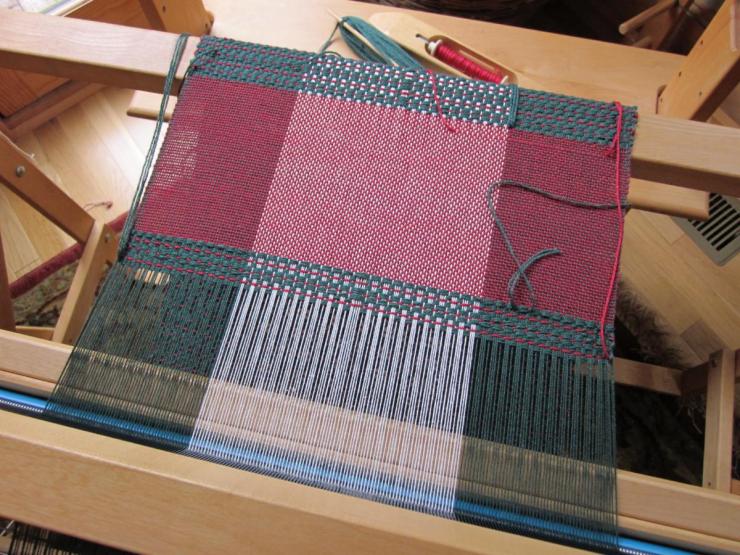
Weaving was already an ancient art in the colonial era, but how did it evolve and what were the advancements made by the 18th century that allowed colonial women to provide their families with linens & clothing. Join Glebe Director, LoriAnn Witte, for this presentation about the history of weaving and its effect on the production of necessities, decorative arts and fashion.
This program will be presented in the “kitchen” of the Glebe House Museum (c.1750), immersed in colonial artifacts and history. Light refreshments will be served.

Class Fee: $20 each for members – $25 each for non-members
*Registration is Required / Limited Seating
Call 203-263-2855 or office@glebehousemuseum.org

Over & Under: The Art of Weaving
Sunday, March 22 @ 1:00 pm

Have you ever wanted to learn how to weave, but find all of the available information complicated and the supplies pricey? Then this is the workshop for you! Participants will learn how to make a simple loom and the techniques for set up and basic weaving to get started. Glebe Director, LoriAnn Witte, will share her knowledge of 25+ years of weaving in technique and tools of the trade. Join us for this hands-on workshop presented in the “kitchen” of the Glebe House Museum (c.1750), immersed in colonial artifacts and history. Light refreshments will be served.
* Please contact Museum Director for information about Materials Fee.

Class Fee: $20 each for members – $25 each for non-members
Materials Fee: Please contact Museum Director.

Registration is required / Limited seating.
Call 203-263-2855 or office@glebehousemuseum.org

Sign up for both programs and receive a $10 discount.
All proceeds benefit the Glebe House Museum.

For more information about these programs, please visit our website at www.glebehousemuseum.org
To register please contact the Museum Office at 203-263-2855 or by email at office@glebehousemuseum.org.