Brew-Ski In Salisbury – Connecticut’s Most Unique Brew Fest -Sunday, October 8

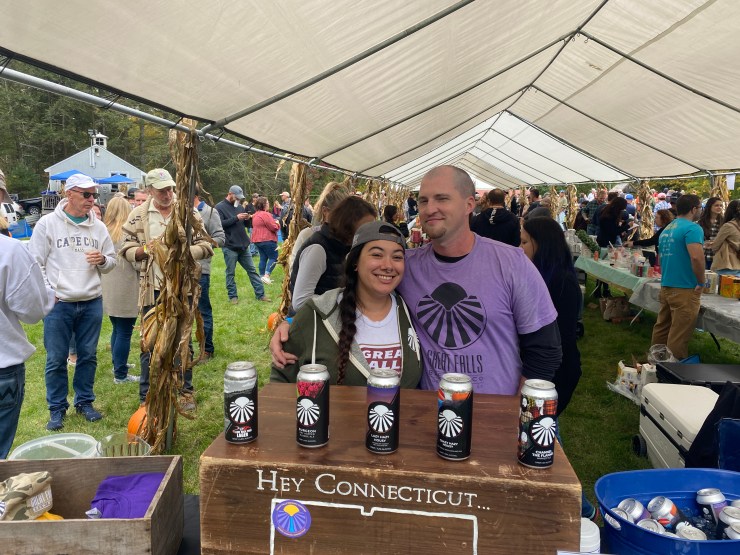
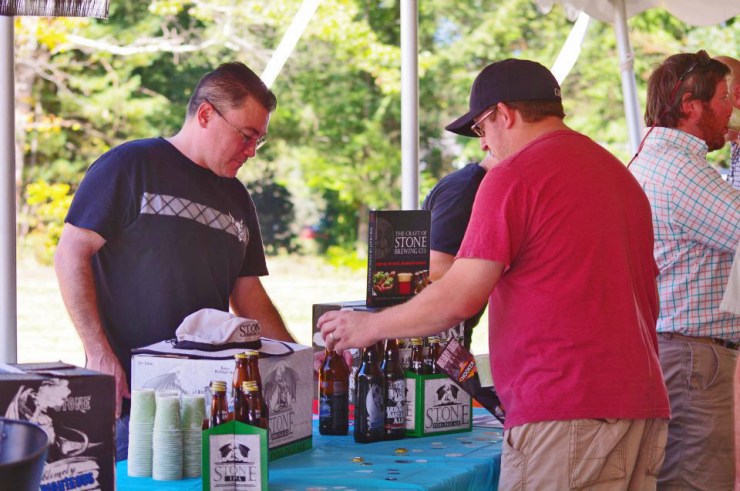
Munich may be home to Oktoberfest and Frankenmuth, America’s Little Bavaria may have a Beer Expo, but something is brewing in Salisbury, Connecticut! The 14th Annual Brew-Ski Fest sponsored by Stateline Wine and Spirits returns to the Salisbury Ski Jumps on Sunday, October 8 from 1 to 4 p.m. with music, pumpkins, cornstalks, and nearly 40 craft breweries offering visitors well over 200 examples of their best brews. The brew line-up boasts popular beers and local favorites as well as a distinct selection of hard cider, hard soda, and distilled spirits by Full Moonshine, On the Rocks, and the Berkshire Mountain Distillery.
This popular event is set against the magnificent backdrop of Satre Hill on 80 Indian Cave Road, in the bucolic town of Salisbury where the oldest Ski Jump Competition on the East Coast takes place every February. The Salisbury Winter Sports Association is hosting the Brew-Ski Fest, to help defray the cost of the internationally acclaimed Salisbury Ski JumpFest and other programs for young ski jumpers this non-profit organizes. Tickets are on sale now online @ http://brewskifest.com for $30 and will be available at the gate for $35, with all proceeds going to the Salisbury Winter Sports Association.

Among the many things that make Brew-ski unique is its alpine location which helps set the mood. Best of all, Brew-ski affords the opportunity for folks to chat with the makers of the featured brews from around the country without waiting in long lines. If you love to try new things and are ready to branch out from industrial lagers then don’t miss Brew-Ski which celebrates craft beer and more. As for food, Sunday in the Country, (http://sundayinthecountry.org) a local non-profit is preparing a hardy mix of brats, hotdogs, hamburgers, and more for you to pair with your new favorite beer.
In addition to beer, there will be live music by the Steve Dunn Band, winners of the Mohegan Sun Casino’s Battle of the Bands, and nominated for the prestigious Telly Award in 2021. The fun doesn’t stop there. Make sure you participate in the only and only Ski Jump Golf Ball Roll! All you have to do is buy a numbered golf ball and watch as hundreds of them roll down the ski jump landing hill… the ball like the skier that travels the furthest wins the prize! And as for prizes, don’t forget to take your free pumpkin home when you leave the Fest!

ABOUT SALISBURY WINTER SPORTS ASSOCIATION

In the winter of 1926, John Satre a resident of Salisbury jumped off the roof of his shed wearing skis to show his friends and neighbors a sport he learned in his native homeland of Norway. Town residents were so amazed as they watched Satre soar through the air that they decided to build a proper ski run that summer, and form the Salisbury Winter Sports Association. The Association hosted the first ski jump competition in January 1927. JumpFest has become a highly anticipated event in Connecticut and throughout the East Coast.

Basket Weaving Classes offered by Award Winning Artist – Tina Puckett At Her Studio

Tina Puckett, owner of Tina’s Baskets and Woven Art in Winsted, Connecticut is a nationally and internationally award-winning woven artist specializing in everything from intricate baskets and bowls to woven sculptures and wall hangings. Puckett has just announced that she is offering a series of year-round classes for teens and adults on Saturday and Sunday and on Monday and Friday nights. “There is a universal and enduring appeal of baskets and woven bowls. The sensation of making something with your hands from reeds and bittersweet vines is empowering, and I want to share that feeling in my classes,” says Puckett.

Learn from an award winning artist

The classes, which are suitable for all skill levels, are offered for up to six people as well as for individuals who want an intensive session. During the weaving session, Tina will share her knowledge about the history of basket weaving and what inspires her work. This hands-on experience provides participants with the basic techniques to create their very own basket or bowl, an understanding of this time-honored craft, as well as improving their understanding of the beauty of bittersweet and reeds. Among the many things that make these classes different is that participants will learn that weaving with bittersweet defines the character and shape of the basket or bowl transforming it into a woven piece of art.

Have fun making this bittersweet tray!

All classes take place in Tina’s atmospherically inspiring Studio at Whiting Mills in Winsted. Part of the fun of is to choose the type of basket or bowl you want to weave, your color palate, and how much time you want to spend weaving it. Participants can choose a class on Saturday or Sunday from 11 a.m. to 4 p.m. or from 1 p.m. to 3 p.m. Classes are also being offered Monday and Friday from 6 p.m. to 8 p.m. All participants will leave the class with a finished basket or bowl to take home. All materials are provided including a piece of locally foraged bittersweet vine or a wooden hoop, and a choice of hand-colored, custom reeds. All classes are by advance reservation only and can be made by clicking https://www.tinasbaskets.com/classes

If you can’t make it to the studio, no worries, Tina is also offering classes via Zoom. Off-site classes are also available by special arrangement.

Learn how to make this colorful and useful basket

“I am excited to share what I know,” says Puckett. “It is a tradition that has been handed down through the centuries, in just about every culture around the world. Basketry weaving classes aren’t one of those things that are readily accessible to everybody, which is why I decided to offer classes year-round.”

About Tina’s Baskets

Tina Puckett is a nationally awarded weaver of baskets and woven art who is the owner of Tina’s Baskets which is located at Whiting Mills in Winsted, Connecticut. Tina has been weaving since 1981 using hand-dyed reeds, bittersweet, and a variety of objects like beads or seagrass. Her work is showcased at a variety of galleries across the United States as well as at her gallery/studio where you will often find her weaving on weekends from 11 a.m. to 4 p.m. Custom orders are accepted and appointments can be arranged by texting 860-309-6934.

A Touch of Monet’s Giverny @ Norfolk’s Husky Meadow Farm’s Art and Cooking Intensive Farm Stay

October is the crown jewel of months in New England which is why Husky Meadows Farm, a certified organic working farm, in Norfolk, Connecticut has put together a farm stay that embraces the beauty of the season through art, cooking, garden walks, and the harvest. At the Fall Art Intensive Farm Stay with Marie Colette-Dupont-Nivet from Thursday, October 12 through Monday, October 16, guests will be treated to a French countryside experience inspired by Claude Monet’s Giverny in France in New England.

Take an art class this fall at Husky Meadows Farm

Like Monet’s fabled home, the autumn landscape of Husky Meadows Farm’s colorful gardens and orchards inspire a sense of serenity making them the perfect setting for an art workshop with Marie Colette-Dupont-Nivet originally from the storybook area of Alsace, France. Her specialty is decorative furniture painting in the historical tradition of using milk paint on wooden panels.

Milk Paint is a traditional way to update old furniture or give new pieces a rustic, farmhouse finish, which is so popular today. Participants will learn that milk paint is made with natural ingredients like lime, casein (a milk protein), and clay, unlike regular paint. Marie-Colette will guide participants through the process of making a decorative wooden piece that they will take home as a memento of this artistic experience. A highlight of the class will be to learn how to match the wood grain with pigments, how to marbleize, and, how to paint a landscape of flowers on wood using milk paint. To finish this project, Marie Colette will guide participants through the different techniques of glazing, varnishing, and waxing to complete the final look of the piece.

To add to the country French ambiance, there will be plenty of time to explore the property, engage in the rich bounty of the harvest, and participate in hands-on French-style cooking classes. Sunday night’s dinner will be a highlight of the stay because it will feature a sumptuous meal made from Monet’s recipes from Giverny that were once served in his famed yellow dining room. Sunday night’s dinner will be long cherished as the next best thing to sitting at Monet’s table!

Guests will enjoy the comfort of Husky Meadows’s luxurious suites; each offers something a little different. The Coop is the most private cottage with a fieldstone fireplace and loft bedroom. Wildflower is spacious and beautifully appointed with a private porch overlooking a wildflower meadow; and Wolftree’s arched ceiling, views, and steam shower make it cozy.

Farm Stays include all meals, beverages, and activities. The Fall Art Intensive is $2500 per person, single occupancy, for the all-inclusive experience. A non-lodging rate that includes all activities and meals is $1200 per person. To book the farm stay, visit huskymeadowsfarm.com or contact the Culinary Director at tracy@huskymeadowsfarm.

About Husky Meadows Farm
Situated on three hundred bucolic acres in Norfolk, Connecticut, Husky Meadows Farm grows certified organic produce for its kitchen, farm stand, and community-supported agriculture membership. The farm kitchen offers year-round prepared foods. At the height of the growing season from May – October the farm also offers intimate farm stays, cooking classes, community dinners, and special workshops on a variety of farm-to-table and ecological topics.

Glow Wild Lantern Festival @ Beardsley Zoo

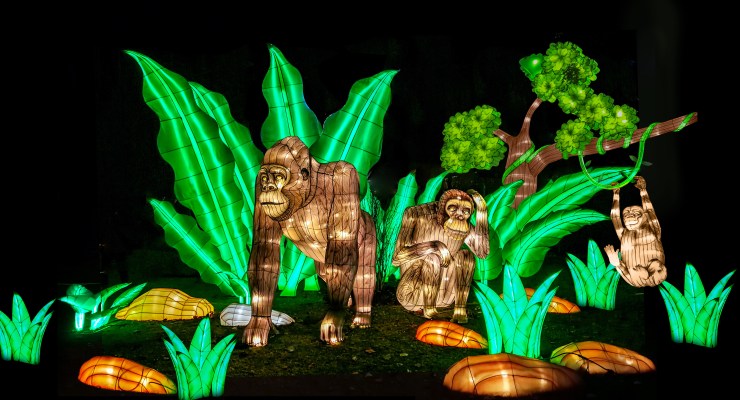
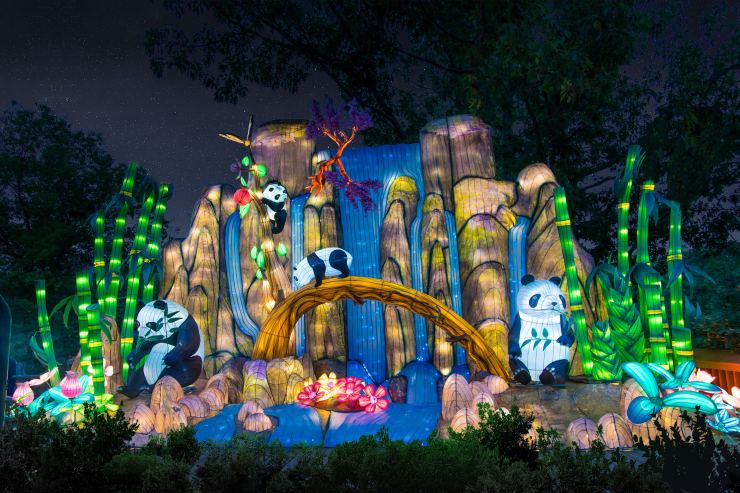
Tickets are on sale now for Connecticut’s Beardsley Zoo’s second “Glow Wild” Lantern Festival. Beginning September 14 and continuing through December 2, “Glow Wild,” a brilliant, illuminated Lantern Festival will be held at the Zoo Thursday through Sunday evenings. Even larger than last year, this incredible evening festival will showcase more than 53 large-scale illuminated sculptures that will amaze guests of all ages.

The “Glow Wild” Lantern returns this year following overwhelming popular support last year, and is designed for everyone to enjoy, whether a family outing, romantic date, or coworker get-together. The festival will run from 5:30 p.m. to 9:30 p.m. Thursdays through Sundays. Timed tickets should be purchased online at beardsleyzoo.org in advance, offered in half-hour increments. A small number of tickets may be available at the door, depending upon Zoo capacity.

Adult tickets (ages 12 +) are $22., and Children (11 and under) are $20. Children two and under and adults 76 and over are free. Wheelchairs and strollers will be available to rent. Donuts, pretzels, coffee, cider and other beverages will be available at the Peacock Café’s side window.

The Glow Wild Sponsor is The Ernest & Joan Trefz Foundation and the elite sponsor Avangrid (UI, SCG). Select Sponsors are AARP CT, Barnum Festival, Coca-Cola Northeast, Liberty Bank, M&T Bank, R.D. Scinto & the Emanuel Family, and Webster Bank. Support Sponsors are Barker Specialty and Gold Fish Swim. “We are grateful to all of our Glow Wild sponsors,“ Zoo Director Gregg Dancho said. “Their generous support allows us to bring this unforgettable experience to the Zoo.”

About Connecticut’s Beardsley Zoo
Get your ticket to adventure! Connecticut’s only zoo, celebrating its 101st year, features 350 animals representing primarily North and South American and Northern Asian species. Guests won’t want to miss our Amur leopards, maned wolves, Mexican gray wolves, and red wolves. Other highlights include our new Andean Bear Habitat, Spider Monkey Habitat, the prairie dog exhibit, and the Pampas Plain with giant anteaters and Chacoan peccaries. Guests can grab a bite from the Peacock Café and eat in the Picnic Grove. As an accredited member of the Association of Zoos and Aquariums (AZA) and participant in its Species Survival Plan (SSP) programs, the non-profit Zoo is committed to the preservation of endangered animals and wild habitats. Tickets must be purchased on the Zoo’s website at beardsleyzoo.org.

Finger Weaving Workshop offers Native American Instruction @ Institute for American Indian Studies Sept. 23, 2023

Most archeologists believe that the art of basket making is one of the oldest crafts in the world. In Native American culture, baskets have always been an integral part of their material culture. For centuries Native Americans have relied on baskets for gathering, storing, preparing, and cooking food. Finger weaving is one of several techniques used among Eastern Woodland Indigenous peoples to make baskets as well as an array of decorative and ceremonial items.

Make a Native American Inspired Basket

On Saturday, September 23 at 1 p.m. the Institute for American Indian Studies at 38 Curtis Road in Washington Connecticut is holding a finger-weaving basket workshop, ideal for those who want to learn this traditional art form. “We think that experiences learning about cultural art forms is important because it gives people insight into Native American culture, “ said Chris Combs, Executive Director.

The focus of September’s class is on the art of finger weaving using natural fibers like jute and raffia. Participants will join Pokanoket Nation and Tribe member, Eva Newell of Cape Sable Island Wampanoag, Nauset, and Cree ancestry for this finger-weaving workshop.

The essence of finger weaving is that it is like an elaborate braid where you move the warp and weft threads with your fingers in order to create beautiful baskets. What makes finger weaving unique is that the same threads are used for both warp and weft; they just change places as you work. In this finger-weaving workshop, two of the most important things participants will learn are how to position their fingers and the best way to hold their hands. Each participant will take home a small finger woven traditionally inspired coil basket.

Have fun embellishing your basket

This workshop is recommended for those 12 and older because of the patience and dexterity required for this project. Space is limited and pre-registration is required. The cost of the workshop, which includes all materials, is $35 for non-members and $30 for members. To register visit http://iaismuseum.org, For questions, email events@iaismuseum.org.

The Amistad Comes to the Norwalk Oyster Festival Sept. 8,9,10

In addition to three family fun-filled days of entertainment at the Norwalk Oyster Festival like the WOW Water Circus and Canines in the Clouds, food, arts and crafts, and riveting performances by Gary LeVox, lead singer of Rascal Flatts, Mullett the nation’s best 80s band, and John Cafferty and the Beaver Brown Band, the historic Amistad will be docked in Norwalk Harbor adjacent to Veterans Park where the festival is taking place. All ticketed festgoers are invited to tour this amazing vessel for free at this year’s Oyster Festival. The enslaved African captives aboard the Amistad initiated the most famous slave ship rebellion in American history.

Illegally Sold into Slavery

The story of the Amistad and Connecticut are historically entwined in an extraordinary way. It all began in February 1839, when Portuguese slave hunters abducted hundreds of Africans from Mendeland, in present-day Sierra Leone, and transported them to Cuba, then a Spanish colony. At that time, the importation of enslaved people and the transatlantic slave trade were illegal in the United States and in Great Britain. Unfortunately, Havana, Cuba remained an important trading hub supplying plantations in the Caribbean with enslaved people.

When the slave ship, the Tecora reached Cuba, two plantation owners, Pedro Montes and Jose Ruiz purchased 53 of the transported Africans as enslaved workers. Soon after their purchase, they set sail on the Amistad, for their plantation in Puerto Rico. Ironically, the name of the vessel, Amistad means “Friendship.”

Color Engraving and Frontispiece from John Warner Barber (1840). A History of the Amistad Captives. New Haven, Connecticut: E.L. and J.W. Barber, Hitchcock & Stafford, Printers.

Uprising at Sea

A few days into the journey Joseph Cinque, one of the enslaved Africans managed to get out of the shackles and helped other captives to get out of theirs. Armed with knives, they seized control of the Amistad, killing the captain and the cook.

After seizing control, they ordered Montes and Ruiz to turn the ship back to Africa. Secretly, at night, Montes and Ruiz changed the course of the vessel, in hopes of being rescued, and sailed it through the Caribbean and up the eastern coast of the United States.

The Amistad docked in Long Island to get provisions and was spotted by the U.S. brig Washington on August 26, 1839. The Amistad was seized by the Naval Officers on the Washington and the enslaved were put back in chains and brought to Connecticut, which was still a slave state at that time. The naval officers claimed salvage rights to the ship and its enslaved cargo.

Contemporary painting of the sailing vessel La Amistad off Culloden Point, Long Island, New York, on 26 August 1839; on the left the USS Washington of the US Navy

Battle in Court

Cinque and other Africans who helped him with the revolt on the Amistad were imprisoned in New Haven and charged with murder and piracy. With the help of influential abolitionists, the charges were dropped. However, a legal battle ensued regarding the legal status of the enslaved captives and property claims between the naval officers of the boat, the Washington, the Spanish government, and Montes and Ruiz.

The President of the United States at the time, Martin Van Buren wanted to extradite the Africans to Cuba to pacify Spain. The defense team for the Africans enlisted a professor who studied languages from Yale University to determine what language the Africans spoke so that they could tell their story. On the waterfront of New York, they found a man who spoke their language and brought him to court to interpret their story for the first time.

In January 1840, a judge in Hartford, Connecticut, in defiance of President Van Buren, who thought the court would rule in his favor, ruled that the Africans were not Spanish enslaved peoples, but rather, that they were illegally captured and should be returned to Africa, not to Cuba. This decision was appealed and eventually was heard in the Supreme Court. The defense team enlisted the help of former President, John Quincy Adams who had successfully argued cases before the Supreme Court and had a strong anti-slavery voice in Congress. Adams argued that these enslaved Africans had the right to fight for their freedom aboard the Amistad, in accordance with the Declaration of Independence, and accused Van Buren of abusing his executive power.

Sketch of an Amistad prisoner, drawn as they awaited trial in New Haven.

The Outcome

On March 9, 1841, the Supreme Court ruled 7 to 1 that the enslaved Africans did have the right to fight for their freedom aboard the Amistad, and that the court deemed them to be free. However, the U.S. government did not allocate funds to repatriate the Africans to their homeland and, awarded salvage rights to the naval officers on the Washington, not to the Spanish or the Africans.

Many abolitionists supported these freed Africans and raised sufficient funds to pay for their return trip to their homeland in Africa. Although some of the Africans died at sea and others died in prison awaiting trial, in November of 1841, 43 surviving Africans boarded the vessel called The Gentleman along with five Christian missionaries in New York and headed for home. Upon reaching their homeland all but four children returned to their families and vanished from historical records.

For tickets to the Norwalk Oyster Festival http://www.seaport.org