Dust and Shadow at Sharon Historical Society

The Sharon Historical Society located on 18 Main Street in the quaint village of Sharon Connecticut in the northern Litchfield Hills has curated a new art show, Dust and Shadow: Paintings by Judy Albright.

06ea5fba-0364-48ca-902b-38b114b4742d

Dust and Shadow features pastel still life and landscape paintings by local artist Judy Albright. Albright is intrigued by the “spaces between and behind objects” and often features the shadows of objects in her work. A quote from The Odes of Horace ,”Pulvis et umbra sumus. (We are but dust and shadow.)” inspired the focus of this exhibition. The exhibition is through March 7, 2015.

Albright teaches classes in drawing and painting at the Northlight Art Center in Sharon, CT. To see more of her work or for a schedule of classes visit www.judyalbrightart.com.

The Sharon Historical Society is open Wed. – Fri. 12 noon – 4 p.m. and Sat. 10 a.m. – 2 p.m. For more information visit http://sharonhist.org.

For event information on Litchfield Hills www.litchfieldhills.com
Bethlehem CT’s Iconic March Farm – Season By Season

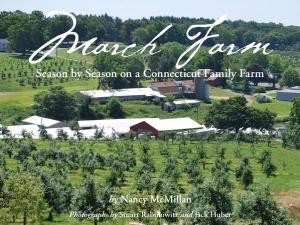
March Farms,located in Bethlehem Connecticut, in the heart of the Litchfield Hills, is an iconic Connecticut Farm with a rich heritage. On Thursday, Feb. 23 at 6:30 p.m., at the Gunn Memorial Library, author Nancy McMillian will lead a discussion and book signing on her new book, March Farm: Season by Season on a Connecticut Family Farm.

5bbc16214b087fefb637572de5e1f8e4

March Farm in Bethlehem, CT is a 150-acre four-generation family farm that has weathered nearly 100 years of the vagaries of a life working the land. The book follows this local farm through an annual cycle of preparation and harvest, highlighting the individual members of the March family working on the farm. For more information on March Farm visit http://www.marchfarm.com.

Using photographs and essays, the farm is followed through four seasons and offer up-close views of farming life. Other essays present a wider perspective on the politics of food and farming. Accompanying recipes use the five crops the farm produces. Books will be available for purchase and for signing. For more information on the book, visit http://www.marchfarmthebook.com.

The snowdate is March 5 at 6:30 p.m.

Greenwich Historical Society – Over Here and Over There: The Popular Music of WWI

On February 26, 2015, 7:00 pm and Sunday, March 1, 2015, 4:00 pm the Greenwich Historical Society is presenting a program on music during WWII. The Society is located on 39 Strickland Road in Cos Cob. The event will take place in the Vanderbilt Education Center on the grounds of the Society. Tickets are $10 for members and $15 for nonmembers. Purchase tickets at http://greenwichhistory.org or call 203-869-6899, Ext. 10.

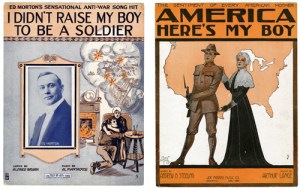
warposters

Music played a key role in the development of popular opinion during WWI. Lyrics and sheet music art were often designed to influence public opinion As the political climate shifted from neutrality to support for the allies, so did mainstream music.

Prior to US involvement in 1917 many songs supported neutrality with more than one song invoking a mother’s love as a reason enough for a son to stay at home. After 1917, when the United States joined the conflict, patriotic themes became more popular.

Led by Stefanie Kies and Bea Crumbine, the program will juxtapose performances of period music with background information and slides. Also, performing are vocalist Dan Swartz and John Goldschmid on piano.

In honor of Black History Month – Torrington Historical Society

In recognition of Black History Month, the Torrington Historical Society presents Venture Smith’s Narrative: The Earliest Known Entirely African- American Work of Literature, a lecture by Chandler Saint, president of the Beecher House Center for the Study of equal rights. The program will take place on Feb. 26 at 7 p.m. at the Torrington Historical Society, Carriage House Gallery on 192 Main St-Rear in Torrington and the Admission is free.

40d50137-fef4-4f8b-b14b-344bc257fd4a

Venture Smith, circa 1728-1805, was sold into bondage as a boy in Africa. He worked as a slave in America for a quarter-century. Over time he saved money from side jobs and from selling vegetables that he grew.

He eventually earned enough to purchase his freedom. During his remaining years, Venture transformed himself into a highly respected American citizen. In 1798, Smith dictated his life story and it was published in New London CT as The Life and Adventures of Venture, A Native of Africa.
During the last decade, Chandler Saint and a team of researchers have uncovered many details of Venture’s life through painstaking research.

The results of that research were first published in 2009 under the title: Making Freedom: The Extraordinary Life of Venture Smith written by Chandler Saint and George Krimsky. Since 2009, Saint and Krimsky have continued their research and discovered many more “interesting and curious passages” from the life of Venture Smith, which will be included in a soon to be published second edition of their work.

For this program, Chandler Saint will give an overview of the life of Venture Smith with particular emphasis on newly discovered aspects of Venture’s story. Historian Robert P. Forbes has written that this new volume, is an indispensable work for anyone interested in the African-American story…it is likely to emerge as the definitive reference tool about a life in bondage and the triumph of overcoming it.”

New at the Beardsley Zoo

The Beardsley Zoo in Bridgeport Connecticut has new guests this winter. The rare and beautiful Amur leopards are now on exhibit. The pair of Amur leopards we received from the Copenhagen Zoo are now on exhibit. The male can be seen quite often perched on the rock in front of the exhibit. Both are beautiful cats. They hope to receive a breeding recommendation for this endangered species. To make room for this pair, they sent their female Amur leopard, Sofiya, to the Maryland Zoo.

Amur Leopard
Amur Leopard

The new year is bringing new animals to the Zoo. While many of them still need to go through their quarantine procedures or wait for their new exhibits to be completed, this year you will enjoy seeing a male Amur tiger from the Indianapolis Zoo, a male Pygmy marmoset from Fort Wayne Children’s Zoo and a female from Brevard Zoo, a male and female red wolf pair from the Wolf Center, three male vicuna from the Berlin Zoo,and a male and a female giant anteater from Dreher Park Zoo. Beardsley Zoo has also recently received two yellow-spotted turtles, a purple gallinule, three black-bellied whistling ducks and three giant river turtles.

As part of these moves, many made as part of accredited breeding programs for endangered and threatened species, the Zoo removed a male Amur tiger, two male and three female river otters, one male common marmoset, one male pygmy marmoset, and two male and three female red wolves.

This may seem like a lot, but they tend to relocate animals during cooler months when they will be most comfortable, so a lot of movement happens at once.

For more information about the Beardsley Zoo visit http://beardsleyzoo.org and for area information www.visitfairfieldcountyct.com

Curator for a day in Litchfield Hills and more

February is a busy month at the Litchfield History Museum. On February 22 for example, at 3pm a lecture, The Colonial Revival as Collective Memory and Consumer has been scheduled. The lecture will be presented by Thomas Denenberg, director of the Shelburne Museum in Shelburne, VT. The development of a culture of consumption in the decades that bracketed the turn of the twentieth century created unprecedented opportunity for the dissemination of images, objects, and texts that engendered historical consciousness in the United States. Antiquarian activities, the province of social outliers, the wealthy, or the creative such as the painter Edward Lamson Henry (1841-1919), became normative behavior in the new middle-class America.

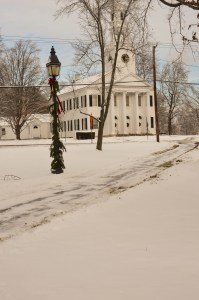
litchfield  church copy

Gathering, collecting, and sorting historical material culture, once an end unto itself in the nineteenth century, gave way to the creation of a widespread aesthetic that prized idealized “native” forms. Entrepreneurial individuals, including the minister-turned antimodern colporteur Wallace Nutting (1861-1941), employed the very modern platforms of advertising, publishing, department stores, and mail order merchandising to encourage and fulfill middle-class desires for objects and myths that answered contemporary social needs in an era of rapid economic and geographic change.

Often termed “the” Colonial Revival—an aesthetic assumed to be, monolithic, sui generis, and whole upon arrival, this illustrated lecture will look at the phenomenon as a complex and carefully constructed collective memory that matured over time. This program is free for members and $5 for non members. Register at registration@litchfieldhistoricalsociety.org.

If you have ever wondered what it’s really like to be a curator at a history museum, you are invited to shadow the curator of the societies collections on February 26 from 9:30 a.m. – 12:30 p.m. Participants will study artifacts from the Historical Society’s collections, get a behind-the-scenes peek at object storage, a hands-on experience with some of a curator’s day-to-day work, and assemble a hypothetical exhibit. Please register for this program by Tuesday, February 24. Non-members are required to pay the registration fee in advance of the event. Your registration will not be considered complete until we have received payment and the cost is $10 for members; $15 for non-members. Register at registration@litchfieldhistoricalsociety.org.

For more ideas about what to do and see in Litchfield Hills visit www.litchfieldhills.com