The Legacy of Wisdom Wednesday- Native American Sayings

“The Great Spirit is in all things, he is in the air we breathe. The Great Spirit is our Father, but the Earth is our Mother. She nourishes us, that which we put into the ground she returns to us…” – Big Thunder (Bedagi) Wabanaki Algonquin

Native American wisdom is something that resonates with many people. In years gone by, Native Americans passed down their history and sayings orally from generation to generation as a guidebook for a way of life that honored and respected all living things.

As Native American culture in Connecticut grew and evolved so did the art of storytelling and wise sayings. These were used as tools to pass down traditions, local customs, hunting and gardening skills, family and child-rearing traditions and courting rituals. In essence, these stories and sayings helped connect them to each other and to the land where they made their home.

An Important Legacy

Through their stories and sayings, Native Americans shared and preserved the memory and traditions of their ancestors. These became an integral part of the legacy passed on to future generations.

Today, remembering and sharing this wisdom is one way to keep the cultural traditions of Native Americans alive. It gives us a glimpse into this rich cultural heritage and into the past of our great nation.

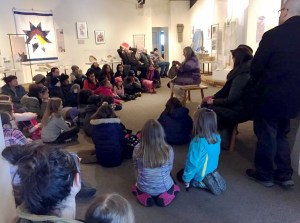
Every Wednesday, the Institute for Native American Studies in Washington will share a saying on their FaceBook page with a “Wisdom Wednesday” posting to inspire you with the wisdom of those that have gone before us.

About The Institute for American Indian Studies

The Institute for American Indian Studies preserves and educates through discovery and creativity the diverse traditions, vitality, and knowledge of Native American cultures. Through archaeology, the IAIS is able to build new understandings of the world and history of Native Americans, the focus is on stewardship and preservation. This is achieved through workshops, special events, and education for students of all ages.

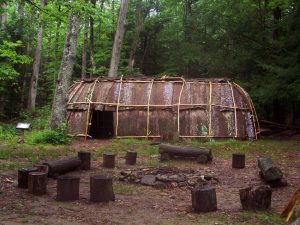
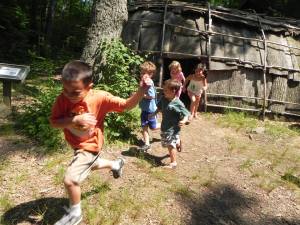
Located on 15 woodland acres the IAIS has an outdoor Three Sisters and Healing Plants Gardens as well as a replicated 16th c. Algonkian Village. Inside the museum, authentic artifacts are displayed in permanent, semi-permanent and temporary exhibits from prehistory to the present that allows visitors a walk through time.

The Institute for American Indian Studies is located on 38 Curtis Road in Washington Connecticut and can be reached online or by calling 860-868-0518.

Tiger Cub Live Cam @ Beardsley Zoo

The two rare Amur or Siberian tiger cubs were born in November at the Beardsley Zoo in Bridgeport have received worldwide attention. Unfortunately, the Tiger cubs, Reka and Zaya are too young to be viewed by the public, however, Blue Buffalo has sponsored a live streaming webcam in their nursery!

The webcam offers animal lovers a close-up view of these two stripped sweethearts at play from 8:30 a.m. to 8 p.m. Eastern Standard Time. Watching the live feed also gives the public a chance to see how hard the zoo staff is working to care for these little ladies that are genetically so important to sustaining their breed.

The Beardsley Zoo is an accredited zoo that does much more than just display animals. Accredited Zoos play an important role in conservation, saving animals and breeding them that are on the verge of extinction in the wild, like Amur Tigers.

In the wild, Amur Tigers are critically endangered due to poaching and the change in their habitat. Reka and Zaya will help keep the genetic pool diverse so these new arrivals are very important overall to this rare and beautiful species.

In late spring, the Beardsley Zoo will move the tiger cubs to a new tiger exhibit where the public can actually watch them frolic… but for now get ready to ohhhhhh and awwwww when watching the webcam!

The Power of Native American Traditional Healing

To celebrate and honor the knowledge of plants and herbs used by Native Americans the Institute for American Indian Studies in Washington Connecticut has decided to launch “Medicinal Monday” on the Institute for American Indian Studies’ Facebook Page. Make sure to follow the page (like and share it too!) to find out how plants and herbs have been used for thousands of years.

The interconnection of all creation is the foundation of the culture of Native Americans, and this is reflected in the way that they tried to heal the sick. They practiced the healing arts in a way that not only included the plants that surrounded them but also by trying the heal the entire person, mind, body, and spirit. There is a long tradition of Native American healers using indigenous plants for a wide variety of medicinal purposes with applications as diverse as there are tribes that use them.

In Connecticut long before the first contact with European settlers, Native Americans were using herbal remedies to heal members of their tribe. Their vast knowledge of herbs and plants came from observing wildlife in the woodlands that surrounded them. They watched what deer, elk, and bears ate when they were sick and experimented with those herbs and plants to see if they would cure them as well.

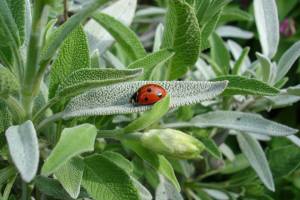
Plants were carefully studied by Native Americans over thousands of years, and through information passed down from generation to generation, they had a huge knowledge base of how to use plants and herbs, that amazed the early Europeans. Tobacco, for example, was used in healing numerous conditions and was also used in rituals and ceremonies. Sage was used for stomach problems, witch hazel was used to treat sore muscles, cuts, and insect bites, dandelions were made into a tea that was drunk as a general health tonic and juniper berries and pine needles cured scurvy.

There are hundreds of herbs and plants that were used by Native Americans to heal both mind and body that were adopted by the first settlers to Connecticut. Today, many modern medicines are based on plants and herbs that were used for thousands of years by Native Americans. As a matter of fact, more than 200 botanicals derived originally from Native Americans have been or are still in use by pharmaceuticals.

About The Institute for American Indian Studies

The Institute for American Indian Studies preserves and educates through discovery and creativity the diverse traditions, vitality, and knowledge of Native American cultures. Through archaeology, the IAIS is able to build new understandings of the world and history of Native Americans, the focus is on stewardship and preservation. This is achieved through workshops, special events, and education for students of all ages.

Located on 15 woodland acres the IAIS has an outdoor Three Sisters and Healing Plants Gardens as well as a replicated 16th c. Algonkian Village. Inside the museum, authentic artifacts are displayed in permanent, semi-permanent and temporary exhibits from prehistory to the present that allows visitors a walk through time.

The Institute for American Indian Studies is located on 38 Curtis Road in Washington Connecticut and can be reached online or by calling 860-868-0518.

An American Odyssey: The Jewish Experience in Greenwich

This exhibition curated by the Greenwich Historical Society located in Cos Cob will explore the history of the Jews of Greenwich within the broader context of the history of the town and the nation.

Beginning with the question of why Jews chose to settle in Greenwich and how they gained an economic foothold, the exhibition will explore the experience of Jewish families living and working in Greenwich for more than a century. It will examine how they, like other immigrants, struggled with the pull to integrate into American society and yet also remain distinct. And it will look at how they, as well as other minorities in Greenwich, have contributed to the larger community despite experiencing periods of discrimination and restrictions on worship, employment and housing opportunities.

Although the lion’s share of the growth of Greenwich’s Jewish community began in the 1960s (today about 11 percent of the population is Jewish), the tale really begins with the mass exodus of Jews from Eastern Europe to America between 1880 and 1920. The stories of those who sought to build new lives here–emblematic of larger historical themes–will be told through photographs, artifacts, archival documents, ephemera and first-person accounts. The exhibition will also explore the little-known fact that there were Jewish property owners in Greenwich as far back as Colonial times.

An American Odyssey: The Jewish Experience in Greenwich is curated by Dr. Ann Meyerson, a nationally recognized independent museum curator who most recently co-curated The First Jewish Americans: Freedom and Culture in the New World (October 28, 2016 to March 12, 2017) at the New-York Historical Society.

Savor CT 2018 in Naugatuck

Once again this year the Naugatuck Historical Society is hosting the popular Savor CT at the Naugatuck Portuguese Club located on 110 Rubber Ave. on Feb. 10 from 7 p.m. to 10 p.m. This event features just Connecticut businesses that carefully craft a multitude of goodies from beer and wine to all manner of food from chocolate to cookies!

Participants in Savor Connecticut include: four breweries, two vineyards and four distilleries. There will also be a great variety of food, all made in Connecticut to sample including the specialties of Nardelli’s, Mr. D’s Tavern, Fascia’s Chocolates, Avery Soda, Pepperidge Farm, Hummel and much, much more. There will be over 30 vendors featured at the event. Guests at the event will enjoy drinks, a commemorative glass as a souvenir, food, music and raffles from around the state.

The event helps to support the mission of the Naug uck Historical Society. The Society tells the stories of Naugatuck through programs, school visits, exhibits, articles and more. Currently, the museum is located at 171 Church Street in Naugatuck, and is looking forward to moving to the Tuttle House when renovations are complete.

The snow date for this event is February 12, but only will be used in extreme weather conditions. Tickets are available at the museum on Church Street which is open 11-4pm on Saturdays or at Fine Wines and Liquors. Tickets are $15 for members of the Society or Portuguese Club when purchased in advance. Tickets for non-members are $20 when purchased in advance. All tickets at the door are $25.

For information on how to become a vendor, donate a raffle prize or to purchase tickets contact Wendy Murphy 203 218 5349, wendy.murphy@snet.net

Flanders Offering Handmade Collaged Valentine Card Workshop

Led by professional artist Dita Carley, Flanders Nature Center & Land Trust is hosting a workshop on handmade collaged valentines. The class is being held on Saturday, February 3 at 10AM.

Carley has given workshops in collage at Guilford and Brookfield Craft Centers and has exhibited her work nationally with a number of pieces becoming part of private collections. She will be bringing examples of valentines she has created.

Appropriate for adults and kids at least 8 years old accompanied by an adult, at the workshop participants will make handmade collaged valentines for their sweethearts. Collage materials and cards will be provided but bringing your own wrapping paper, photos, magazine pages or any type of collage material to customize your valentines is encouraged.

The workshop will be held at the Flanders Studio on the corner of Flanders and Church Hill Road in Woodbury. The cost is $20 for members and $25 for non-members with an additional supply fee of $5 per person.

Those interested may register online at www.flandersnaturecenter.org or call 203-263-3711, ext. 10, for more information.

About Flanders

Flanders Nature Center & Land Trust acquires, preserves and manages land; and uses the land to promote understanding and appreciation of nature, art and the environment. Founded by artist, farmer and environmentalist Natalie Van Vleck, Flanders provides a variety of environmental education programs year-round, designed to bring a deeper understanding of art, nature and farming to children, youth and adults in the Woodbury region and throughout Connecticut.