Learn About Native Americans @ KidsPlay in Torrington

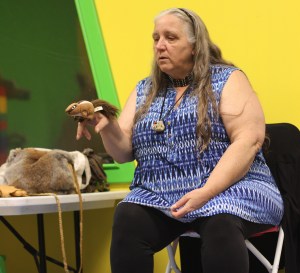
On April 2 from 11 a.m. to 1 p.m. KidsPlay located on Main Street in Torrington is offering a program featuring Darlene Kascak (Schaghticoke Tribal Nation) from the Institute for American Indian Studies (IAIS) for an interactive presentation of the 12,000-year history of life in the Eastern Woodlands.

Kascak is the Education Coordinator at IAIS and Traditional Native American Storyteller and will share various visual and tactile resources to guide the discussion about how Eastern Woodlands Natives have adapted to their changing environment. With hands-on activities, participants will learn the importance of working together for the sake of the community, innovation through knowledge of natural resources, and how this knowledge can benefit everyone today. IAIS will bring along animal furs, replicated artifacts, organic instruments, and more contemporary items for an interactive and educational experience.
Reduced admission for this program ($2 per person) is offered because of the generous support from the American Savings Foundation and Nolin Selby Fund of the Northwest Connecticut Community Foundation.

About the Institute for American Indian Studies
Located in Washington, Connecticut, the Institute for American Indian Studies (IAIS)—formerly the American Indian Archaeological Institute (AIAI)—was incorporated in 1975 as an outgrowth of local efforts to recover New England’s then-largely-unknown indigenous history. IAIS is a 501(c)3 museum and research center dedicated to providing unique, informative, and engaging experiences for our members and visitors alike.

About Darlene Kascak
Darlene Kascak (Schaghticoke Tribal Nation) is the Education Director at The Institute for American Indian Studies in Washington, Connecticut. Her experience as an educator, tour guide, museum assistant and Traditional Native American Storyteller has taught her the importance of educating both young and old about the many misconceptions and stereotypes about her ancestors. Her style of teaching from a Native American’s point of view allows children and adults the opportunity to have a new understanding of Connecticut’s Indigenous Peoples lives both in the past and in the present.
Lithuanian Folk Art: Egg Decorating @ MATT

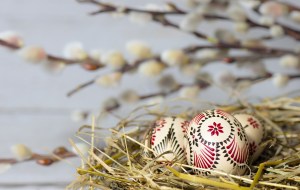
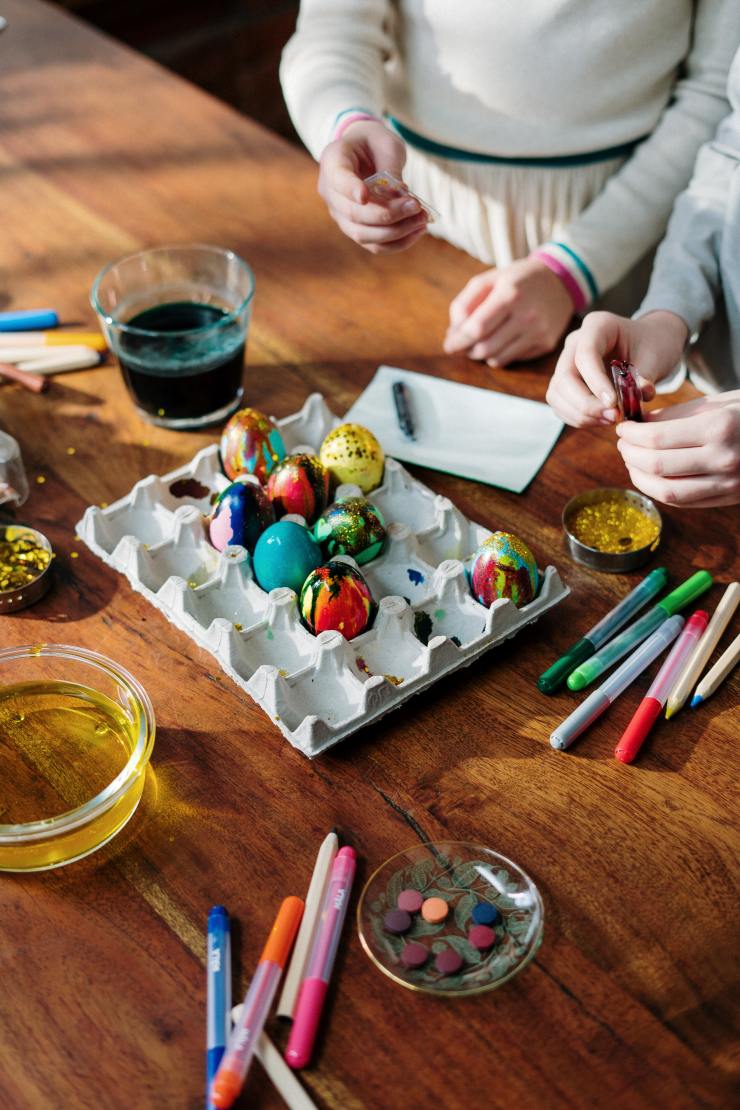
The Mattatuck Museum on West Main Street in Waterbury is hosting a Lithuanian Folk Art Easter Egg decorating workshop, on April 9 from 10 am to 12 noon. Participants will join Valerie Rogers for a folk-art experience celebrating the Lithuanian egg decorating tradition known as marguciai. Participants will use a scratching/etching method to create beautifully intricate designs. Participants will use a scratching/etching method to create beautifully intricate designs.

For Lithuanian Christians, Easter (Velykos) is the most sacred of holidays. It follows 40 somber days of Lenten moderation and marks the resurrection of Jesus Christ. Each spring, Lithuanians commemorate the Passion of Christ by attending church services throughout Holy Week on Palm Sunday, Holy Wednesday, Holy Thursday, Good Friday, Holy Saturday, and Easter Sunday.

While the rites of these services are comparable to those in other parts of the world, many Easter traditions observed outside of church liturgy are uniquely Lithuanian. Holy Saturday is dedicated to painting Easter eggs (margučiai) and preparing the Easter Sunday feast. Traditional Lithuanian Easter eggs are stained with natural dyes extracted from bark, leaves, fruit, and vegetables. Stained margučiai appear in solid colors or patterns created when leaves or other materials are pressed onto the eggs during the staining process.

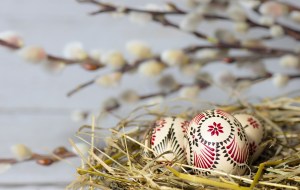
More famously, Lithuanians are known for their ornate margučiai, which are either hand-painted or hand-carved into magnificent works of art. With the hand-painted method, they use the tips of needles and other sharp objects to paint intricate patterns with hot wax. Then, after the wax hardens, they dip the eggs into colorful dye. After the eggs dry, they are heated and then pressed gently with towels or paper to remove the wax and reveal the pattern. With the hand-carved method, wax is not used. Instead, these eggs are dipped in dye first. After they dry, designs are etched into the shells with a finely tipped, sharp object. Both methods require artistic talent and patience and both result in extraordinary, heirloom-quality margučiai.

In Lithuania, the Easter Granny (Velykų Senelė) delivers Easter eggs and treats to children. Children often prepare for the Easter Granny by leaving empty homemade egg nests outside their homes in gardens and shrubs. On Easter morning, they wake to search for their hidden margučiai treasures.

All supplies for this workshop are provided by the Mattatuck Museum. No experience is necessary. There is limited space for this workshop and it is recommended that you register early. The cost is $25 for members and $30 for the general public. To register click here.

Drum Making Workshop @ the Institute for American Indian Studies

Rhythm and sound are important to just about every culture around the world. Throughout the Americas, indigenous peoples have been using drums as part of their culture for thousands of years.

If you are asked to think about Native American music, there is a good chance you will think of the sound of drums, but did you know that the drum is considered to be a living and breathing entity to Native peoples and symbolize a strong relationship with the creator?

On Sunday, March 20 the Institute for American Indian Studies, located at 38 Curtis Road in Washington, Connecticut is hosting an in-person drum-making workshop, with sessions at 11 a.m. and at 2 p.m.

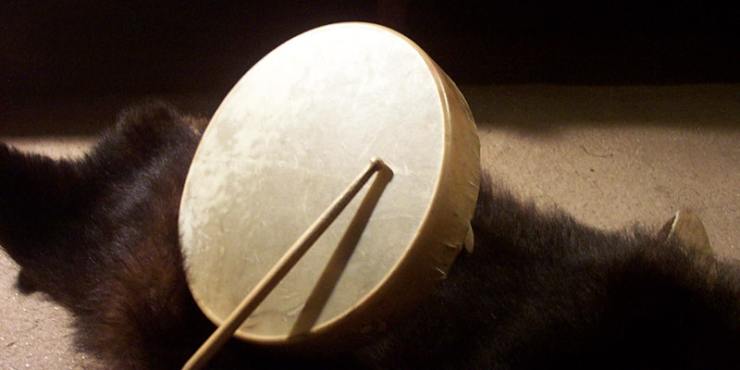
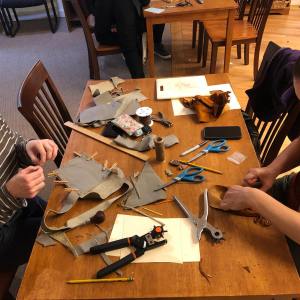
The highlight of this workshop is to learn how to make your very own rawhide drum. The drums made in this workshop will be 14- inches in diameter and constructed of a traditionally used material, elk rawhide. Each drum will come with a drumstick. While creating a drum for their own personal use, participants will learn about their cultural significance, and how they remain a vibrant part of today’s indigenous cultures in the Americas.

Space is limited for this workshop and pre-payment and pre-registration is required. To register online, please visit the Museum website to register via Eventbrite. If you have questions about the workshop, please call 860-868-0518 or email events@iaismuseum.org. The price for this workshop is $90 for IAIS members and $110 for non-members.

Ukrainian Egg (Pysanky) Decorating Workshop for Adults and Kids

On April 2 from 1 – 3 p.m. the Wilton Historical Society is hosting a Ukrainian Egg decorating workshop just in time for the Easter Holiday.

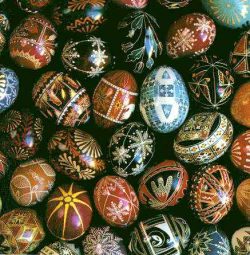
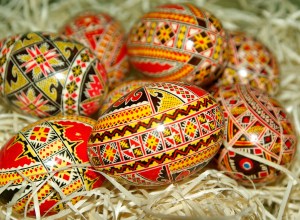
Participants will learn the colorful and venerable craft of decorating eggs in the Ukrainian style, known as pysanky (their name is derived from the Ukrainian verb meaning to write). Expert egg decorator Susan Clark will lead this workshop for adults and children and explain the importance of this tradition to the people of Ukraine. This ancient craft uses symbols and motifs to create a jewel-like egg. Intricate designs can be created with geometric forms, or with more naturalistic, flowing patterns. Participants will be using a kistka, a pointed implement a bit like a pen, filled with beeswax and heated, to draw designs on the eggs between bathing them in colored dye. Decorate eggs in a traditional design, or create your own.

This workshop is limited to 20 participants and will take place at the Abbott Barn. Family groups will be seated together. The fee is $30 for members and $40 per non-member, per person, and includes materials. This event is suggested for children 9 years old and older and for adults.

Did You Know?
“According to Ukrainian folklore, the fate of the world depends on pysanky, intricately decorated dyed Easter eggs. As long as people make pysanky, it is said, a monster personifying evil will remain chained to its cliff and the world will be safe.” – The New York Times, , 4/5/1984

Maple Sugar Festival @ Institute for American Indian Studies March 5

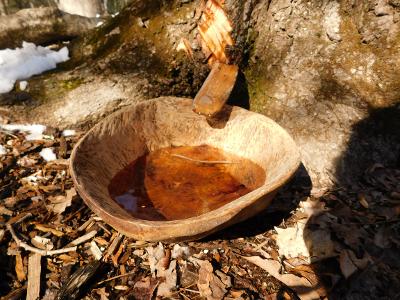
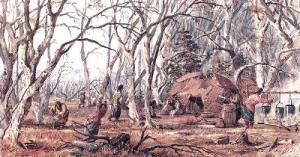
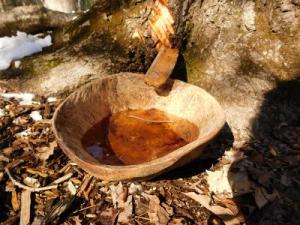
The sugaring off the process in the Litchfield Hills has a long history that began with the Native Americans living here. They were experts at knowing the perfect time to collect the sap which is when the days grow warm and the nights are still cold, and before the trees begin to bud. They would boil the sap down using time-honored techniques and materials collected from the environment. On Saturday, March 5 from 11 a.m. to 4 p.m. visitors to the Institute for American Indian Studies on 38 Curtis Road in Washington, Connecticut can join IAIS educators at an event that demonstrates and celebrates this golden syrup of spring.

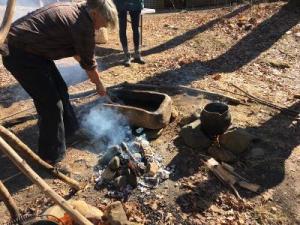
At 11:00 am, 1:00 pm, and 3:00 pm, IAIS Educator and Ecologist, Susan Scherf will demonstrate various traditional Native American techniques of collecting sap and boiling it down into syrup for sugar. It is interesting to watch how Native Americans used tools made from a variety of natural materials in this labor-intensive process. Visitors will learn about the importance of maple sugar to the diet of Native Americans as well as its usefulness as an item of trade.

Historic records indicate that the collecting and processing of maple sap was a social as well as a working occasion. Women would tap the trees, men would cut the wood for the fire needed to boil the sap, and children tended the sap as it bubbled and boiled. In keeping with the convivial nature of traditional Native American maple sugaring, listen to Traditional Native American stories recounted by Education Director Darlene Kascak, Schaghticoke Tribal Nation at 12:00 and 2:00 pm. Throughout the day, there will also be traditional family-friendly games and activities to enrich the visitor experience at the Institute’s Maple Sugar Festival. If you have worked up an appetite, the Institute is serving up pancakes topped with real maple syrup sure to satiate your taste buds from 11:30 a.m. to 1 p.m. Coffee and orange juice will also be available.

The annual Maple Sugar Festival at the Institute teaches visitors about the importance of the maple season to local Native American cultures. Pre-registration for this event is requested by visiting www.iaismuseum.org to register for this event via Eventbrite. If you have any questions, please call the Institute at 860-868-0516 or email events@iaismuseum.org. The price to attend this very unique festival is $15 for Adults, $10 for Children, and $5 for Members. Pancakes are an additional $5. For the safety of the guests and staff of the Institute, masks are required inside the museum and research buildings regardless of vaccination status. Social distancing is practiced at all outdoor events.

In-Person or Zoom-In @ Weekend in Norfolk

The little village of Norfolk, Connecticut has organized Winter Weekend in Norfolk, consisting of a series of in-person and Zoom events taking place on Saturday, February 26 through Sunday, February 27 that are sure to chase the winter blues away.

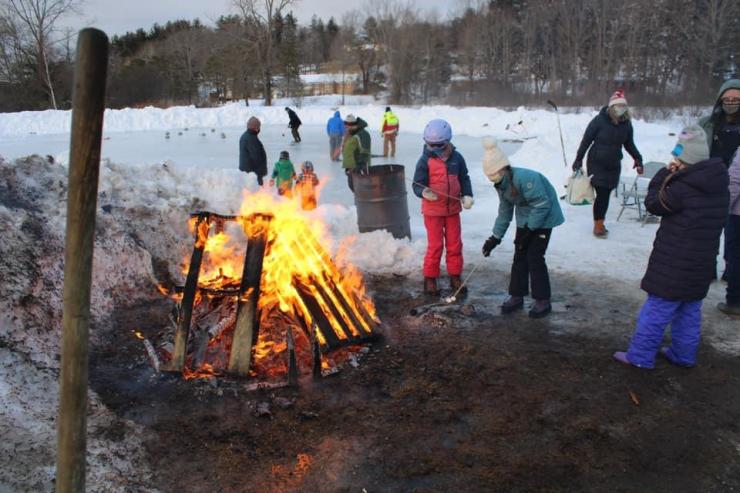
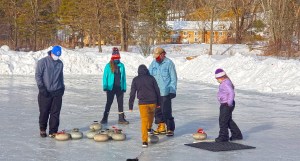
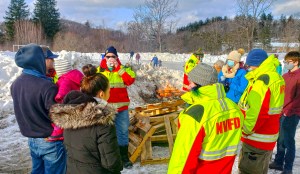
If your kids are bored and like sports, take them skating at the Norfolk Skating Rink on Mountain Road where kids can warm up next to a roaring bonfire while enjoying steaming hot chocolate and s’mores on Saturday afternoon. A highlight at the rink will be a demonstration of an ancient Scottish game, curling, by the Norfolk Curling Club. Best of all, visitors are welcome to try their hand at learning this skill with experts.

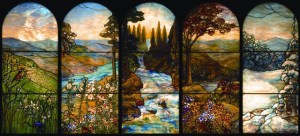
Norfolk is an art lover’s dream that comes alive during the Winter Weekend in Norfolk. Visitors will have the chance to tour Tiffany Stained Glass Windows at the Battell Chapel as well as windows designed by one of the most prestigious firms named by Pope Leo XII as a Pontifical Institute of Christian Art at the Immaculate Conception Church. Other stops for art lovers are the Norfolk Libary that is hosting “Hidden Doorways,” photographs by Angus Mudge, and a photography display, “In the Woods,” of Norfolk’s Land Trust Properties at The Hub @ 2 Station Place where maps and event information is also available.

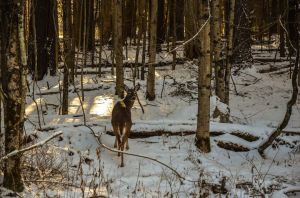
To experience the natural beauty of Norfolk’s great outdoors, don’t miss the Wildlife Walk at 10 a.m. on Saturday or the Photography Safari beginning at 10 a.m. on Sunday. Both of these in-person outdoor events will lead you through some of Norfolk’s unspoiled scenery that it is famous for.

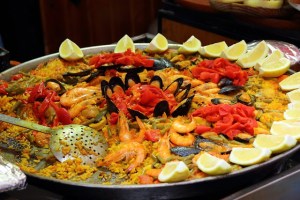
If you can’t make it to town, no worries, the Winter WIN organizers have that covered with a series of fascinating programs. If you like to cook don’t miss the cooking demonstration with Martiña Gago, which will transport you to sunny Spain, where the culinary culture is as rich and varied as the country itself. Paella, Spain’s National dish is on the menu today. This video will be available on-demand throughout the Winter WIN Weekend along with concerts by the Norfolk Chamber Music Festival in addition to several other virtual programs. For links visit the WIN website.

Two Zoom programs are also scheduled. If you enjoy historic architecture, don’t miss the program. Ladies, Legends, & Lakeside Dwellings – Alfredo Taylor in Norfolk presented by Ann Havemeyer and the Norfolk Library on Saturday, February 26 from 4 p.m. to 5 p.m. Alfredo Taylor arrived in Norfolk in 1902 at the time when Norfolk was being transformed into the beautiful village that it is today. For sports-minded historians, the Norfolk Historical Society has teamed up with author and coach, Ariel Picton Kobayashi on Sunday, February 27 at 4 p.m. This Zoom talk will highlight the popularity of ski jumping across the northeast including Norfolk, which was introduced by Norwegian immigrants. Learn how ski jumping became popular in the area and how and why it changed in the 1980s.

Winter WIN is one of Connecticut’s most beloved winter traditions. The entire town of Norfolk has rolled out a “winter white carpet” for in-person and virtual events. This is the best way to warm up to winter! All these and more events are listed on the Weekend in Norfolk website (weekendinnorfolk.org), along with links for the virtual events and a downloadable copy of the schedule.

ABOUT THE WIN (WEEKEND IN NORFOLK) COMMITTEE
Now in its seventh year, the all-volunteer WIN Committee organizes two town-wide events annually: the Summer WIN and the Winter WIN. Norfolk’s town officials, the Economic Development Commission, and a multitude of local organizations, institutions, and individuals support the festivals.