Antique, Vintage and Tag Sale

The Litchfield Performing Arts, whose signature event is the Jazz Festival that is taking place this year August 7-9 also offers a Jazz Camp for aspiring students. To raise money for the Jazz Camp the Litchfield Performing Arts has organized their first ever Antique, Vintage and Tag Sale that will be held at St Michael’s Church on 25 South Street in Litchfield April 17-19.

6c698ad5-6c2c-45a0-87f9-1eaa5d8cad28

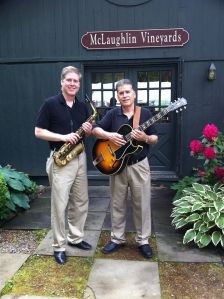
There is a early buying and preview party on April 17 from 6:30 to 8:30 p.m. and ticket prices are $35. Participants on Friday evenings preview party and buying event can shop while enjoying hors d’oeuvres and beverages and great jazz by the Litchfield Jazz Camp faculty. To purchase tickets email tegan@litchfieldjazzfest.com.

80ccf90a-2035-4770-ad0f-6126937df350

The tag sale continues on Saturday, April 18 from 9 a.m. – 4 p.m. and Sunday, April 19 from 9 a.m. – 3 p.m. and admission is free. Treasure hunters will find a variety of antique and vintage items including: an Edwardian flip table, an 1880’s Belgian tile cook stove, Victorian and Queen Anne mirrors, dressers, clocks, china, chandeliers, stained glass panels, jewelry and much more. Vintage pieces include Drexel Heritage sofas and chairs, Ralph Lauren dinnerware, a 1940’s Duncan Phyfe dining table… Tag sale items range from decorative pottery and glassware to housewares, all in good condition.

a913d13a-02b8-44de-ae1d-15697ce0c1be

For more information about the Litchfield Jazz Festival and other events the organization hosts visit http://litchfieldjazzfest.com/festival

Tour the Palace Theatre in Waterbury

Explore nine decades of Palace Theater history and backstage mystique during the Waterbury performing art center’s monthly guided tour scheduled for Friday, Apr. 10, from 11a.m. to 12:15pm.

palace_lobby copy

Each Palace Theater tour is approximately one hour and fifteen minutes and is led by a team of Palace Theater Ambassadors, a specially trained group of engaging volunteers well-versed in the theater’s rich history, architectural design and entertaining anecdotal information. In addition to exploring the theater, Poli Club and lobby spaces, patrons will also have the opportunity to walk across the stage, visit the star dressing rooms, and view the venue’s hidden, backstage murals – artwork painted and signed on the theater walls by past performers and Broadway touring companies.

Due to the tours’ increasing popularity, reservations are required in advance. Each tour is $5.00 per person and single tickets for individuals or groups of 10 or less can be purchased online at www.palacetheaterct.org. Larger groups are asked to contact the Box Office at 203-346-2000 to book their reservations.

pano of orch dome promoinent

A special boxed lunch and tour package is also available for groups of 15 or more and cost $17 per person. Tour and dessert packages can also be arranged for $12 per person. Reservations for the lunch and dessert packages need to be made at least three days in advance of the desired tour date and paid in full at that time.

Built in 1920 and recorded in the National Register of Historic Places, the Palace Theater is known for its grand architectural design. Designed in a Renaissance Revival style, the building features an eclectic mix of Greek, Roman, Arabic and Federal motifs along with marble staircases, gilded domed ceilings, cut glass chandeliers and intricate plaster relief details that make the Palace one of the most striking performing arts spaces in the state.

Party Like it is 1799!

Spend your April Vacation with us from April 14-16 and experience what kids did for fun more than 200 years ago. Our Education Director, Elizabeth Devoll, has used her creativity to come up with fun-filled activities that will inspire, enrich and educate every kid!

April-vacation-2015-300x300

Learn about the button factory in Saugatuck while using antique buttons to decorate wooden bowls. Another important local industry 200 years ago was a tin factory and we’ll construct elaborate tin mobiles and hand-stitch a version of an American flag.

Celebrate spring with cooking and planting. Learn about the many apple farms in Westport and bake apple tarts. Decorate vintage flower pots using a mosaic technique and paint local historic scenes with watercolors.

A behind-the-scenes tour of the historic Wheeler house will be included along with insider legends to excite the imagination. Yoga with Sue and role playing drama games with Jen Devine will round out the activities.

Snacks will be provided; bring a bag lunch. Registration is required, please call: 203-222-1424, Members $150, Non Members $175, Sibling discounts. Ages 5 – 11, 10 am -2pm. For more information http://westporthistory.org.

For the birds in Litchfield Hills @ the Livingston Ripley Waterfowl Conservancy

The Livingston Ripley Waterfowl Conservancy located in Litchfield Connecticut was founded by S. Dillon Ripley, considered to be one of the twentieth century’s outstanding figures in ornithology and conservation. Ripley began building an internationally known collection of waterfowl in Litchfield, Connecticut in the 1920’s. He started his first duck pond at age seventeen and taught ornithology at Yale while director of Yale’s Peabody Museum of Natural History. In 1964 Dillon became the Secretary of the Smithsonian Institution where he led the creation of numerous new museums, such as the National Air & Space Museum and the Hirshhorn Museum, and the development of the Smithsonian Magazine.

marbled1

An avid aviculturist, Dillon Ripley is credited with being the first person to propagate successfully many threatened and endangered species in captivity, such as the red-breasted goose, nene goose, emperor goose and Laysan teal. Dr. Ripley also raised various endangered species in Litchfield for re-introduction to the wild.

Today, known as the Livingston Ripley Waterfowl Conservancy, this is one of the pre-eminent facilities for breeding rare and endangered waterfowl. The public is invited on self-guided tours on Saturday and Sunday beginning April 1 and running through November 30 from 10 a.m. – 4 p.m. Visitors to the Conservancy are invited to visit the aviaries at their leisure and enjoy the diversity of waterfowl on display. Information panels provide interesting insight about each species and Conservancy staff and volunteers are available to answer questions.

marbled

Visitors can also visit the duckery where ducklings and goslings are hatched and reared. Even during the fall and winter months there are often eggs incubating or chicks hatching as the southern hemisphere species often reproduce during Connecticut’s northern hemisphere winter.
October through May are the best months to observe male ducks in their breeding plumage. Male ducks of many species (but not all) molt their colorful breeding plumage towards the end of June and most resemble their respective females until late September when they molt into breeding plumage once again. Male swans and geese remain colorful throughout the year.

NeNe_Group_-WEB-1

Admission is $10.00 per adult, which includes one child under the age of twelve. Additional children are $5.00 each. Please note that no pets are allowed on Conservancy grounds.

LRWC is located on Duck Pond Road in Litchfield. For more information http://www.lrwc.net. For area information www.litchfieldhills.com

Franklin Street Works Presents: “It’s gonna take a lotta love”

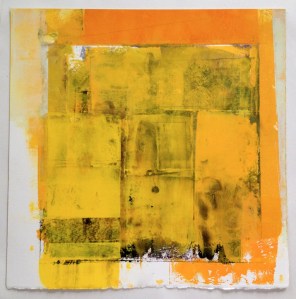
“It’s gonna take a lotta love” is a group exhibition that explores ideas about inclusivity, authenticity, and commonality in an age of anxiety, isolated individualism, and virtually lived experience. The show is on view from March 7 – May 24, 2015, and is curated by Liza Statton and Terri C. Smith. A free public reception will take place on Saturday, March 7th from 6:00-8:00pm with member VIP reception from 5:00-6:00pm.

The artists in “It’s gonna take a lotta love” intentionally avoid many of the sensationalist strategies used by the culture and advertising industries, Rather than critiquing these methods of slick production, elaborate fabrication, and massive scale through ironic appropriation, they make art that focuses on the aesthetic and conceptual potential of the everyday.

These artists also share a type of tragic-comic vision of contemporary culture. Humor, joy, and melancholy, among others, mix easily in their work. Such emotional credibility creates a slippage between empathy and alienation. Some artists create this slippage by making and re-making objects using seemingly inconsequential materials.

Wayne White paints witty and sometimes biting phrases on found paintings of pastoral landscapes and rustic barns. Andy Coolquitt resituates familiar materials such as vinyl records, lightbulbs, synthetic shag fabric, and books-on-tape into installations that are inspired by functions and spaces outside of the gallery. His works articulate a tension between the familiarity of our real lives and the exclusive domain of the white cube gallery. Whiting Tennis creates drawings, paintings and sculptures that pit Modernist art’s fascination with pure form against an intentionally personal mode of a hobbiest aesthetic that wrestles with ideas of concealment and containment.

Other artists such as Jon Campbell, Stephen Vitiello, and Jeremy Deller create subtle interventions using everyday language and music. Deller’s poster “Attention all DJs” takes on the form of a handwritten sign with tongue-in-cheek instructions for DJs. Jon Campbell’s “four letter word flags” brightly declare words like “Yeah,” “Home,” and “Want.” By inserting his word flags between country, state, or corporate flags in a city, Campbell prompts passerby’s to ask if the words we all use are worthy of a public format usually saved for pagentry or branding. Stephen Vitiello’s sound works in “It’s gonna take a lotta love” appropriate commercial music from well known singers. With “Dolly Ascending” Vitiello slows down Dolly Parton singing “Stairway to Heaven” to the point where it sounds like choral music. In A.L. Steiner + Robbinschild’s “C.L.U.E. Part I” video two women perform dance infused movements in backdrops of natural and built environments, connecting color, action, attitude, and environment in a straightforward way that includes the audience in their choreographed antics.

Two of the exhibiting artists, Andy Coolquitt and Jon Campbell, have been commisioned to make new works for “It’s gonna take a lotta love.” In the gallery, Coolquitt, whose assemblages reconsider the materials we unconsciously engage with, will be creating a new mixed media installation entitled “oo oo.” Australian artist Jon Campbell has been commissioned to make new works for the exhibition. His gallery contributions include a “four letter word” mural and a set list painting, which is based on a Melbourne band’s 1984 performance. Campbell extends his painting practice into the public sphere with an ambitious installation in Downtown Stamford, his first in the United States. Campbell, who is interested in representing “the overlooked and undervalued,” will design and exhibit flags and banners with the words: Hold, Home, Look, Play, Want, and Yeah. The works will be mounted on existing flagpoles in public parks, at office buildings, and on construction fences throughout Downtown.

Getting There: Franklin Street Works is located at 41 Franklin Street in downtown Stamford, Connecticut, near the UConn campus and less than one hour from New York City via Metro North. Franklin Street Works is approximately one mile (a 15 minute walk) from the Stamford train station. On street parking is available on Franklin Street (metered until 6 pm except on Sunday), and paid parking is available nearby in a lot on Franklin Street and in the Summer Street Garage (100 Summer Street), behind Target. The art space and café are open to the public on Wednesday, Friday, Saturday, and Sunday: 12:00pm – 5:00pm with extended hours on Thursdays, 12:00pm – 7:00pm. Franklin Street Works does not charge for admission during regular gallery hours.

Living History Luncheon at Danbury Museum Katy Leary and Mark Twain

On Saturday, March 28, the Danbury Museum & Historical Society will be hosting a living history lunch buffet with Herstory Theater as they present, Katy Leary & Mark Twain.

A Lifetime with Mark Twain book cover

Katy Leary, born into an Irish-American family in Elmira, New York, served as the Clemens’ maid from 1880 until Samuel Clemens’ death in 1910. The performance will be based on A Lifetime with Mark Twain, a memoir dictated by Leary and published in 1925. to Mary Lawton. Lawton was a childhood friend of Clara Clemens, Mark Twain’s daughter. She, like everyone else, was devoted to Katy Leary whose quaint sayings, philosophies, and amusing accounts were a source of delight to all who heard them.

Herstory Theater has researched and developed the character of the irrepressible and expressive Leary and welcomes you to join Katy as she takes a walk down memory lane. Clemens called Leary, a “potent influence all over the premises” and “a pole star for steadiness” with “a good store of that veiled & shimmering & half-surreptitious humor which is the best feature of the “˜American’ brand.”

Katy Leary
Katy Leary

Herstory Theater is a wonderful theater company based in Connecticut and this is their third visit to the Danbury Museum & Historical Society. The programs and performances are history-filled, educational, inspirational and always enjoyed by guests.

Admission for this special history program and buffet luncheon provided by Two Steps Downtown Grille and Ciao Catering & Events is $25.00 per person. Reservations are recommended as space is limited. Seating will begin at 11:30 a.m. and lunch begins at 12 noon. The program starts at 12:30 p.m. Please phone 203.743.5200 or email info@danburymuseum.org to reserve your seat(s).

For more information about the museum www.danburymuseum.org and for area information www.litchfieldhills.com.

About the DMHSA:
The Danbury Museum & Historical Society was formed in 1947 to acquire, preserve, exhibit and interpret the history of Danbury. Situated in downtown Danbury, the museum preserves the John and Mary Rider House (c.1785), the Dodd Hat Shop (c. 1790), two one-room schoolhouses, the Marian Anderson Studio and the Charles Ives Birthplace. Huntington Hall, a modern exhibit building houses the museum offices, archives and research library.