Make Holiday Wreath Inspired by Nature @ Great Mountain Forest

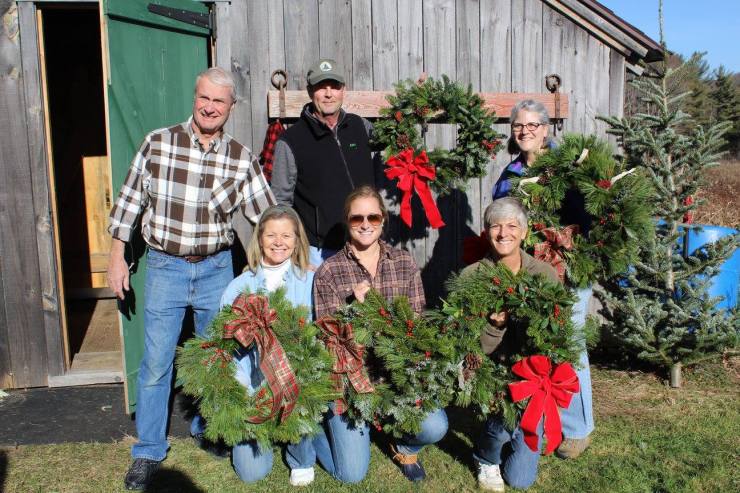
A quintessential symbol of the holidays, the wreath, is practically de riguer for yuletide decorating. Making a wreath from locally foraged greens and pinecones gathered by the staff of Norfolk/Canaan’s Great Mountain Forest (GMF) is a gratifying way to add festive flair, naturally, to your home. Best of all, GMF’s Wreath Workshop features boughs from species you will not encounter anywhere else! Join staff educators, Matt Gallagher and Vicki Nelson, as well as GMF Trustees, volunteers, and friends on Saturday December 7, or Saturday, December 14, from 9 a.m. to 12 p.m. or 1 p.m. to 4 p.m. at their annual Holiday Wreath Workshop to make a wreath inspired by nature with materials harvested from GMF.

Resources in Great Mountain’s 6,000 unfragmented acres of forest are always changing and evolving. Some of the greens used in this workshop come from trees that were planted experimentally over the past century, and not native to the area. Due to climate change, and other stressors, many of these species are aging out. Don’t miss the chance to work with them before they’re gone! Greens from the Veitch Fir, a species native to Japan with its lustrous dark green foliage above and white bands below, and Oriental/Caucasian Spruce, native to Europe’s Caucasus and Pontiac Mountains with short, shiny, deep green needles will give your wreath a unique look that cannot be replicated with more common or artificial greens.

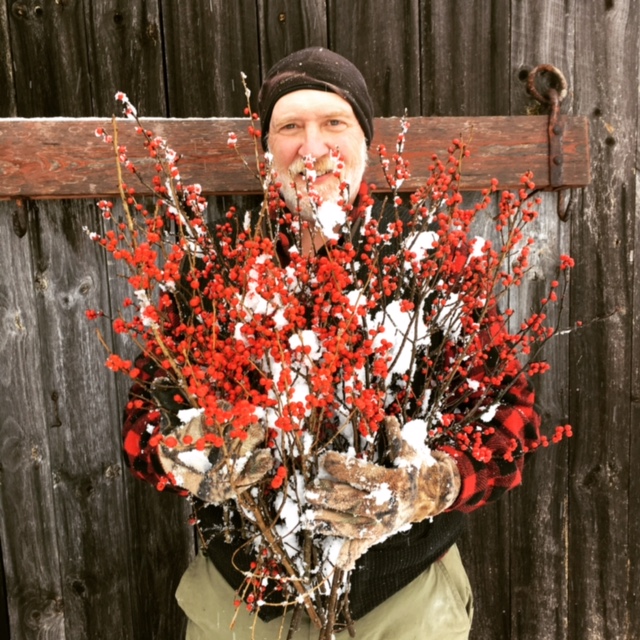
Participants may also choose from a variety of locally foraged native greens, berries, and cones such as White Spruce, Eastern White Pine, Northern White Cedar, Mountain Laurel (Connecticut’s State Flower), Winterberry Holly, and Juniper. There will also be four to five different types and sizes of pine, spruce, and hemlock cones to choose from as well as an array of ribbons and decorative items.

Friends old and new will gather around a warm wood stove as they make their wreaths while sipping hot cider and enjoying a variety of snacks. Great Mountain Forest’s staff is always at the ready to help. A bonus of this workshop is that tips will be given on how to properly care for your wreath to keep it fresh throughout the season. You will also learn a bit about each species. One important reason why this wreath will last throughout the holiday season is because the greens were locally foraged at their peak freshness by Great Mountain’s professional foresters. Additionally, using natural greens is eco-friendly and sustainable, because they can be composted after the holiday season.

Tickets are available online by clicking here https://greatmountainforest.org/events The cost of the workshop is $40 and includes all materials. Participants are asked to bring their pruning sheers and sense of fun and creativity to spread holiday cheer. The workshop will take place at the atmospheric Mountain House Barn located on 200 Canaan Mountain Road in Falls Village.


About Great Mountain Forest

Great Mountain Forest (GMF) is a leader in forest stewardship. For more than a century, we have been demonstrating how sustainable management can protect biodiversity and support ecosystems. By serving as a hub for education and research, we are spreading the benefits of sustainable management so that communities across New England derive educational, economic, and recreational and health benefits from their forests—now and well into the future. GMF is a 501(c)(3) nonprofit encompassing 6,200 acres of contiguous forestland in Norfolk, Canaan, and Falls Village Connecticut.

Connecticut Tour Operator Announces Biggest Sale of the Year Thanksgiving Day – Cyber Monday

Tours of Distinction, a Connecticut based Tour Company in business for 50 plus years is thrilled to announce the biggest savings of 2024 on their 2025 vacations. Starting Thanksgiving Day and going through Monday, December 2, Tours of Distinction is offering a 20% discount on their entire travel portfolio.

Step back in time in Mackinac Island

“Tours of Distinction is committed to offering travelers exceptional value to foreign and domestic destinations,” said Tyler Zajacz, President of Tours of Distinction. “Whether you are planning a three or four day trip or a two week vacation to Europe or Asia, we offer incredible experiences and great deals. One of our most important goals is to give our travelers authentic experiences that give them the most for their money, “ Zajacz continued.

Fall in love with Italy

With an impressive travel portfolio of 65 destinations and 150+ tours ranging from Japan to Nova Scotia, the Canadian Rockies to Thailand, and Switzerland to Utah, to name a few, there is something to suit everyone’s wanderlust. To book your vacation http://toursofdistinction.net today.

Visit America’s National Parks


About Tours of Distinction

Tours of Distinction has been providing full inclusive, quality guided group tour travel for more than 50 years. We offer day tours, multi-day tours, and 7 to 14 day excursions domestically and internationally. Tours included everything from start to finish and are always fully escorted by a knowledgeable and professional Tour Director.

Learn the Cultural Tradition of Corn Husk Weaving @ Institute for American Indian Studies

During this month of gratitude, the Institute for American Indian Studies located at 38 Curtis Road in Washington Connecticut is hosting a Corn Husk Weaving Workshop on Saturday, November 23rd at 1 p.m. Participants will learn the traditional art of weaving beauty from simple cornhusks into a seasonal craft perfect for gift giving.

Originating in South America, corn didn’t reach New England until about 1000 years ago. Corn was a useful crop that wasn’t grown just as a source of food. Many Native American traditions, including the Three Sisters Garden, various traditional stories, and annual ceremonies like the Green Corn Festival, encompass the cultural importance of corn including weaving art and everyday items from cornhusks.

A cornhusk is the outer leaf of the corn plant that protects the cob as it grows. Most of the time, this green outer shell is thrown out after corn is harvested. Readily available during the fall harvest season, skilled Native American artists and other artisans collect the husks and dry them until they turn an attractive shade of golden brown signaling that they are ready to be woven.

At this workshop participants will join an IAIS educator for a hands-on class where they will create crafts made from cornhusks to take home. Weaving with cornhusks has been around for thousands of years in Native American culture and this workshop presents a rare opportunity to experience a bit of Native American culture while creating something beautiful and meaningful.

Pre-registration for this workshop is required and can be made online at iaismuseum.org. The price to participate including all materials, is $20 for non-members and $10 for members of the Institute. If you have questions, please call 860-868-00518 or email events@iaismuseum.org

About the Institute for American Indian Studies

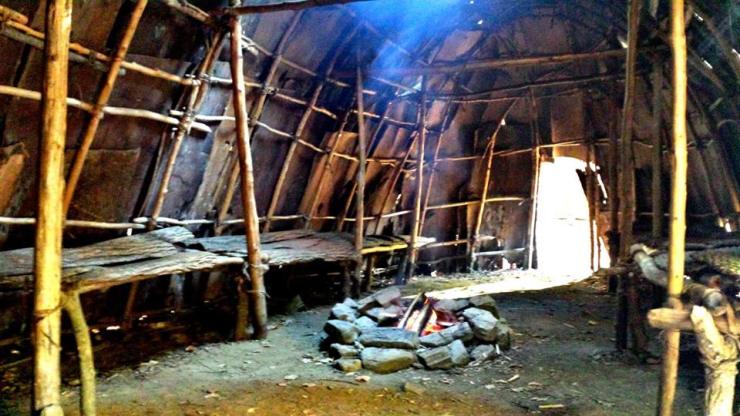
Its “Wigwam Escape” escape room offers an opportunity to solve a puzzle while learning about Indigenous life before European settlement. With a focus on “two-eyed seeing”, visitors can learn about the history of the American continent that incorporates more than 12,000-year history of human habitation. The Institute for American Indian Studies is located at 38 Curtis Road, Washington, Connecticut.

Kris Allen Jazz Quartet to Perform at the Palace Theater’s Poli Club

Kris Allen Quartet – Acclaimed saxophonist, composer, and bandleader Kris Allen brings his renowned jazz quartet to the Poli Club at the Palace Theater on Friday, November 15, with two live shows at 7:00 PM and 9:00 PM. Known for his dynamic and original compositions, Allen’s latest album June (Truth Revolution Recording Collective) has garnered widespread praise, including a 4.5-star review from Downbeat Magazine and acclaim from The New York City Jazz Record, which highlighted Allen’s unique ability to craft “strong compositions for a simpatico quartet with its own sound and identity.” For tickets click here.

Joining Allen on stage will be an extraordinary lineup of his long-time collaborators: Zaccai Curtis on piano, Matt Dwonszyk on bass, and Jonathan Barber on drums. Audiences can anticipate an evening of inventive jazz, featuring selections from the quartet’s three albums alongside brand-new, unrecorded compositions.

This special performance is presented by Litchfield Jazz and offers a unique chance to experience live jazz in an intimate, club-style setting. The Poli Club provides a New York jazz club vibe right in Waterbury, featuring exceptional acoustics, a welcoming atmosphere, and reasonably priced tickets and refreshments.

Connecticut’s Moose at Great Mountain Forest Rambunctious Rutting and Long Term Research

Moose are an icon of the northern forests. Although moose has always been a rare sight in Connecticut’s forests, since 2002 they’ve been spotted in Great Mountain Forest where the vast unfragmented ecosystem provides them with a special haven. Usually solitary animals, all that changes in October when mating season (also known as rutting season) begins.

Most of us will never see a moose or witness the exciting breeding ritual known as rutting that happens every October in Great Mountain Forest, but it is exciting to think about. The courting scene heats up as bulls dig rutting pits, mark, them with urine, and compete for breeding rights. All the while cows seek attention and overtures from the bulls. Ruts are epic battles that can last for hours.

To get a better understanding of the Forest’s moose population, Great Mountain Forest initiated an intern study in 2020, deploying game cameras to known foraging spots and counting individual moose. As a result, 21 moose were identified including 11 mature bulls, two adolescent bulls, five cows, and three calves.

Although moose continue breeding in Great Mountain Forest, anecdotal reports suggest that their total population may be decreasing. Moose face many new challenges such as climate change and winter tick infestation.

To understand the effects that moose and white-tailed deer have on forest development, researchers Ed Faison, Senior Ecologist at Highstead Foundation, and Steve DeStefano, retired Leader, of Massachusetts Cooperative Fish and Wildlife Research Unit collaborated with Great Mountain Forest to set up experimental moose and deer exclusion plots within several patch cut harvests conducted in 2010. Each plot was fenced in different ways to filter which herbivore species would be able to access vegetation within the plot: one plot excluded both moose and white-tailed deer; the second excluded only moose but not white-tailed deer, while the third was left open for both species to feed freely. Comparing the trees, shrubs, and herbs among the plots over time allows researchers to study how selective foraging patterns and different browsing intensities affect the structure, composition, and growth rates of the forest. Moose browsing and wallowing likely contribute to different forest dynamics at Great Mountain Forest than would be observed in forests where only white-tailed deer are present – the latter being typical of most Connecticut forests.

“We are very happy to be hosting this exciting research and look forward to learning more about moose impacts on New England hardwood forests! The presence of moose at GMF is a testament to our history of expansive conservation and sound forest stewardship,” said Mike Zarfos, PhD, and Executive Director, of Great Mountain Forest.

About Great Mountain Forest
Great Mountain Forest (GMF) is a leader in forest stewardship. For more than a century, we have been demonstrating how sustainable management can protect biodiversity and support ecosystems. By serving as a hub for education and research, we are spreading the benefits of sustainable management so that communities across New England derive educational, economic, recreational, and health benefits from their forests—now and well into the future. GMF is a 501(c)(3) nonprofit encompassing 6,200 acres of contiguous forestland in Norfolk, Canaan, and Falls Village Connecticut.

Celebrate the Quince at White Silo Farm in Sherman this weekend

Quince is an ancient fruit, found in Roman cooking and grown across Turkey and southeast Asia. It grows on small trees and is closely related to apples and pears, but it lacks their immediate edibility and appeal. The fruit is knobbly and ugly, with an irregular shape and often a gray fuzz — especially when the fruit has been picked underripe. The ripest, nicest quince will have a golden tone and smooth skin as pictured directly above. But even ripe quince doesn’t taste very good raw.

Quince was popular in 18th century New England. Nearly every home had a quince tree in the yard because quince provided a natural and plentiful source of pectin that was necessary for home canners to ensure that preserves they were putting up for the winter were properly set and preserved.  After powdered pectins were invented, quince fell out of favor.

The first clue that quince hides something special is its aroma. If you leave a quince on a sunny windowsill it will slowly release a delicate fragrance of vanilla, citrus, and apple into your kitchen. It’s a heady, perfumed scent that is completely at odds with its appearance. Maybe this is why the quince is slowly making a comeback and is celebrated at White Silo Farm in Sherman on November 2 from 1:30 pm to 4 pm.

The event will be indoors and outdoors (heat lamps and firepits). The cost is $27 PP. It includes four items made with fresh quince – White Silo NY Times quince recipe with bacon, cipollini onions, and balsamic reduction sauce – quince butternut squash soup – Quince and cheese panini – Quince panna cotta. Reservations are required for the quince food items. Music with the Hummingbirds. Additional non-quince food items will be available for vegetarians and other dietary restrictions. Reservations are limited and can be made on the http://www.whitesilowinery.com