Resources From the River with Griffin Kalin Native American Fishing Techniques

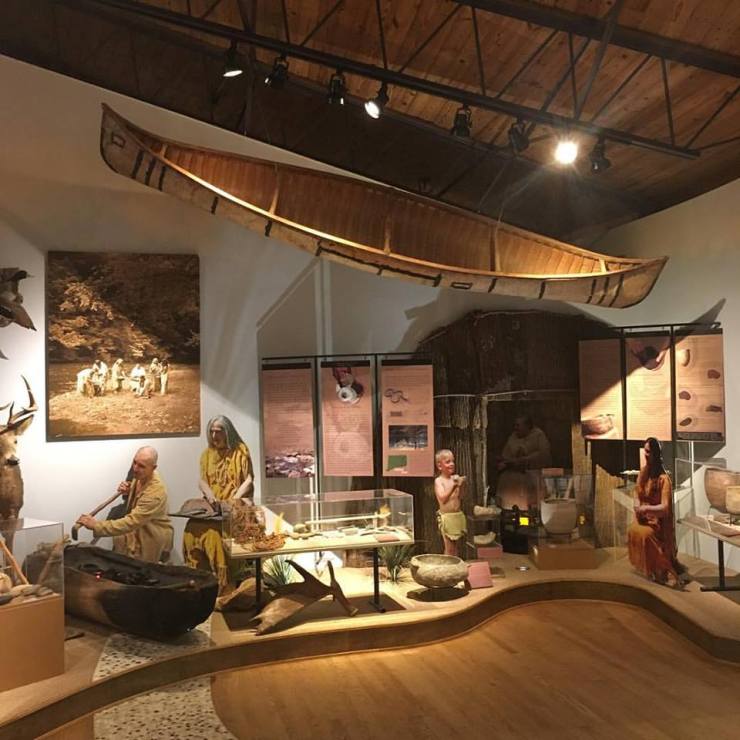
The end of a long winter signals the first in a stream of returning opportunities. It is the time of year when rivers and streams come back to life with the opening of the fishing season. If you have ever wondered what resources Native peoples had access to local waterways, then join Institute for American Indian Studies Educator and Traditional Skills expert, Griffin Kalin, on April 30, at either 11 a.m. or 1 p.m., for a program along the Shepaug River, which boasts a 10,000 plus year history of Native American communities living along its banks. This event will begin at the Institute for American Indian Studies located at 38 Curtis Road in Washington, Connecticut.

Griffin Handfishing

The programs at 11 a.m. and 1 p.m. include an informative hike to the banks of the Shepaug River that borders the Institute’s grounds and runs through Steep Rock Reservation. Through hands-on experiences and engaging demonstrations, participants will get their feet wet with traditional fishing methods including learning how to make and maintain a fish house, and how to make a fish trap from the surrounding environment. Participants will also learn about the production and function of fishing weirs, a technology used by Native American communities that is still widely used today.

Participants will also wade into discussions about the role that turtles, crayfish, freshwater mussels, and edible and useful aquatic plants played in Native American communities that lived along rivers and streams.

Space is limited and pre-registration is required. Visit the website to register, call 860-868-0518, or email events@iaismuseum.org. Tickets are $15 for non-members and $5 for IAIS Members.

Traditional Native American Fishing Tools

About The Institute for American Indian Studies
Located on 15 acres of woodland acres the Institute For American Indian Studies preserves and educates through archeology, research, exhibitions, and programs. They have a 16th c. Algonquian Village, Award-Winning Wigwam Escape, and a museum with temporary and permanent displays of authentic artifacts from prehistory to the present allow visitors to foster a new understanding of the world and the history and culture of Native Americans. The Institute for American Indian Studies is located at 38 Curtis Road, Washington, CT.

Long Island Sound with the Norwalk Seaport Association

At one time, Connecticut and Long Island Sound were covered in a sheet of ice that was part of the Late Wisconsin Glacier which dates to about 18,000 years ago. Long Island Sound was formed when glacial ice tore a huge hole in the land and formed Lake Connecticut. As the sea levels and sediments shifted, the lake receded, making way for the rivers and ocean to take its place, forming what we know today as Long Island Sound. On our way to Sheffield Island Lighthouse, with the Norwalk Seaport Association, we cruise Long Island Sound. We have put together some fun facts about Long Island Sound to think about during your on-the-water adventure.

Sounding Off – Fun Facts!

Technically, Long Island Sound is an estuary getting its water from the Atlantic Ocean, the Thames, Housatonic, Mianus, Mill, Norwalk, Pequonnock, and the Connecticut Rivers.

90% of the freshwater in Long Island Sound comes from three main rivers in Connecticut, the Thames, the Housatonic, and the Connecticut Rivers.

Long Island’s directional positioning is unusual among estuaries in the United States. Most large estuaries are orientated north-south. Long Island Sound has an east-west orientation.

If you draw a straight line down the center, Long Island Sound is approximately 21 miles wide at its widest point and 113 miles long. The amazing thing to remember is that it covers more than 600 miles of coastline because of all the bays and inlets.

Long Island’s surface area is 1300 square miles and contains about 67 billion tons of water.

The deepest channel in Long Island Sound is known as “The Race.” The depth of this channel ranges between 60 feet and 350 feet deep.

This estuary is sheltered from high winds and has two high and two low tides a day, making it perfect for boating. This is one of many reasons why our cruise to Sheffield Island is so pleasant.

Long Island Sound is Connecticut’s most important natural resource according to the Department of Energy and Environmental Protection (DEEP). More than eight million people live in Long Island Sound’s watershed area. The recreational activities enjoyed along the Connecticut coast generate more than $5.5 billion per year.

DEEP also notes that Long Island Sound provides feeding, breeding, and nesting areas for a diversity of plants and animals. It is home to 120 species of finfish and countless birds.

To learn more about the Long Island Sound watershed area and for a Connecticut Coastal Access Guide, click https://www.depdata.ct.gov/maps/coastalaccess/index.html

Acorn Button Club Antique Roadshow @ Naugatuck Historical Society

The Naugatuck History Museum at the Tuttle House is excited to be hosting the Acorn Button Club Antique Roadshow on April 23 @ 2 p.m. This program is free and open to the public and will be held at the Naugatuck History Museum at the Tuttle House. The Tuttle House is the backdrop for this exhibit. Listed on the National Register of Historic Places, this 1882 Queen Anne-style mansion provides an authentic space to tell the story of invention and enterprise that created employment for many and great wealth for the few. It is located on 380 Church Street in Naugatuck.

The Acorn Button Club will share a collection of antique buttons, their history, and the art of button making. Guests are invited to bring in their own buttons and discover the history and craft that went into making the button.

The Acorn Button Club is dedicated to sharing and preserving the amazing history of these tiny pieces of art. Naugatuck’s own button history goes back to before this town was even called “Naugatuck.”

Norfolk Connecticut’s Husky Meadows Farm Celebrates Earth Day

Husky Meadows Farm, located in Norfolk, Connecticut kicks off its 2023 season of events with a weekend-long Earth Day Celebration from Friday, April 21 through Sunday, April 23. While primarily an organic market garden, the entirety of Husky Meadows Farm includes 300 acres of mixed native meadows, woodlands, hay fields, and an orchard. Earth Day offers the perfect opportunity for visitors to explore the whole farm ecosystem.

Guests can join for a full weekend farm stay that includes overnight lodging, meals, a farm tour with farmer Brett Ellis, a wild foods cooking class with Culinary Director Tracy Hayhurst, and a tour of the farm’s apiaries with Dan Watkins of Beeworks, LLC, as well as break-out sessions that are also open to the public. Husky Meadows is delighted to offer these sessions with acclaimed teachers from the community to help guests identify ways to create healthy ecosystems for flora and fauna in their own backyards.

On Friday, April 21, from 6 p.m. to 7:30 p.m., Husky Meadow Farms will host a screening of “What’s the Rush.” The film, presented by co-founder Michelle Alfandari features the work of Homegrown National Park®, a grassroots movement to increase biodiversity one person at a time. In the film co-founder renowned ecologist Doug Tallamy, a New York Times best-selling author and leading voice on solving the biodiversity crisis, showcases the importance of creating new ecological networks by replacing invasive plants with native plants, right in your own backyard. Alfandari will lead a Q&A after the film when light refreshments will be served. This event is open to the public at the Norfolk Hub @ 2 Station Place in the center of Norfolk.

On Saturday, April 22, from 10 a.m. to 1 p.m., Mike Nadeau will present “Native Grasses and Wildflowers.” There is a limited number of individual tickets for the program, Mike is a leading authority in the field of sustainable and ethical land care strategies and the co-founder of NOFA’s Organic Land Care Program. Mike recently transformed one of the fallow pastures at Husky Meadows into a native grass and wildflower meadow while using only organic methods and materials. He’ll use this meadow as the backdrop for his discussion.

On Sunday, April 23, from 11 a.m. to 1 p.m., the farm presents brunch with author and gardener, Page Dickey, well known for her books, “Uprooted” and “Embroidered Ground.” Page has rich experience with classical horticulture and a deep understanding of the interdependent nature of native plants and pollinators. Page will share how these elements can complement each other in one’s home landscape and gardens.

For more information, event tickets, and farm stay bookings visit huskymeadowsfarm.com or email tracy@huskymeadowsfarm.com

About Husky Meadows Farm

Situated on three hundred bucolic acres in Norfolk, Connecticut, Husky Meadows Farm grows certified organic produce for its kitchen, farm stand, and community-supported agriculture membership. The farm kitchen offers year-round prepared foods. At the height of the growing season from May – October the farm also offers intimate farm stays, cooking classes, community dinners, and special workshops on a variety of farm-to-table and ecological topics.

Connecticut’s Beardsley Zoo Has –One, Two, Three…Four! River Otter Pups

Connecticut’s Beardsley Zoo is happy to announce the birth of four North American river otter pups (Lontra canadensis), born on March 23, 2023. After a two-month gestation period and a few days past her fourth birthday, Tahu gave birth to her litter of four. Freshwater river otters give birth on land, in dens, where the pups remain secluded with their mother for a period of about eight weeks.

The pups underwent a quick neonatal exam on Wednesday, March 29 by the Zoo’s animal care staff, ensuring that all four pups were of adequate weight and healthy. The birth is part of the Association of Zoos and Aquariums (AZA) Species Survival Plan (SSP) Program, designed to maintain a healthy, genetically diverse, and demographically stable population for the long-term future. The Zoo allows animals to exhibit natural behaviors, so first-time mother Tahu is being given space to raise her litter without staff assistance.

“This is a great time of year to visit the zoo and witness the new life that spring brings — whether it’s new baby animals or the beautiful flowers that are in bloom,” said Zoo Director Gregg Dancho. “River otters are extremely active and playful animals so it will be a great deal of fun for guests to watch the four pups grow. We are more than grateful that Sedge and Tahu were able to produce offspring and that they are doing so well.”

Tahu came from the Woodland Park Zoo in Seattle, Wash. in December 2020. The otter pups’ father, Sedge, died last month. His necropsy, standard for all animals who pass from an undetermined illness, is being performed by the Pathology Lab at the University of Connecticut. In the wild, female river otters raise pups on their own, so Tahu is well-equipped to care for the family without a mate.

About North American River Otters

As a species, river otters have suffered from habitat loss, water pollution, and fur trapping. Their numbers are on the rise due to reintroduction programs in parts of the U.S., better water quality, and protection of their habitat. River otters, members of the weasel family, can run on land as well as swim. They are playful and agile athletes, sliding down hills of mud or snow to land with a splash in the water. Their tail is muscular and comprises up to 40 percent of the otter’s body length. They can move through the water as fast as eight miles per hour and can dive to 36 feet. Found throughout most of North America, the river otter lives in aquatic habitats: streams, rivers, lakes, ponds, and marshes. They prefer unpolluted water with minimal human disturbance.

About Connecticut’s Beardsley Zoo

Get your ticket to adventure! Connecticut’s only zoo, celebrating its 101st year, features 350 animals representing primarily North and South American and Northern Asian species. Guests won’t want to miss our Amur tiger and leopards, maned wolves, Mexican gray wolves, and red wolves. Other highlights include our Spider Monkey Habitat, the prairie dog exhibit, and the Pampas Plain with giant anteaters and Chacoan peccaries. Guests can grab a bite from the Peacock Café and eat in the Picnic Grove. As an accredited member of the Association of Zoos and Aquariums (AZA) and participant in its Species Survival Plan (SSP) programs, the non-profit Zoo is committed to the preservation of endangered animals and wild habitats. Tickets must be purchased on the Zoo’s website at beardsleyzoo.org.

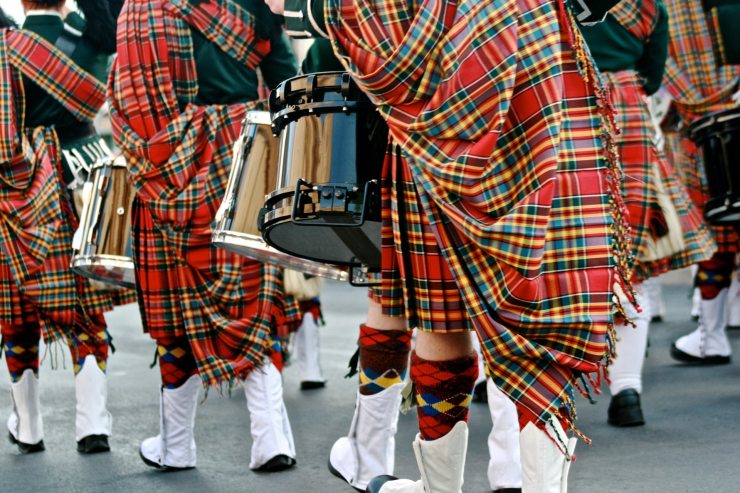
BraeVal in Litchfield has Ideas how to Celebrate National Tartan Day!

There are many ways to celebrate National Tartan Day on April 6, even if you aren’t Scottish! One of the most unique places to honor National Tartan Day, or get ready for it, is in the center of Litchfield, Connecticut, at a shop called BraeVal that specializes in custom-designed tartans. This exclusive shop is owned by Gregor McCluskey, whose great uncle, Big Jock McCluskey, brought the Rob Roy MacGregor Tartan to America in the 1800s.

Today, we know this tartan pattern as “Buffalo Plaid” – which is authentically and ancestrally reproduced by BraeVal on the cuffs and collar of every custom tartan shirt sold here. What makes BraeVal’s shirts different is that they are custom tartan designs made from technically advanced proprietary, all-natural Tierra fabric that is ring spun out of merino wool and long-staple cotton.

The shop’s name is of Scottish origin too. BraeVal is a Scottish word for the Upland River Valleys that exist between the mountains and the rugged brae of the Scottish Highlands, where streams and rivers tumble to the loch and sea. At this shop, Tartan Day is a year-round celebration! That said, Gregor McCluskey, founder of BraeVal, has a few great suggestions on ways to celebrate National Tartan Day.

His first suggestion is to enjoy trying traditional Scottish food like haggis, Scottish pie, smoked salmon, tatties (mashed potatoes), herring, shortbread, and a wee dram of whisky! To add to the conviviality of the meal, play your favorite Scottish or Celtic tunes, they add so much atmosphere and fun.

To add to your celebration, watch your favorite Scottish movie. An oldie but goodie is Whisky Galore, a comedy where Scottish islanders try to plunder 50,000 cases of whisky from a stranded ship. According to The Scottish Statesman, two of the top movies about Scotland include The Angel’s Share, set in Glasgow, which tells the tale of a father that narrowly avoids jail and visits a whisky distillery to find inspiration, and the classic, Highlander which follows the adventures of the immortal warrior of Clan MacLeod.

Another suggestion is to have a poetry reading – reciting Robert Burns of course! Or, read portions of the Declaration of Arbroath to see why the founders of our country were inspired. “As long as but a hundred of us remain alive, never will we on any conditions be brought under English rule. It is in truth not for glory, nor riches, nor honors, that we are fighting, but for freedom – for that alone, which no honest man gives up but with life itself.”


About National Tartan Day

Did you know that National Tartan Day is celebrated in the United States on April 6 in honor of Scottish heritage? This date is a special commemoration of the Declaration of Arbroath, which was a letter written by the nobles of Scotland to the Pope in 1320. The letter asked the Pope to recognize Scotland as an independent kingdom from England that was attempting to subjugate it and recognize Robert Bruce, as the country’s legitimate king. What many people don’t know is that the Declaration of Arbroath was the foundation for the Declaration of Independence when America declared itself free of British rule. Today, over 11 million Americans claim Scottish and Scottish-Irish roots, making them the eighth-largest ethnic group in the United States.

About BraeVal
BraeVal is a lifestyle brand of clothing that has endured for generations. It is an American design born of comfort that offers time-tested classics in the Scottish tradition.