A Touch of Monet’s Giverny @ Norfolk’s Husky Meadow Farm’s Art and Cooking Intensive Farm Stay

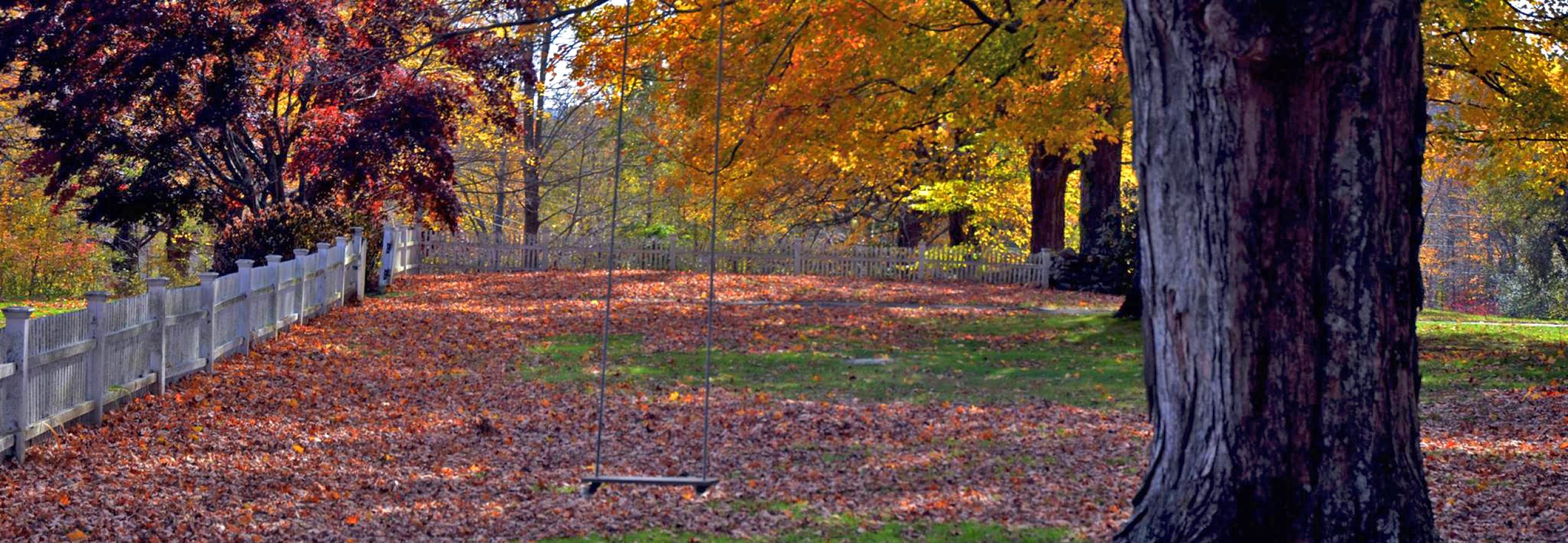
October is the crown jewel of months in New England which is why Husky Meadows Farm, a certified organic working farm, in Norfolk, Connecticut has put together a farm stay that embraces the beauty of the season through art, cooking, garden walks, and the harvest. At the Fall Art Intensive Farm Stay with Marie Colette-Dupont-Nivet from Thursday, October 12 through Monday, October 16, guests will be treated to a French countryside experience inspired by Claude Monet’s Giverny in France in New England.

Take an art class this fall at Husky Meadows Farm

Like Monet’s fabled home, the autumn landscape of Husky Meadows Farm’s colorful gardens and orchards inspire a sense of serenity making them the perfect setting for an art workshop with Marie Colette-Dupont-Nivet originally from the storybook area of Alsace, France. Her specialty is decorative furniture painting in the historical tradition of using milk paint on wooden panels.

Milk Paint is a traditional way to update old furniture or give new pieces a rustic, farmhouse finish, which is so popular today. Participants will learn that milk paint is made with natural ingredients like lime, casein (a milk protein), and clay, unlike regular paint. Marie-Colette will guide participants through the process of making a decorative wooden piece that they will take home as a memento of this artistic experience. A highlight of the class will be to learn how to match the wood grain with pigments, how to marbleize, and, how to paint a landscape of flowers on wood using milk paint. To finish this project, Marie Colette will guide participants through the different techniques of glazing, varnishing, and waxing to complete the final look of the piece.

To add to the country French ambiance, there will be plenty of time to explore the property, engage in the rich bounty of the harvest, and participate in hands-on French-style cooking classes. Sunday night’s dinner will be a highlight of the stay because it will feature a sumptuous meal made from Monet’s recipes from Giverny that were once served in his famed yellow dining room. Sunday night’s dinner will be long cherished as the next best thing to sitting at Monet’s table!

Guests will enjoy the comfort of Husky Meadows’s luxurious suites; each offers something a little different. The Coop is the most private cottage with a fieldstone fireplace and loft bedroom. Wildflower is spacious and beautifully appointed with a private porch overlooking a wildflower meadow; and Wolftree’s arched ceiling, views, and steam shower make it cozy.

Farm Stays include all meals, beverages, and activities. The Fall Art Intensive is $2500 per person, single occupancy, for the all-inclusive experience. A non-lodging rate that includes all activities and meals is $1200 per person. To book the farm stay, visit huskymeadowsfarm.com or contact the Culinary Director at tracy@huskymeadowsfarm.

About Husky Meadows Farm
Situated on three hundred bucolic acres in Norfolk, Connecticut, Husky Meadows Farm grows certified organic produce for its kitchen, farm stand, and community-supported agriculture membership. The farm kitchen offers year-round prepared foods. At the height of the growing season from May – October the farm also offers intimate farm stays, cooking classes, community dinners, and special workshops on a variety of farm-to-table and ecological topics.

Glow Wild Lantern Festival @ Beardsley Zoo

Tickets are on sale now for Connecticut’s Beardsley Zoo’s second “Glow Wild” Lantern Festival. Beginning September 14 and continuing through December 2, “Glow Wild,” a brilliant, illuminated Lantern Festival will be held at the Zoo Thursday through Sunday evenings. Even larger than last year, this incredible evening festival will showcase more than 53 large-scale illuminated sculptures that will amaze guests of all ages.

The “Glow Wild” Lantern returns this year following overwhelming popular support last year, and is designed for everyone to enjoy, whether a family outing, romantic date, or coworker get-together. The festival will run from 5:30 p.m. to 9:30 p.m. Thursdays through Sundays. Timed tickets should be purchased online at beardsleyzoo.org in advance, offered in half-hour increments. A small number of tickets may be available at the door, depending upon Zoo capacity.

Adult tickets (ages 12 +) are $22., and Children (11 and under) are $20. Children two and under and adults 76 and over are free. Wheelchairs and strollers will be available to rent. Donuts, pretzels, coffee, cider and other beverages will be available at the Peacock Café’s side window.

The Glow Wild Sponsor is The Ernest & Joan Trefz Foundation and the elite sponsor Avangrid (UI, SCG). Select Sponsors are AARP CT, Barnum Festival, Coca-Cola Northeast, Liberty Bank, M&T Bank, R.D. Scinto & the Emanuel Family, and Webster Bank. Support Sponsors are Barker Specialty and Gold Fish Swim. “We are grateful to all of our Glow Wild sponsors,“ Zoo Director Gregg Dancho said. “Their generous support allows us to bring this unforgettable experience to the Zoo.”

About Connecticut’s Beardsley Zoo
Get your ticket to adventure! Connecticut’s only zoo, celebrating its 101st year, features 350 animals representing primarily North and South American and Northern Asian species. Guests won’t want to miss our Amur leopards, maned wolves, Mexican gray wolves, and red wolves. Other highlights include our new Andean Bear Habitat, Spider Monkey Habitat, the prairie dog exhibit, and the Pampas Plain with giant anteaters and Chacoan peccaries. Guests can grab a bite from the Peacock Café and eat in the Picnic Grove. As an accredited member of the Association of Zoos and Aquariums (AZA) and participant in its Species Survival Plan (SSP) programs, the non-profit Zoo is committed to the preservation of endangered animals and wild habitats. Tickets must be purchased on the Zoo’s website at beardsleyzoo.org.

Finger Weaving Workshop offers Native American Instruction @ Institute for American Indian Studies Sept. 23, 2023

Most archeologists believe that the art of basket making is one of the oldest crafts in the world. In Native American culture, baskets have always been an integral part of their material culture. For centuries Native Americans have relied on baskets for gathering, storing, preparing, and cooking food. Finger weaving is one of several techniques used among Eastern Woodland Indigenous peoples to make baskets as well as an array of decorative and ceremonial items.

Make a Native American Inspired Basket

On Saturday, September 23 at 1 p.m. the Institute for American Indian Studies at 38 Curtis Road in Washington Connecticut is holding a finger-weaving basket workshop, ideal for those who want to learn this traditional art form. “We think that experiences learning about cultural art forms is important because it gives people insight into Native American culture, “ said Chris Combs, Executive Director.

The focus of September’s class is on the art of finger weaving using natural fibers like jute and raffia. Participants will join Pokanoket Nation and Tribe member, Eva Newell of Cape Sable Island Wampanoag, Nauset, and Cree ancestry for this finger-weaving workshop.

The essence of finger weaving is that it is like an elaborate braid where you move the warp and weft threads with your fingers in order to create beautiful baskets. What makes finger weaving unique is that the same threads are used for both warp and weft; they just change places as you work. In this finger-weaving workshop, two of the most important things participants will learn are how to position their fingers and the best way to hold their hands. Each participant will take home a small finger woven traditionally inspired coil basket.

Have fun embellishing your basket

This workshop is recommended for those 12 and older because of the patience and dexterity required for this project. Space is limited and pre-registration is required. The cost of the workshop, which includes all materials, is $35 for non-members and $30 for members. To register visit http://iaismuseum.org, For questions, email events@iaismuseum.org.

The Amistad Comes to the Norwalk Oyster Festival Sept. 8,9,10

In addition to three family fun-filled days of entertainment at the Norwalk Oyster Festival like the WOW Water Circus and Canines in the Clouds, food, arts and crafts, and riveting performances by Gary LeVox, lead singer of Rascal Flatts, Mullett the nation’s best 80s band, and John Cafferty and the Beaver Brown Band, the historic Amistad will be docked in Norwalk Harbor adjacent to Veterans Park where the festival is taking place. All ticketed festgoers are invited to tour this amazing vessel for free at this year’s Oyster Festival. The enslaved African captives aboard the Amistad initiated the most famous slave ship rebellion in American history.

Illegally Sold into Slavery

The story of the Amistad and Connecticut are historically entwined in an extraordinary way. It all began in February 1839, when Portuguese slave hunters abducted hundreds of Africans from Mendeland, in present-day Sierra Leone, and transported them to Cuba, then a Spanish colony. At that time, the importation of enslaved people and the transatlantic slave trade were illegal in the United States and in Great Britain. Unfortunately, Havana, Cuba remained an important trading hub supplying plantations in the Caribbean with enslaved people.

When the slave ship, the Tecora reached Cuba, two plantation owners, Pedro Montes and Jose Ruiz purchased 53 of the transported Africans as enslaved workers. Soon after their purchase, they set sail on the Amistad, for their plantation in Puerto Rico. Ironically, the name of the vessel, Amistad means “Friendship.”

Color Engraving and Frontispiece from John Warner Barber (1840). A History of the Amistad Captives. New Haven, Connecticut: E.L. and J.W. Barber, Hitchcock & Stafford, Printers.

Uprising at Sea

A few days into the journey Joseph Cinque, one of the enslaved Africans managed to get out of the shackles and helped other captives to get out of theirs. Armed with knives, they seized control of the Amistad, killing the captain and the cook.

After seizing control, they ordered Montes and Ruiz to turn the ship back to Africa. Secretly, at night, Montes and Ruiz changed the course of the vessel, in hopes of being rescued, and sailed it through the Caribbean and up the eastern coast of the United States.

The Amistad docked in Long Island to get provisions and was spotted by the U.S. brig Washington on August 26, 1839. The Amistad was seized by the Naval Officers on the Washington and the enslaved were put back in chains and brought to Connecticut, which was still a slave state at that time. The naval officers claimed salvage rights to the ship and its enslaved cargo.

Contemporary painting of the sailing vessel La Amistad off Culloden Point, Long Island, New York, on 26 August 1839; on the left the USS Washington of the US Navy

Battle in Court

Cinque and other Africans who helped him with the revolt on the Amistad were imprisoned in New Haven and charged with murder and piracy. With the help of influential abolitionists, the charges were dropped. However, a legal battle ensued regarding the legal status of the enslaved captives and property claims between the naval officers of the boat, the Washington, the Spanish government, and Montes and Ruiz.

The President of the United States at the time, Martin Van Buren wanted to extradite the Africans to Cuba to pacify Spain. The defense team for the Africans enlisted a professor who studied languages from Yale University to determine what language the Africans spoke so that they could tell their story. On the waterfront of New York, they found a man who spoke their language and brought him to court to interpret their story for the first time.

In January 1840, a judge in Hartford, Connecticut, in defiance of President Van Buren, who thought the court would rule in his favor, ruled that the Africans were not Spanish enslaved peoples, but rather, that they were illegally captured and should be returned to Africa, not to Cuba. This decision was appealed and eventually was heard in the Supreme Court. The defense team enlisted the help of former President, John Quincy Adams who had successfully argued cases before the Supreme Court and had a strong anti-slavery voice in Congress. Adams argued that these enslaved Africans had the right to fight for their freedom aboard the Amistad, in accordance with the Declaration of Independence, and accused Van Buren of abusing his executive power.

Sketch of an Amistad prisoner, drawn as they awaited trial in New Haven.

The Outcome

On March 9, 1841, the Supreme Court ruled 7 to 1 that the enslaved Africans did have the right to fight for their freedom aboard the Amistad, and that the court deemed them to be free. However, the U.S. government did not allocate funds to repatriate the Africans to their homeland and, awarded salvage rights to the naval officers on the Washington, not to the Spanish or the Africans.

Many abolitionists supported these freed Africans and raised sufficient funds to pay for their return trip to their homeland in Africa. Although some of the Africans died at sea and others died in prison awaiting trial, in November of 1841, 43 surviving Africans boarded the vessel called The Gentleman along with five Christian missionaries in New York and headed for home. Upon reaching their homeland all but four children returned to their families and vanished from historical records.

For tickets to the Norwalk Oyster Festival http://www.seaport.org

Orchard Farm Stay at Husky Meadows Farm

September at Husky Meadows, a certified organic working farm, is a very special time to experience a farm stay. The gardens and orchards are brimming with fruits, vegetables, and flowers, just as the leaves are beginning to turn. The Orchard Farm Stay taking place from Friday, September 22 through Sunday, September 24 invites guests to enjoy the season in a beautiful setting on this small New England farm.

Farm stays include two nights lodging in one of four elegantly appointed and very private guest suites. A favorite among guests is the Pergola Apartment because it has two bedrooms and ensuite bathrooms, a sitting area, a kitchenette, and even a balcony. This totally separate guesthouse is perfect to book with four friends or family members. Another favorite guesthouse is called The Coop, which is the most private of all the rooms. It has a cozy loft bedroom and a large sitting room replete with a rustic stone fireplace. All meals with beverages and cocktails are included in the farm stay package. Highlights of the package include a Friday night welcome dinner around a communal table, light breakfast, and lunch, a Saturday evening cooking class dinner, and a sumptuous and healthy Sunday brunch.

The Coop

During the Orchard Farm Stay, guests will have the opportunity to go into the garden and harvest its bounty with Farmer Brett, who tended the gardens at California’s famous restaurant, The French Laundry. There will be a cider-making donut class and a pie-making class with Tracy Hayhurst, the farm’s Culinary Director followed by a Hard Cider Tasting that features the best hard
ciders made in the Northeast.

The two-acre orchard at Husky Meadows Farm is a treasure trove of peaches, plums, pears, and too many types of apples to name. A highlight of the weekend will be the Saturday night cooking class that combines fruit from the orchard into a mélange of savory dishes inspired by the harvest. Guests will be amazed at the number of ways there are to incorporate fruit into savory dishes. Cooking is an art and the classes at Husky Meadows Farm are designed to help guests make magic in their kitchens long after the weekend is over.

To book the Orchard Farm Stay visit huskymeadows.com.

About Husky Meadows Farm
Situated on three hundred bucolic acres in Norfolk, Connecticut, Husky Meadows Farm grows certified organic produce for its kitchen, farm stand, and community-supported agriculture membership. The farm kitchen offers year-round prepared foods. At the height of the growing season from May – October the farm also offers intimate farm stays, cooking classes, community dinners, and special workshops on a variety of farm-to-table and ecological topics.

Savor Indigenous Foods @ the Founders Clambake September 16 With the Institute for American Indian Studies

Lobsters, clams, corn, and potatoes are all hallmarks of Indigenous foods and every September, the Institute for American Indian Studies celebrates the bounty of New England and its waterways with a Founders Clambake. This year, on Saturday, September 16, from 6 p.m. to 8 p.m. the public is invited to the annual Founders Clambake. The location for the event is 11 a School Street in Washington Depot.

Guests will experience a sumptuous seafood feast while enjoying drumming and dancing performed by the members of the Redhawk Indigenous Arts Council. Traditional dances are combined with stories that have thrilled audiences around the globe and are sure to be the highlight of this event. In addition to being invited to dance with the troupe, guests will have the opportunity to meet the dancers and learn about the importance of dancing, regalia, and music to indigenous peoples.

Brought back by popular demand, the Institute is also holding a Silent Auction during the clambake. Auction items will be on display during this event and winning bids will be announced after the dancers’ performance.

To attend this festive event that gives thanks to the many members, visitors, and volunteers who have made this museum a success for 45 years register online at https://www.iaismuseum.org by September 14. Tickets are $60 per person for members and $65 for non-members and include a lobster dinner. A children’s menu is offered for $10 and includes hot dogs, chips, and lemonade. No tickets will be sold at the door.

About the Institute for American Indian Studies

Located on 15 acres of woodland acres the Institute For American Indian Studies preserves and educates through archeology, research, exhibitions, and programs. They have the 16th c. Algonquian Village, Award-Winning Wigwam Escape, and a museum with temporary and permanent displays of authentic artifacts from prehistory to the present allows visitors to foster a new understanding of the world and the history and culture of Native Americans. The Institute for American Indian Studies is located at 38 Curtis Road, Washington, CT.

About the Redhawk Indigenous Arts Council

Formed in 1994, this non-profit organization founded by Native American artists and educators is dedicated to educating the general public about Native American heritage through song, dance, works of art, and other cultural expressions.