Gilded Age Redux @ Lockwood Mathews Mansion

In addition to touring this magnificent mansion the Lockwood Mathews Mansion Museum on 295 West Ave. in Norwalk in collaboration with the Rowayton Arts Center, will present Gilded Age Redux, a juried group exhibition through Jan. 7, 2018, 12-4 p.m.

GILDED AGE REDUX Exhibit, 2017, Lockwood Mathews Mansion Museum, Norwalk CT.

This exhibit of original artwork is focused on today’s interpretation of the 19th century Gilded Age. Lockwood-Mathews Mansion Museum invited RAC artists to interpret this turbulent yet seminal period of recent American history and draw parallels with today’s social, political, and economic environment. The resulting works selected for this exhibit span the spectrum, from traditional-style still life paintings, to posed photographic references, to purely abstract gestural images, demonstrating the rich vein of material that the Gilded Age contains.

Juried and curated by Trustees Julyen Norman and Gail Ingis, the exhibition will feature artists: Sandra Farley Aldrich, Bridget Cusack, Dawn Dahl, Jo Ann Davidson, Katherine Draper, Laure Dunne, Sawyer Hanlon, Judy Katz, Emily Kelting, Dana Laird, Heidi Lewis Coleman, Judy Noel, Pamela Tucker, and Richard Ventre.

The Lockwood-Mathews Mansion Museum is a National Historic Landmark. The exhibit will be on view as part of LMMM’s tours. For more information on schedules and programs please visit: www.lockwoodmathewsmansion.com, e-mail info@lockwoodmathewsmansion.com, or call 203-838-9799.
Explore the Barn and Quilt Train in New Milford

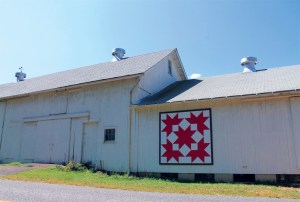
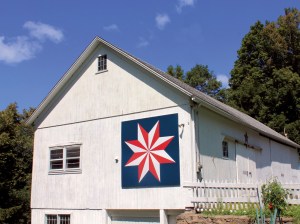
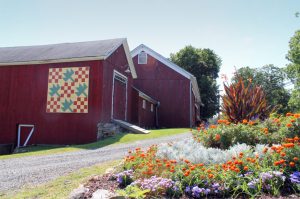
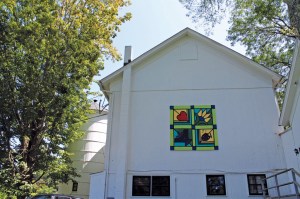
There is something quintessentially New England about barns, stone walls, and quilts and if you are a fan, you just might explore the New Milford Barn Quilt Trail. This trail is a self-guided tour that consists of eight colorful quilt patterns painted on large wood blocks that are hung on antique and vintage barns around New Milford.

The idea of the trail is to honor the rich agricultural history of Litchfield Hills, the exciting resurgence of farming in New Milford today and the American tradition of quilt-making. It is the first barn quilt trail to be established in Connecticut.
There are eight barns on the trail.

Hunt Hill Farm Trust
44 Upland Road
A country cultural and culinary nonprofit is housed in a repurposed 19th-century bank barn. It was founded in the early 21st century by famed bandleader Skitch Henderson and his wife, Ruth, with a mission of “cultivating love of the land, food and the arts.” The red heart on the upper left corner of the barn quilt block symbolizes love; the flower in the upper right corner, the land; the basket of fruits and vegetables in the lower left corner, food; and the artist’s palette and musical notes in the lower right corner, the arts. The 137-acre farm was established by the Hendersons in the 1970s by combining two farms formerly owned by the Hine and Buckingham families.

Holstein Cow, Wieting Farm
19 Wheaton Road
The design was inspired by “Patriotic Cow,” by quilter Mary Henzel of Oberlin, Kansas, although the Wieting cow design is black and white, rather than the original brown. This is because the Wietings have maintained a dairy herd of black and white Holsteins at the farm for more than 40 years. The English-style barn was rebuilt in the 1920s after a fire when it was part of the Carlson Farm. The current barn was built on the same footprint and incorporates some surviving timbers of a barn possibly from the 19th century.

Maple Leaves, Smyrski Farm
227 Merryall Road
The quilt depicts a solid eight-pointed star in its center with stylized maple leaves in each corner. The design symbolizes maple syrup production, one of the several agricultural items produced there today. A dairy operation until the mid-1980s, the farm is named for Adam Smyrski, who emigrated from Poland in the early 1900s. It was donated to Weantinoge Heritage Land Trust Inc., Connecticut’s largest land trust. In 2008 by the last remaining Smyrski children. The 220-acre property produces hay, livestock and maple syrup and hosts environmental education programs.

North Star, Lillis Farm
241 Litchfield Road (Route 202)
The quilt block, with its popular North Star quilt square design, is hung on a white barn that originally housed workhorses. The year 1929 appears on two of the barn doors. A nearly identical dairy barn stands a few hundred feet to the south. The farm is no longer actively worked.

Maple Leaf, Sullivan Farm
140 Park Lane Road
This barn quilt block design, adapted from a popular 1880 design, highlights maple syrup production, one of several agricultural goods produced there today. High school and college students tap maple trees throughout southern Litchfield County in late winter, producing maple syrup at the on-site sugarhouse. The landmark barn, on which the barn quilt block is hung, was built in 1869 by William Sullivan. He was the great-grandfather of Jake Sullivan, who sold the dairy farm to the town, stating in the deed that the farm always be used to benefit the community. Today, young interns at the repurposed farm grow a wide range of produce that is sold at the on-site farm stand, through area farmers markets, and in local specialty grocery stores.

Five Leaves, Bright Green Farm
173 Ridge Road
The five different leaves depicted on this barn quilt block are rich in meaning for the Duffy-Reisberg family, who purchased this antique farm in 2016. The chestnut leaf in the upper left corner represents historic Chestnut Land, the name of the 19th-century district of the original subsistence farm, which belonged to the Canfield Family. The birch leaf in the lower left corner represents the Duffy-Reisbergs’ heritage in Eastern Europe, where birch trees abound. The maple leaf in the lower right corner is a nod to the mature maple trees that line the driveway. The apple leaf in the upper right corner commemorates the apple trees on the farm that legend holds were planted sometime after the Civil War. According to Karen Duffy, the bright green elm leaf in the center of the design symbolizes Mother Earth, signifying the “bright green” school of environmentalism that focuses on sustainability, a core value at the farm.

For a free monthly newsletter on Litchfield Hills and Fairfield County visit www.litchfieldhills.com

Stone Wall Week October 25 – 29 @ Weir Farm

Back by popular demand, Weir Farm National Historic Site is offering Stone Wall Tours during our first ever Stone Wall Week! Even better than Shark Week, Stone Wall Week provides visitors the opportunity to learn more about the park’s historic stone walls during special guided hikes every day.

Join Park Ranger Joe Trapani on a ramble through the fields of Weir Farm National Historic Site to examine the three different types of stone walls on the property and learn about their rich history. The stone walls not only provide an opportunity to explore New England’s geologic and cultural past, but they have also served as a source of inspiration to the artists that have lived and visited here for over 135 years. Join us for a tour during Stone Wall Week, then stick around and create a sketch or painting with our free-to-use supplies!

Tours will be offered daily at 10:00 am Wednesday October 25th through Sunday October 29th. No registration is required, but parking is limited, so please carpool if possible.

Location: Weir Farm National Historic Site, 735 Nod Hill Road, Wilton, CT 06897. Meet outside of the visitor center at 10:00 am.
For more information visit www.nps.gov

About Weir Farm National Historic Site

A National Park for the Arts, Weir Farm National Historic Site welcomes you to experience creativity, art, and nature. Explore the only national park dedicated to American painting and rediscover the beauty of light and color in everyday life. The 60-acre park, which includes the Weir House, Weir and Young Studios, barns, gardens, trails, meadows, and Weir Pond, is one of the nation’s finest remaining landscapes of American art. Learn more at http://www.nps.gov/wefa and visit us on Facebook http://www.facebook.com/WeirFarmNHS, YouTube http://www.youtube.com/WeirFarmNHS , and Instagram @WeirFarmNHS.

Colonial Cookery and Customs for Kids at the Wilton Historical Society

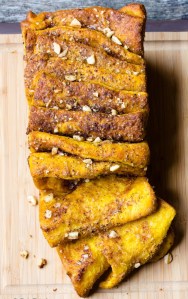
Rustic breads of mixed grain meals and flours formed an early American baking tradition. Thirded bread was one-third wheat, one-third Indian meal (corn/maize) and one-third rye. With the addition of pumpkin, this Early American “make do” recipe was a type of Boston brown bread. On Saturday, October 28 from 11:00 – 12:30 the Wilton Historical Society will be holding a Colonial Cookery and Customs Workshop for Kids, and the focus will be on the daily task of making bread. Museum Educator Lola Chen will be showing the children how to make Thirded Bread with Spiced Pompion (pumpkin), and sampling some fresh and warm from the oven.

The Colonial Cookery and Customs for Kids workshop at the Wilton Historical Society teaches kids a “reciept” (recipe) used in the Connecticut region. While the food is prepared, they hear about Colonial manners, morals, and way of life. The monthly workshops feature relatively simple dishes made with local, seasonal ingredients, adapted for modern kitchens. All participants will sample their own cooking and take home recipe cards – as well as any leftovers! The children will learn how a Colonial kitchen would have operated, in order to appreciate the modern conveniences we take for granted. Previous sessions have made bannock cakes, pease porridge, pickles, an amulet of green peas, apple tansey, fairy butter, pumpkin bread, cranberry shortbread, New Year’s “cakes”, New England chowder, hand pies, cheese and ramp soufflé, and pea and watercress Rappahannock, and blackberry maslin. Suggested for ages 6 – 12.

Members: $10; Non-members $15. Space is limited — please register by contacting info@wiltonhistorical.org or call 203-762-7257.
The Wilton Historical Society, 224 Danbury Road/Rt. 7, Wilton, CT 06897 http://www.wiltonhistorical.org

Did You Know?
After our Revolution, pearlash-leavened thirded bread became popular throughout the Colonies, particularly one known today as Boston brown bread. Since that time, the bread’s fundamental elements have not changed: rye meal, cornmeal, and graham flour mixed with water—later milk or buttermilk—and molasses and baked in a mold. There are hundreds of variations on classic thirded bread, but the basic elements of rye, wheat, corn, cane, and pumpkin appear in different iterations throughout the vast scape of recipes over the last four centuries. The triple-blend concept was not new to America. In 1792, some Parisian bakers were baking “Bread of Equality,” a combination of brown, white and rye grains.

New Show @ Washington Art Association

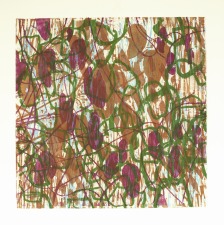
The Washington Art Association & Gallery located in 4 Bryan Plaza in Washington Depot is pleased to present “On The Edge,” an exhibition featuring monoprints by John Thompson through November 10.

John’s work has always reflected his keen interest in the natural world. Today, he is finding it increasingly important to be making images that speak to the fragility of our world. His concerns about the climate crisis compel him to find and appreciate the fleeting beauty and sanctity of our natural environment. Our world is precious and we should celebrate what surrounds. We need to cherish what we have and fight to keep what might be lost.

John teaches printmaking at Massachusetts College of Art & Design, Framingham State University, Danforth Museum, The Washington Art Association & Gallery, and other workshops in the region. He also works with master printers: Peter Pettengill at Wingate Studio, Hinsdale, NH, and Susan Oehme of Oehme Graphics, Steamboat Springs, CO.

Zombie Ball @ The New England Carousel Museum

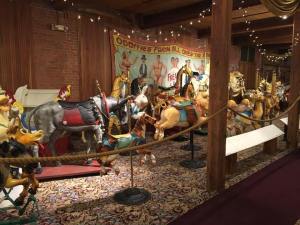
The New England Carousel Museum is throwing its second annual Zombie Ball on Friday, October 27, 2017 in celebration of the Halloween season, this time with the help of the Central Connecticut Chambers’ Young Professional Organization, PYVOT. This 21-plus event begins at 8:00 PM with a Coney Island Freak Show in honor of the exhibit INK: The History and Ritual of Tattoo & Body Art.

The ghastly evening continues as the undead make their way up to our haunted ballroom at 9:00PM for dancing and other spooktacular festivities. Toast the witching hour with us when the clock strikes midnight, as this hair-raising party goes until 1:00AM. Come in your zombie best or other spooky attire, all costumes are welcome -however, zombies are highly encouraged. Prizes will be awarded for the best costumes, zombie and otherwise. This is a BYOB event, with snacks, a candy bar, and local fare available throughout the evening. There will also be tarot card readings, photos with Leo the lion & henna tattoos. Some food and activities may require a small additional fee. Don’t miss the fun!

Admission to this event is $20 per person or $25 at the door. Coming in a group? Tables of 8 may be reserved in advance. For more information or to purchase tickets call 860-585-5411 or visit http://www.thecarouselmuseum.org.